Monday, August 20, 2018

How to Drive More Traffic to Your Website with These 11 Types of Blog Posts

Those of you who know me know how much I promote blogging.

I’ve been doing it for years, and I use blogging as a tool for lead generation. But having a blog has many other benefits as well.

Driving more traffic to your website is arguably one of the most important reasons for running a blog.

Think of it like this. How often would you say the same person comes back to your website?

Depending on the nature of your site and your brand, it may not be too often. This is especially true if you have an ecommerce site.

People don’t want to buy things from you on a daily basis. Sure, you may have had some success by implementing customer loyalty strategies, but even the most loyal customers probably won’t visit your site every day.

Blogging gives people a reason to come back to view your site on a regular basis.

If you can establish a steady audience of readers, they will continue to visit your site to read your blog. Once they’re on the site, they will be more likely to convert into buyers.

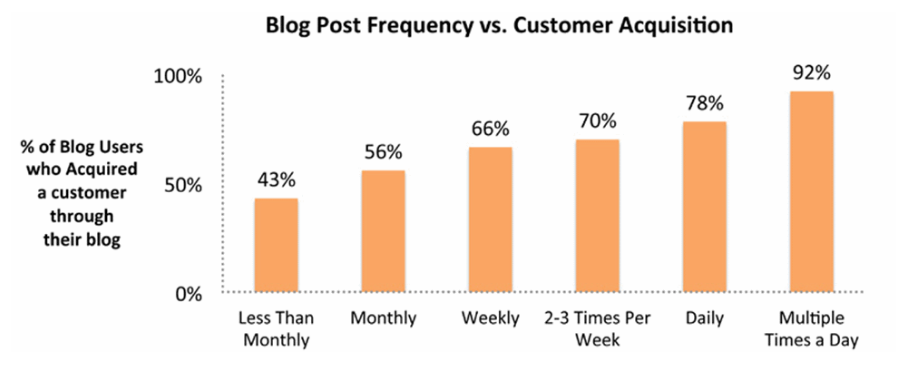
Research shows that the publishing frequency of your blog posts has a direct impact on customer acquisition:
frequency

But if you want to publish posts frequently, you’ll need to mix up your content.

Blogging about the same thing over and over again is boring. That’s why you need to learn how to write different posts to keep your readers interested and engaged.

Here are the top 11 types of posts that will drive traffic to your website.

Use this guide as a reference so you can always come up with fresh ideas for your blog.

1. Informative guides

Stick to the basics. Informative posts or “how to” guides are some of the most popular types of posts on the Internet.

You have to understand how people search for content online. If you’re trying to drive traffic to your website organically, your blog posts need to be SEO-friendly.

When someone wants to learn how to do something, they will literally type “how to” into the search engine to find information about it.

If your post appears as a top result, you’ll get more traffic to your site. But to get ranked toward the top of the list, your guides must be helpful.

Getting more people to read your posts and spend time on the page will improve your search ranking.

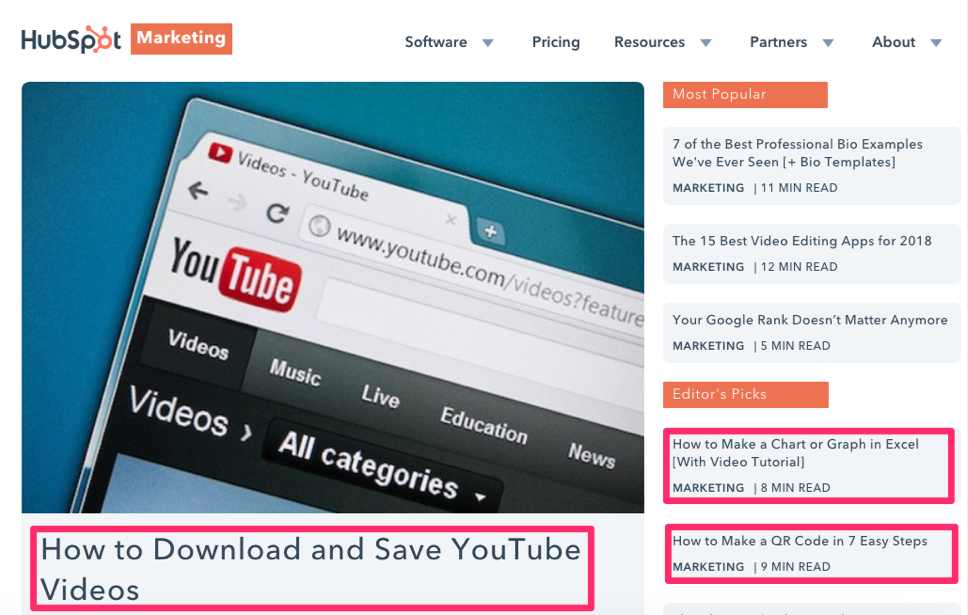
Here’s a great example of these types of posts on the HubSpot website:
hubspot 1

As you can see, three of the top six featured posts on the homepage of its marketing blog explain how to do something.

If you’re writing these types of posts, you need to make sure your explanation is clear.

Describe each step in a separate subsection with its own subheading. Take screenshots, and use boxes, arrows, and other annotations so readers can see what you’re talking about.

2. Video blogs

If writing comes naturally to you, it will help you tremendously when it comes to blogging.

But some people have trouble translating their thoughts into words on the page. If you think you’re a better speaker than writer, you may want to consider running a video blog.

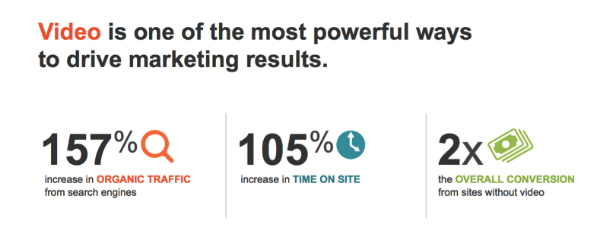
As a marketer, you need to recognize how video content drives results:
video blogs

Video content will increase your organic search traffic by 157% and also increase the time people spend on your site.

People probably won’t read your posts word for word. They’ll just skim through them.

But videos keep people engaged. Your video blogs have seemingly endless opportunities.

The content of each video is completely up to you. You may even consider turning an informative “how to” post, which I previously discussed, into a video tutorial.

Video blogs don’t need to stand on their own. You can mix in video posts with your conventional written blog posts.

Here’s an example of how I do this on the Neil Patel blog:
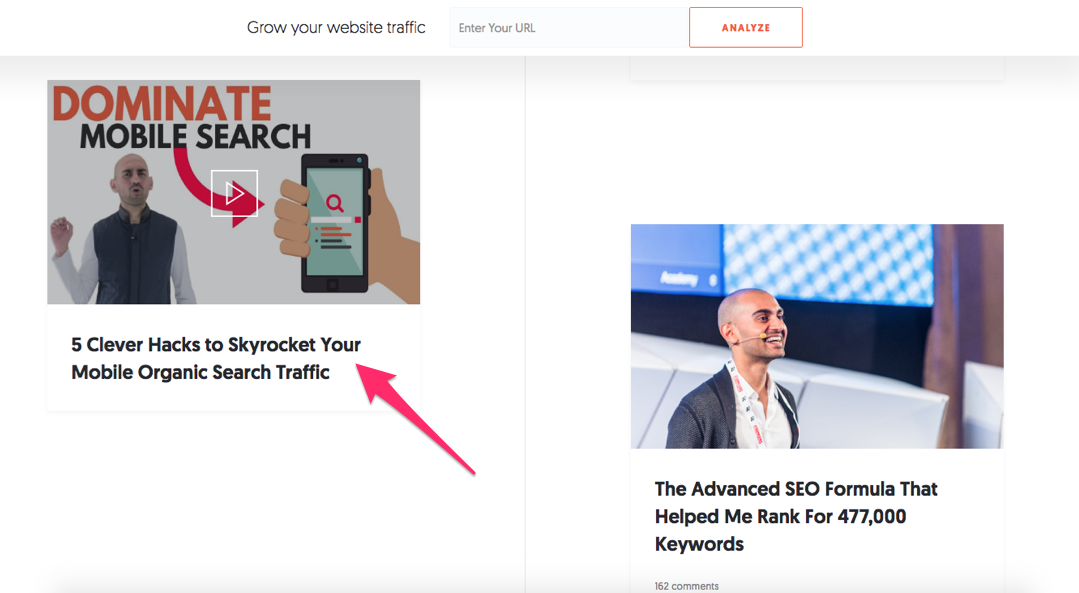
patel blog

As you can see, the post on the left is a video blog. But the blog published on the right is a regular post.

3. Guest posts

Guest blogging has tons of benefits. If websites give you the opportunity to blog for them, don’t turn them down.

Bloggers have the wrong mentality when it comes to guests posts. I see this problem all the time.

They would much rather focus on producing new content for their own sites as opposed to someone else’s.

But they don’t realize how writing for another site can benefit them. Allow me to explain.

The people who currently read your blog are already familiar with your voice and content. That’s what keeps them coming back.

However, other people might also enjoy your content, but they don’t know you yet. Getting featured on another website through a guest post will expose you and your brand to a new audience.

If you can impress these readers, they may be more likely to visit your site in the future.

Plus, you can build backlinks through your guest posts that drive more traffic to your website and ultimately improve your SEO as well. This will help you get more organic search traffic moving forward.

4. Long blogs

If you’re writing short posts just to save time and put out as much content as possible, it’s probably not working to your advantage.

Your blog posts should be long.

There are a few reasons for this. First of all, the length of your content is linked to search engine optimization.

Longer posts will give you the opportunity to add more links, images, and keywords to your posts. Google will reward you for this.

Furthermore, a higher percentage of bloggers who publish longer posts reported stronger results from these efforts:
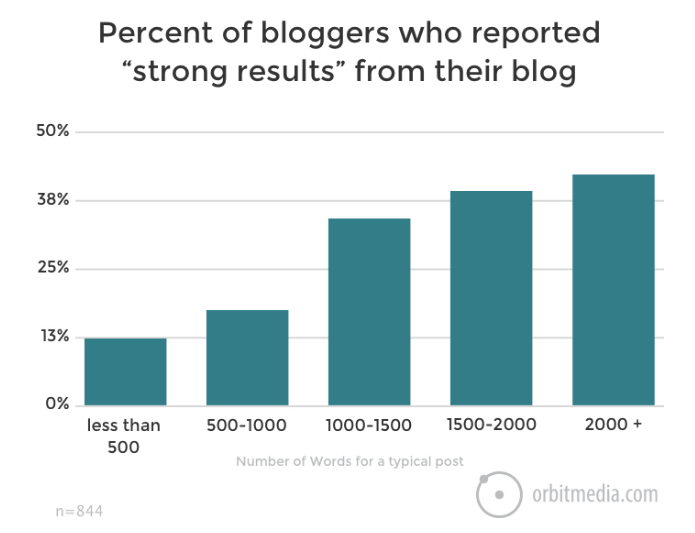
word count

If you are not taking the word length into consideration when you’re writing, you need to reevaluate your strategy.

I’d recommend publishing content that is 1,500 words at a minimum. But you can even shoot for 2,000 or 2,500+ words for certain posts.

Again, people won’t read your posts word for word. So don’t have really long paragraphs in these posts.

Use short sentences, headers, and visual elements to break up your content. This is especially important for longer blog posts.

5. Lists

Lists are another common type of blog post.

I use lists all the time. In fact, what you’re reading right now is one of my lists.

One of the reasons why list posts are so popular is that your readers know what to expect. They can scroll through each point on the list without having to read through the entire thing.

Readers like it when content is straightforward and organized.

Vary the formula for writing titles of list posts. Here are some examples to show you what I’m talking about:

  • 21 Ways to Prepare Chicken
  • the Top 6 Types of Bicycle Tires
  • How to Travel on a Budget with These 13 Tips

The list goes on and on, pun intended. But you get the point.

Changing the position of the number within the title of your list ensures your content doesn’t appear stale. If someone looks through your blog and sees that each title starts with a number, they may not be interested in reading it.

Switch up the numbers as well. While top ten lists may be popular, they can get boring too.

Google the topic before you start writing. Try to come up with a list longer than other lists in the search query. This will give you an advantage over your competitors.

6. Product reviews

Reviewing products and services is another great way to drive traffic to your blog.

As we’ve said before, you need to understand how people search for content on the Internet. If they are interested in a product, they’ll want to read reviews about it.

Here’s an example of a recent blog post from TechRadar that reviews multiple products in the same post:

review

There are a few different ways to decide what products to review.

For starters, you could review items your company sells. The only issue with this strategy is that people will know your opinion is biased. You won’t post an unfavorable review about something you’re selling.

But if your blog covers a specific industry, you can review new releases. Make sure the reviews are relevant.

Refer back to the example above. The article is reviewing the most recent iPhone products. It wouldn’t make sense to review models released five years ago.

If you decide to review products on a regular basis, establish a flow to such posts so your readers know what to expect.

Start with a product overview, and explain what the product does. Then, you can discuss specifications and other details. List the price and where it can be purchased.

The review should have some form of a pros and cons list. Reviews should ultimately express your stance on the item. For example, you can explain which people would benefit most from the product.

7. Infographics

As I’ve said before, you need to incorporate visual content into your blog posts.

But you can take this strategy to the next level by publishing blog posts that are almost exclusively infographics.

Creating custom infographics can help you build more backlinks as well. Here’s why.

Other websites are always looking for content that will help improve their blog posts. If you can come up with relevant, accurate, and visually appealing infographics, these sites will use them in their blogs.

As a result, you’ll get credit for the image source.

People who see your infographics on other sites may be inclined to click the link to visit your website. Furthermore, these links will also improve your SEO ranking, which I’ve previously discussed.

8. Stories

Learning how to tell a story is an art. Once you master this skill, the quality of your blog posts will improve.

A great story will keep your readers on the edge of their seats.

You need to understand the impact storytelling has on our brains:
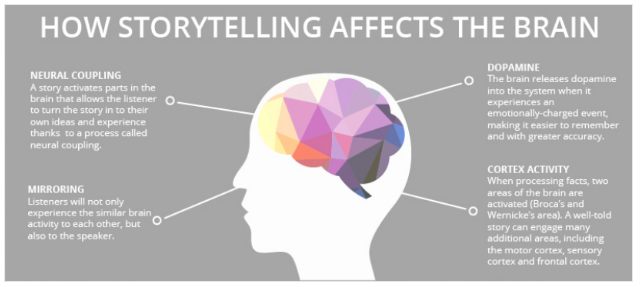
storytelling

When readers have an emotional response to your story, dopamine gets released from their brains.

Use this information to your advantage. The best stories are written to elicit some type of emotion, whatever that may be.

The choice is up to you. Maybe you want your readers to feel sad or angry while they’re reading your posts. And some of you may prefer to evoke joy, surprise, or love.

If you can make your readers feel emotions, they’ll be more likely to continue reading the blog.

As a result, they’ll come back to read more in the future.

Depending on the nature of your story, it can also generate traffic based on curiosity alone. For example, if I saw a blog post that said something like “How I Caught a Shark With a Pair of Jeans,” I would be very inclined to click on it to find out what happened.

9. Controversial posts

Controversy can spark some interest. This interest will lead to website traffic.

That said, you need to tread carefully with this approach.

Depending on what stance you take on a particular topic, you could potentially destroy your brand’s image. You don’t want this strategy to backfire.

It’s best to avoid topics such as race, religion, and politics. Don’t say anything that would offend someone.

When writing a controversial blog post, try not to pick a side. Instead, bring up the issue and try to generate a discussion in the comments section.

Truthfully, I wouldn’t recommend this strategy to all websites. But for some of you, this type of blog post may fit well with your brand image and target audience.

10. Breaking news

Use your blog to discuss breaking news topics.

Don’t get me wrong, I’m not saying you should try to compete with actual news outlets. But you can still write about recent events.

When it comes to breaking news, timing is everything. Being the first one to break a story isn’t always the best.

Sometimes you’re better off waiting to publish your content until all the facts are straight. You don’t want to get a reputation for posting unreliable information.

Here’s an example of a news story published on the TechCrunch blog:

breaking news

Make sure your news story is relevant to your business.

For example, let’s say you run a fashion blog. A breaking news story about a technological advancement isn’t related to your brand, so don’t write about it.

11. Data-driven guides

Whenever you’re writing an informative guide, back it up with statistics.

Use data only from authority sources, and give them credit for the information.

Adding data to your guides shows your readers your content is legitimate.

You didn’t just pull ideas out of thin air. You took the time to conduct research and then formed opinions based on your findings.

I use this strategy all the time. Before I take a stance or give advice, I find numbers to back up my claims.

If you are interested in doing original research, consider highlighting your case studies in a blog post.

This will help you get traffic from organic searches as well as through backlinks whenever another site uses your study as a source of information.

Conclusion

Your website needs a blog. But having a blog alone won’t necessarily drive traffic to your website.

Producing the same type of content for each post is boring and won’t deliver the results you’re looking for.

That’s why you need to learn how to write different types of blog posts.

Some of your posts may not even need to be text-heavy. You can use video blogs and infographics to enhance your content.

Anyone with a blog can benefit from using this guide as a reference. Adding these 11 types of posts to your website will increase your overall site traffic.

What types of posts are you using to drive traffic to your website?


from Quick Sprout https://ift.tt/2MFzYCu
via IFTTT

Friday, August 17, 2018

13 Ways to Improve Your Engagement Rates on Your Instagram Posts

Social media marketing has become a necessity for brand survival in today’s day and age.

But simply creating profiles on these platforms and hoping the rest will take care of itself is not an effective strategy. You need to be active on social media.

While you may have already recognized the importance of social sites such as Facebook, it’s time for you to focus on other platforms—specifcally, Instagram.

Instagram, with its features and benefits, was part of the top social media trends of 2018 I wrote about.

Instagram has more than 1 billion users. Of those users, 500 million use the platform on a daily basis.

Only Facebook and YouTube have more active users.

For the most part, Instagram users are younger. Nearly 60% of Instagram users in the United States are under the age of 30.

This is important to recognize if you’re segmenting your target audience with generational marketing.

How can you use Instagram to promote your brand effectively?

Your content might be great, but if nobody sees what you’re posting, you won’t have results. That’s why you need to focus on engagement metrics:

  • likes
  • comments
  • views
  • interactions
  • clicks

You need to measure all these to determine the success of your Instagram marketing campaigns.

If you need some help with this, I can steer you in the right direction. I’ve identified and explained the top 13 ways to improve your engagement rates on Instagram.

Review the tips I’ve explained in this guide, and apply the tactics to your brand’s page.

1. Utilize hashtags

Do you remember the days when we used to refer to the tic-tac-toe board as a pound sign?

Well, social media changed that symbol forever. Now the symbol (#) at the bottom right-hand side of your telephone keypad is more commonly referred to as a hashtag.

As a social media marketer, you need to incorporate hashtags into your Instagram strategy.

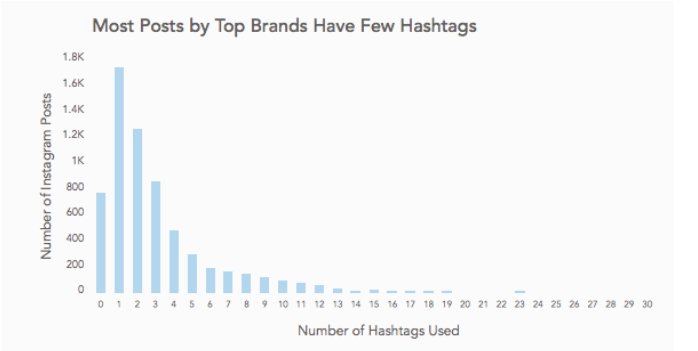
Research shows that the majority of posts by the top brands on social media only use a few hashtags:

number of hashtags

If the top brands are using them, your brand needs to as well.

Furthermore, 70% of Instagram hashtags are branded. Posts with only one hashtag receive 12.6% greater engagement than posts without hashtags.

When deciding what hashtags to use, you want to be broad to appeal to the widest possible audience.

However, hashtags that are too broad will not stand out. On the other hand, if your hashtag is extremely unique, nobody will search for it.

You need to find some middle ground for your hashtag.

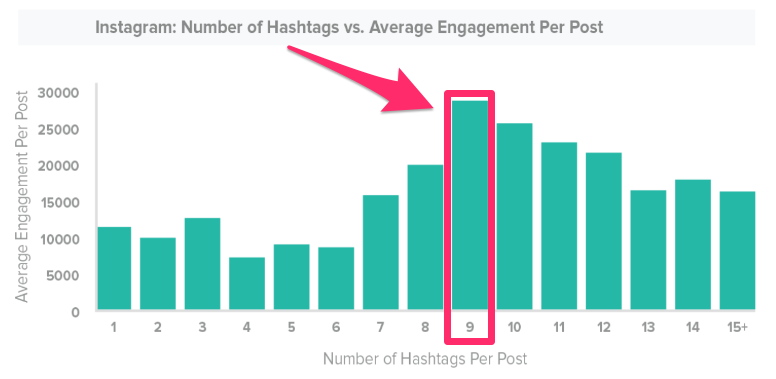
Even though the top brands aren’t using many hashtags, research shows that engagement rates reach their peak when a post has nine hashtags.

hashtags 2

It’s also worth noting that hashtags with 21 characters have the highest engagement rates. And 24-character hashtags were second on this list.

You don’t need to be shy with the number of hashtags or characters you’re using. Just don’t go overboard, or you’ll appear too spammy.

2. Promote your Instagram posts on all your distribution channels

To have higher and more valuable engagement rates, you need to increase your social following.

If your social media marketing strategy is effective, you can convert your Instagram followers into customers. This needs to be your ultimate goal.

To get more followers, you need to promote your Instagram profile on all your distribution channels:

  • include a follow link in your marketing emails
  • share information about your Instagram posts on your website
  • blog about it
  • use your other social media profiles such as Facebook, Twitter, and YouTube to promote content you posted on Instagram.

As a result, you’ll get more traffic to your Instagram page. Because of this increased traffic more people will follow your page.

Even if people don’t follow you right away, at least they are exposed to your brand. Now your content may appear on their page, and they might engage with your posts in the future.

3. Run a contest

Contests are another great way to gain exposure for your brand.

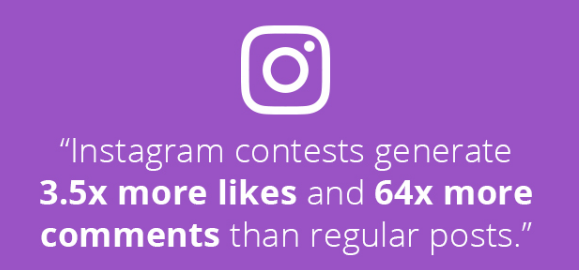
In addition to the increased brand awareness, contests run on Instagram have been proven to dramatically boost engagement rates.

contest

It’s because contests encourage user-generated content.

Plus, the fact that you’re giving something away to the winner entices people to participate. Overall, it’s a winning strategy.

The best contests incorporate hashtags, which is something I discussed earlier.

Set up a unique hashtag for each contest you run.

It will allow you to track all participants’ submissions.

Further, this will make it easier for you to judge the winner.

And this unique hashtag will also be a way through which other people can see your brand and its popularity.

Instagram users who may have never heard of your brand might see posts from contest participants.

As a result, these users may be enticed to follow your page. Once they start following you, they will be more likely to engage with your content.

4. Add emojis to your captions

Emojis.

These little animations are no longer just for your personal messages. Brands are starting to use them as well to drive engagements.

In fact, 56% of Instagram profiles use emojis.

In the last year, emoji usage on Instagram went up by 19%. Adding emojis to your post increases engagement by 2.07%.

This makes sense. Emojis in captions add a personal touch to your posts.

Users will feel as if they’re looking at posts from a friend as opposed to some giant corporation. The added comfort your followers will feel when seeing posts with emojis will encourage them to engage with your posts.

Besides that, you need to learn how to write Instagram captions that drive engagement.

Ask your followers to comment on your posts with their favorite emoji or an emoji that best describes the reaction to your content.

I expect the trends related to emoji usage to continue rising in the foreseeable future.

5. Share videos

While Instagram may have started as a platform for sharing photos, the social network has adapted to the new trends and made appropriate changes.

Initially, Instagram had a 15-second limit on videos when the feature was first made available in 2013. But that number jumped to 60 seconds a few years later.

As a result, the amount of time users spent watching videos increased by 40% in the first six months of the change.

It’s no secret that consumers want to see more video content.

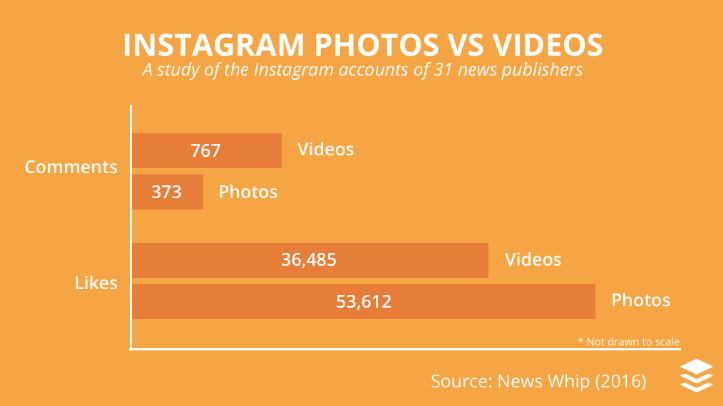
But how will videos affect your engagement rates? Let’s take a look:

videos

As you can see, videos on Instagram typically get more than double the number of comments compared to photos.

While photos get more likes than videos, your Instagram videos will still get plenty of views, even if users aren’t liking them.

Mix up your content, and start posting more videos. I’m not saying you need to shy away from photos completely, but try to find a balance between the two.

6. Don’t be boring

As I just finished saying, you need to change up your content strategy on Instagram.

Posting similar photos from different angles and just changing the caption slightly will bore your followers. Nobody wants to follow accounts like that, and people certainly won’t engage with your posts.

Post funny content. If you make people laugh, they’ll be more likely to tag their friends in the comments.

This will help increase your engagement metrics.

If it fits with your brand image, you can even post content that’s edgy, controversial, or even somewhat sexual in nature—anything that’s going to raise some eyebrows and grab the attention of users.

Share crazy news. Be provocative.

Post surprising or shocking photos and videos.

Just don’t do anything that might damage your brand reputation.

But try to make sure you’re not posting the same thing over and over again. That’s boring and won’t drive engagement.

7. Know the best times to post

To get high engagement on your posts, you need to make sure your audience sees your content.

That’s why you need to determine the best times to post.

I’m referring to the time of day in addition to the best days of the week.

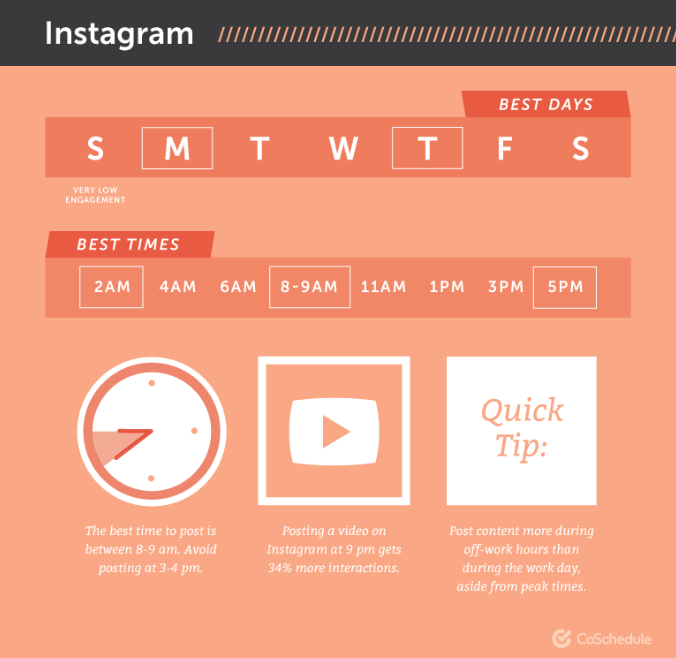
There are lots of different answers to this question, depending on whom you ask. That said, I like these results from CoSchedule:

best time to post

Their research shows that Mondays and Thursdays are the best days of the week to post although, for the most part, your metrics on weekdays will be pretty similar.

Engagement on Sundays is the lowest.

That’s probably because people are out and about doing things on the weekend. If they’re busy, they won’t be active on social media as much.

The times you post will also be determined by your target audience.

For example, let’s say your brand is targeting consumers who live in the United States. It’s worth noting that 80% of the US population is located in the Eastern and Central Time Zones.

These are the types of things you need to take into consideration before you post something.

8. Form relationships with social influencers

In addition to sharing your Instagram content on your distribution channels, you can leverage your relationships with social influencers to expose your profile to a wider audience.

These people can promote your brand, products, and profile to their followers. Since social influencers have great engagement rates with their audiences, those results will translate to your page.

That’s because users trust social influencers.

If they endorse your brand, it will increase the chances of more people viewing your page. Now that they’ve landed on your page, they’ll engage with your content.

You can combine this strategy with one of the other tips I’ve discussed, such as contests.

Let a social influencer give away one of your products as a promotional campaign for your Instagram page.

Influencers are also great options for account takeovers, but we’ll discuss this strategy in greater detail shortly.

9. Post pictures of faces

You know you need to post content on a regular basis. But what type of photos should you be posting?

I highly recommend posting images with faces.

That’s because photos with faces receive 38% more likes than photos without faces.

Look at how Nike used this concept on its Instagram profile:

nike

As you can see, eight of these nine consecutive posts contain faces.

Don’t get me wrong, this isn’t the only type of content you should be posting. But when in doubt, share a picture that shows someone’s face.

10. Add subtitles to your videos

We already established you need to share video content on Instagram to drive engagement.

But I’ve got a way for you to make your video strategy even better. Add subtitles.

Video subtitles increase view times by 12%.

It’s worth noting that on Facebook, 85% of videos are watched without sound.

Since Facebook owns Instagram, we can safely assume those numbers translate to Instagram as well.

11. Tag your location

You posted a picture of someone’s face and added a hashtag to your caption. It’s time to post, right?

Not so fast.

Before you post your photos, you should tag their locations. Research shows that posts with tagged locations have 79% higher engagement rates.

You can add a location tag even if you aren’t actually there. If your office is in San Francisco but you’re trying to promote something in Miami, you can still add Miami to the tag.

Just don’t get caught with the Golden Gate Bridge in the background of your photo, or users will know you’re not in Miami.

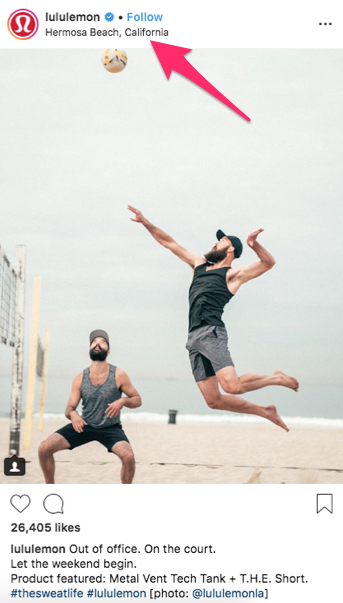
Check out this example from Lululemon.

lululemon 1

This image was shared on July 28, 2018.

The date corresponds with the Hermosa Beach Open, which is an AVP beach volleyball tournament.

Was this photo actually taken on this day at this location? Maybe. But maybe not.

Either way, it’s promoting beach volleyball gear during a beach volleyball tournament at that location. So the location fits the post.

12. Announce a new post in your story

You need to learn how to use Instagram story to promote your business.

When you add a new post to your profile, announce it on your story. This will double your engagement metrics.

First, you’ll get a view and impression on your story.

Then, users will be enticed to view the new post. After that, you can encourage them to like and comment on the post by implementing the other strategies I’ve discussed so far.

13. Leverage takeovers

This relates to the discussion about social influencers.

An influencer may allow you to take over their account for a period of time. You can post content to their story or even broadcast a live video.

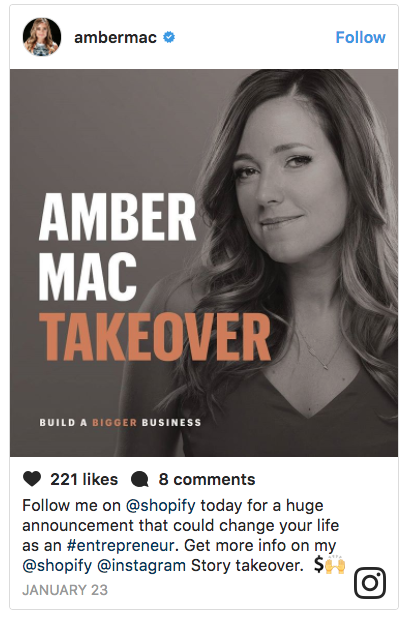
On the flip side, you can let an influencer take over your account. Here’s an example from Shopify:

amber mac

Amber Mac not only took over the Shopify account but also promoted it on her profile as well.

Now her followers have a reason to visit the Shopify profile to see what she’s up to over there. This will boost the engagement metrics during that time period.

Furthermore, if those users like the content you post as a guest of another account, they may end up following your page, which increases your chances of having additional engagements with those users moving forward.

Conclusion

Your Instagram profile is a valuable marketing tool. But you’ll be successful only if you know how to use this tool correctly.

Ultimately, your content needs to drive engagements.

Getting users to like, comment, view, share, and click on your posts will increase your brand exposure and help you generate more leads.

As a result, your business will be more profitable.

If you’re unhappy with your current engagement rates or if you think there’s room for improvement, refer to this guide.

Implement the tactics listed above to boost your Instagram engagement rates.

How is your brand using Instagram to focus on user engagement?


from Quick Sprout https://ift.tt/2OM88SF
via IFTTT
Wednesday, August 15, 2018

How to Improve the Ranking of Your Business Mobile App

It’s no secret we’re living in a mobile world.

As marketers, we need to recognize that our current and prospective customers are active on their mobile devices. That’s why you need to learn how to optimize your web design for mobile users.

But some of you may have taken this one step further and built a mobile app. That’s great news, and you’re definitely headed in the right direction.

Mobile apps are increasing in popularity.

If you saw my top mobile trends that are dominating 2018, you’re aware of this.

In fact, over half of small businesses in the United States either have mobile apps or are planning to develop one. Further, 55% of these business owners say they are using mobile apps to drive sales.

Those of you who already developed an app have an advantage over your competition.

But your app won’t be successful unless you can get people to download it.

Ultimately, the more downloads you get, the greater the chance you’ll have of getting more sales and increasing your total revenue.

The ranking of your mobile app has a direct correlation with how many downloads you’ll get. Ironically, getting lots of downloads will also improve the ranking of your app.

It’s a constant cycle. Basically, if you’re able to get downloads, the popularity of your app will increase.

As a result, the ranking will improve, and the downloads will continue.

While it may sound complicated at first, it’s not difficult to understand. I’ll explain what you need to do to drive downloads and improve the ranking of your mobile app.

Understand the basic concepts of app store optimization (ASO)

For starters, you need to understand ASO, which is short for app store optimization.

Having a mobile app without focusing on ASO is like having a website without focusing on SEO (search engine optimization). ASO is extremely important.

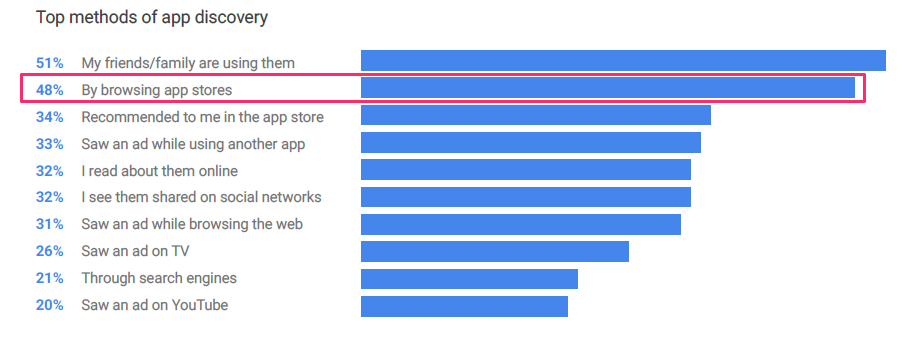
That’s because such a large percentage of app users discover new apps by browsing the app stores:

app discovery methods

Think of the app store as a general search engine.

Someone knows what they want but doesn’t know where to find it. So they type some general terms into the search box.

Just like with a web browser, mobile users aren’t going to go searching through dozens of results after they conduct a search. They’re going to select one of the top results.

Those are the apps that will get the most number of downloads.

It’s the same concept as Google searches. The top ranking results will get the majority of the traffic.

You need to learn which factors can increase your chances of getting ranked higher according to ASO. We’ll cover some of these concepts as we continue.

Recognize the differences between the Apple App Store and Google Play Store

Let’s continue talking about the basics. There are two main app stores.

The Apple App Store is for apps available to download on iOS devices, whereas the Google Play Store is for Android users.

Depending on your business, your app might be available on just one or both of these platforms.

You need to know which factors impact your ranking in each store. The algorithms for ranking apps are not the same.

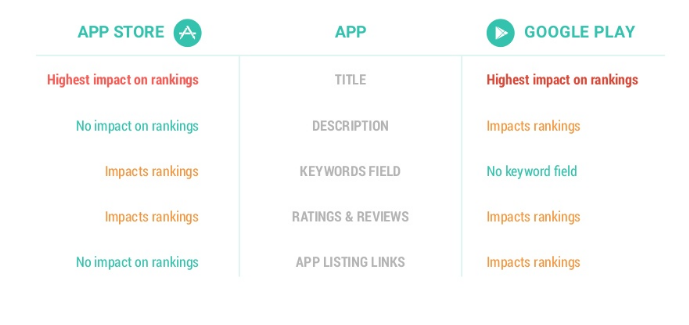
Here are some of the key similarities and differences between the Apple App Store and the Google Play Store:

apple vs google

As you can see, the title of your app has the highest impact on your ranking in both stores. We’ll talk more about your title in greater detail shortly.

Similarly, the ratings and reviews of your app also affect the ranking of your app on each platform.

However, there are some major differences as well.

Your app’s description impacts rankings in the Google Play Store. But iOS users may not download your app unless you’re able to describe it, even though it doesn’t directly impact your ASO. But we’ll discuss tips for writing app descriptions later on.

The keywords field in Apple App Store apps will impact your ranking, but that field isn’t even an option in the Google Play Store.

Ultimately, you’ve got to find a balance between these two stores.

You can’t expect the same ASO strategy to work for each platform, so you’ll need to make the necessary changes in your listing in each store.

Make sure you have a great title

You need to put some thought into creating a title for your app. This may be easier for some of you compared to others.

For example, if you already have an established business and your app is just an extension of that company, you’ll want the name to be the same for your branding purposes.

But those of you who are launching an app as a completely new business will benefit from reviewing my tips for naming your startup.

You want the title of your app to explain the function of your app and what it does.

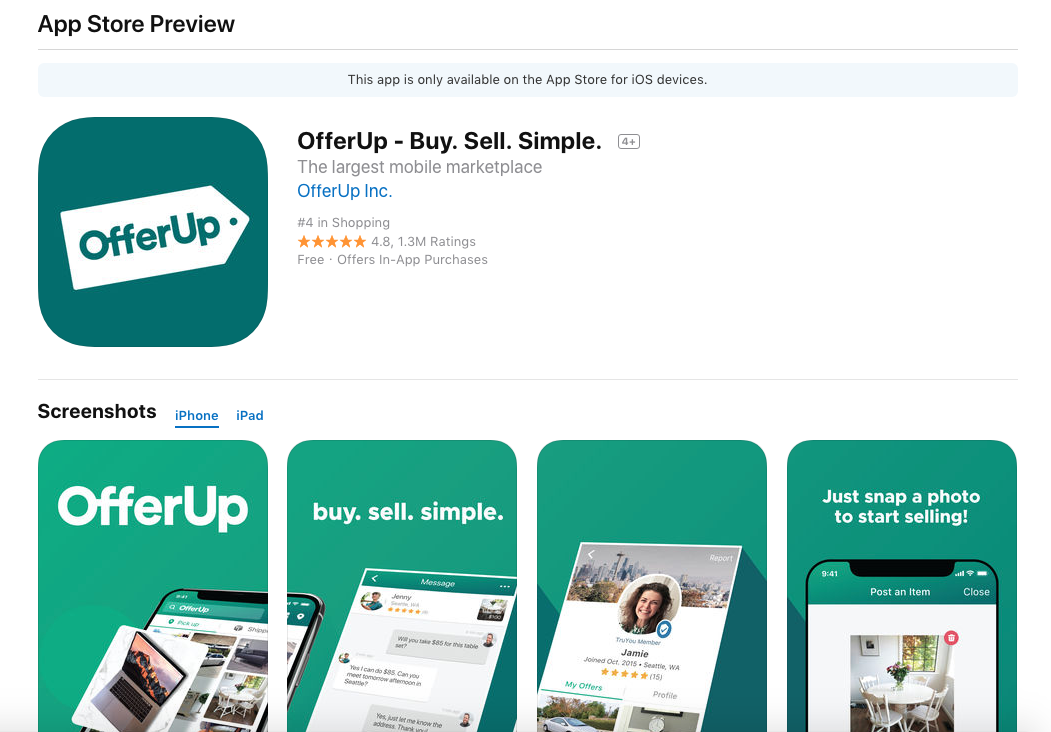
Here’s an example of a great title from OfferUp:

offer up

OfferUp is an app designed for buying and selling goods. As you can see, those keywords are also included in the title for ASO purposes.

However, it’s worth noting that the Google Play Store could potentially suspend your app if you’re using repetitive and irrelevant keywords in your title just to improve your ASO ranking.

Here’s something else to take into consideration. The Google Play Store gives you a 50 character limit to name your app.

But the Apple App Store has a 30 character limit for titles.

As far as the ASO algorithms are concerned, having different names on each platform won’t impact downloads.

However, from a branding perspective, you want your app name to be identical in each store. Here’s why.

Let’s say a user who has an iOS device downloads your app from the Apple App Store. Then they recommend it to a friend who has an Android phone.

If the names are different, it can cause some major confusion. That new user may not be able to find your app if they’re searching for the wrong title.

Write an informative description

As I explained earlier, your app description impacts your ranking in the Google Play Store.

This is a great opportunity for you to include relevant keywords that prospective users may search for when browsing for a new app.

Even though your description is irrelevant to your ASO ranking on the Apple App Store, you still need to write one that’s informative. Why?

Well, how else will people know what your app does? Sure, the title may give them some kind of indication, but the description is your chance to shine and explain your app’s functionality.

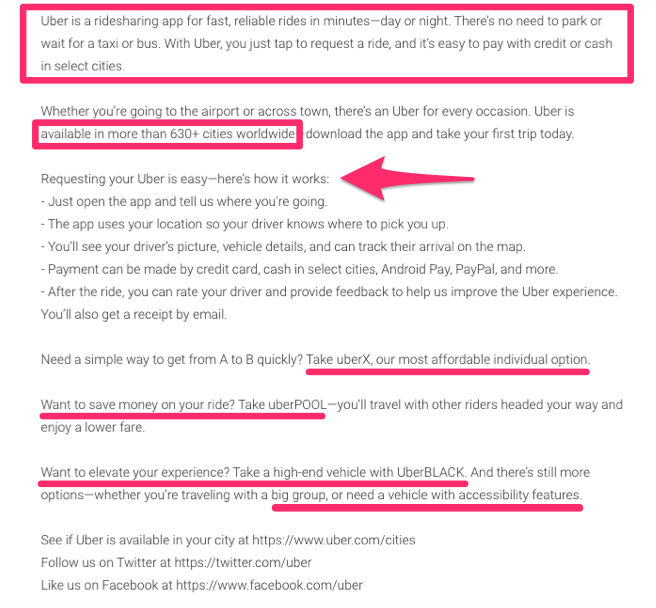
If you want to know how to write a great description, take a look at this example from Uber:

uber 1

I pointed out some of my favorite parts.

For starters, the entire description won’t be displayed when a user first clicks on the app. That’s why the opening lines are the most important.

In the first three sentences of this description, Uber clearly explains what its app does.

As the description continues, they showcase the platform’s availability in cities across the globe. There is even a simple step-by-step guide to explain how the app works.

Another great part about this description is how it promotes all the services offered within the app.

Customers who want a simple and affordable way to get around will benefit from using uberX. If someone wants to save even more money, the description recommends uberPOOL.

The description explains that UberBLACK is intended for customers who want to ride in a high-end vehicle.

Uber also offers rides to app users who need accessibility features and to people who are traveling in big groups. All of this information was clearly written in the description.

Keep this in mind when you’re writing the description for your app. Make sure it’s simple while still highlighting the top features and how the app works.

Encourage users to rate and review your app

How your app is rated and reviewed will have an impact on your ranking in both app stores. So it’s important you encourage users to review your app.

Your star rating impacts your ranking in a number of ways. First of all, the higher your rating, the greater your chances of getting ranked higher.

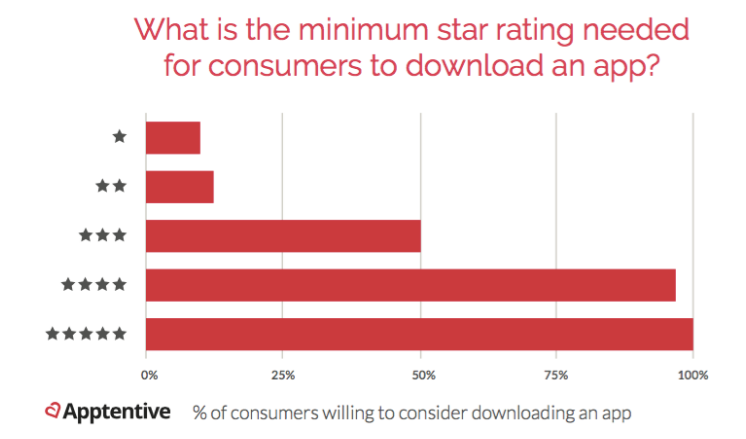
And having four or five stars increases the chances that consumers will download your app.

app rating

In fact, 79% of users check ratings and read reviews before they download a new app.

As you can see in the graphic above, if your app is rated too low, people won’t even consider downloading it.

This is why it’s important for you to encourage users to rate and review your app. For the most part, people won’t write a review unless they have a really good experience or something terrible happens.

But an average user has no reason to go out of their way to write a review.

That’s why you need to ask them. Otherwise, your app ratings will just be from people who experienced something extreme.

Send users a popup or push notification that gives them an incentive to rate your app and write a review. This will improve your ASO and make your app more appealing to new users.

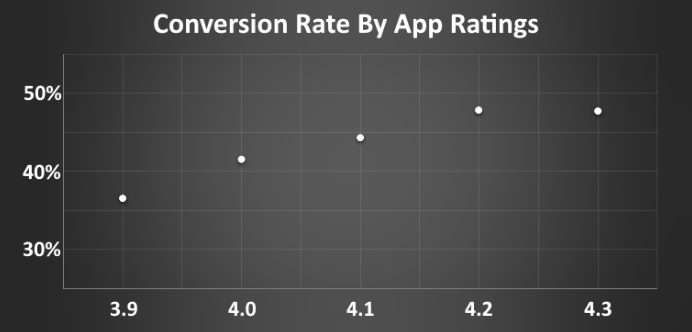
Improving the star rating of your app will do more than just increase your ranking. It also has a direct correlation with your conversions.

Check out this example from Medium:

conversions

Its conversion rates went from 36% to 47% as the app star rating jumped from 3.9 to 4.3.

Improving the rating by such a small margin increased the app’s conversions by more than 10%.

Use screenshots to showcase the in-app experience

Your title and description can do only so much.

It’s one thing to tell users what your app can do, but it’s another thing to actually show them. That’s why you need to include screenshots.

Screenshots give you a chance to show off your app’s versatility.

For example, you wouldn’t want to show four screenshots of one feature. It makes much more sense to showcase different features with each image.

Let’s say you have an app for your ecommerce store. Showing screenshots of just products isn’t utilizing the option to its full potential.

You’re better off showing screenshots of your navigation, search options, checkout procedure, and payment methods. This will give the prospective user a much better indication of how the app functions.

Now, your screenshots aren’t directly tied to ASO. However, they’ll help you drive more downloads, which will ultimately improve your ranking.

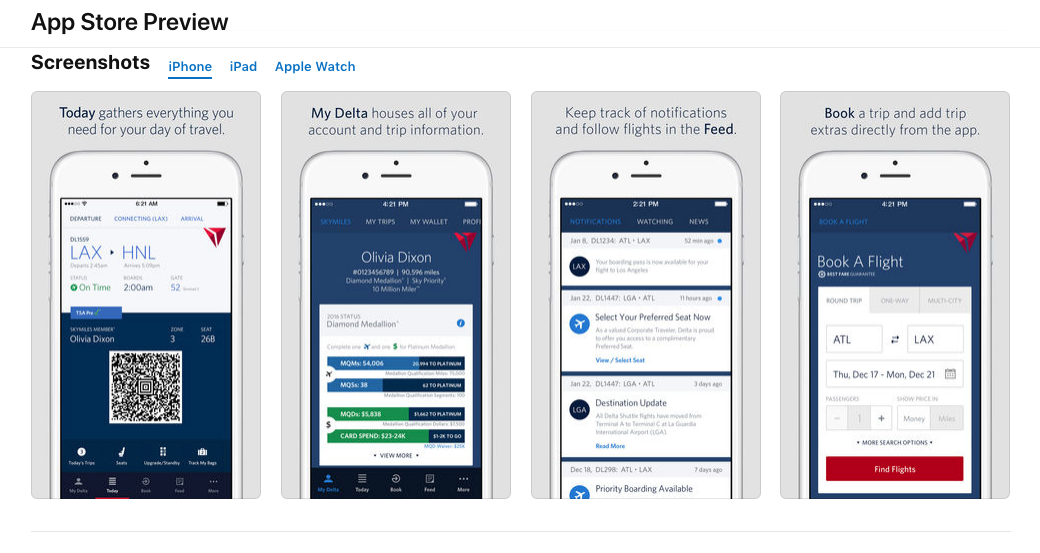
Here’s a great example of screenshots displayed on the Delta app listing:

delta

As you can see, each screenshot shows something different.

The first image shows what the app looks like on the day of travel. It’s a digital boarding pass that can save you time at the airport.

Next is an image that displays the user’s profile. The Delta app also shows travel notifications in an organized feed. This can keep users informed if there is a gate change or flight delay.

Finally, the last screenshot shows how users can book a trip directly within the app.

Varying screenshots increase the chances of your app being downloaded.

Create a video to demonstrate your app

In addition to taking screenshots, you can also use videos to demonstrate how your app works.

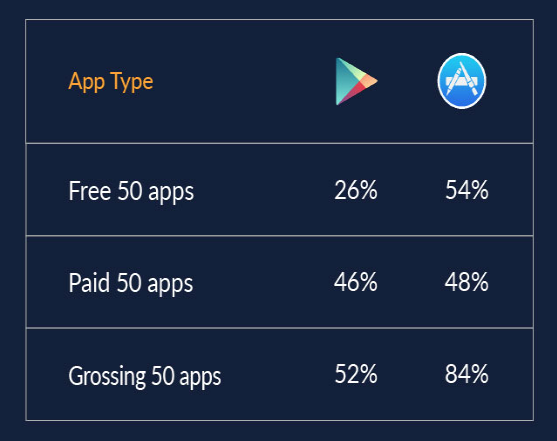
Just take a look at these numbers that show how many of the top 50 apps in the Google Play Store and Apple App Store incorporate videos:

video

As you can see, the majority of the top grossing apps on both platforms use videos.

Users are three times more likely to download an app after watching a video about it, so this strategy will definitely help you drive downloads.

Design an eye-catching app icon

Don’t overlook the design of your app icon.

While this doesn’t necessarily affect ASO, it will still have an impact on downloads and how your app is perceived.

The app icon needs to be attractive so that it stands apart from other apps when users are browsing.

It should be memorable and related to your overall branding strategy. Don’t make it too similar to another app, especially if it’s your competitor.

Think about how your app is going to look once it’s downloaded to various devices. It needs to be visible against as many backgrounds as possible.

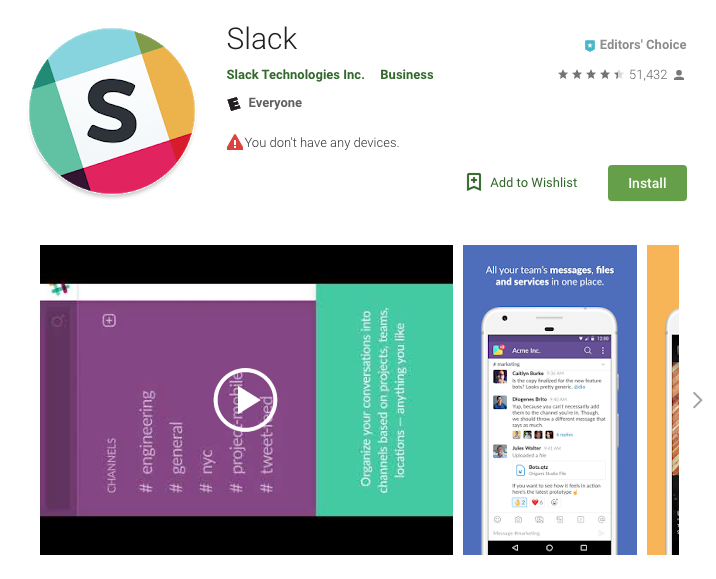
Take a look at the Slack mobile app icon:

slack 1

It’s colorful and draws attention. But it’s still simple.

Do you notice anything else about this app listing?

It has a video in addition to screenshots, which is a strategy I just finished discussing.

Promote the app on all of your distribution channels

To get more downloads, ratings, and reviews, you need to promote your app.

Leverage all your distribution channels for this. Convert your social media followers into app users.

Create YouTube content that drives people to your app store listing. Market the app to your email subscribers.

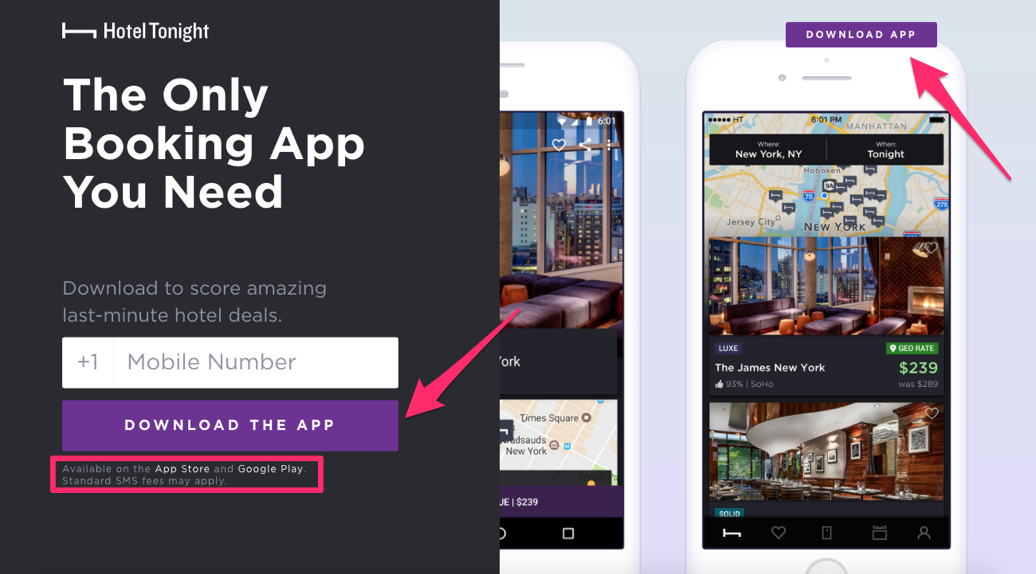
Share download links to the app on your website. Here’s an example of this strategy put to use by Hotel Tonight:

hotel tonight

Even if you’re running your app as a new business without any physical stores or online purchase options, you still need to have a website as a promotional tool.

Conclusion

You invested hard work, time, and money into your mobile app.

But the job isn’t quite done yet. Now that your app has launched, you need to take the proper steps to improve its ranking. This will help you get more downloads.

Conduct research on ASO. Learn the differences between listing your app on the Google Play Store and the Apple App Store.

Focus on your title. Write an informative description.

Use screenshots to show the app’s functionality. Create a video demonstration.

Encourage users to rate and review your app.

Design an app icon that draws the attention of prospective users. Make sure to promote your app on as many distribution channels as possible.

If you follow the tips I’ve outlined in this guide, your app ranking will improve, and you’ll get more downloads. These downloads will ultimately translate into higher profits.

How are you using ASO principles to increase your mobile app ranking?


from Quick Sprout https://ift.tt/2MqCQmI
via IFTTT
Monday, August 13, 2018

How to Get More Email Subscribers Without Annoying Your Website Visitors

With so many new content marketing strategies out there today, it can be tempting to look past your email list. After all, how important can it be?

To say the least, email marketing is crucial. It needs to remain part of your core marketing foundation.

Research shows that 99% of consumers check their emails every single day.

Between personal email addresses, work accounts, computers, and mobile devices, some consumers check their inboxes even up to 20 times per day.

More than 80% of retailers say email marketing is the driving force behind their acquisition and customer retention strategies.

From a marketing perspective, sending emails is an extremely cost-effective strategy as well. On average, the ROI yields $40 for every dollar spent, which is the highest among other strategies.

But your email campaigns won’t work unless you have lots of subscribers. That’s why you need to learn how to build your first email list from scratch.

While you may understand the importance of growing your subscriber list, you need to recognize the impact your growth strategy has on your website.

Yes, you want people to opt in to your email content, but at what cost? You don’t want to overwhelm your website visitors and bombard them with nonstop sign-up requests and notifications.

This will backfire. If the people visiting your website get annoyed, they may leave and never come back.

Fortunately, there are ways you can get more email subscribers without annoying your website visitors.

I’ll show you ways you can implement these tactics on your website. Let’s dive in.

Add a sidebar to your homepage

You need to come up with ways to promote your email list without spoiling the user experience.

After all, you still want visitors to consume your content.

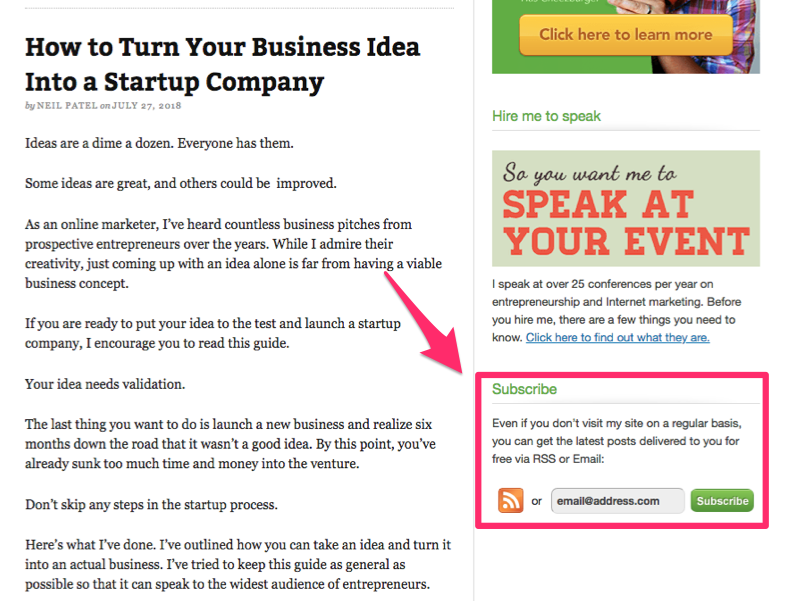
That’s why a sidebar on your homepage is the perfect place to include an email opt-in form. As you may have noticed, I use this strategy on the QuickSprout blog.

quicksprout

It’s simple yet effective.

Visitors can navigate through my website and read my blog without being annoyed by giant bells and whistles trying to get them to subscribe to my email list.

The size, placement, and location of the opt-in button on my sidebar are subtle, yet clear and legible.

In addition to placing a sidebar to your homepage, you can place it on other pages of your website as well.

This will increase your chances of getting more subscribers.

First of all, not everyone will navigate directly to your homepage. If someone lands on another page through an organic search, you still want them to see your sidebar.

Furthermore, since the sidebar is subtle, it’s possible a website visitor could overlook it on your homepage. As long as it’s out of the way and doesn’t obstruct their navigation experience, it won’t be annoying if you place it on multiple pages.

Create a separate landing page

Another way to get more email subscribers is by building a dedicated landing page for opt-ins.

This definitely won’t annoy your website visitors since they won’t see the page unless they navigate to it.

Plus, having a separate landing page will make it easier for you to promote your email list through other marketing channels. For example, if you’re promoting your email content to followers on social media, you can provide a link to this page rather than your homepage.

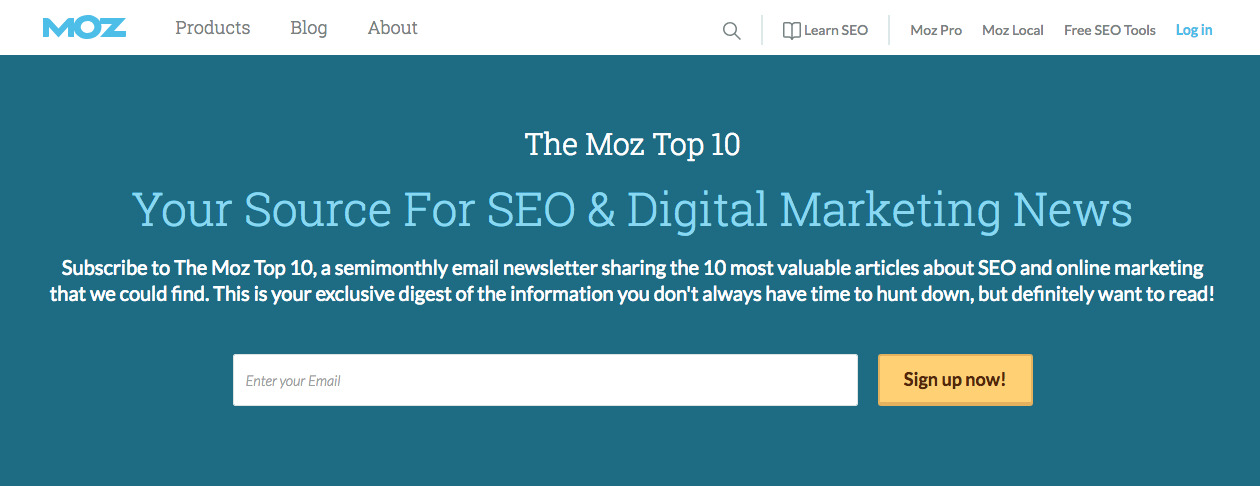
Look at how Moz accomplishes this strategy with its dedicated opt-in landing page:

moz

I really like the way MOZ pitches its email list.

Rather than just asking customers to subscribe to its newsletters, it differentiates itself from the competition.

Website visitors know exactly what they’ll be getting if they sign up to receive this content. There won’t be any surprises.

Moz will deliver them the top ten articles about online marketing and SEO on a semi-monthly basis.

The visitor also knows that their inbox won’t get flooded with too much promotional content if they subscribe.

Allow visitors to create an account before making a purchase

You can also get more email subscribers by making it easy for visitors to provide you with their information while they’re completing another action on the site.

The idea here is that you want to limit the number of steps for any given process.

For example, let’s say a customer wants to create an account on your website. If they provide you with their email address at that time, they shouldn’t have to do it again to sign up for emails.

I recommend combining the account creation strategy with your email opt-in method when customers are making a purchase.

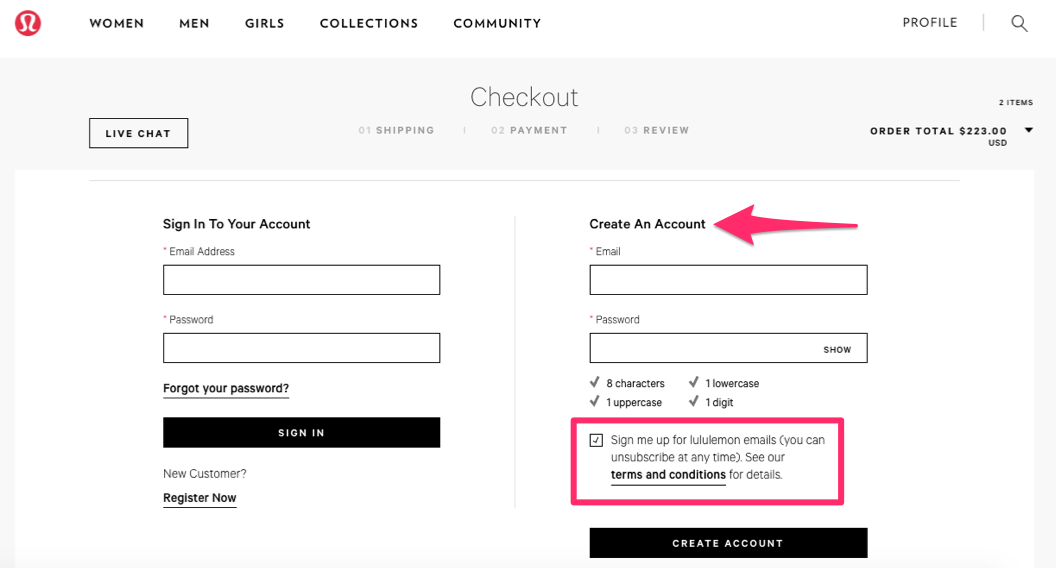
Look at this example from Lululemon:

lululemon

As you can see, the brand gives its website visitors an option to create an account before starting the checkout process.

By creating an account, they also sign up for emails.

That said, you don’t want to force people into your email list. The customer can easily uncheck the box if they don’t want to subscribe.

We’ll talk more about these checkboxes during the checkout process in greater detail shortly.

Trigger pop-ups when visitors display intent to exit

As I said before, you don’t want to overwhelm your website visitors with pop-ups.

If someone lands on your page and a pop-up takes over the screen within the first few seconds, it’ll annoy the visitor. You don’t want this to happen.

But timing is everything.

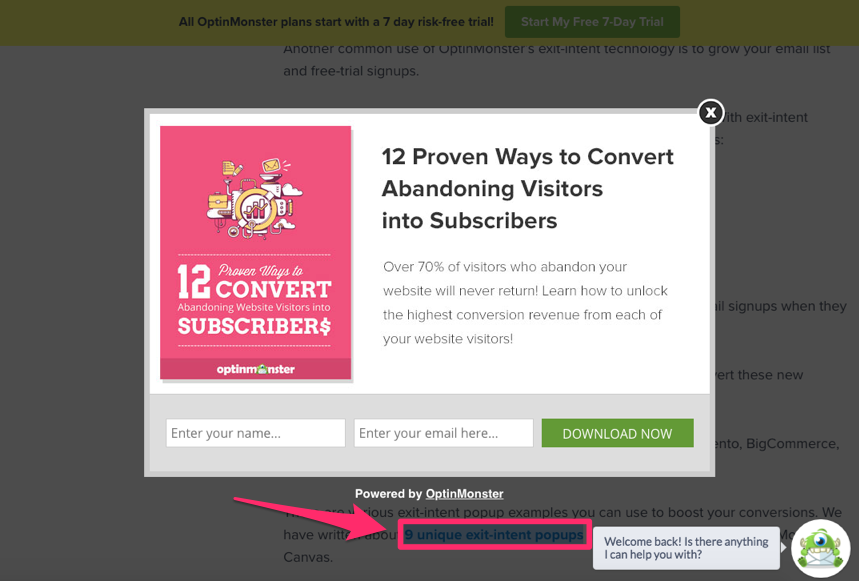
You can set a pop-up to appear when a website visitor displays an exit intent. OptinMonster provides this technology and uses the strategy on its own website:

optinmonster

Interestingly enough, I was on the website reading more about its exit-intent technology.

There was a hyperlink within the content that said “9 unique exit intent popups,” which I highlighted above for you to see. I thought it was interesting and relevant, so I clicked to open it in a new tab.

That’s when the popup came.

The exit-intent technology recognized I opened a link in a new tab, which means I was probably going to leave the current page to read it.

OptinMonster used this popup as an opportunity to collect email addresses.

To those of you interested in implementing this strategy, I’d recommend checking out this software. It’s refreshing when brands practice what they preach, and the technology worked as advertised when I was browsing on this site.

Pin a sticky bar to all your pages

Sticky bars are similar to sidebars, discussed earlier.

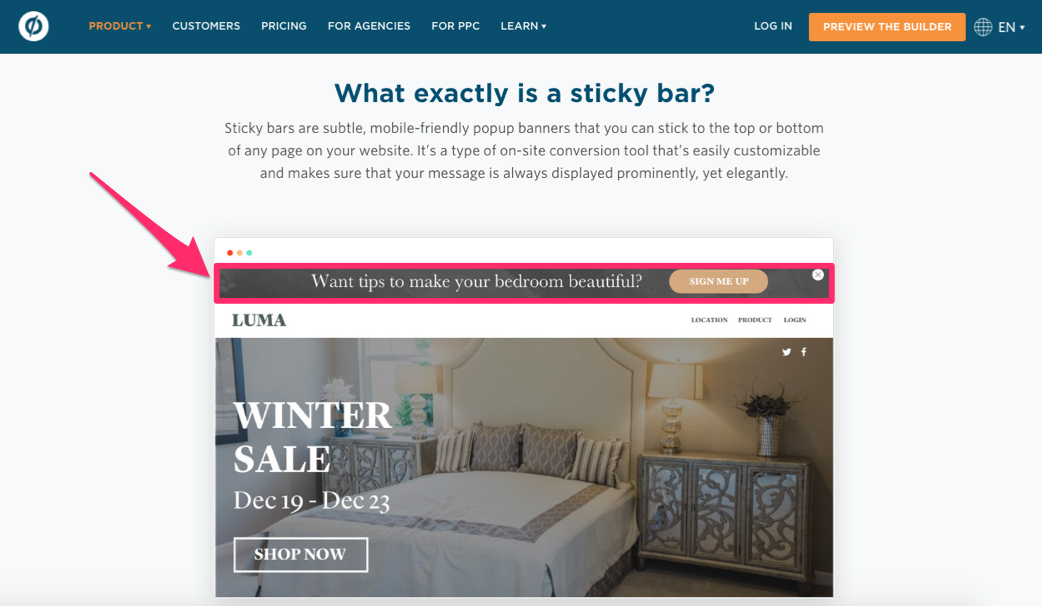
Sidebars are located on the side of your pages, just as the name implies. But sticky bars get placed at the top of the page.

As users scroll, the sticky bar remains in place.

You can use services such as Unbouce to build sticky bars for your website.

sticky bar

As website visitors scroll and navigate, they’ll always see the option to sign up for your emails.

Users won’t perceive it as annoying because the sticky bar isn’t intrusive and won’t disrupt their experience as they browse through your site.

Place your subscribe boxes at the bottom of your content

Again, we don’t want your opt-in requests to take over your website. Your website visitors need to be able to read through your content without being interrupted.

That’s why placing the subscribe boxes at the bottom of your pages is a viable strategy.

There are several benefits to this method.

First of all, it doesn’t impede the user browsing experience. But it also gives your website visitors a chance to consume your content.

If they’ve never been on your site before, why would they want to sign up to receive emails from you within the first few seconds of their visit?

But after they have a chance to navigate and scroll to the bottom of your page, they’ll be more familiar with you and your service or product. This is your chance to tell them you have an email list.

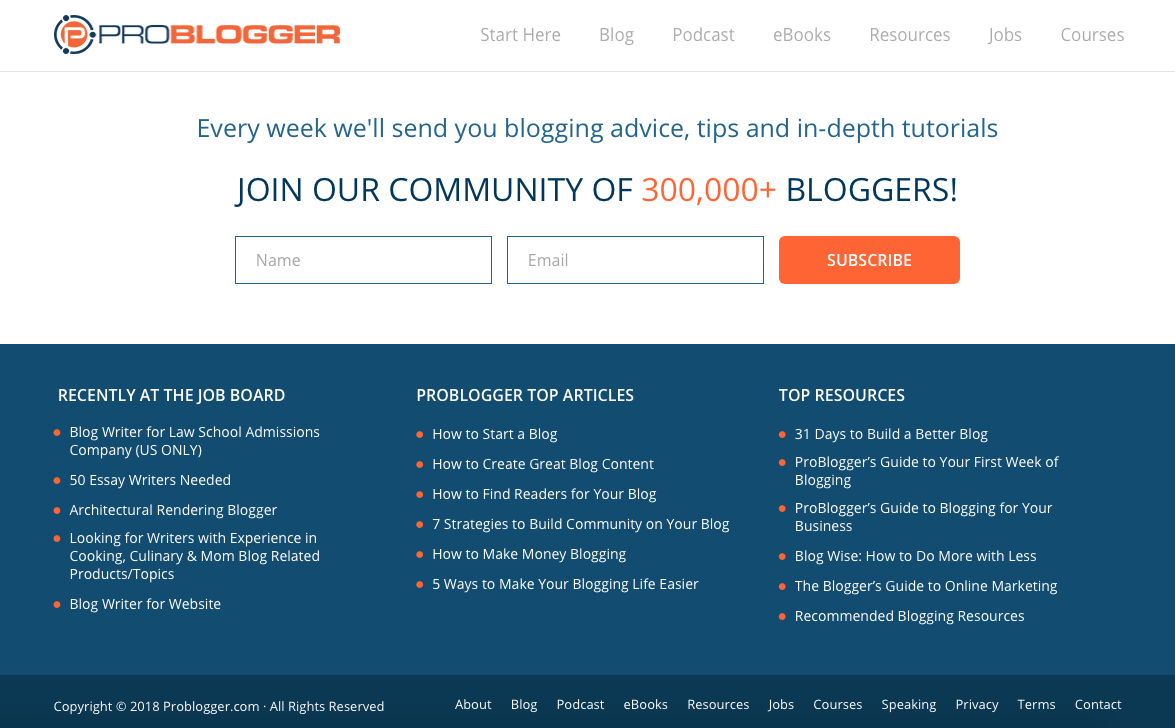
Check out how ProBlogger uses this tactic on its website:

problogger

As you can see, the subscribe boxes are at the very bottom of the page.

This is another example of how the information included tells prospective subscribers exactly what they’ll be receiving if they sign up for emails. It’s a weekly newsletter that provides advice, tips, and tutorials on blogging.

Consider moving the placement of your current opt-in boxes to the bottom of your pages.

Create an opt-in checkbox during the checkout process

Earlier I talked about how you can collect email addresses by giving customers the option to create an account before they make a purchase.

That said, you don’t want to force people to create an account just to buy something. If you have a long and complicated checkout process, it will hurt your conversion rates.

That’s why you need to understand and implement my shopping cart abandonment prevention tactics.

Even if a customer doesn’t create an account, they’ll still need to provide you with their email address to get a receipt, order confirmation, and shipping information.

Add a simple checkbox to this process that gives the consumer an option to sign up for your email list.

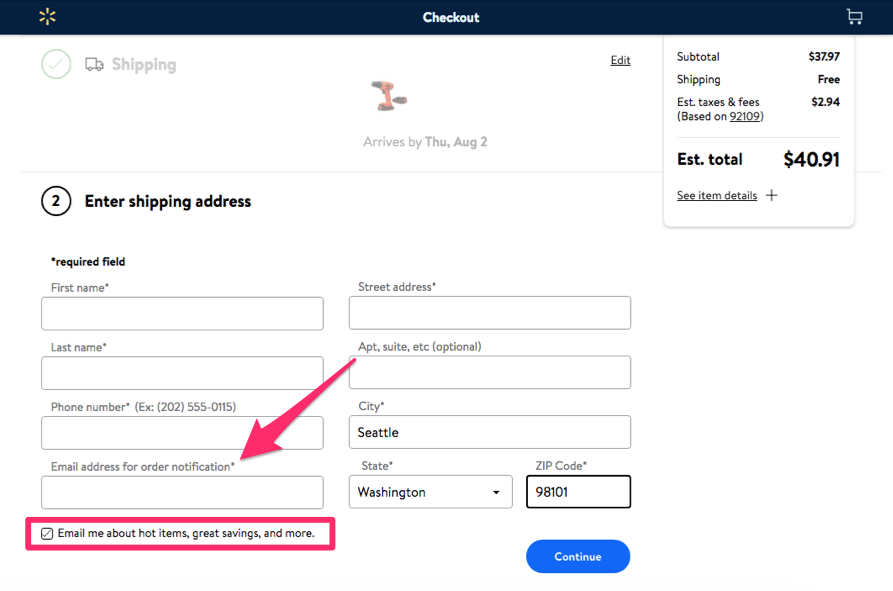
Here’s an example of how Walmart uses this strategy:

walmart

Walmart has a guest checkout option. If people don’t have an account, they can make a purchase without creating one.

As you can see, an email address is still a requirement to complete the purchase.

They added a simple checkbox below the email field so their customers can subscribe.

Similar to the example we saw earlier, if someone doesn’t want to opt in, all they need to do is uncheck the box.

Offer an incentive to subscribe

Sometimes, people need some motivation to do something.

Sure, your newsletter may be informative, but is that really intriguing enough to get customers to sign up for emails? Giving them an incentive to sign up can increase the chances that they’ll opt in.

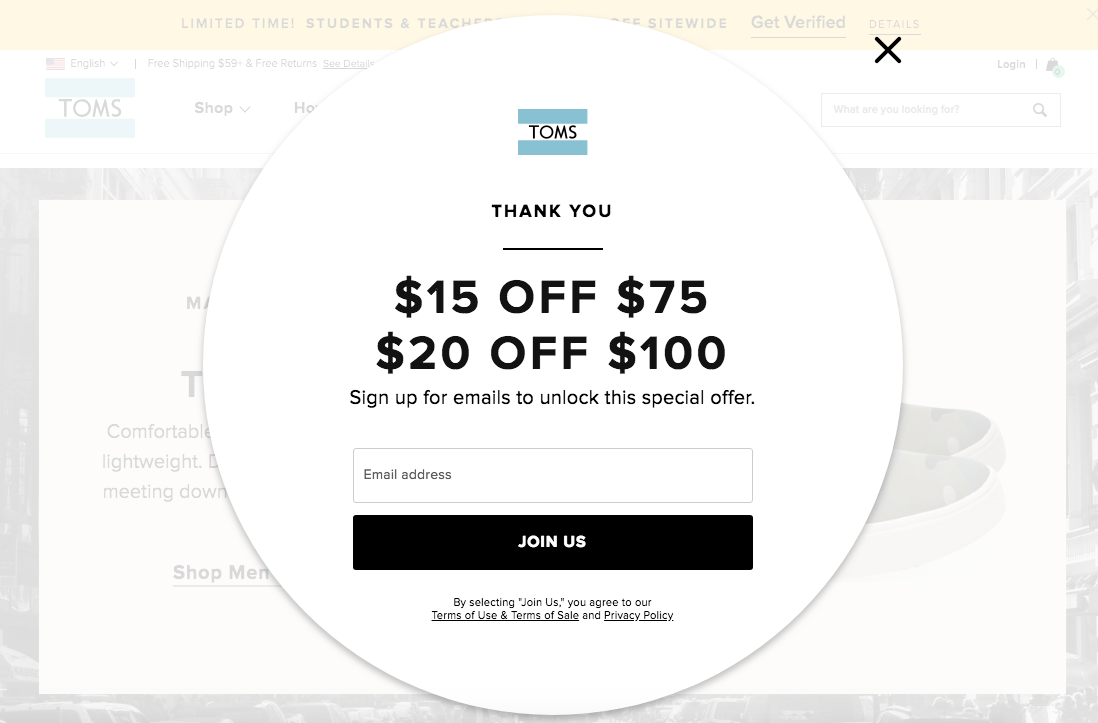
When in doubt, remember that monetary benefits and discounts are always a safe bet.

Consumers are sensitive to prices. Everyone wants to save money when possible. If you offer your website visitors a way to get a discount by providing their email address, they’ll probably go for it.

Look at how TOMS implements this strategy on its ecommerce website:

toms

Yes, I know it’s a pop-up.

However, it’s not too obtrusive, and it’s easy for visitors to close the popup if they don’t want to see it.

Plus, it won’t be perceived as annoying if they are getting something in return.

Add a slider box

Slider boxes are similar to pop-up windows, but they are less intrusive.

Rather than popping up and taking over the screen, they simply slide into view to draw the visitor’s attention, remaining in the corner of the screen.

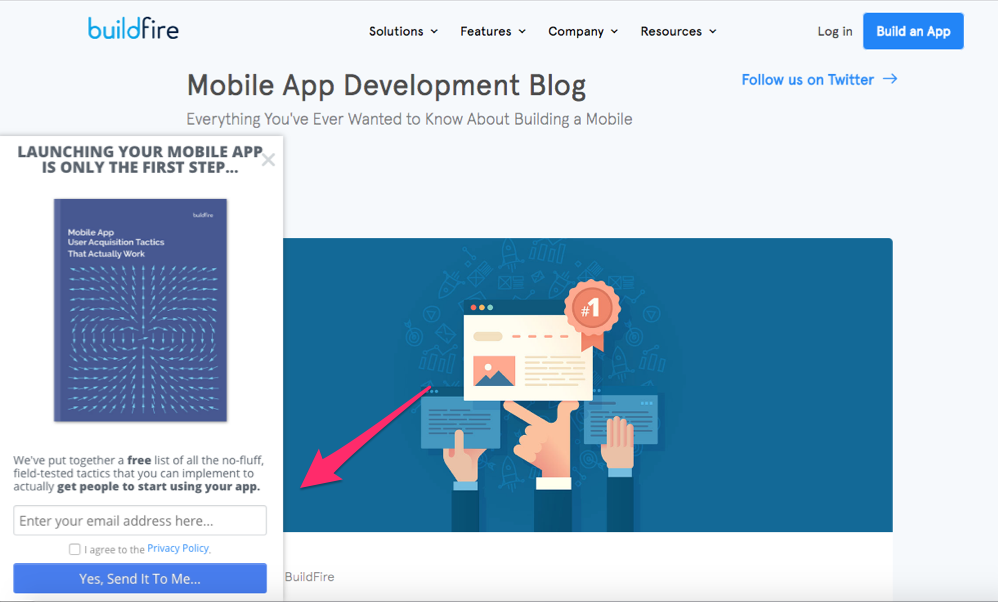
Here’s an example of how BuildFire uses sliders on its website:

buildfire 1

This slider is specifically designed to collect email addresses.

Notice how big the slider is on the page. It probably takes up maybe 20% of the screen, at most. Visitors can still scroll and navigate without a problem.

If the visitor doesn’t want to subscribe, they can easily close the slider box without getting annoyed or frustrated.

Thoughtfully place a subscribe box at the beginning of your homepage

If collecting email addresses is one of your primary marketing strategies right now, you may not want to bury the opt-in buttons at the bottom of your page or on a separate landing page.

You can still promote your email list at the beginning of your homepage.

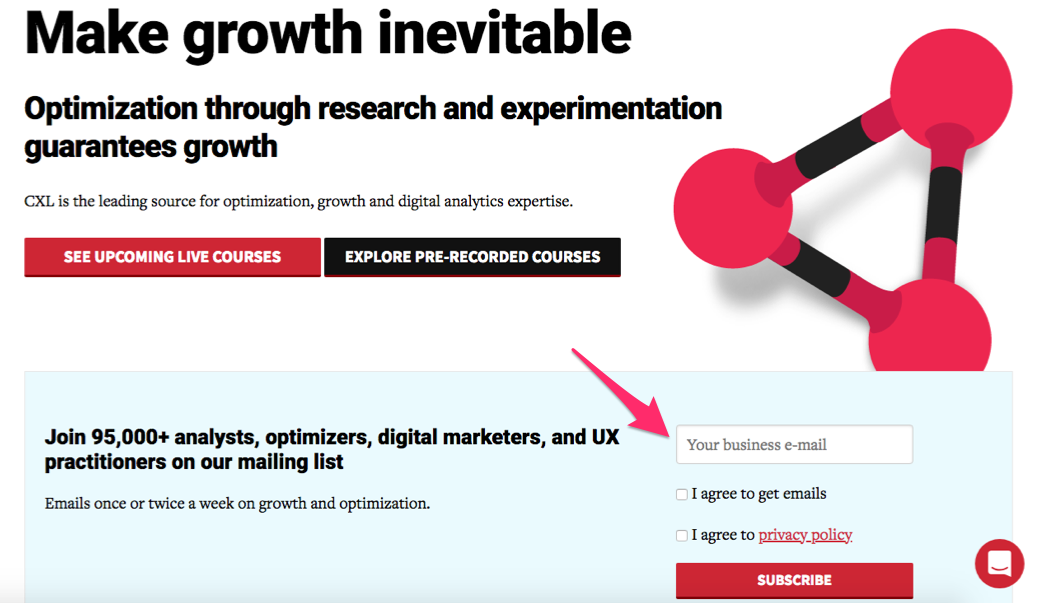
Just make sure it’s done tastefully. Let’s look at how ConversionXL uses this strategy on its website:

conversion xl

The company felt getting subscribers was important enough to put the invitation to subscribe at the beginning of its homepage. There’s nothing wrong with that.

But notice that it doesn’t take over the entire page.

The pages does both: displays other content and collects email addresses.

If you want to apply this strategy to your website, make sure you consider the layout to help you design a homepage that converts.

Conclusion

You need to prioritize your email marketing strategy and constantly try to add more subscribers to your list.

That said, you don’t want to annoy your website visitors.

Promote your email list with a sidebar or sticky bar. Create a separate landing page dedicated to adding subscribers.

Collect email addresses during the checkout process. You can do this whether customers are creating an account or going through a guest checkout procedure.

If you use pop-ups, trigger them when a visitor shows an exit intent. Or you can use a slider that takes up less space on the screen.

Placing the subscribe boxes at the bottom of your pages gives your website visitors a chance to consume your content uninterrupted.

There’s nothing wrong with asking for email addresses at the beginning of your homepage. Just make sure it’s done tastefully.

And don’t forget to offer your site visitors an incentive to subscribe.

If you follow the tips I’ve outlined in this guide, you’ll grow your email list while keeping your website visitors happy.

How are you getting website visitors to subscribe to your email list without interfering with their browsing experience?


from Quick Sprout https://ift.tt/2KPjti9
via IFTTT