Monday, September 10, 2018

How to Generate Leads with PPC Campaigns for Your B2B Company

B2B brands need to use a marketing strategy different from that of B2C brands.

Some of you may operate as a B2B and B2C company. In this case, you may have already implemented some of the most effective ways to generate leads for your business on the B2C side.

However, not all of these strategies will work if you’re targeting other businesses.

Whether your business is run as a B2B operation exclusively or as a blend of B2B and B2C, you can use PPC campaigns to scale lead generation.

If you don’t know this tactic, PPC stands for “pay-per-click.”

This term is also referred to as CPC, or cost per click.

The concept of PPC is very simple. Advertisers pay a publisher or search engine when their advertisements are clicked.

Publishers typically charge a fixed amount per click for ads placed on their websites.

With search engines, brands bid on relevant keywords and phrases so their ads appear when prospective customers search for those keywords.

If you’re not currently using PPC campaigns to generate new leads for your B2B brand, I highly recommend trying it out. There is a good chance your competitors are using this tactic already.

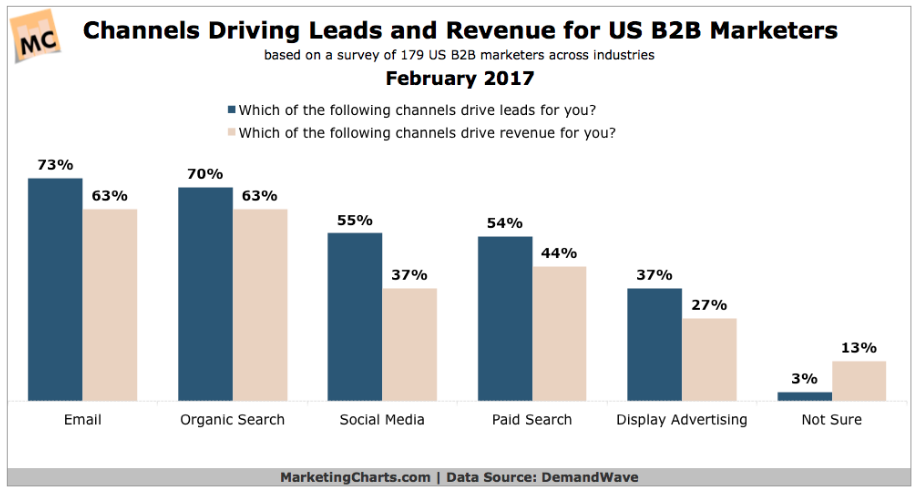
In fact, 54% of B2B companies say paid search campaigns generate leads for their businesses:
lead source

This compares to just 37% of B2B companies that are using display advertising.

But PPC campaigns can add up quickly. It’s important to make sure you’re getting the best results for your money.

Implementing an efficient PPC strategy can help you generate new leads without spending a fortune.

If you have never done this before, I’ll explain what you need to do to be successful.

Even if you’re currently running PPC campaigns as part of your B2B marketing strategy, there is always room for improvement. Let this guide steer you in the right direction.

Set up UTM parameters

Your business is generating new leads. That’s great.

But where are those leads coming from?

You can’t measure the success of your PPC campaigns and distinguish them from your other lead generation strategies if you’re not tracking the sources.

That’s why you need to learn how to track your leads with UTM parameters.

Just because you see a spike in traffic, you can’t assume it’s coming from your PPC campaigns.

It’s possible you’re wasting money on keywords that aren’t driving traffic to your website and generating leads. In this case, you’ll want to treat those as negative keywords, but we’ll discuss that concept in greater detail later.

According to research, 63% of marketers say that generating traffic and leads is their biggest challenge.

Setting up UTM parameters will help you track your results.

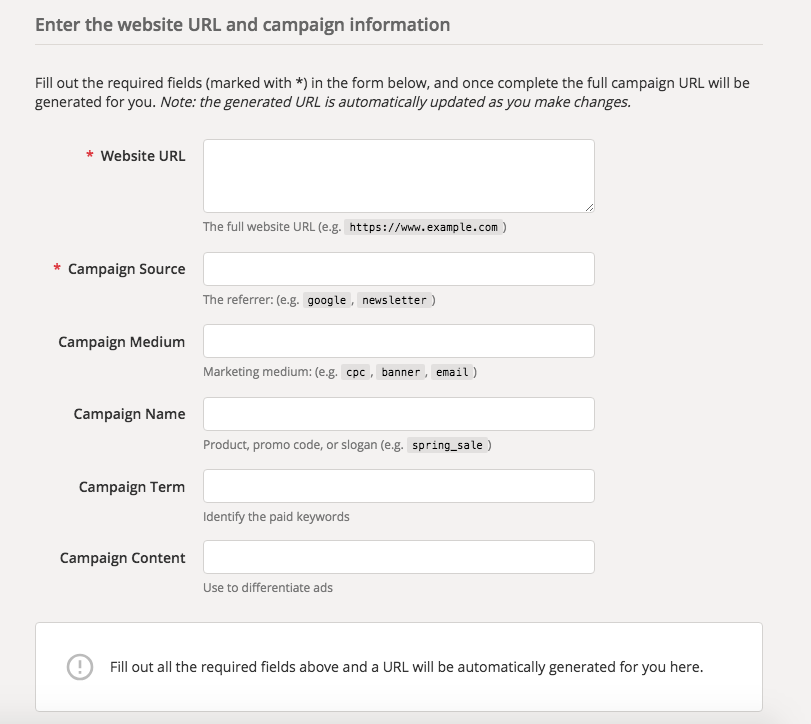
Here’s a look at what the campaign URL builder looks like on Google Analytics:
utm parameters

The idea here is to create a custom URL for all your campaigns.

If you’re running PPC ads on multiple websites, you’ll be able to see which ones are generating the most traffic.

Furthermore, if you’re paying for keywords, you can enter them into a specific form field for each campaign.

Once you fill out the form, a customized URL will be generated for you.

The great part about setting up your UTM parameters with Google Analytics is that the platform makes it easy for you to track and measure the results.

You need to use UTM parameters to help you stay organized and efficient.

Make the necessary adjustments based on the results. Stop paying publishers that aren’t generating leads, and change keywords that aren’t working for you.

Plus, this strategy can be used for more than just your PPC campaigns. You can generate unique links for your social media promotions or email newsletters as well, even if you’re not paying for them.

Segment your PPC campaigns

Your competitors may be running PPC campaigns with similar keywords, but you can gain an advantage over them by segmenting your campaigns.

This strategy is especially important for B2B retailers.

That’s because specific keywords might be relevant only during certain times of the year, and you would want to change the bidding values accordingly.

For example, let’s say you manufacture clothing and sell your products to other businesses that add their logos or other design elements to make the clothing unique to their brands.

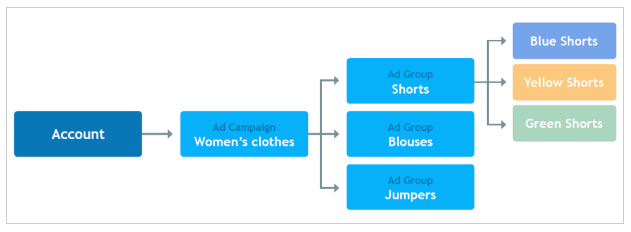
One of the search terms you might be paying for could be “women’s clothes.”
segment

Creating just one ad group with all your women’s clothing ads won’t yield the best performance.

Instead, you can segment your products as in the example above, using shorts, blouses, and jumpers as subcampaigns.

But you can take this strategy one step further. You can place a bid for each specific product, separating them by color.

Let’s say you know blue shorts sell more than yellow jumpers. You can adjust your bids accordingly based on which colors and items are your top sellers.

This relates back to what I said earlier about making sure that your PPC campaigns are profitable and yield a high ROI.

Don’t waste money on keywords that aren’t driving leads.

Schedule your ads based on performance

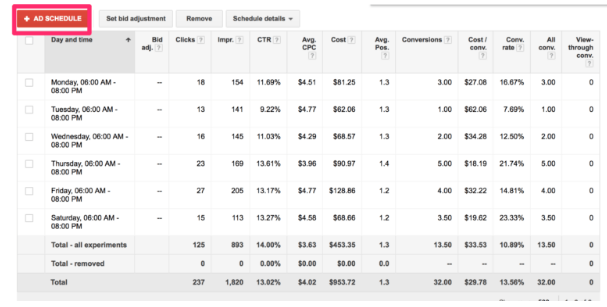
B2B companies need to take advantage of ad scheduling for their PPC campaigns. AdWords has a feature that allows you to manage your keyword schedules.
schedule

Even if you’re running PPC ads on publisher sites, you should still be able to control what times these ads are run.

Make sure that’s in your agreement with the publishers.

Why is this so important? Allow me to explain.

A standard B2C ecommerce site may run ads 24/7. That’s because consumers can be browsing for products at any time, any day of the week, from anywhere in the world.

That’s not the same for B2B companies.

It’s highly unlikely that a prospective lead will be browsing for search terms related to your products or services on a Saturday night.

You want to make sure your ads are run during your business hours and the business hours of your target market.

Plus, you want to make sure that someone in your office is available to pick up the phone and answer any questions if a new lead calls. Running ads 24/7 is an inefficient use of your funds.

Make sure your keywords are relevant

Now you understand the concept behind bidding on keywords and segmenting your campaigns.

Next, you need to make sure the keywords for each campaign are relevant to your business and your marketing goals.

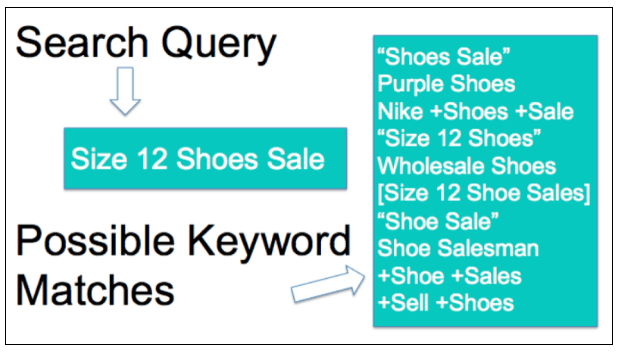
For example, let’s say a prospective customer types something like “size 12 shoes sale” into a search engine.
relevant keywords

Your company sells shoes at wholesale rates, so you’ve bid on a variety of keywords that could match this search query.

However, some of the keywords aren’t relevant to the prospective consumer’s intent of the search.

If you’re paying for keywords that appear when people search for something not related to what you’re offering, you are wasting money.

Google has a system that explains how keywords are selected for ad campaigns.

First, they prioritize keywords that have identical matches to the search query, even if you have other keywords in the ad group related to the search.

Google also gives preference to ads with exact matches. If you have keywords matching the search terms, your exact match result will be shown ahead of broad matches.

Next, the keywords with the highest ad ranking will be triggered.

This means that if you have multiple keywords in the same ad group, the ones with a higher ranking will be displayed.

Here is the point I’m trying to make. If you have many keywords and ad groups, it’s possible that irrelevant ones will be triggered ahead of ones that generate B2B leads based on Google’s algorithm.

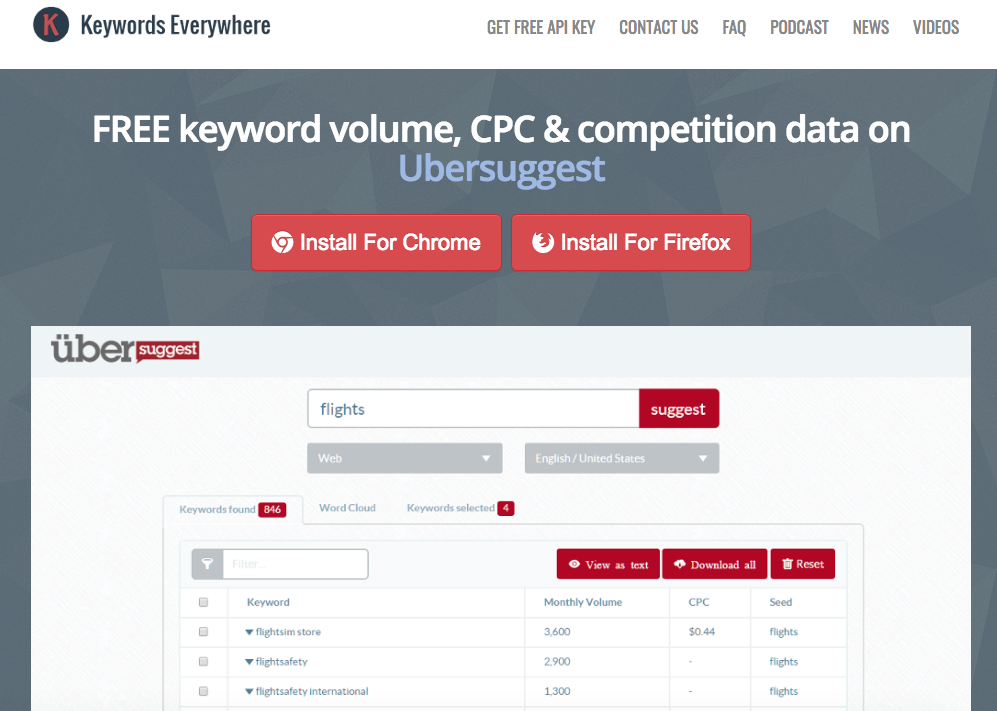
It’s extremely important you bid on only the most relevant keywords. You can use a tool such as Ubersuggest to help you identify the best keywords for your B2B strategy.
ubersuggest

This will increase your chances of getting identical and exact matches, and relevant keywords with a higher ranking will be prioritized for each PPC campaign.

Build custom landing pages

PPC advertising has downsides as well. I’m not saying this to discourage you, but I want you to be aware of it so that you can plan accordingly.

Once someone clicks on an ad, you’ve paid for it.

It doesn’t matter whether they convert or not. This can drive your customer acquisition costs through the roof if you’re not getting conversions.

You need to implement cost-effective customer acquisition strategies.

To maximize the conversion rates of your PPC campaigns and get a high ROI, you need to build custom landing pages.

You can build specific landing pages based on where the lead came from, highlighting the importance of setting up custom UTM parameters, discussed above.

These landing pages need to be simple. Landing pages with simple designs have higher conversion rates.

You should have big and bold CTAs that speak to your B2B audience.

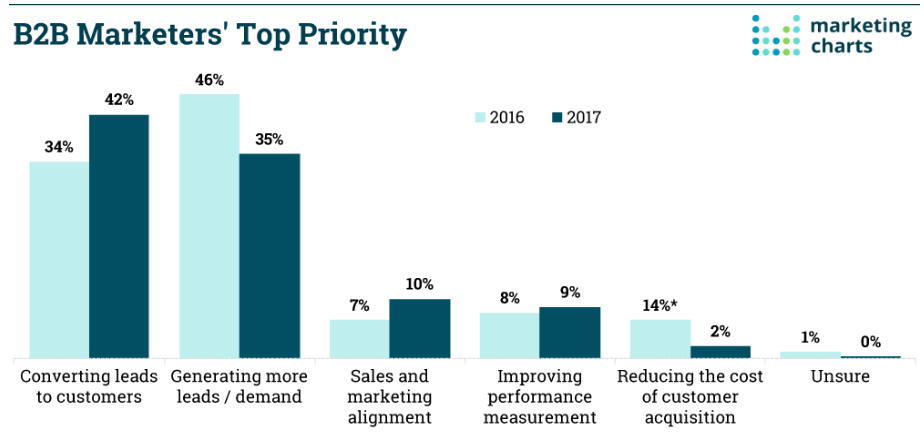
Just look at the top priorities for B2B marketers over the last two years:
b2b priority

The majority of these businesses want to generate more leads and convert leads into customers.

One of the best ways to make sure your landing pages are designed for optimal results is to regularly run A/B tests on different elements.

Review your search terms report

Your Google search terms report will give you valuable information about your PPC campaigns.

It’s important you review this report on a regular basis to see whether your keywords are generating leads.

The report will show you new terms with a high potential of benefiting your campaigns based on your existing keywords.

The report also explains how your search term matches are determined.

By using all the data in the report, you’ll be able to effectively manage your keywords.

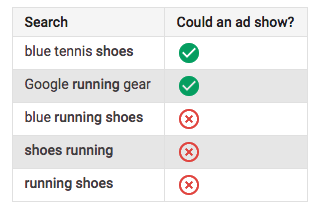
As I explained earlier, you want to make sure you’re bidding only on relevant keywords. You can add negative keywords to your campaign to exclude specific search terms from your results.
negative

As you can see in this example, the search terms with a red “X” have been flagged as negative keywords.

This strategy is especially important for B2B brands.

You want to eliminate keywords and search terms that regular consumers are browsing for. It’s a waste of your money if your ads are coming up in search results for those people.

You’re trying to target only other businesses, and this tool will help you achieve that.

Pre-qualify leads with a detailed ad copy

In addition to adding negative search terms to your campaign, you can also include more specific terms that only other businesses would be searching for.

Don’t be too broad, or you’ll end up getting irrelevant clicks and traffic.

You can apply the same strategy when running ads on publishers’ websites as well.

For example, let’s say your B2B business offers a subscription service. A regular consumer doesn’t have the same budget as a big business.

You can pre-qualify your leads with an ad copy that says something like “plans starting at $5,000 per month.”

This is another scenario where A/B testing your ad copy would be an effective way to see what generates the most qualified leads.

Take a look at a traditional B2B lead funnel:
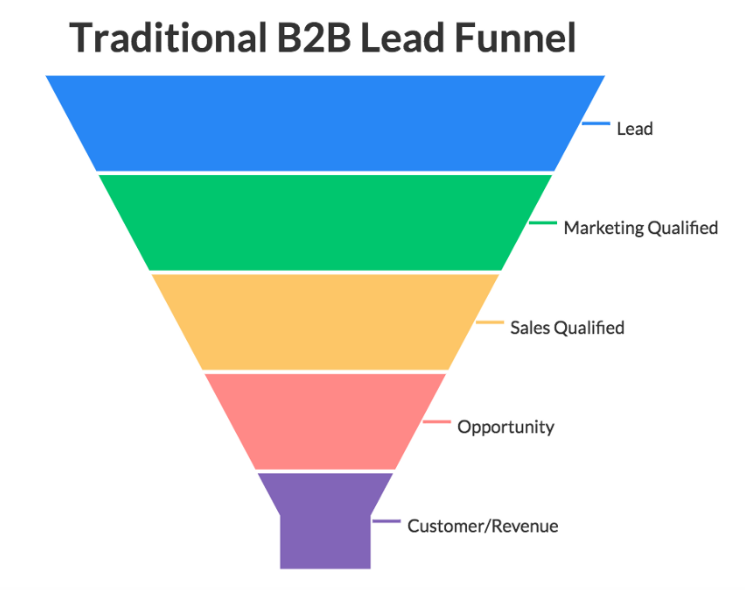
b2b funnel

As you can see, making sure the lead is both qualified for marketing and qualified for sales is a major component of the B2B buying process.

Pre-qualifying your leads ahead of time increases the chances that a higher percentage of those leads will make it to the opportunity and revenue stages of that conversion funnel.

Conclusion

B2B businesses won’t generate leads the same way as B2C brands.

When it comes to PPC campaigns, there are certain things that you need to do to set yourself up for success.

First, you need to set up UTM parameters. This will help you track the source of your leads and measure the success of each ad.

Your PPC campaigns should be segmented. Use only relevant keywords to maximize your results.

Make sure you schedule them accordingly. Unlike with a B2C marketing strategy, you want your ads to run during regular business hours.

Create custom landing pages based on the source of your new leads. This will help you achieve higher conversion rates.

Take advantage of all the tools at your disposal, such as your search terms report. Add negative search terms to your campaigns as well.

By writing a detailed ad copy, you can pre-qualify your leads and increase your chances of getting more conversions.

If you follow the tips I’ve outlined in this guide, your B2B company will be able to generate leads with PPC campaigns.

How is your B2B brand using PPC campaigns to get new leads?


from Quick Sprout https://ift.tt/2MiBUwy
via IFTTT

Friday, September 7, 2018

How to Improve Your Click Through Rates with Emojis

Whether you love them or hate them, emojis have become part of our lives and our digital culture.

The first emoji was created nearly 20 years ago in Japan. But today, the use of these tiny, animated faces and characters has drastically evolved.

They have become so popular that July 17th has been officially named World Emoji Day.

It’s a fitting date. Apple users may recognize July 17th from the calendar emoji.

Origins and history aside, the fact remains that emojis have become a dominating mobile trend. As marketers, we need to understand this trend and apply it in our businesses.

People have full conversations using emojis.

Some emojis are even used as a type of slang. Depending on the country you’re in, some emojis are used to imply things other than what the creators intended.

For example, some innocent pieces of food are commonly used to represent parts of the human anatomy.

There is even a middle finger emoji.

Even if you’re not using emojis for business, I’m willing to bet that you and your friends send them to each other when you’re texting. Or maybe you use one in the occasional social media caption.

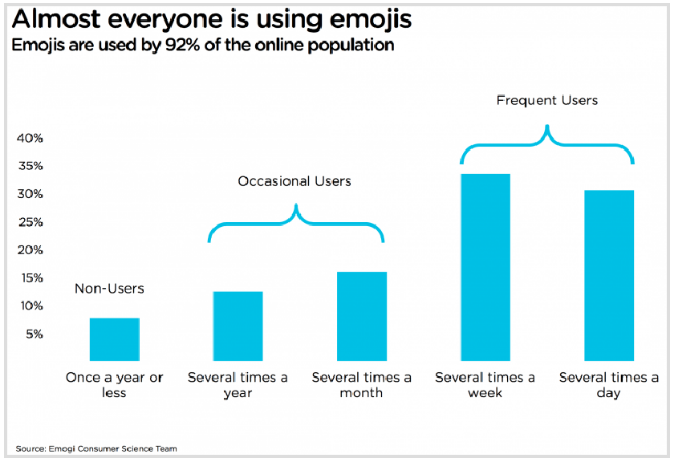
The odds are in my favor. That’s because 92% of the online population uses emojis.

92

Furthermore, it’s worth noting that women use emojis more than men.

In fact, 70% of women are frequent users, while just 50% of men fall into that category.

With all of this in mind, now it’s time for you to start using emojis to improve your business and not just your texting.

I’ll explain how you can implement an emoji strategy that helps you improve your click-through rates and ultimately drive conversions. Here’s what you need to know.

Make your email subject lines stand out

You need to learn how to increase your open rates with different subject lines. If people don’t open your messages, your campaigns won’t be successful.

One of the best ways to use emojis to increase clicks is by adding them to your email subject lines.

I know how much time and effort you put into your content. Don’t slack off when it comes to crafting a subject line.

Research shows that 56% of brands saw an increase in their open rates when they added an emoji to their subject lines.

They experienced higher click-through rates as well. Recipients were more engaged with the content.

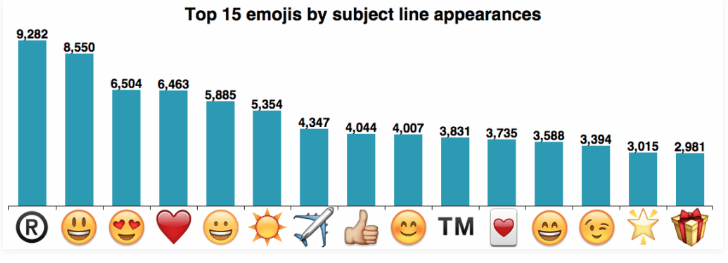
These are the most frequently used emojis for email subject lines:

subject line 1

That doesn’t mean they were the most successful.

You’ll have to see which ones work best for you depending on your brand, industry, and purpose of the message.

For example, using the gift emoji or airplane emoji in a subject line would be irrelevant if you’re a restaurant informing your subscribers of your new dinner menu.

Adding emojis to your subject line is a winning strategy because it helps you stand out from the crowd.

Your subscribers get their inboxes flooded with promotional content on a daily basis. Anything you can do to be different will help your cause.

Look at how Grubhub used an emoji in this subject line:

grubhub

It stands out from the others because it’s the only one with an emoji.

Plus, it’s relevant to the subject line. They used the smiling face with sunglasses for a subject line that’s related to the sun being out.

Add an emoji to your ad headlines

If you’re using sponsored ads to market your business, you should definitely consider adding an emoji to your headlines.

I know it may sound simple, but you’d be surprised at the results you’ll see.

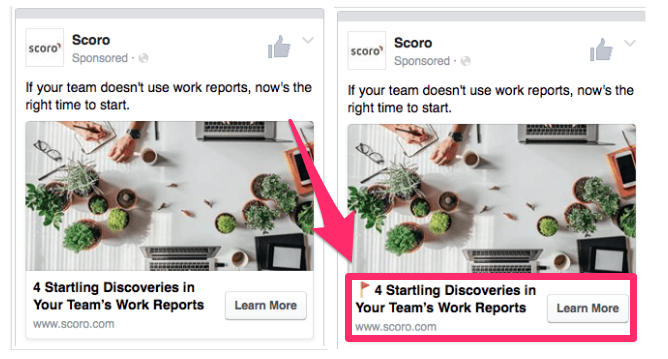
Take a look at this example of a promoted Facebook advertisement from Scoro:

scoro

At first glance, the two ads are seemingly identical. But the ad on the right has a simple red flag emoji added to the headline.

Nothing major, right?

Well, Scoro A/B tested these two headlines, and the results were astonishing. The headline with the emoji had 241% more clicks than the one without an emoji.

It’s worth finding out whether your company can have the same success.

Start running A/B tests on your upcoming ad headlines.

Use them in your push notifications

If you have a mobile app for your business, you have an advantage over all of your competitors who don’t.

Having the app is a great start, but you need to make sure you’re getting the most out of the tools at your disposal. You need to learn how to target your mobile customers with push notifications.

These messages get sent directly to the devices of your app users. It’s a great way to contact them with various promotions.

But just like with your email subject lines, the campaigns are useless if nobody clicks on them.

Studies suggest that adding emojis to push notifications can increase open rates by 85%.

The open rates are 135% higher on Android devices than on iOS devices.

That’s an enormous difference.

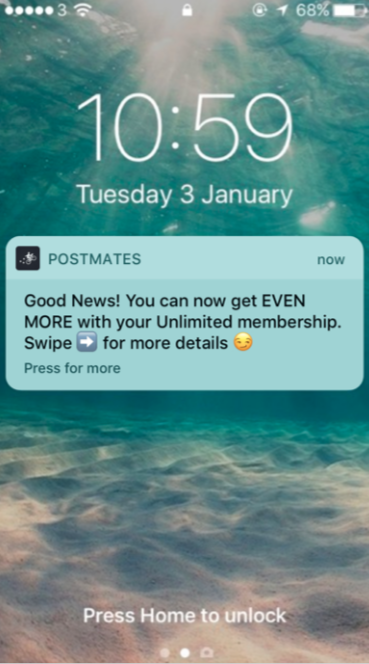
Here’s an example of how Postmates used this strategy with one of its push notifications:

postmates

It’s a simple and effective way to promote its membership.

Since push notifications have a limited character count, it’s important to grab the attention of your app users with just a sentence or two at most.

The arrow emoji reflects the swiping motion. And the side smirking face implies there is some type of secret or information worth reading.

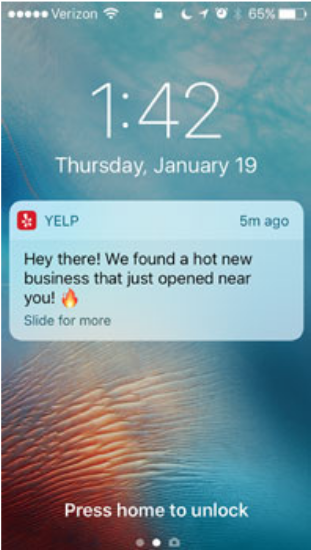
Here’s another example, from Yelp:

yelp 1

Again, it’s very simple. It’s using a flame emoji to enhance the phrase “hot new business.”

It’s not rocket science.

You don’t need to create your entire push notification strategy around emojis.

Just write what you were planning to say in the first place. Then add an emoji or two that fit the description, and you’re all set.

Program your chatbots to use emojis

How are you communicating with your customers?

You can provide better customer service by implementing live chat. Now your customers can reach you when it’s convenient for them, without having to make a phone call or send an email.

But it’s not always easy to have a customer service representative available to respond to these messages 24 hours a day, 365 days a year.

That’s where chatbots come into play. You can set up a chatbox to automatically appear in the corner when someone lands on your website.

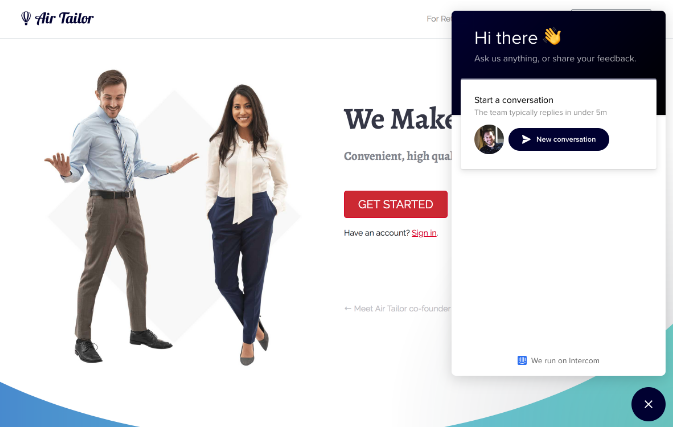
Take a look at how Air Tailor uses this strategy on its homepage:

air tailor

For a business that promotes affordable clothing alterations, effective customer communication is definitely important.

Everyone has unique requests and needs when it comes to getting their clothes tailored. So getting welcomed by a chatbot is a great feature.

According to a recent study from Wise Merchant, adding emojis to the chatbot feature has helped Air Tailor grow by 100% each year.

This strategy worked for them, and it can work for your business as well.

An emoji from a chatbot adds a human element to the conversation, even though the communication is with a robot.

Include emojis in your meta titles

While you may not think of it, people are using emojis in search queries.

Adding an emoji to your meta titles can help improve your SEO strategy. The increase in clicks will drive more traffic to your website.

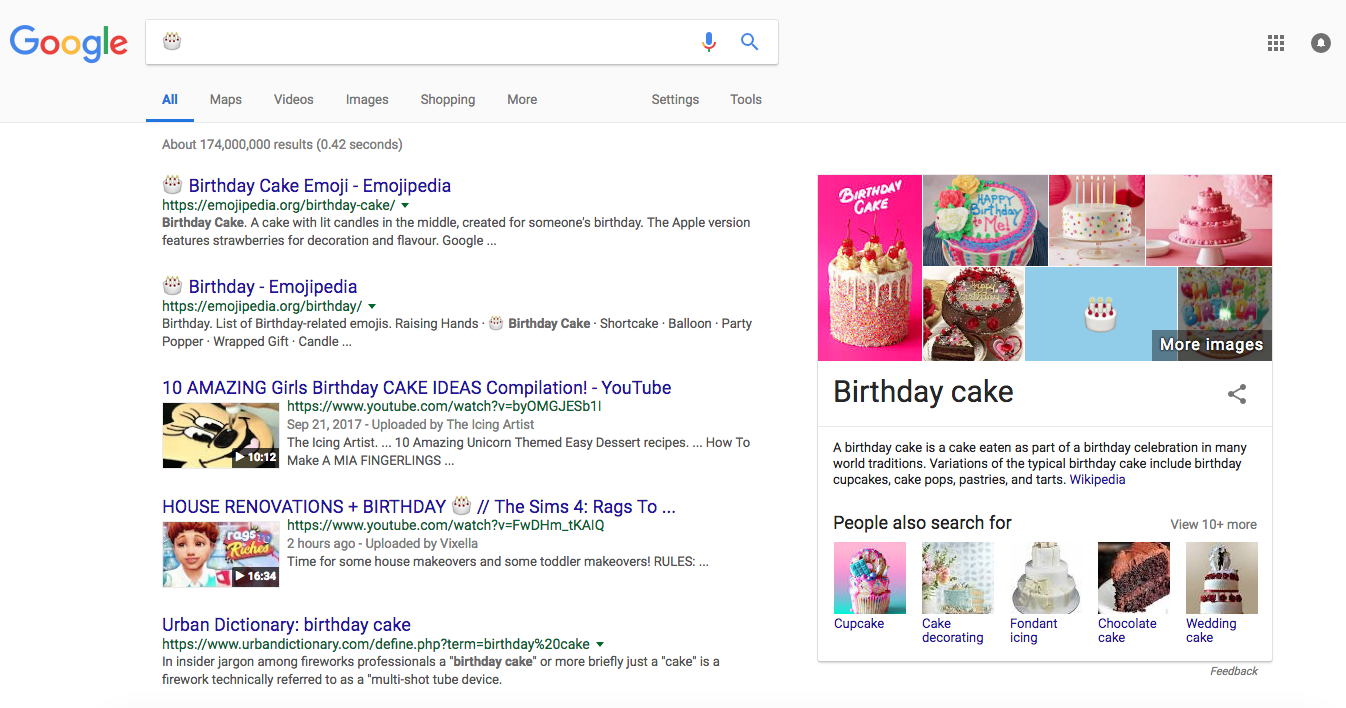
Here’s an example of what happens when you add the birthday cake emoji to your Google search:

cake

Look at the top two results on the page. They both have a birthday cake emoji in the meta title.

The top two ranked pages of search results control roughly 50% of all clicks.

Adding an emoji to your meta titles and even meta descriptions can increase your chances of getting ranked higher.

Add emojis within the text of your marketing emails

Earlier I discussed how you can use emojis in email subject lines to increase your open rates. But that’s only half of the battle.

Now you need the email recipients to consume the content, click, and convert.

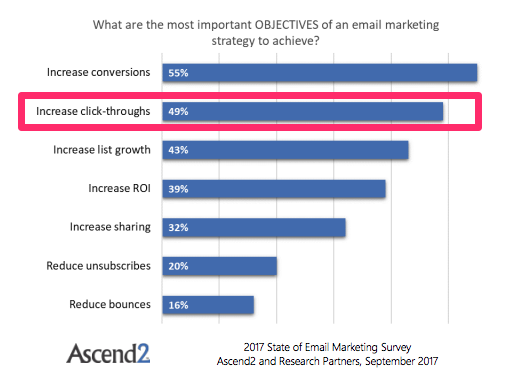
Increasing click-through rates is a top email marketing objective according to a survey of business owners and marketers.

CTR

That’s because there is a direct correlation between clicks and conversions.

Getting more clicks can ultimately help your business make more money. Depending on the goal of your campaigns, these clicks can directly drive sales.

A recent study reported that some businesses enjoyed a 93% increase in click-through rates after adding emojis to their email content.

Use emojis in the subject line to generate opens. Then continue using them within the body of the message to increase click-throughs.

Enhance your Instagram captions

You can’t have an effective emoji strategy without changing the way you do things on social media.

Adding an emoji to your Instagram captions is a great way to increase engagement with your followers.

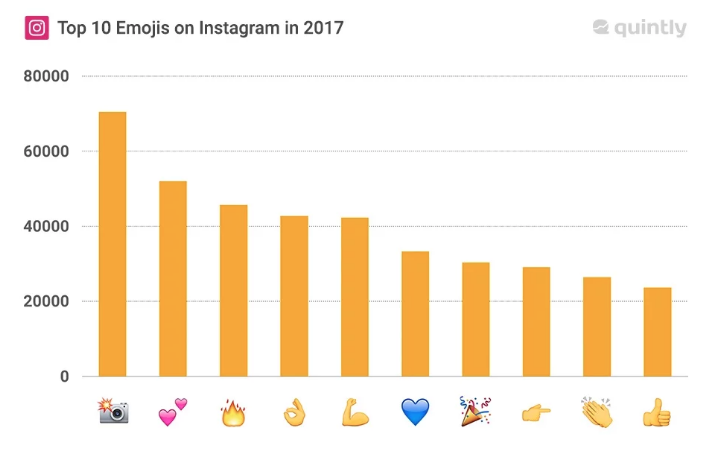
Here’s a look at the top ten most used emojis on Instagram last year:

instagram captions

Furthermore, posts with emojis increase interactions by 47.7%, which means users are more engaged with the posts.

It’s no surprise that the camera emoji was at the top of the list. I see this one used all the time.

People commonly use the camera emoji to give credit to another user who took the photo.

If your brand is encouraging user-generated content and sharing photos submitted by your followers, you can use this emoji instead of typing “photo credit.”

Gain an advantage over your competition

If you start using emojis in your marketing strategy, it will help you stand out among your competitors.

While emojis are popular for personal use, businesses are still adapting to this trend. It’s not a strategy that’s being implemented by everyone just yet.

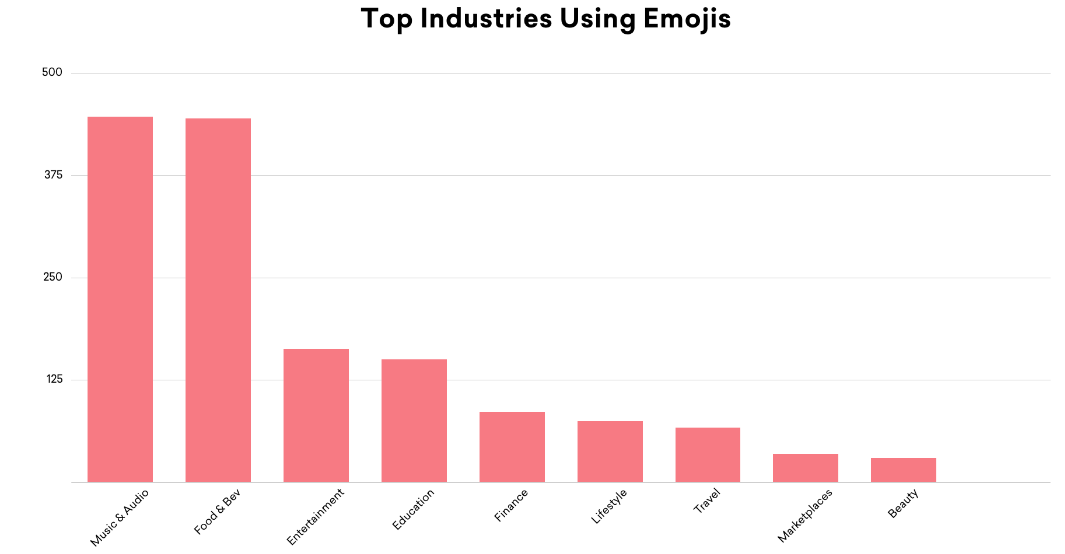
These are the top industries using emojis:

industries

As I said earlier, emojis bring a human element to your marketing strategy.

Consumers don’t feel comfortable interacting with giant corporations. If you take yourself too seriously, you won’t appeal to your customers.

You can use emojis while still remaining professional.

When consumers see emojis in your marketing campaigns, they will feel as though they’re getting a message from one of their friends.

Jump on the emoji bandwagon before your competitors have a chance to catch up with these trends.

Get creative on Twitter

While Twitter may not be your primary marketing channel, you should still have an active account and post content on a regular basis.

Emojis are a great way to drive engagement on your posts and generate clicks. This is especially true if you’re sharing a video.

Pairing an emoji in a tweet containing a video generates six times higher interest and emotional connection among your followers.

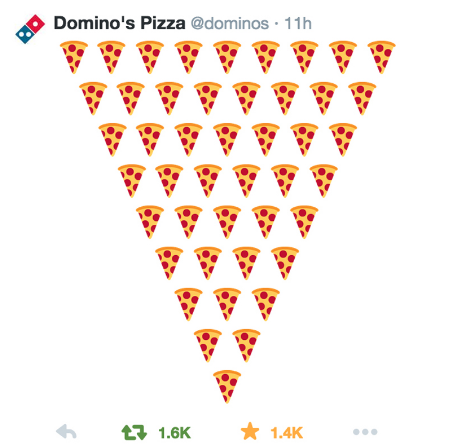
Even if you’re not sharing a video, you can still get creative with emojis to improve your tweets. Look at this example from Domino’s Pizza:

dominos 1

Sure, it may be a bit corny, but it’s definitely creative.

Just look at the engagement on this post. It has more retweets than favorites, which means it’s being exposed to a wide audience.

As a result, the page will be seen by more users, even if they don’t follow the brand.

This increase in exposure will translate to more traffic to the company’s profile and website and ultimately yield more clicks.

Conclusion

It doesn’t look like the emoji trend is going away in the foreseeable future. You need to recognize this and start promoting your content accordingly.

Add emojis to your email subject lines to increase your open rates. Then continue using them within the body of your emails to generate click-throughs.

A/B test emojis in your ad headlines. Use emojis to enhance your push notifications.

Add a human element to your live chat feature by programming your chatbots to use emojis.

Use emojis in your meta titles to improve your SEO ranking. This will help give you an advantage over your competition.

Emojis will increase your engagement metrics on Instagram and Twitter as well.

You don’t need to apply all of these strategies right away. Pick a few and see how they work out for your brand.

Which emojis are you using to increase click-through rates for your marketing campaigns?


from Quick Sprout https://ift.tt/2NrGoFL
via IFTTT
Wednesday, September 5, 2018

How to Generate More Profits by Focusing on Your Pricing Strategy

You can tell a lot about a business by how it sets its prices.

Psychologically, consumers are programmed to behave a certain way when they see the price of a product or service. Your pricing strategy can control the entire perception of your brand.

It’s similar to the way different color schemes can impact sales on your website.

Whether you realize it or not, I’m sure you think the same way when you’re shopping.

If you see the same item listed for $5 at one store and $50 at another, which option would you say has higher quality? The more expensive one.

However, even though one store is selling products at a higher price point, it doesn’t mean their quality is superior to that of the products from the store with bargain prices.

It’s all about perception.

Don’t blindly price your items. You need to have a reason and a strategy behind your pricing decisions.

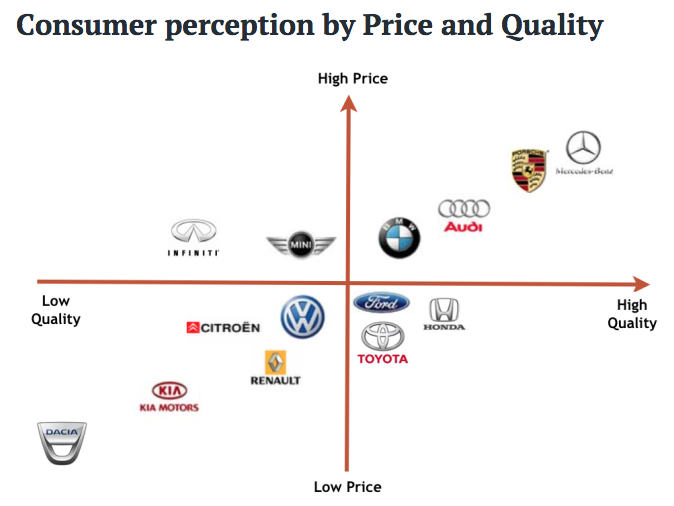
Just look at how popular car brands are perceived by consumers based on their prices:

cars

Ironically, the majority of your business efforts will cost you money. But your prices will ultimately be the determining factor in whether or not you’ll make a sale.

I see this problem all the time in my consulting work.

Many business owners don’t have any rhyme or reason behind their pricing strategies. As a result, their sales numbers aren’t where they should be.

I’ll explain how you can generate higher profits by putting more focus on your pricing strategy.

Depending on your brand, some of these strategies will work for you better than others. Review this guide, and decide which ones you want to use in your business.

Avoid similar prices

When brands set their prices, they might be tempted to price certain items the same.

On the surface, this makes sense. If you’re selling the same shirt with different patterns, they should have the same price, right?

Believe it or not, research suggests that similarly priced items hurt conversions.

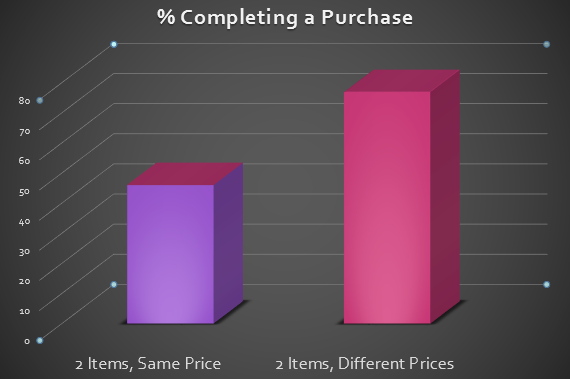
In an experiment, researchers studied behavior when customers were presented with two different packs of gum, both priced at $0.63.

In this case, 46% of people bought a pack of gum. That’s not a terrible conversion rate, but it could be better.

When the prices were changed, with one pack of gum priced at $0.62 and the other at $0.64, the conversions increased.

As a result, 77% of consumers purchased a pack of gum.

Setting different prices increases the chances of your customers making a purchase.

percent completing purchase

As you can see from the experiment, the differences in the prices don’t need to be drastic.

Even a slight adjustment can boost your conversions.

Take a look at the prices in your stores and on your website. If you notice that the majority of similar items have the same prices, make an adjustment and see if that helps you drive more sales.

Understand the psychology of anchoring

Some of you may have heard of anchoring, but you may not be sure how to use it.

Before you can implement an anchor pricing strategy, you need to understand how the mind works.

Focalism is a psychological term, more commonly referred to as anchoring or anchor pricing in the marketing world.

Anchoring impacts the way humans make decisions. We depend heavily on one piece of information, which is the metaphorical anchor. Once the anchor is set, our minds are trained to use that information when making a decision. That information biases our decision-making.

For example, think about what goes through your mind when you’re buying a car.

If it’s a used car, the first questions you might ask are:

How many miles does it have?

or

What year is it?

That’s the bias you use to determine the value even though it would be more reasonable to ask whether the engine and transmission have been properly maintained.

Now let’s get back to your pricing strategy.

How do you sell a watch for $1,500? Put it next to a watch that costs $8,000.

The consumer’s mind will use the more expensive watch to create an anchor bias, which makes the $1,500 watch seem like a great deal.

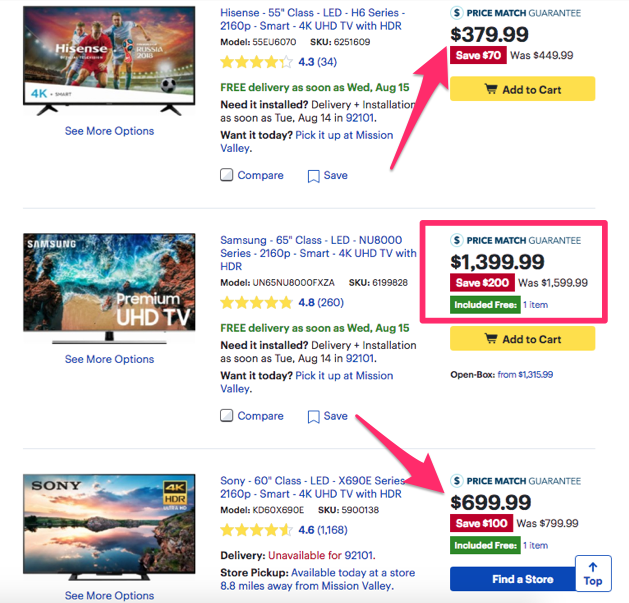
Take a look at this example from Best Buy:

best buy

These three TVs are very similar. Just look at the common features they have:

  • LED
  • 4K
  • 2160p
  • HDR
  • Smart TV

The only major difference is the size and brand. Plus, the sizes aren’t even that drastically different.

Seeing a $1,400 TV next to similar TVs for $700 and $380, the consumer will use the higher-priced product as an anchor.

For half the price, they can get a TV that’s just five inches smaller. This is still a great deal.

Budget-conscious consumers can buy the $380 model without thinking twice about it. They are getting a great value for the price.

We’ll discuss value and segmenting prices for different types of customers in greater detail shortly.

Offer incentives to spend more

Your prices can determine how much each customer spends per transaction. Obviously, you want to set these prices so that your customers spend as much money as possible.

You need to give the consumer a reason to spend more money. How can you accomplish this?

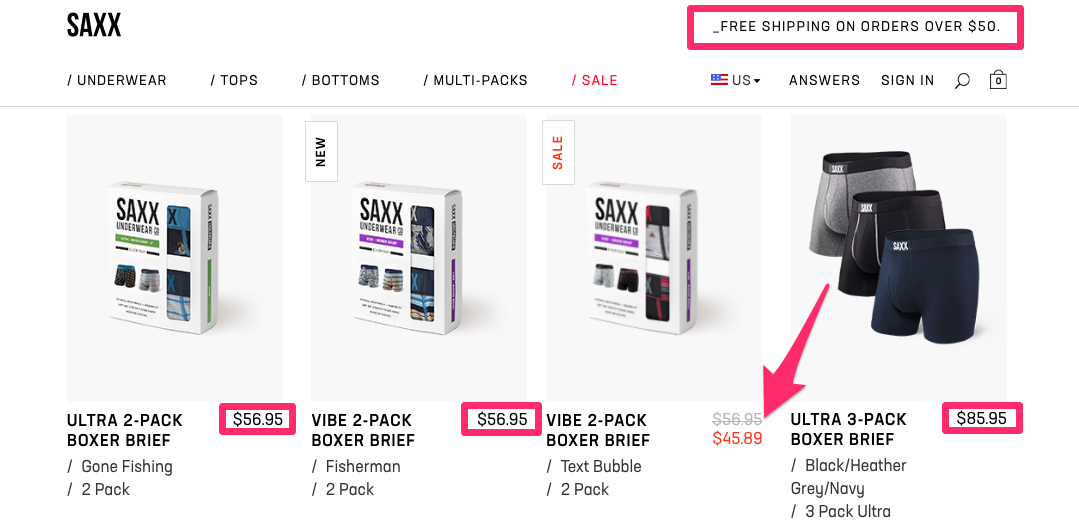
Let’s look at a great example from SAXX:

saxx 1

This page has four different products for sale. As you can see, it also uses the anchor pricing strategy.

Customers aren’t really getting a better deal per piece if they buy a 3-pack for $86 or a 2-pack for $57. It’s still about $28 per pair of underwear.

But if they buy the 2-pack that’s on sale, they’ll get each pair for $23. This is a better deal.

However, they’ll have to pay for shipping if they buy the sale package because it doesn’t meet the $50 threshold. So what does the customer do?

They consider buying two of the sale items.

This gives them a better value per piece, and they’ll meet the free shipping requirement.

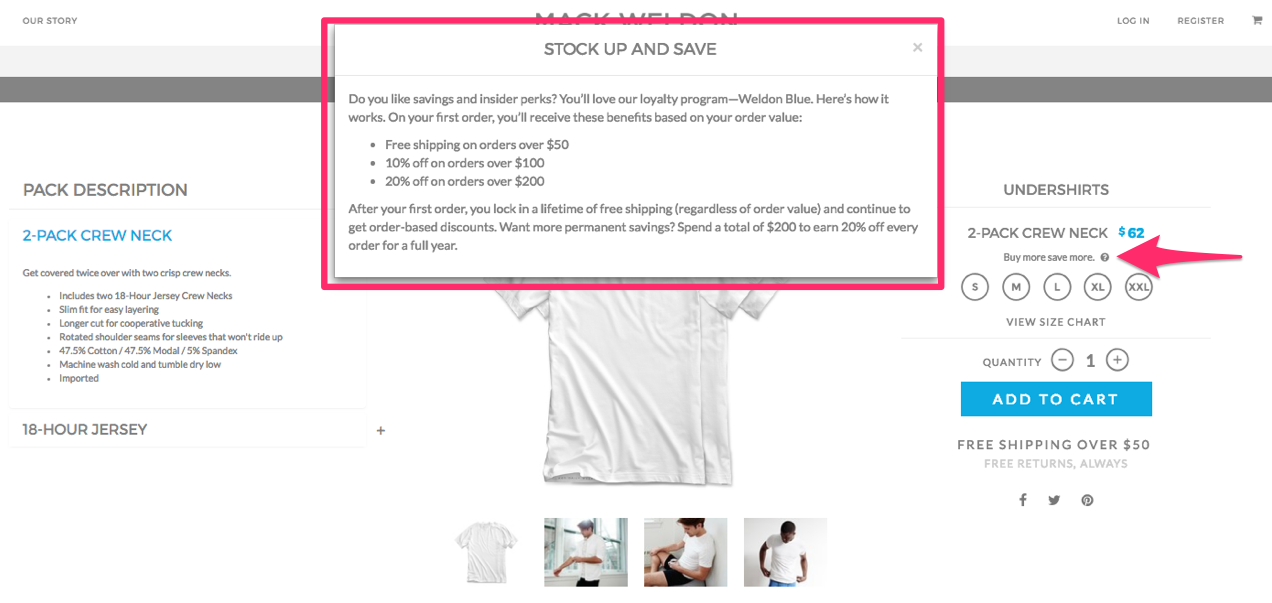
Mack Weldon uses a similar strategy on its ecommerce site:

mack weldon

Orders over $50 will be shipped free, but the site offers more: 10% off orders over $100 and 20% off orders over $200.

This strategy gives the company’s customers a reason to keep adding more items to their shopping carts.

Research your competitors

Who are your biggest competitors? How do their prices compare to yours?

If you don’t know the answer to this question, it’s a big problem. You can increase profits by analyzing your competition.

You have to decide how you want to position your prices compared to theirs.

Maybe you want to undercut their prices in an attempt to steal their customers. But as I discussed earlier, if your prices are lower, the value of your brand could be perceived differently.

On the flip side, if you set your prices too high, you could lose customers to your competitors.

This is always a tricky situation. There are lots of different factors at play when it comes to your pricing strategy in relation to your competitors.

I can’t tell you definitely what the right or wrong approach is. You may have to experiment with this one.

But at the very least, you need to be aware of your competitors and their prices.

Segment your prices

As I briefly discussed earlier, you should segment your prices so that they appeal to a wide range of customers.

This is slightly different from the previous tactic of altering your prices by just a few dollars or so.

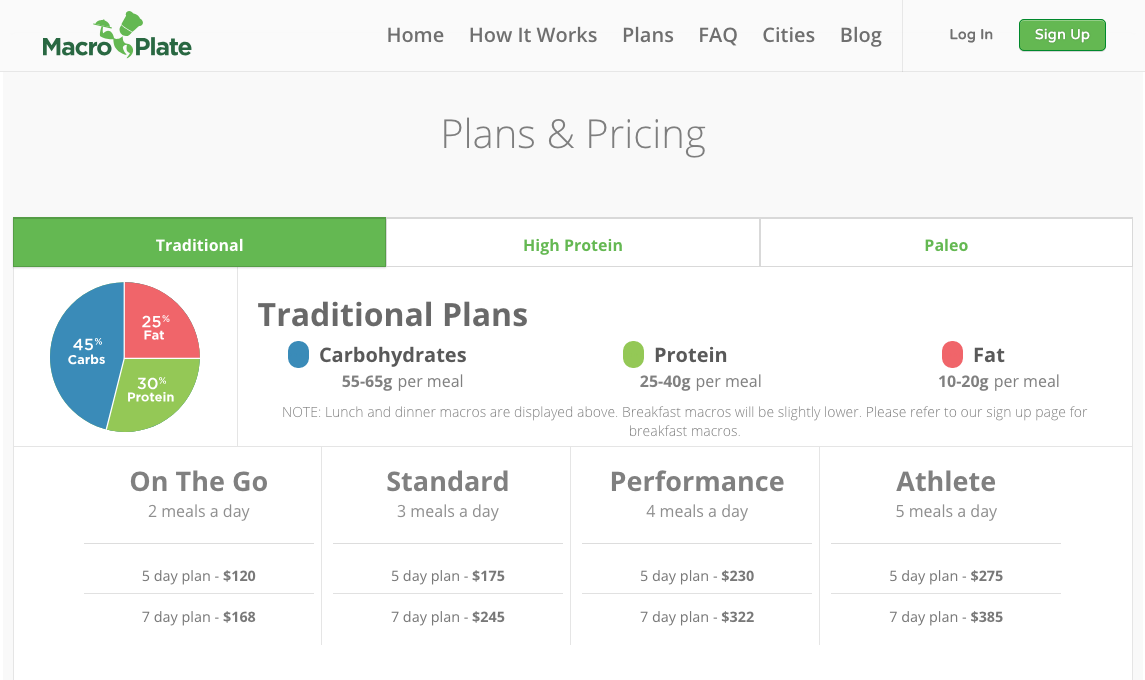
With price segmentation, each pricing point is aimed at targeting a specific type of customer. Take a look at the Macro Plate pricing plans:

macro plate

As a meal delivery service, the company needs to have something for everyone. That’s because not every customer will have the same diet.

It appeals to customers who want meals delivered five days a week as well as seven days a week.

How many meals do its customers get each day?

It depends on the plan they select. This ranges from two to five meals per day.

Furthermore, the site has meal plans designed for different diets:

  • traditional
  • high protein
  • paleo

The meals target customers based on what type of food they need and what they can afford.

There is a big difference between a customer on a traditional diet who wants two meals a day five days a week and a customer on a high protein diet who wants four meals a day seven days a week.

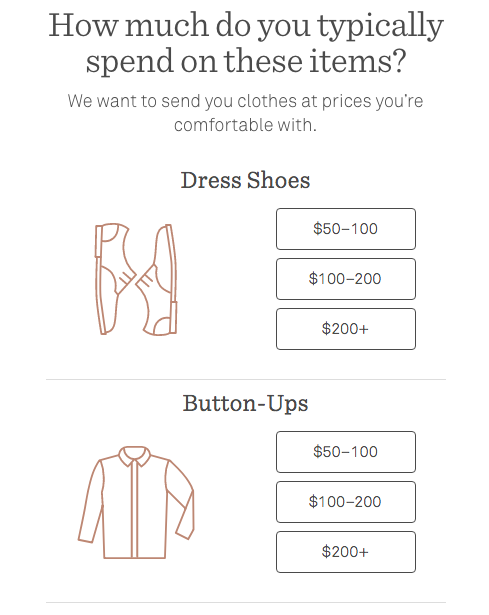
Trunk Club uses a similar strategy on its website as well:

trunk club

Trunk Club is an online personal stylist. It sends you clothes on a regular basis.

But to make its service more appealing to the general population, the company needs to segment its prices based on the type of clothing people want to wear.

That’s why it has this questionnaire in place. Asking customers what they normally spend on different types of clothes helps them decide what to send them based on quality and price.

There is a big difference between the type of customer who spends $50 and a customer who spends more than $200 on shoes.

Offer big discounts

This is one of the oldest pricing strategies in the book. Set your prices high, then offer promotions, sales, and discounts.

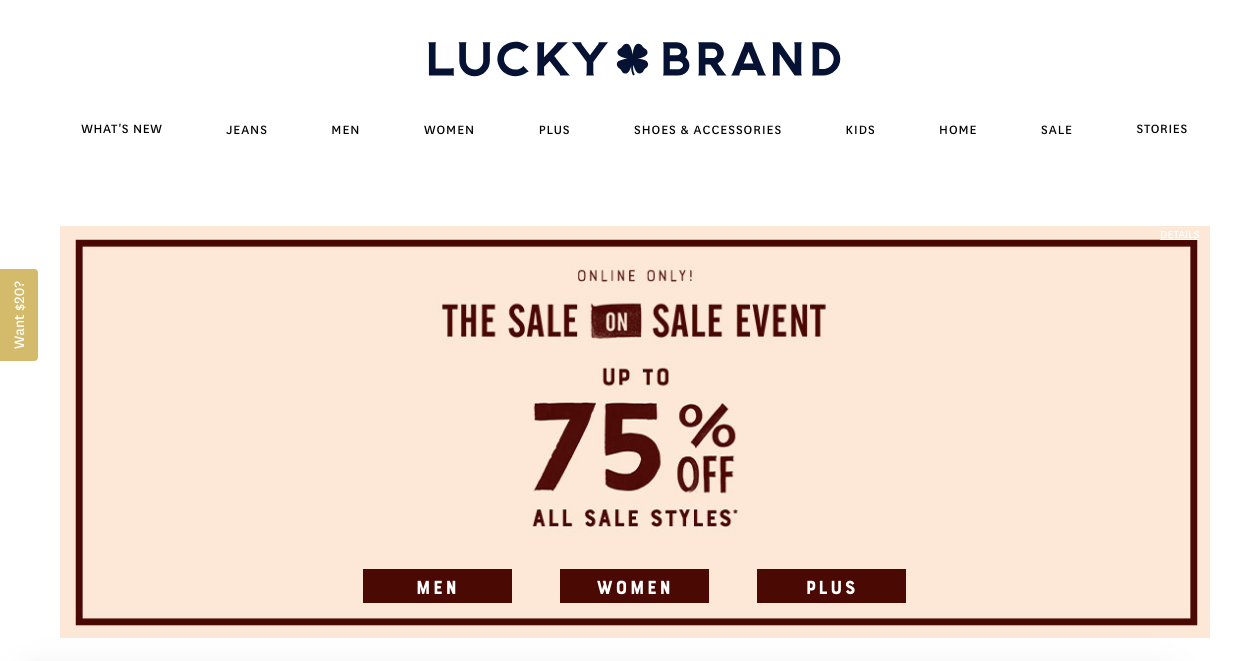
Check out this example from the Lucky Brand homepage:

lucky brand

This promotion has discounts up to 75% off.

Buying a pair of jeans at the regular price will typically cost customers about $100. But if they can get that same pair for $25, the deal seems too good to pass up on.

They could potentially get four products for the price of one.

You need to be careful though when implementing this strategy. Running sales too often could hurt your conversion rates when you don’t have any products discounted.

If your customers get used to buying only when items are discounted, full price products may never get bought. That’s OK if this is part of your anchor pricing strategy, discussed above.

But if you want to drive conversions, it’s always a good idea to discount your prices.

Research shows that retailers with active discount codes are eight times more likely to drive sales.

Know your margins

Understanding your margins is especially important if you’re planning to offer discounts.

You need to make sure you’re still turning a profit. That profit needs to be enough to pay your bills, pay your employees, put money in your pocket, and invest back into your business.

As I said before, you can’t blindly set your prices.

You need to know your profit margins before and after you offer discounts, put items on sale, or run other promotions.

If your margins don’t make sense, you could be generating tons of sales but losing money at the same time.

You obviously need to avoid that.

Bundle packages

Another common pricing strategy is the bundling concept.

Basically, you set your prices so that it’s cheaper to buy items together than buying each one separately.

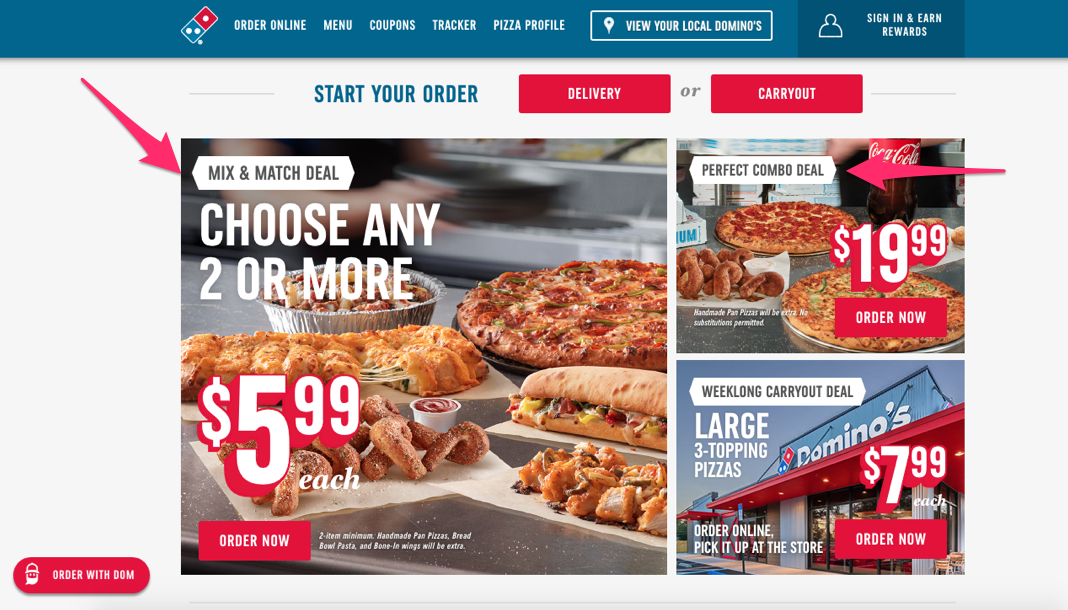
Look at how Domino’s does this on its website:

dominos

Its mix and match deal makes buying two or more items less expensive.

Dominos also has a combo for full meals, at a higher price point. This is an example of segmenting prices based on the needs of your customers, which I talked about above.

How can you apply this concept in your business?

It’s a great opportunity to improve your upselling and cross-selling strategy.

For example, let’s say your brand makes and sells musical instruments.

You sell guitars for $600 and guitar cases for $150. But if someone buys a guitar and case together, the total price gets discounted to $675.

Create a sense of luxury

Depending on your brand image, you may never want to offer a discount.

In this case, you would be trying to appeal to a certain type of customer. Some consumers don’t want to buy products on sale.

They believe higher prices translate to higher quality. These customers also want to buy from brands that convey prestige.

Some consumers with deep pockets look for brands with higher prices because they know not everyone can afford their products or services.

If this is the kind of pricing strategy you’re trying to implement, don’t worry about the customers looking for bargains. Instead, you’ll probably get fewer conversions, but your profits will be much higher.

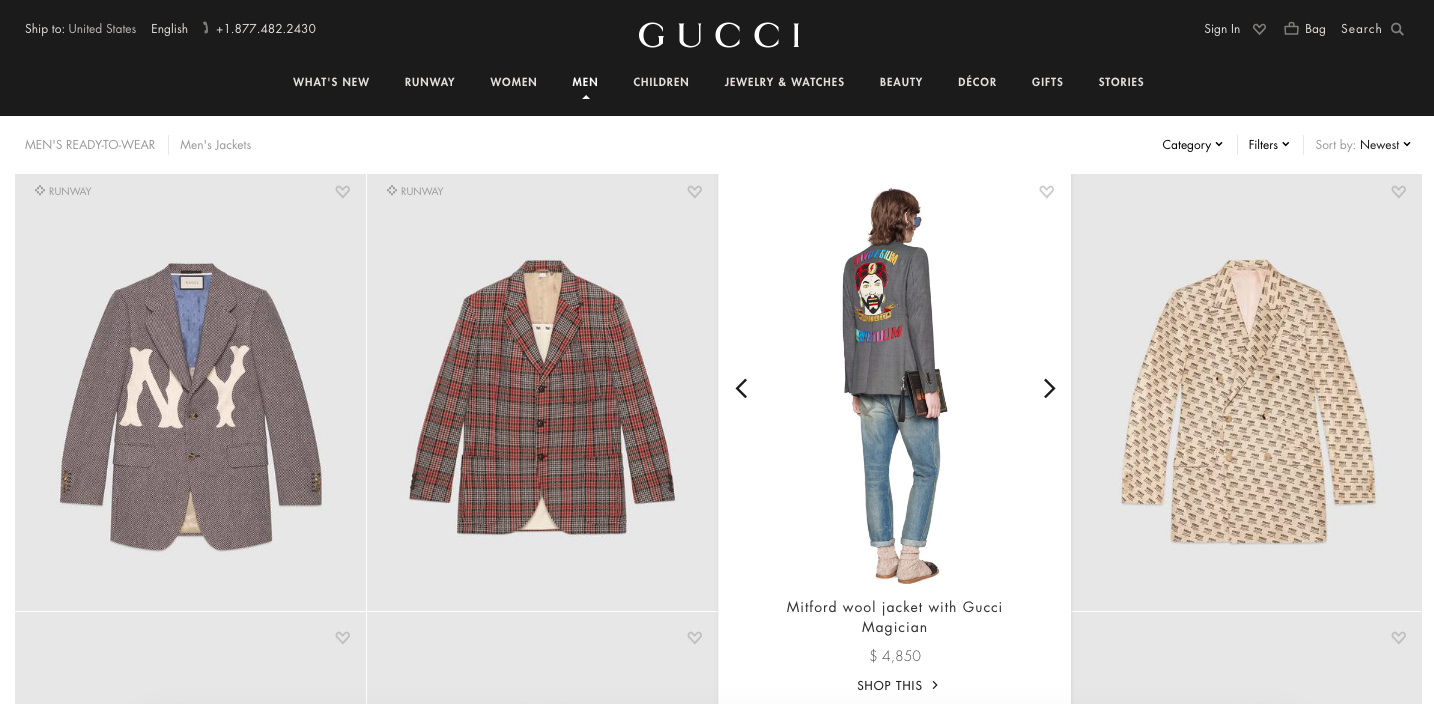
Look at the Gucci website:

gucci

Does anything on this website stand out to you?

For starters, it’s very simple. Websites with simple designs have higher conversion rates.

But that’s not all. Unlike on the majority of ecommerce sites, on the Gucci site the prices are not listed upfront.

There’s an old saying, which I’m sure you’ve heard before:

If you have to ask, you can’t afford it.

That’s the idea here. The customers the brand is targeting don’t care about the price. They’ll buy the products regardless.

To see the prices, you have to click on the items, like the $4,850 jacket above.

Focus on quality

There’s nothing wrong with having higher prices, but you need to be able to justify your reason for having them.

Just to be clear: I’m not referring to the luxury brands as in the example above. Those kinds of prices are in a league of their own.

But if you charge $100 for a t-shirt, you need to give your customers some kind of explanation for that price.

Why should they buy your shirt when they can buy it somewhere else for $5?

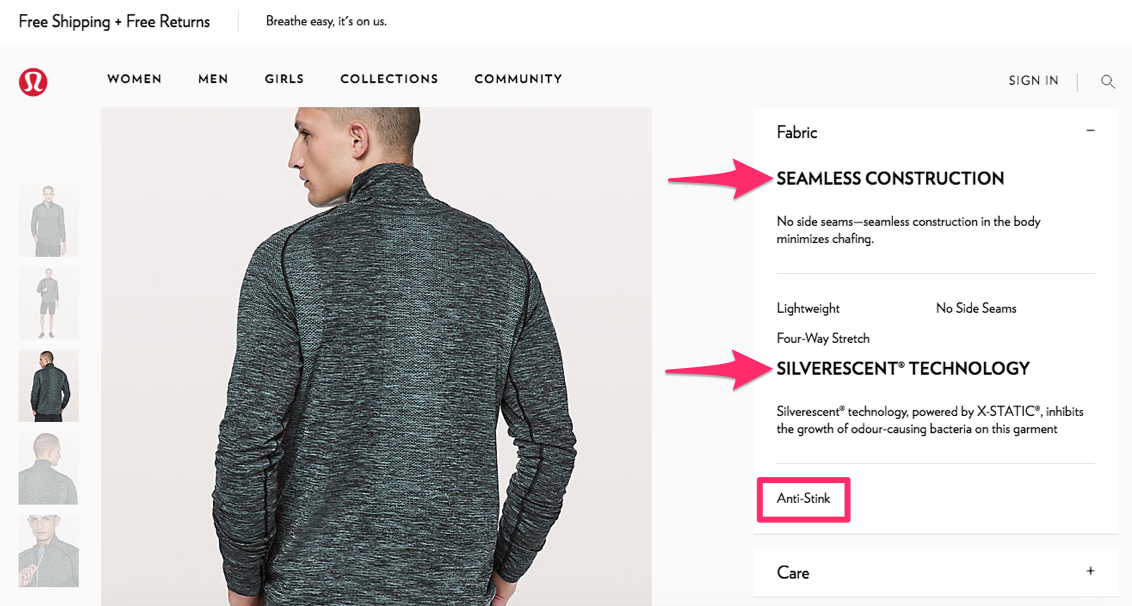
Here’s an example from the Lululemon website that focuses on quality:

lululemon 2

The brand’s prices aren’t outrageously high, but a seemingly simple pullover costs $120.

This is more money than most people would spend on something like this, but the brand justifies the price by emphasizing the quality of its product.

To reduce irritation, the company removed seams from the sides, which is a common construction for similar pullovers.

The material is lightweight and made to stretch. It’s also made with a fabric that fights bacteria that causes odor.

This is the brand’s justification for charging these prices. By focusing on quality, it’s able to generate more profits.

Put emphasis on value

What type of value are you offering your customers?

You need to position your prices so that the customer feels they’re getting a deal. Some of the previous strategies use this concept, such as bundling products and offering discounts.

But there are other ways to do this as well.

You want to make your prices seem as affordable as possible. It’s all about how you deliver the information to your customers.

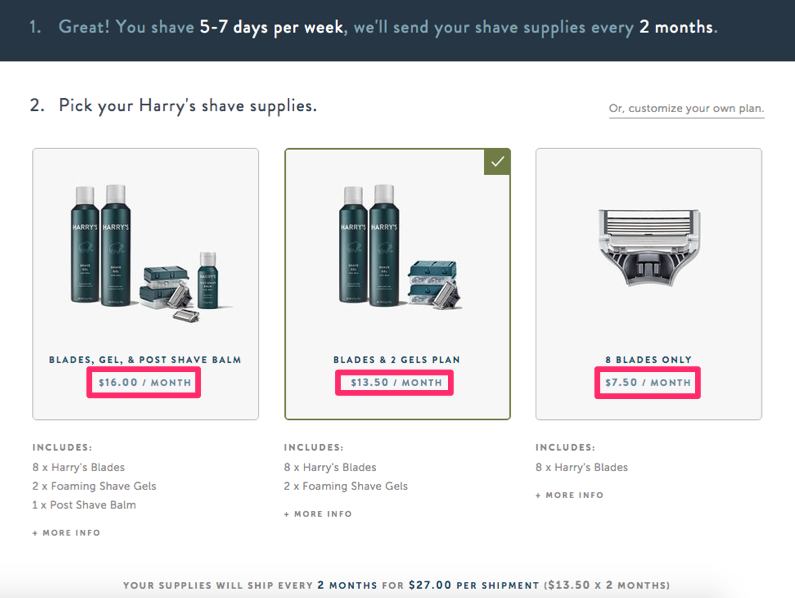
For example, look at the pricing options from Harry’s Razors:

harrys

It delivers shaving supplies to its customers every two months with its subscription service.

Look at its most expensive package: $16 per month sounds more appealing than $32 every two months, even though it’s the same thing.

It’s also better than listing it as $192 per year. After all, $16 sounds much more reasonable and affordable.

Plus, there is added value in the subscription. Customers are paying for the convenience of having products shipped to their doors on a regular basis instead of having to go to the store or to constantly re-order products online.

Conclusion

Your prices will directly impact your sales. Implementing the right pricing strategy will increase your profits.

Don’t set similar items at the same price. Apply the anchor pricing tactic.

Encourage your customers to spend more money with each transaction. Bundle packages together. Offer big discounts.

Segment your prices to appeal to a wider range of customers.

Research your competition. Know your profit margins.

If you want to appeal to a certain type of customer, create a luxury brand with high prices and never run a sale.

Prioritize quality and value.

No matter what type of business you have, I’m confident you’ll find an appropriate pricing strategy in this guide.

How will your brand generate higher profits with your updated pricing strategy?


from Quick Sprout https://ift.tt/2NPoLN8
via IFTTT
Monday, September 3, 2018

How to Generate Recurring Sales by Implementing Subscriptions

Every business needs to come up with creative ways to drive sales.

Sure, you may be doing well today, but how are you planning on making money tomorrow? What about next month or next year?

Whether your company sells a physical product or offers a service, the subscription business model is something that you should consider using to generate recurring sales.

Historically, implementing a subscription business model has proven to be highly profitable.

In the last five years, this model has grown by more than 100%.

Businesses that know how to offer valuable subscriptions end up with extremely loyal customers, which is why it’s such an effective customer retention strategy.

Even ecommerce brands have been using subscriptions to drive sales.

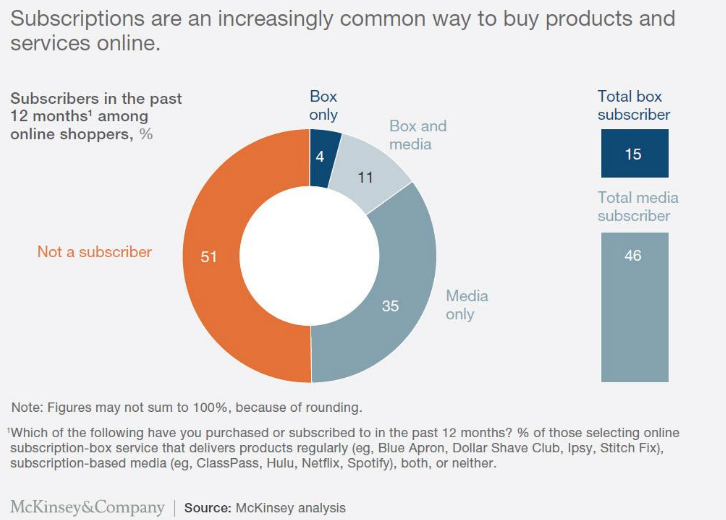
That’s because the consumer market has accepted this model, causing it to grow in popularity over the last year.

grow

Once you’re able to get customers to pay for a subscription, you’ll get recurring sales on a monthly or annual basis.

As a result, your company will be in a great position for sustainable growth over time.

But if you’ve never implemented a subscription model to your business, it might be a little bit intimidating for you. Where do you start?

Some of you may have already set up a subscription model for your business. But unfortunately, it’s not working out as well as you thought it would.

That’s why I created this guide.

Whether you’re new to the subscription concept or you want to make adjustments to your existing subscription model, I’ll explain what you need to do to be successful in this space.

Don’t charge for your basic package

Offer your most basic package for free.

Now for some of you, this may not be realistic. For example, if you’re offering clothing or accessories delivered on a monthly basis to your customers, you can’t just give that away for free each month.

But for those of you who are offering an intangible service, it’s a great way to get people interested if you have multiple packages.

  • games
  • mobile apps
  • streaming services

These are all great examples of how you can leverage a free package to eventually get your customers to pay for the service if you’re in these industries.

For those of you who have a mobile application, this strategy is a great way to improve the profitability of your small business mobile app.

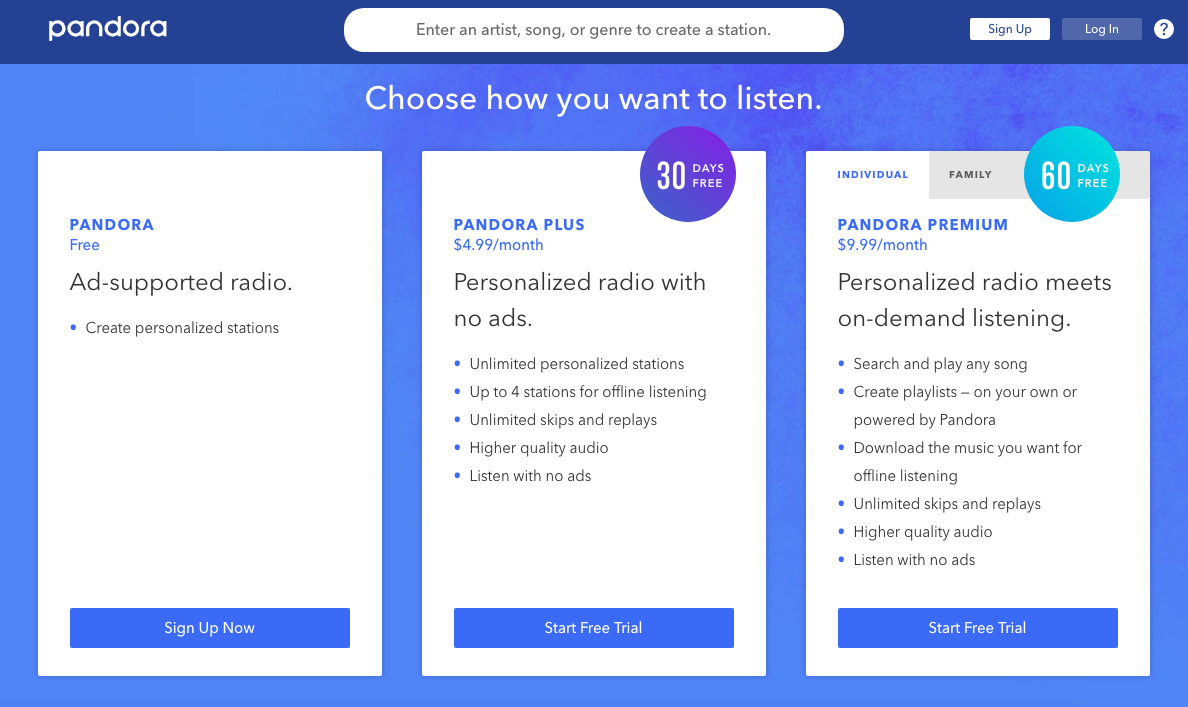
Let’s look at the Pandora packages as an example.

pandora

For those of you who aren’t familiar with this company, they offer a music streaming service.

As you can see from their website, they have three different listening packages. The basic package is free.

This introductory package gets people familiar with the service. If they had to pay from the beginning, they’d be less likely to try it out in the first place.

But if you offer something for free, there is no risk in people using it.

Now you’ll have a better chance of getting these free subscribers to upgrade their service for a fee.

Offer a free trial for your premium services

So you’ve offered your basic package for free. But customers still haven’t upgraded yet.

Why not?

Well, they don’t know what they’re missing.

If you offer them a free trial of a paid service, it will be harder for them to go back to the basic version. Let’s refer back to the Pandora example.

They offer a 30-day free trial for their $4.99 package. So for one month, customers on this trial will experience personalized content with no advertisements.

Once they go back to music that’s not personalized and are forced to listen to ads, they’ll be more inclined to pay the monthly fee for the enhanced experience.

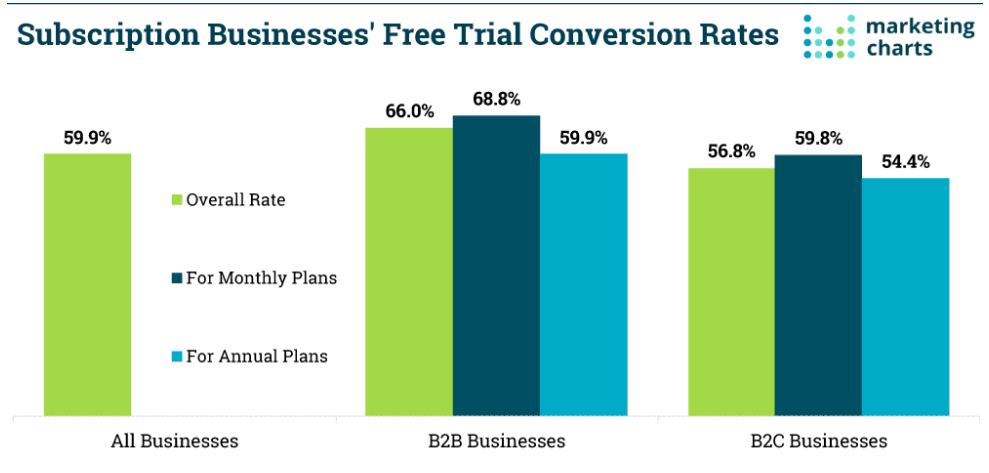
Roughly 60% of all businesses are able to convert free trial users to customers.

free trial

Those conversion rates are outstanding.

For those of you who are offering physical products, such as a box of items mailed to customers on a monthly basis, you can use this strategy as well.

Even though you may not be able to do this long-term, you can still offer a month or two of your package for free.

Here’s something else to consider. The more expensive your subscription is, the longer you should offer the free trial for.

Again, we’ll continue to use Pandora as an example.

They offer a 60-day free trial for customers who want to try out their most expensive package at $9.99 per month.

It’s worth giving away two months for free if they’re able to generate $120 per year from each subscriber.

Set up different membership plans

Profitable subscription models have different plans. There are a few reasons for this.

First of all, not everyone can afford your most expensive membership, but you don’t necessarily want to exclude those people from being paying customers.

Second, you want to offer plans based on the needs of different customers.

People don’t want to pay for a feature or benefit that they won’t use. But if someone knows that they need something, they’ll gladly pay an additional fee.

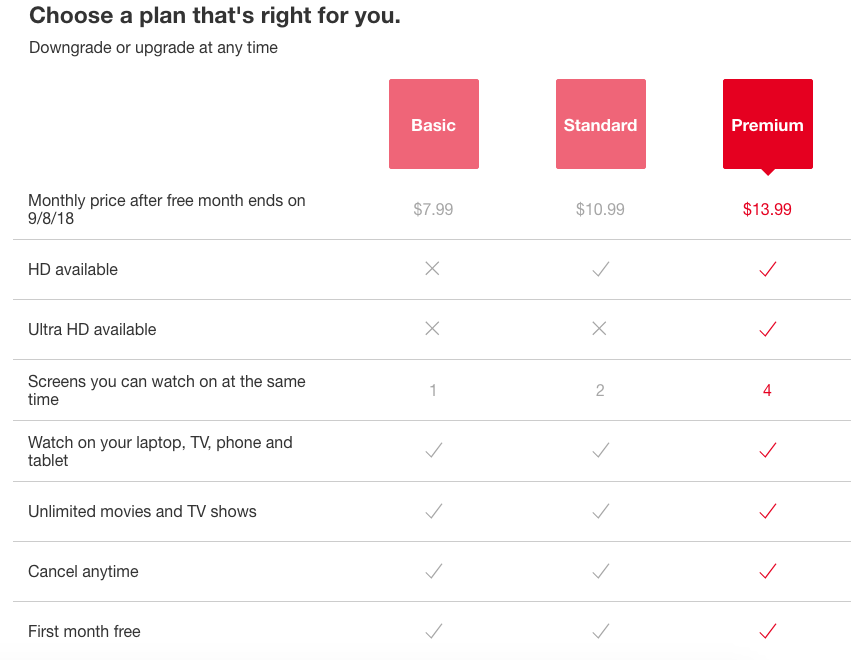
Let’s look at the Netflix membership plans as an example.

netflix

All of their plans offer the first month for free and the ability to cancel anytime. Their customers can watch from their laptops, tablets, phones, and TVs.

But the basic membership doesn’t offer HD video and only lets you watch on one screen at a time.

So for someone who doesn’t have an HD television and doesn’t plan on sharing the account with anyone else, this is a suitable option.

But if you’ve got a family that’s going to be sharing the account and streaming simultaneously from multiple HD devices, this won’t be enough for you.

Those customers will need to subscribe to the most expensive option.

Allowing customers to select their plan gives them a personalized experience. Plus, we already know that personalizing your website boosts conversions.

So analyze your features and come up with a few different membership plans that target the needs of various customers.

Give discounts to customers who pay in advance

Obviously, you want your customers to be a subscriber for as long as possible. That’s how you make money with recurring sales.

But with that said, you don’t want to force your customers into a long-term contract.

This strategy can make people hesitate to sign up. Consumers like having the option to cancel at any time without having to pay a penalty.

That’s why monthly subscription plans are so common.

The problem with monthly subscriptions is that if a customer cancels after a couple of months, you didn’t really have a chance to generate high profits from them.

Who knows. Maybe in that short period of time they didn’t have a chance to fully experience everything that your subscription plan has to offer.

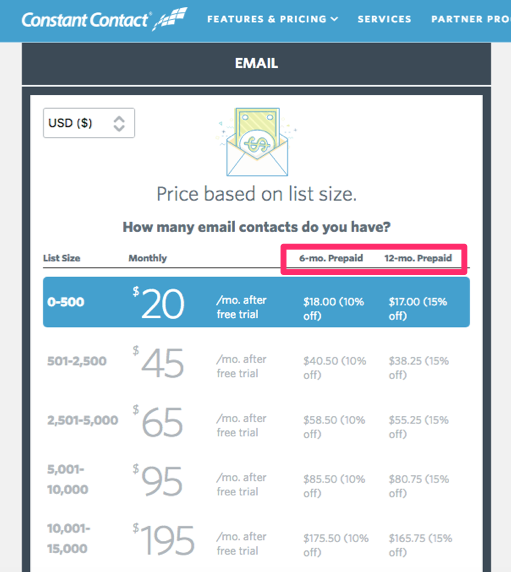
If you want people to commit for longer periods of time, you can offer discounts if they pay in advance. Take a look at this example from Constant Contact.

constant contact

As you can see, they offer a 10% discount and 15% discount for subscribers who pay for six months and 12 months in advance, respectively.

Even though you’re making less off each customer per month, you’re locking them in for a longer term.

This is a much more effective strategy than forcing your customers to commit to a year contract that charges them on a monthly basis.

Giving them the option benefits both of you. They’ll get a discounted rate, and you’re guaranteed to make money.

Plus, it adds more of a personal touch, which we previously talked about and we’ll continue discussing in greater detail throughout this guide.

Provide added benefits to your customers

Depending on your business, offering subscriptions exclusively may not be in your best interest.

You can still have other business models that you use in addition to your subscription model.

So for those of you who fall into that category, you need to make sure that the subscription memberships come with benefits that justify the cost to your customers.

Otherwise, they won’t have any incentive to join.

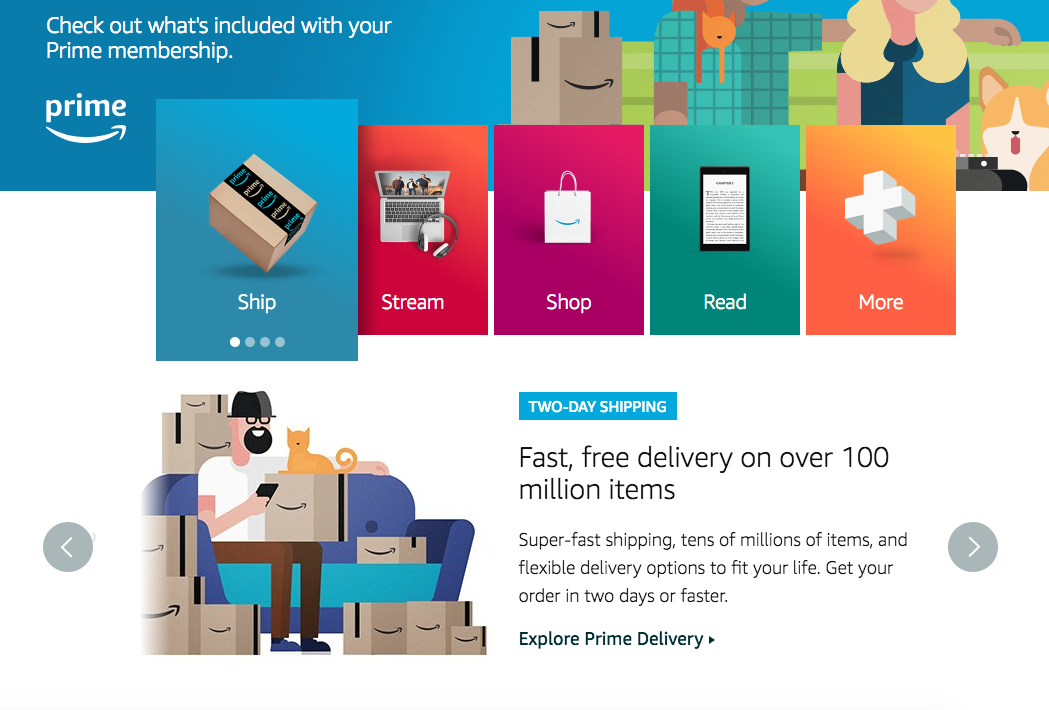
A perfect example of what I’m talking about is the Amazon Prime membership.

amazon prime

You don’t need to pay a monthly or annual fee to buy something on Amazon. Anyone can use this ecommerce platform.

But for customers who shop frequently and want their items delivered as fast as possible, they may be more inclined to pay for the Amazon Prime subscription.

This membership offers two-day free shipping for subscribers.

In addition to the shipping benefits, Amazon Prime members also get access to music and video streaming services.

As I explained earlier, they have packages designed for everyone.

For customers who just want the video streaming service, they can pay $8.99 per month.

To get all of the membership benefits, including video streaming, two-day shipping, music streaming, photo storage, unlimited reading, and free same-day delivery for certain items, it costs $12.99 per month.

That totals just under $156 for the year, assuming that they keep the membership without canceling.

But if a customer wants to save money and knows that they’ll use the service for an entire year, they can pay $119 annually and save roughly 25% on their membership.

Amazon also offers a free trial for prospective members to try out their Prime service for 30 days at no cost.

Do you see how they incorporated most of the strategies that we talked about so far?

It’s always a good idea to follow the lead of successful companies and apply their concepts to your own business.

Set your subscriptions to renew automatically

Let’s say you get someone to sign up for one of your subscriptions. That’s great news!

You’ve got their credit card information, and you’re ready to start processing their account.

But you want to make sure that you set these memberships up to renew automatically.

Don’t worry, I’m not saying that you should do this to be deceiving or trick your customers. Just include this in the terms that they agree to when they’re signing up.

You don’t want to annoy them each month asking them for their credit card information again. So get their permission from the beginning to bill their card each month.

This is a great way to get recurring sales.

If you give the customer the option to opt-out each month, they may decide to cancel.

But if their card just gets charged without any contact or notification, they may just keep the service whether they’re using it or not.

For example, how many of you have a gym membership or have had a gym membership in the past? You get charged each month whether you’re there every day or never show up.

You don’t cancel it because it’s more of a pain to go through that process and then sign up again when you want to go.

So your customers will treat this membership the same way. Sure, you obviously want your customers to take advantage of the products and services that you’re offering.

But if they’re paying for it, either way, does it really matter if they do? Not really.

Allow your customers to customize their subscriptions

We’ve talked about personalization quite a bit in this guide.

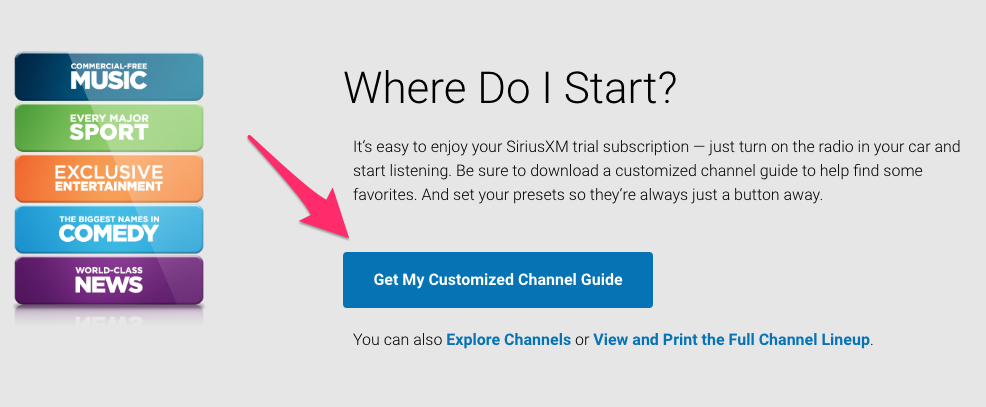
You can take this concept to the next level by allowing your customers to fully customize their subscriptions. Take a look at this example from Sirius XM Radio.

sirius xm

They have membership options that allow customers to pick and choose which stations they want on their account.

You can find ways to apply this same concept to your business as well.

For example, let’s say that your brand sales beard grooming and shaving products for men.

You sell products directly from your website, and you also have subscription options to deliver a box of products on a monthly basis. Allow your membership subscribers to customize each order.

Some customers may want more razors, while others want more shaving cream and after shave lotion.

The membership prices will vary based on the type of products and quantity of items that the customer wants to be delivered each month.

Conclusion

The subscription business model is extremely profitable, and it’s growing in popularity.

Whether you’re adding subscriptions to your business for the first time or you’re making changes to your existing model, there are certain tips and tricks that will improve your chances of being successful.

Offer your basic package at no charge. Then, let customers try out the premium options with a free trial.

Create different membership plans to target a wider range of prospective customers.

Your standard memberships should be charged on a monthly basis and renew automatically. Encourage customers to pay in advance by offering discounted rates for an annual plan.

Provide added benefits to make sure that your subscriptions are worth the cost.

Focus on personalization and customization that entice consumers to sign up for your subscription service.

If you follow the advice that I’ve outlined in this guide, you’ll be able to achieve sustainable growth in the form of recurring sales through subscriptions.

How is your brand using the subscription business model to generate recurring sales?


from Quick Sprout https://ift.tt/2Neudfe
via IFTTT