Thursday, September 5, 2019

The Best Website Builder

Quick Sprout recommendations for website builders are based on months of research and testing. We’ll never point you to a product or service that we don’t believe in or have first-hand experience with. Our content is reader-supported, which means if you click on one of our links to a recommended website builder, we may earn a commission.

You want a website, but you’re not a coder, an engineer, or a designer. Maybe you’re not even super technically proficient. You just want a website. You want it to look good and work well and not take forever to build. Luckily these days, a website builder or a template can get you a professional-looking website in minutes. Literally minutes.

There was a time when you could really tell the difference between the site a web designer would build and one a novice could create. But these days, the playing field is leveled. I’ve built lots of websites, and most of them I didn’t use a designer for — I used a template or a website builder. (And, yes, I still made money off of those sites.)

To find the best, I reviewed 31 website builders, testing them on their ease of use, the professionalism and quality of the final product, customer support, and pricing. I have 4 favorites I recommend.

I narrowed down 31 website builders to my 4 top picks:

  • WordPress — No subscription fees
  • Wix — Automates the tough choices
  • Squarespace — Beautiful, modern templates
  • Ucraft — Free one-page sites

If you’re looking for the easiest way to create a site, a website builder like Wix or Squarespace will certainly get you there. These are subscription services with drag-and-drop interfaces and we’ll explain the pros and cons of each of them in detail.

But you should also consider building your own website with WordPress. There’s no subscription fee and your site will be basically limitless. It’s not an all-in-one service, but it isn’t hard to sign up for the other pieces you’ll need (a domain name, hosting, and a theme). In this guide, I’ll walk you through this method too.

Methodology and criteria for my website builder reviews

Ease of use. There should be no technical proficiency required and no need for a designer or other outside help. We asked ourselves, How easy it is to get started? And, how long does it take to build a nice looking site?

A professional high-quality final product. A professional, well-designed website that reflects your business. We asked, What do the templates look like? How customizable are those templates? Can I add an ecommerce option to sell things on my site? Can I add a menu? A form? A map? Reservations?

Customer support. We wanted to know that it’d be there if you needed it, but we also expect everything to be intuitive enough that you don’t feel like you can’t go it alone.

Pricing. Pretty simple, but we didn’t just ask how much does it cost? We also asked, Which tier should a person start on and when will they need to upgrade? If it’s free, what’s the trade-off? Does it come with a free domain? Does it come with email addresses? Any other extras to be on the lookout for?

The 31 top website builders compared

WordPress

  • Best for content management
  • Free open-source software forever
  • You’ll need to buy a domain name (~$10 per year) and web hosting (~$8 per month)

I love WordPress. (We run Quick Sprout on WordPress.) And I’d recommend anyone starting a website really consider starting it with WordPress, especially if you’re running a content site. Why’s that?

WordPress runs a third of the internet and it has the best content management system — all available for free. Some huge names you’ll recognize run their sites on WordPress.
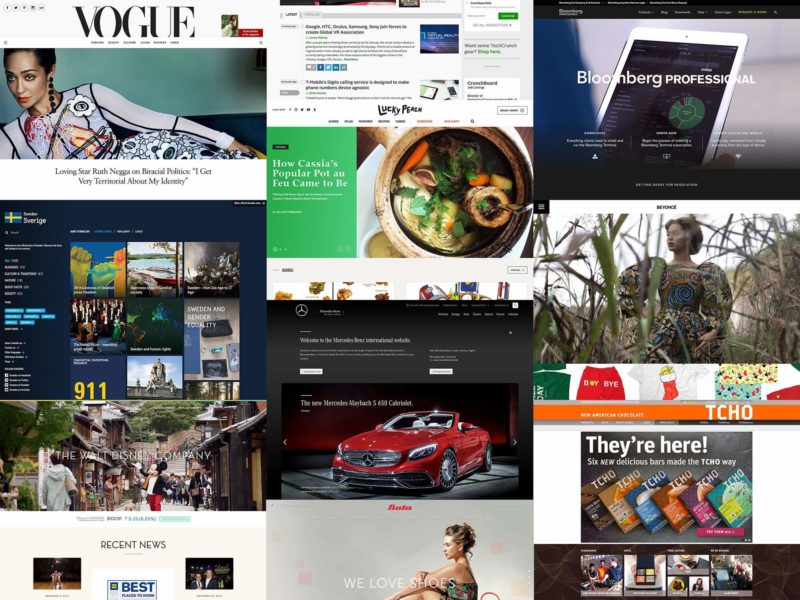
WordPress User Collage
If you run WordPress you’ll be in fine company, including Vogue, Lucky Peach, and Beyonce’s own website.

Because WordPress is so popular there’s a huge community of developers and designers creating themes and plugins for you to use.

Unlike other website builders, WordPress isn’t a one-stop shop. You’ll also need:

  • A domain name – This is your website’s address. Ours is QuickSprout.com — you’ll need to buy yours. We recommend going to Namecheap. Domains are typically around $10–15 and Namecheap includes the only add-on you need for free: privacy protection.
  • Hosting – This is where your website’s files will be stored, which allows a user to access your site. I recommend starting with a shared plan (the lowest tier) with either SiteGround, of if you don’t mind paying a premium, to go with WP Engine, which is optimized for WordPress. You can read more in our review of the Best Web Hosting Service. This will cost you about $8 a month, but there’s usually promotional pricing for half-off the first contract.
  • A theme – A WordPress theme controls the look of your website and how all of the information in it works, so a theme is one part design and one part feature set. Every WordPress site comes with a basic theme, and there are thousands of free and paid themes you can select from in the WordPress themes directory. I like to use the $30 themes at Themeforest. If you go with WP Engine, your plan includes 35 or more themes already, which does a bit to defray the steeper price point.

Once you’ve gotten your domain name and your web host, you’ll be able to install WordPress within a few clicks and get your login credentials. They don’t call it WordPress.org’s “famous 5-minute installation” for nothing.

Log in and you’ll see that your site is pre-loaded with a starter theme. Using as different one? Simply install it. From here, you’re set to adjust your site’s settings, menus, and page structure, and start writing blog posts. WordPress is hands down the winner when it comes to running a content-driven site.

If you need help at any point, there are tons (literally tons) of guides on the internet. I recommend starting with WordPress’s support page, which will answer questions like Where to start, Writing posts, and Using themes.

Wix

  • Automates the tough choices
  • Paid plans start at $11 per month billed annually
  • Free trial period: 14 days

It’s easy to choose Wix as one of the best website builders. It truly takes on the name. Wix’s artificial intelligence asks you a few questions and literally builds your website before your eyes — unique color palette, features, and design all in one. It’s one of the best tools I’ve seen to get a site that matches your vision, even if you don’t know yet how you’d articulate that vision. Honestly, building a site with Wix’s AI felt a little like getting my mind read.

Wix has been at the forefront of this revolution, and is looking to closely combine AI and website building.

Why AI is the best tool to help build your next website, TechRadar

Wix does have a free tier, but I don’t recommend it. It has some of the most in-your-face “this was not paid for” company branding I’ve seen — an instant trust breaker. Wix free sites also have one of the most cumbersome domain structures: yourusername.wix.com/sitename so we’d be QuickSproutEditorial.wix.com/QuickSprout. Connecting your actual domain also allows you to attach a Google Analytics profile and add email accounts if you’d like ($5 per account per month, or about half that with an annual plan). Unfortunately, none of this pricing is very upfront. Wix wants you to connect your domain before you see the email pricing, for example. I found answers to pricing questions in the support center, not the user flow.

To start creating a Wix website, just click create site. You’ll be asked a question: What kind of website do you want to create? From there, the AI will help you build your website. (You can opt-out and go it alone at this point, too, but we appreciated the AI’s help.)
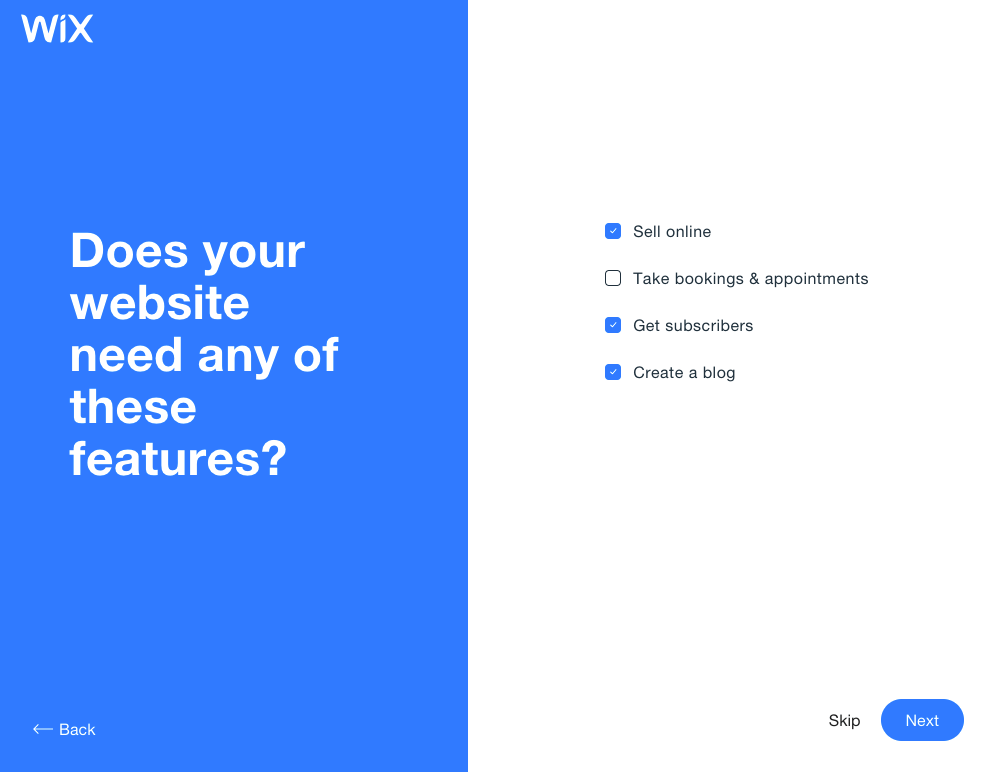
Wix artificial intelligence website builder questions
One of the first screens you’ll see when you build a website with Wix.

When I tested Wix, I loved how easy it was to find a template that matched our vision. The AI stayed with me as I edited the page. A little pink square in the bottom that looked like a chat pop-up helped me pick the next thing to edit and showed me how to do it.

The Wix AI matched my new site to my business’ existing online presence, used my logo to create a color palette for my site, which it pulled right from Instagram, and gave me a template pre-populated with that logo and our street address. Connecting images from existing social media accounts made it easy to pull in all the assets we already owned.

I was using a local yoga studio as an example and the site looked really close to the site the yoga studio actually has. It’s kind of a fun thing to try — pick a business you already know and see how close Wix’s AI comes to replicating it. What’s even juicier, is I bet they paid a web designer a bit of coin for their design, and I did mine for free with an AI assistant.

>As AI progresses, it will be harder and harder to know which site was built via AI and which was built via a designer. You can think of it like passing a “design turing test”, i.e. in the future humans will not be able to differential between the two. Then, it’ll have to get innovative. Instead of mimicking what it is learning from what’s created, it will get better and more experimental. It’s easy to see how soon most websites that are created use AI in some way.

—Wix VP & GM of Consumer Experience Nitzan Achsaf told TechRadar

There’s a lot of variety between the Wix themes, and the personality of each theme matches its name well. The Business Advisor had a spot-on graphic of an analytics dashboard, while Astrologer features an astral hero image.
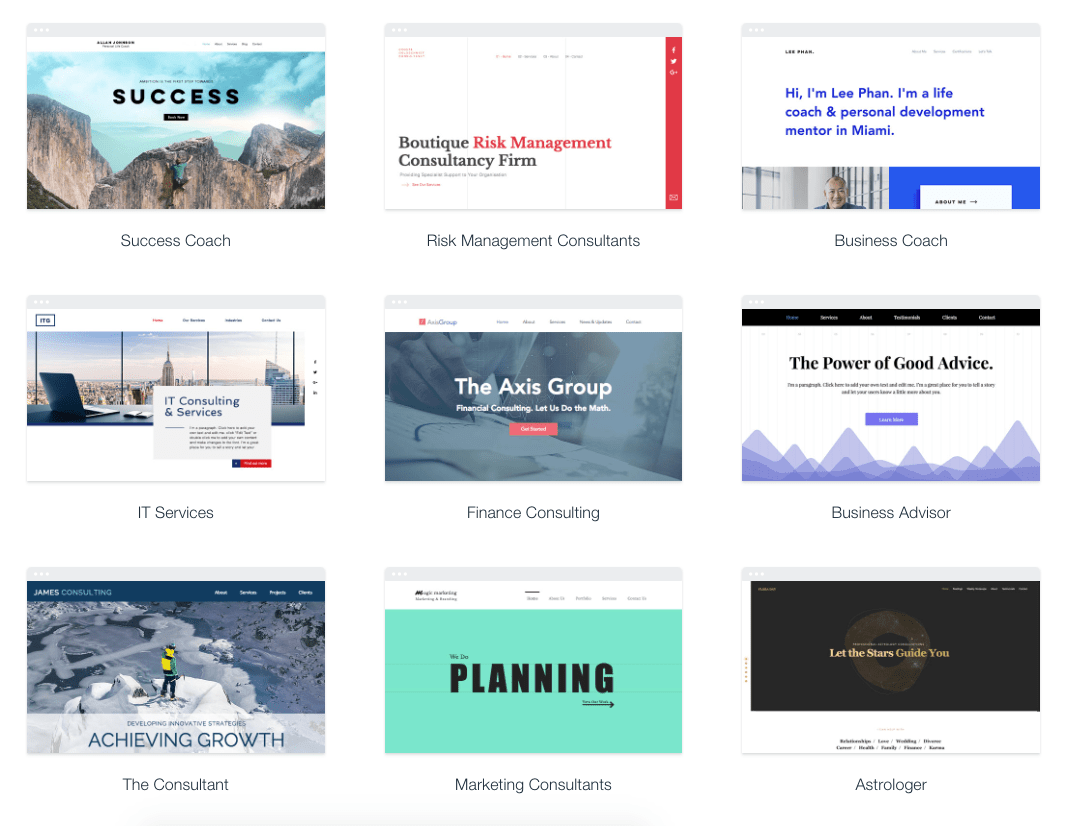
Wix theme template designs for marketing
Some of Wix’s business-centric themes.

Editing your desktop site with Wix does require some patience. To change the text on a text box, you’ll need to hover precisely in the right spot. I did some deep breathing and was able to find enough inner zen to make all the changes I wanted. The mobile editor has the serene helpful feel I wish the rest of the editor maintained. It’s super easy to click through the options for how your menu, quick actions, and scroll options work on your mobile page. What you change in the mobile editor doesn’t affect anything that happens on the desktop.
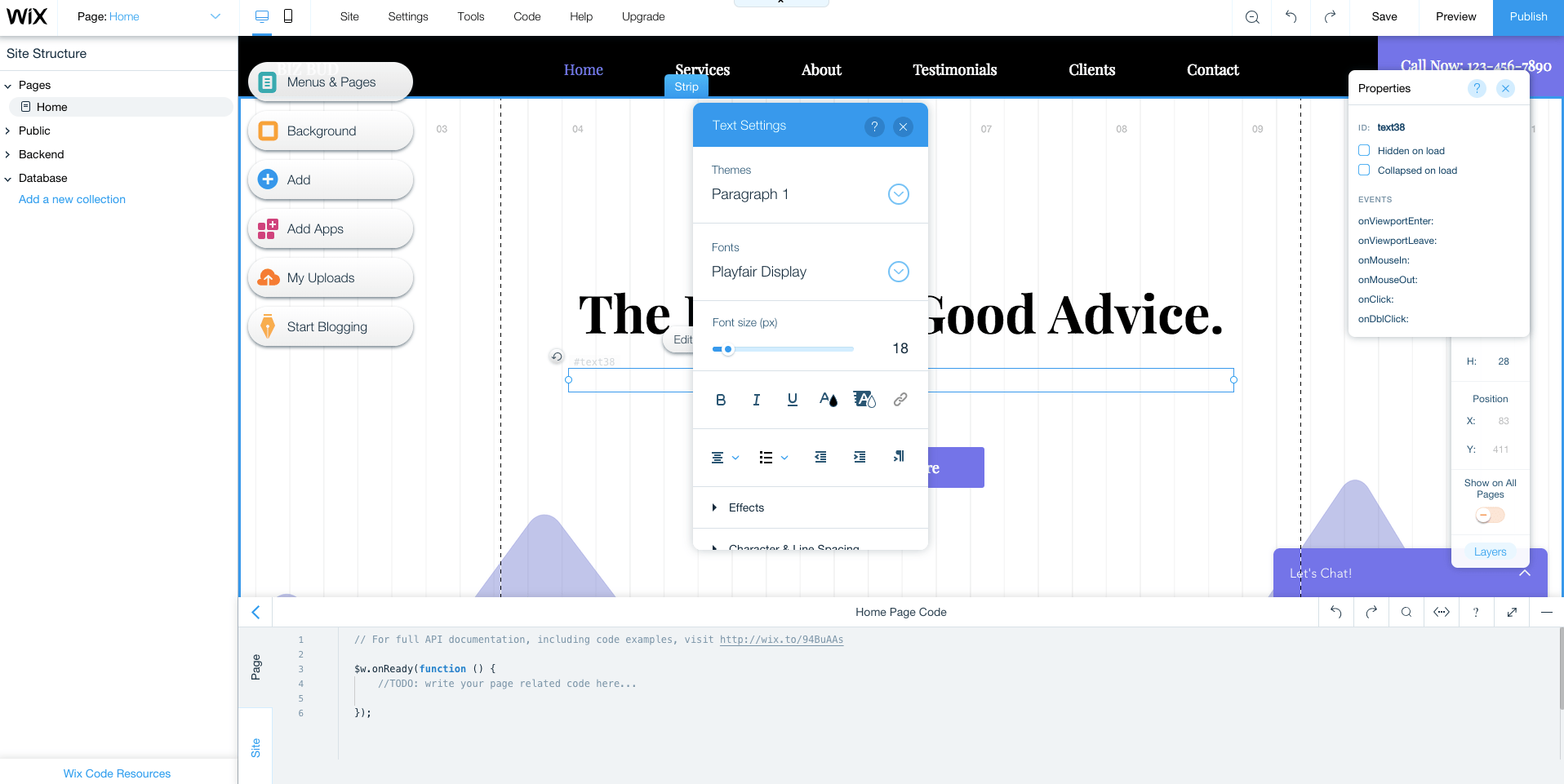
Wix website builder menu overwhelm
Wix’s editor requires patience — and some clicking around.
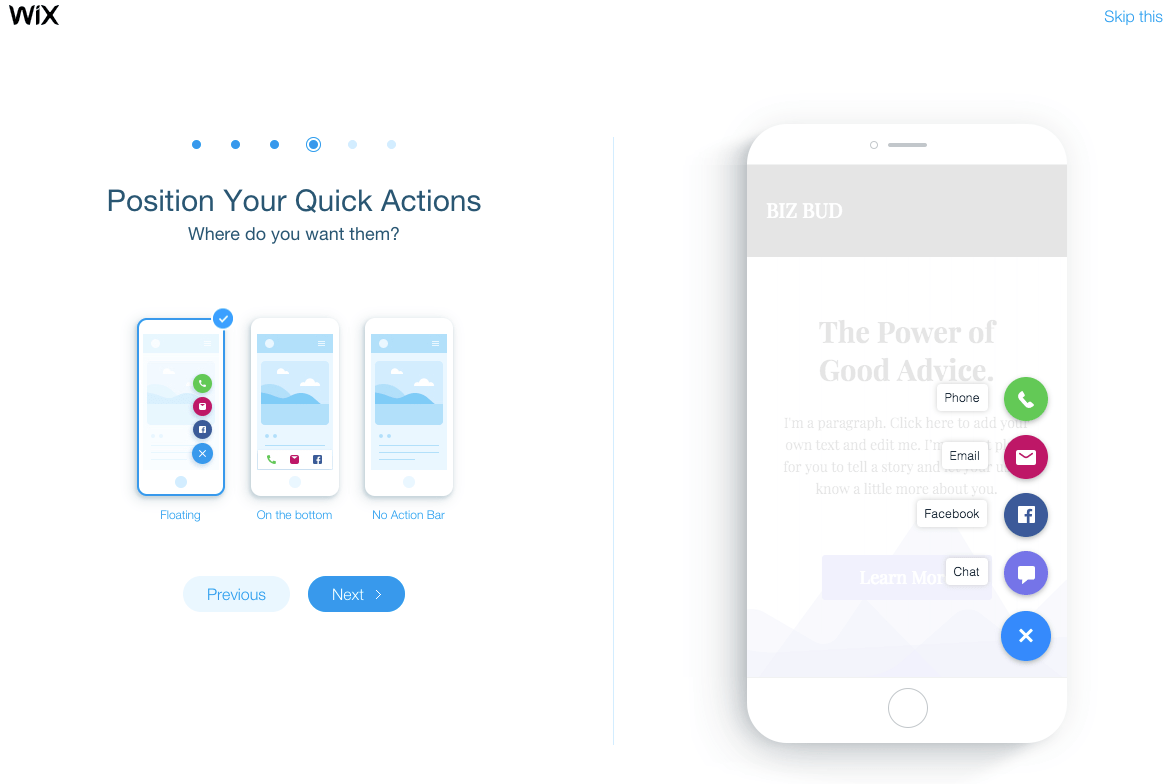
Wix website builder mobile user interface
I prefer the easier-to-use mobile editor.

Take note: all of Wix’s plans are automatically set to auto-renew. Sticker shock is real, especially if you signed up with an introductory promo pricing (at the time of publish, premium plans were a full 50% off, for example). There are many frustrated customers on TrustPilot who’re unhappy with this. It is possible to turn off your auto-renew, but you’ll need to do it more than 14 days before your plan’s anniversary — and if you do it during your 14-day free trial, your trial will be cancelled immediately.

As for which paid plan to pick, you have 7 options: 4 “regular” and 3 “ecommerce.” The difference really boils down to whether you’ll be accepting payments on your site or not. If you’re not sure about how much bandwidth you need, you can always start with a smaller subscription: if you go over the limit, you’ll get a notice from Wix (with no penalty) and can use that as your signal to upgrade.

Squarespace

  • Stellar templates
  • Plans start at $12 per month billed annually ($16 month to month)
  • Free trial period: 14 days (plus a 7-day extension)

“Build something beautiful” is right. There’s no doubt that Squarespace wins the design and beauty contest here. The user interface has a bit of a learning curve and there’s not much of a Squarespace community to help you out, but the page you’ll end up publishing will be phenomenally good-looking.
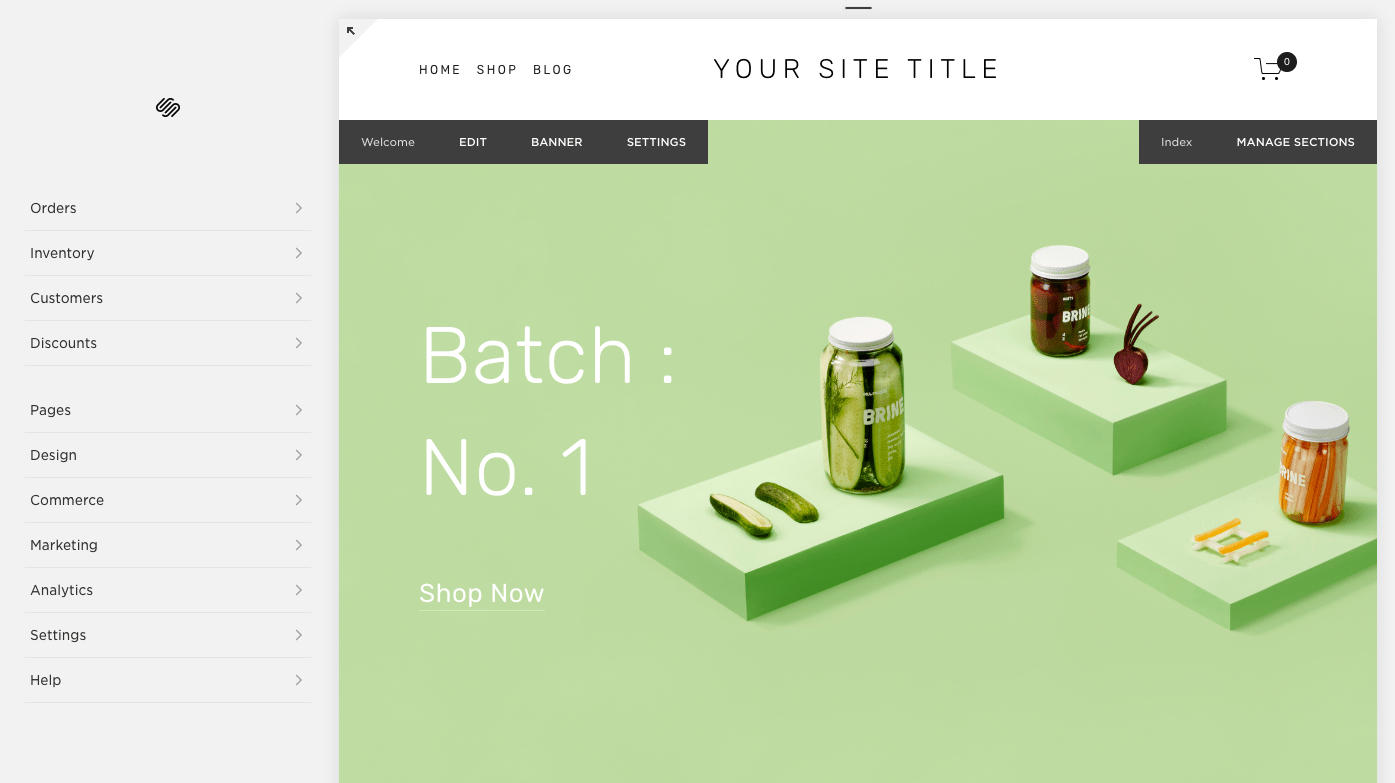
Squarespace website builder template editor user interface
Squarespace’s templates are all modern and beautiful.

Building a website with Squarespace can feel a little like building IKEA furniture: in the showroom it’s all so beautiful and simple, but somehow it feels a little more complicated to put together than promised. It can be hard to understand where exactly you are in the Squarespace editor. I kept getting notifications that I was editing demo content, or that I’d see the social logos once we connected our social media, or that we could unlock this or that feature with a paid subscription, but Squarespace didn’t go the extra step to make it easy to make that required move. It was a lot of fumbling through a beautiful interface, not exactly sure what changes were real, or where to head next. I also had some issues saving changes — an error message popped up and we had to move on, without our changes.
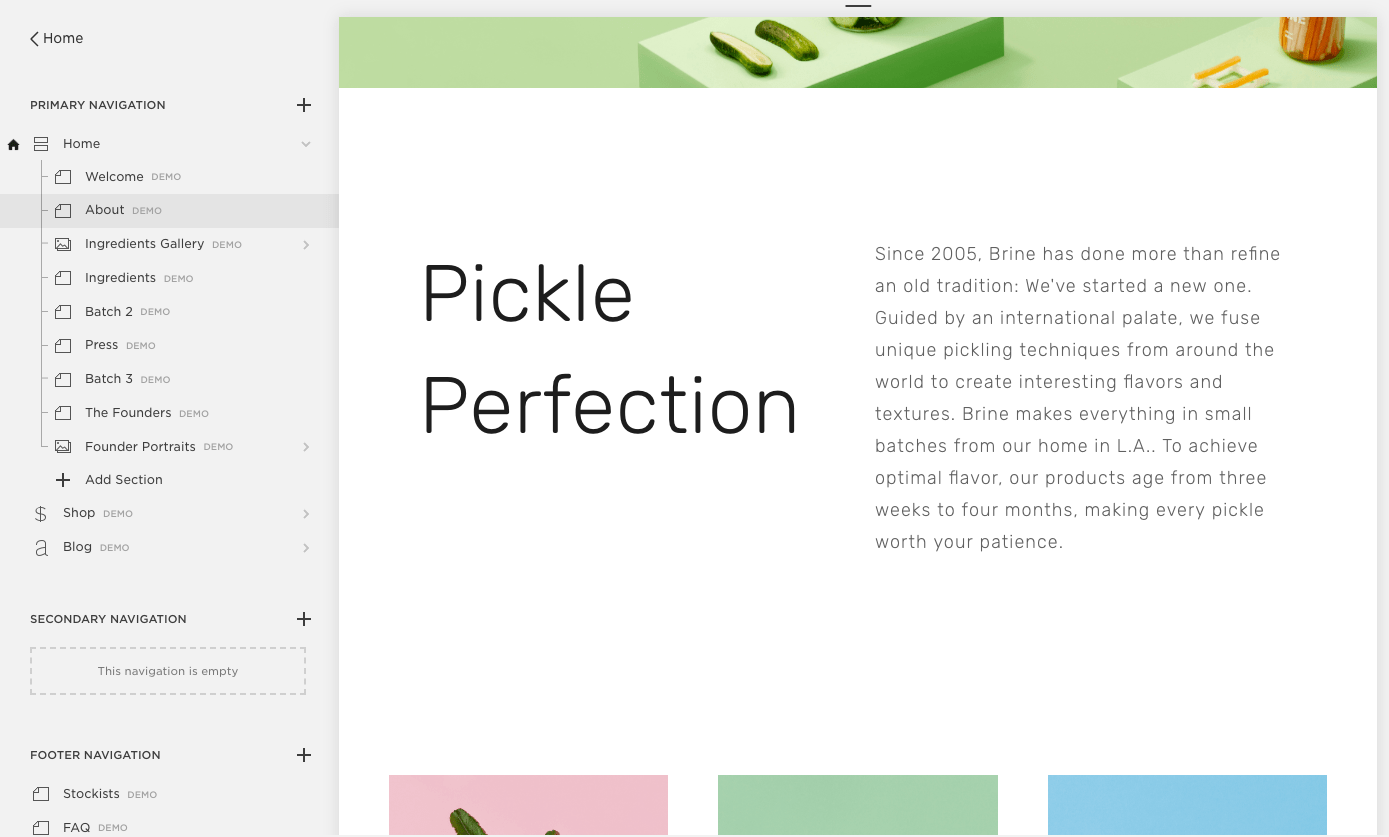
Squarespace website builder editor and page selector
Editing a site in Squarespace has a bit of a learning curve.

Unlike IKEA, Squarespace is pricier than other website builders. That being said, I love the way sites built with Squarespace look, and think it’s one of the simplest ways to create a beautiful, contemporary site.

Ucraft

  • Free one-page sites
  • Paid plans start at $10 per month billed annually
  • Free trial period: 14 days

If you need something super simple, you may be happy with the free Landing Page option from Ucraft: you can create a single, mobile-ready page and connect your domain for free. The free version doesn’t get rid of the Ucraft branding but it’s minimal and not invasive. The template has all the features I’ve identified in my anatomy of a high-converting landing page.

You can drop the branding and sell up to 50 products by upgrading to a $10 per month Pro Website plan, and sell up to 1,000 products on the $21 per month Pro Website plan. (Ucraft recently dropped its $6 per month Basic plan, and lowered the price of the Pro Website Plan from $14 to $10 per month.) If you have more items to sell, upgrade again, but note that once you upgrade, you can’t drop back down to a less expensive plan.
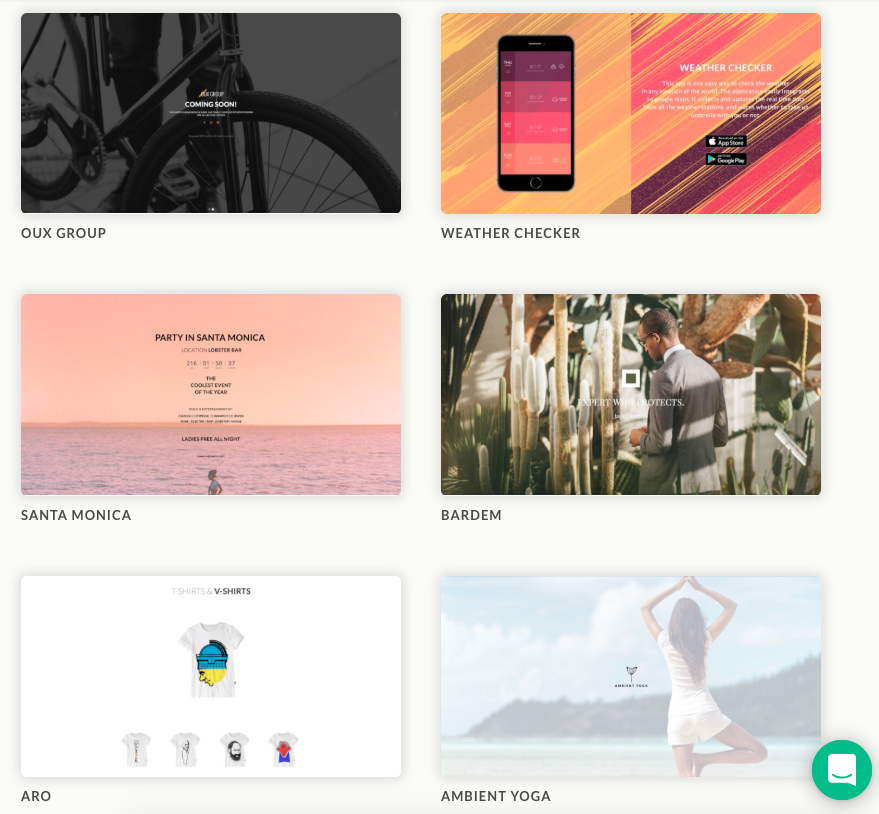
Ucraft Landing Page Template Theme Options
Ucraft’s themes are elegant and streamlined. It’s one-page free sites are designed to be a long scroll with anchored sections.
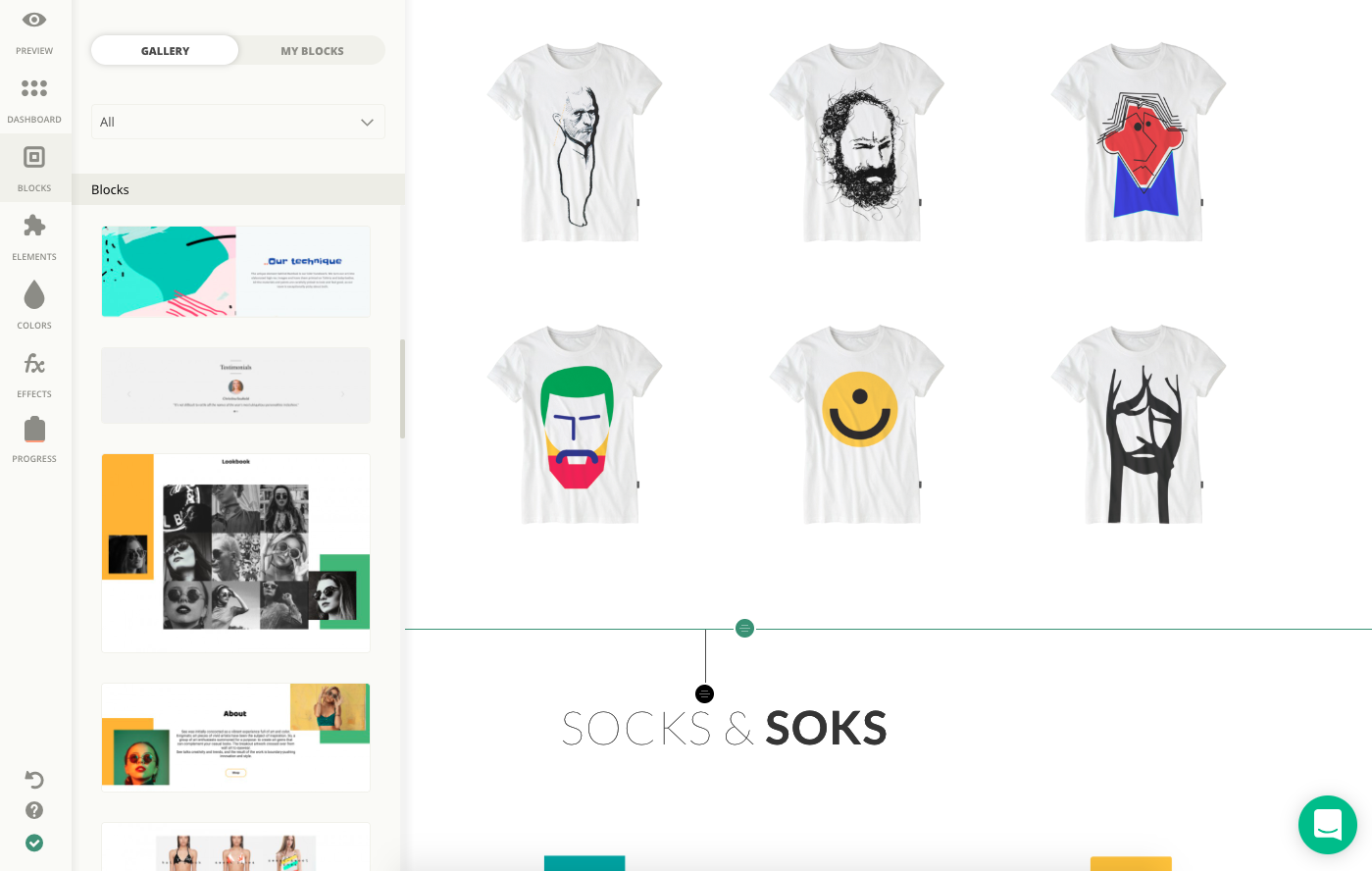
Ucraft Website Builder User Interface
Build a Ucraft site using drag-and-drop blocks and elements.

Adobe Muse

  • No longer in service
  • Last updated March 2018

As of March 2018, Adobe has stopped releasing updates to its website builder software, Adobe Muse, acknowledging that simpler site builders like Wix and Squarespace have taken over: “For simpler websites, we’ve seen the emergence of Do-It-Yourself (DIY) website creators that use customizable templates to quickly create responsive websites that can be easily modified by the designer or a client.” — End of service for Adobe Muse

Cargo Collective

  • Honorable mention
  • Great for artist portfolios

Cargo Collective has amazing templates and designs perfect for artists and art galleries, but definitely not for everyone. If you’re after templates designed for displaying images and image galleries, definitely take a look.

Cindr

  • Super fast set-up
  • Very limited customization

True to its slogan, Cindr is very fast to use: add in new “blocs” and move them, but want to do much customization (say, if your team doesn’t have exactly 2, 3, 4 or 6 people on it…) and you’ll quickly get frustrated. I certainly was.

Duda

  • Web design reseller
  • Dealbreaker issues on homepage

There were too many deal-breaker annoyances on the Duda homepage — broken links, unclear organization, scroll bars on pages that don’t scroll, and typos — for me to recommend building your site with them. And it’s just as well, as Duda’s primary focus is on white-labeling and reselling web designs, not on creating and building your own site.

GoDaddy GoCentral

  • Frustrating customer service
  • Only 8 templates

I’ve never loved the customer support from GoDaddy and GoCentral is no exception. There are only 8 templates, and you can only make extremely limited font and color changes on them. No moving or resizing. The GoDaddy forums are full of frustration and confusion. Case in point: GoDaddy updated live templates so their headers no longer looked the same. Support recommended changing themes if you didn’t like the new header. What a nightmare.

Homestead

  • Dated templates
  • Not recommended

The Homestead website itself looks like its from a different era. And the 27 featured templates from its collection of hundreds! have that same late-90s look.

Jimdo

  • Glitchy editor
  • AI assistant prepolates site from social

I really like using an AI questionnaire to launch a new website, and I adore the ease of pre-populating the images from our Google Places, Facebook, and Instagram feeds. But, the Jimdo editor is glitchy (images would appear as blank boxes, then reappear) and the design customizations were super limited. (Is it impossible to have a full width image header without a color filter? Seems so.) Wix makes all the same promises, and delivers.

Moonfruit

  • No templates
  • Amateur-looking results

I really wanted to love this Moonfruit. It’s clean, it’s modern, it’s easy to flip into mobile view as you edit, it has a helpful dashboard that lets you know how much of your 500 free MB storage you’ve used. And maybe it’s worth considering. But I found that the template-free starting point left me floundering, not empowered. A lot of haphazard clicking resulted in a website that looked more amateur than any other I’d built.

Onepager

  • Very basic templates
  • Prioritizes published over perfect
  • Surprise favorite

I am so surprised to admit I like Onepager. The templates look dated and the product tour video hasn’t been updated in six years. Not a great sign of life… but Onepager is so dead simple and easy to set up that we were able to publish a workable website for a local pizza shop in minutes. Sure, every webpage builder claims you can get started that fast, but with so many options, templates, and features, I’ve found that I’m distracted and deep in the weeds of perfecting my site, not publishing it. That wasn’t the case with Onepager. For a small business that just wants to stake out its territory online — as opposed to, say, build an online empire — I think Onepager fits the bill.

Simvoly

  • Not recommended
  • Empty marketing promises

I was intrigued by the marketing lingo Simvoly opens with: funnels, analytics, A/B testing. Oh my! But, this platform shows lots of sloppiness that keeps it out of any competition for the best: typos in the animations on the Simvoly homepage are just the beginning. The builder doesn’t have an undo/redo function, or any way to save a draft page without publishing it. Simvoly knows the right buzzwords but doesn’t back it up with its product.

Site123

  • Limited customizations
  • AI builder asks only one question

I wanted to like the AI assistance for building my theme, but didn’t. I answered one question about our site (I’m a DJ, or a Diner) and got sent to a pre-built page to customize. There’s no sense of adding your own personal style or browsing through templates to pick the site structure you’d like. Want to change templates? You’ll need to go back and answer that one question differently. To get a design I liked, I had to cheat the quiz. That’s the opposite of AI.

SiteBuilder

  • No free trial period
  • Cost doubles after promo pricing

You have to sign up with SiteBuilder before you can even browse the templates. That’s a dealbreaker for me, but they also have no free plan and once the promotional pricing wears off, your cost will double.

SiteZulu

  • Not much to love here
  • Overcharges for free PayPal plugin

SiteZulu has only 31 themes, the mobile version of our test site was buggy, and its ecommerce “upgrade” is the PayPal embed button that you can get for free. No thank you.

SnapPages

  • Overly expensive
  • Subsidiary of Subsplash

SnapPages is one of the most expensive website builders on the market. For the price, it doesn’t offer anything you can’t get elsewhere. Recently acquired by Subsplash, we expect SnapPages to focus on selling its services as part of the Subsplash service packages aimed at churches and nonprofits.

Strikingly

  • A one-page website builder
  • Not as good as Ucraft

Strikingly is a Y-Combinator-backed one-page web builder — and like most one-pagers it shouldn’t be compared to a full-fledged website builder like Wix, Weebly, or Squarespace. It’s in the simplicity of getting something launched where single-page builders work best. Strikingly just isn’t as good as Ucraft, which lets you connect your own domain for free and has a more beautiful and user-friendly interface, or Onepager, which is so dead simple you can literally publish a complete (albeit super simple) site in minutes.

uCoz uKit

  • Requires sign up to view templates
  • Very limited editing freedom

uCoz has a clean and modern interface, that is intuitive and easy to use (though noticeably slow to load). I didn’t love that I needed to sign up for uCoz uKit to see the templates, that most of the templates are very similar, and you’re extremely limited in editing the templates. Once you’re in a template you can’t change things like text styling and can only choose from one of three colors. This keeps you from making bad design choices, but also makes picking a template a much more important choice.

Virb

  • Skip it
  • Not WYSIWYG

Virb, the MySpace competitor that pivoted to become a website builder in 2010 has just one $10 plan. Yes it’s simple, but there’s no way to preview the editing tool, and honestly we couldn’t even figure out how to sign up. I clicked log in (but was told I didn’t already have an account…). Let me know if you can figure it out. By watching the Virb tutorial videos on its Vimeo account, which were uploaded six years ago, I got a sense that the tool hasn’t been updated recently, and here’s the deal breaker of deal breakers: it’s not WYSIWYG. To add social buttons, you’ll need to go to a menu, click add widget, and who knows where they’ll show up on the page. We live in a world with the ease of drag-and-drop editors and I personally can’t go back.

Vistaprint

  • Limited website design options
  • Specializes in business card printing

Vistaprint does offer some limited templates you can build yourself under its “Digital Marketing” offerings, but it’s still a business-card first business. In fact, one of the major selling points it offers is just that: your website can match your business card.

Voog

  • Big localization claims
  • But the Voog website is slow and doesn’t recognize user geography

Voog advertises that it’s the simplest multi-lingual site builder, that is you can build your site in one language and then add all of the copy in up to 10 other languages. Your user will choose the appropriate language with the little flag logo in the corner (you can also pre-select language based on user location). But, this is a feature Wix, Squarespace, and others also offer. I think it’s better to go with one of those bigger names for a few reasons: Voog’s site itself loads very slowly with noticeable lag on pages with more than one image, and its own pricing page doesn’t automatically notice the country you’re in. When your big claim is matching content to the user country, this is a big miss.

Web.com

  • Steer clear
  • Unfavorable billing practices

Before you even get to browse the templates on Web.com, you’re signing up for introductory pricing that’s $1.95 for the first four weeks, then bumps up to the “current rate” which is $22.95 a month right now, with no promise that it won’t be more later. And the fine print asserts there are 4 weeks in a month, so there are 13 “monthly” billing cycles in a year. It’s a hard no from me.

Webnode

  • Extremely simply
  • Surprisingly high price point

Webnode is a simple (almost too simple) designer with a super high price point. For no ads, you’ll pay $11.95 a month on the required annual plan. At that price, you can do far better.

Webs

  • Acquired by VistaPrint in 2011
  • Not updated recently

Built by three brothers and then acquired by VistaPrint in 2011 for $117.5M in cash and stock, Webs looks like it hasn’t been touched since. The editor is slow, and the templates are dated — the default “line” has the scrollwork of a fancy wrought-iron fence, for example — and the templates, which are arranged in an awkward horizontal scroll, don’t respond to the system’s filter so premium and free templates are intermingled. Can’t recommend.

Websitebuilder.com

  • A strong no
  • Chat support doesn’t function, among other issues

The list of issues with Websitebuilder.com is long: uninspiring templates, buggy interface, a support chat portal that doesn’t work (and actually suggests unplugging your router to solve the problem), and terrible customer reviews that call out inaccurate billing and incorrect charges. I don’t doubt it: the terms of service say in order to unsubscribe from auto-renewals, you’ll need to turn to phone or chat, not simply update your account settings.

Webstarts

  • Lots of freedom
  • To make really bad design choices

There’s so much freedom with Webstarts: you can literally move anything you want anywhere on the page. The problem with this is that it’s easy to move something on the desktop editor in such a way that it won’t show up on mobile. For a website builder, it’s freedom to a fault. I like to see software stop me from making bad decisions I don’t even know I’m making, without any fuss. Mobile-optimization doesn’t click in until the Pro Plus level, which is $14.32 a month, billed annually (~$172).

Weebly

  • No undo feature
  • Owned by Square

In Q2 2018, Weebly was acquired by Square and has been increasingly geared towards entrepreneurs and online store owners (really gunning for online shops like Shopify). At least in its marketing, that is. When I checked out the one-star reviews on TrustPilot, I knew I couldn’t recommend Weebly. Another dealbreaker? There’s no undo button. Once you exit a module in the editor all of the changes you made are permanent. Delete a module, and want to undo it? Sorry, you’re simply out of luck.

WordPress.com

  • Fully hosted WordPress
  • I recommend using WordPress.org

I love WordPress and run this site on WordPress.org. If you’re up to using WordPress, I recommend using the .org version. You won’t pay the monthly subscription you’d pay with WordPress.com and you get all the same features — you’ll just need to do the hands-on work. Read more about the difference between self-hosted WordPress.org and fully hosted WordPress.com on the WordPress.com blog.

Yola

  • Not worth the price
  • Extra charges for things most builders offer for free

Yola is expensive and wants to upsell left and right. You’ll need Silver ($119 annually or $14.99 monthly) to ditch the Yola branding, and they’d like you to get Mobile Plus (an extra charge to make your business phone number and address show up on the bottom of mobile pages — this is free with Wix) and the $10/month ecommerce upgrade is simply a free Ecwid plugin Yola would love to charge for. The editor is a bit buggy, you can’t add a blog (Yola suggests embedding a Tumblr page…) and I don’t think the high price point and upselling are worth it for the mediocre product.

Recap: The best website builders in 2019

I like WordPress for its ability to run just about any site you can think up. It’s also the best content platform out there. If you have a content site, I recommend building it with WordPress — with a template, it’s not drag-and-drop but it’s already pre-built.

In terms of all-in-one true website builders, I love the AI-powered mind-reader that is Wix and the stellar templates from Squarespace.

Need a little less? I was surprised by one-page standouts Ucraft and, even though it’s not in my top pick top picks, I really loved how fast I could publish a “good enough” site with Onepager. Of the 31 website builder services I reviewed, I like these the best.


from Quick Sprout https://ift.tt/2PY83QK
via IFTTT

The Best Ecommerce Platforms

Quick Sprout recommendations for ecommerce platforms are based on months of research and testing. We’ll never point you to a product or service that we don’t believe in or have first-hand experience with. Our content is reader-supported, which means if you click on one of our links to a recommended ecommerce platform, we may earn a commission.

So, you’re ready to build an online store and sell, ship, and manage your business. Awesome.

To get started, you’ll need to build your website on an ecommerce platform — that simply means the software allows you to sell stuff and accept payments. I took a look at six of the best ecommerce software options to find the one that’s easiest to set up, customizable to your liking, and the best bang for your buck.

Let’s dive in.

The 3 Best Ecommerce Platforms Compared

All of my top picks offer at least 14-day free trial periods for you to set up your site and see if you like it and it has all the features you need. (It’s industry standard, so don’t go with any that don’t have it.)

Which platform is right for your ecommerce site?

There’s almost no contest here: Shopify is likely the best platform for you.

Why I recommend Shopify to almost everyone

Shopify takes care of everything you need to run an online business, from a website to website hosting to inventory management to accepting credit card information. It also offers point-of-sale hardware (though it’s not industry best), and integrates into online marketplaces like Amazon and eBay.

It has every feature you’ll need without you even needing to knowing you need it: fast loading times, best-in-class security, great support, an all-in-one dashboard. With a little bit of customization, you’re good to go. There’s a subscription fee that starts at $29 per month, and more premium plans for $299 per month. Shopify is the ecommerce platform I recommend to just about everyone. It’s a one-stop shop with everything you’ll need to run and optimize your site already built in.

Shopify alternatives and when to use them

My other top pick is a self-hosted option. It’s not an all-in-one, out of the box thing, so there’s more setup needed on your end. There are two well-known names in this space, WooCommerce and Magento.

Between the two platforms, I like WooCommerce. The only time I recommend it over Shopify is if your site is mostly content-focused. That’s because WooCommerce is built on WordPress, the platform that nearly a third of the internet uses. While Shopify barely has a blog feature, WooCommerce has a robust content CMS, and it’s a cheaper, lighter weight software to use and maintain than Magento. For most digital businesses, Magento is more than you need in both features and price.

Shopify’s weakness is its blogging platform; exactly WordPress’ strength.

If you go the self-hosted route, you’ll need to buy your domain name and sign up for a web host.

It’s also possible to build a store on a Wix or Squarespace site, to monetize your existing site, or even build a non-store site and then convert it to a credit-card accepting store later on. This is a good option if you’re already using Wix or Squarespace and your business isn’t worth the project of transferring your store over. Wix is my pick between the two: you can build your site for free and it has a mind-reader-y AI setup process. You’ll only need to upgrade to its ecommerce subscription when you’re ready to take that first credit card transaction.

No matter which platform you pick, the best practices for running a successful ecommerce site apply.

In-Depth Ecommerce Software Reviews

Shopify

  • All-in-one ecommerce platform
  • Easy setup
  • Great for beginners and big stores alike

Shopify is one of the most recognizable out-of-the-box solutions for small business owners — by some measures, it’s the second most popular ecommerce platform in the world after WooCommerce, and continues to grow like crazy. It’s my hands-down favorite because it gives ecommerce sites that don’t have a lot of in-house technical support everything they need.

As a full-blown hosted ecommerce platform, it takes care of everything you need to run an online business, from the website to website hosting to inventory management to accepting credit card information.

Shopify’s core product comes in a few different plans for different prices, ranging from $29 per month to $299 per month. More robust functionality (and more perks, like better credit card rates, more user accounts, and advanced reporting) come with the higher price tag.

If you already have a website and are interested in adding some shoppable products and a shopping cart, I recommend skipping down to where I discuss Shopify Lite, which is $9 per month. Full-blown Shopify is probably more than you need.

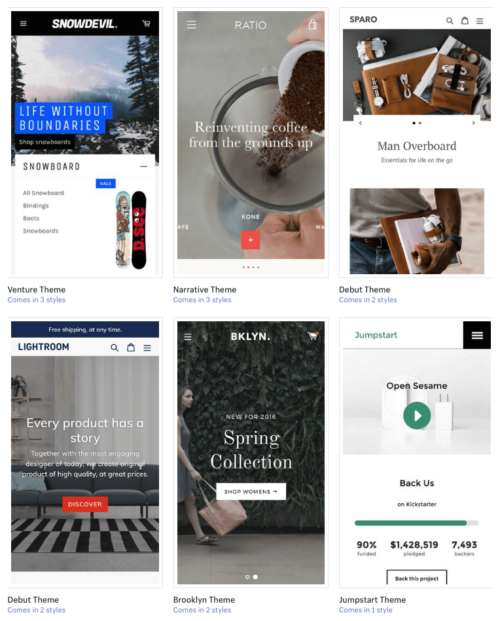
Thumbnails of six Shopify ecommerce templates

Shopify makes it pretty straightforward for a small business to get up and running — like a lot of hosted ecommerce platforms, you have a 14-day free trial where you can actually build your entire store and try out the features and functionality without ever entering a credit card number.

You’ll choose the basic look and layout of your store from 10 free or 60 for-purchase themes, and customize from there. Shopify’s templates are fully customizable, and if you want to tinker even more, you have full access to the HTML and CSS of their stores, but heads-up: Shopify uses a Liquid setup, which will have a little bit of a learning curve for those who are more used to PHP.

Because it’s such a force in the industry, Shopify integrates with pretty much every other app, SaaS, and technology out there, be it live order tracking, automated up-selling bots, or finding dropship products to sell.

Shopify has its own app store a la Apple and Google with built-for-Shopify (and often built-by-Shopify) technology that you can plug and play to make your store do everything you want. It’s amazing.

Some merchants don’t love this — they find that Shopify relies so much on third-party integrations that some of its built-in technology is lacking. But I think the app marketplace is great.

Here’s what you should do to decide for yourself: Make a list of all the functionality you want for your site and see if you’re satisfied with what you get for free during your 14-day trial. If not, explore the available add-ons and plugins (there are over 2,400 in the Shopify app store) and see how much they’ll add to your bottom line. My guess is it’s not going to be much, and the ease you’ll get from Shopify will make it worth the cost.

Speaking of bottom lines: One of Shopify’s biggest standouts is that it’s built its own payment gateway, Shopify Payments. While you still can integrate with over 100 others (in fact, you’ll have to if you have customers outside of the US, the UK, Australia, Canada, Hong Kong, Ireland, Japan, New Zealand, and Singapore), Shopify Payments potentially eliminates one more integration you’d have to do to get up and running. At 2.9% + $0.30, Shopify Payments’ rates are right in line with other leading payment gateways, including PayPal, stripe, and Authorize.net, but it does tack on an extra 2% transaction fee for any payment that isn’t processed through Shopify Payments.

If there’s anything I’d call out as really not awesome about Shopify it’s this. I get that they want you to use Shopify Payments, but it’s a bit annoying that they charge extra for offering other payment options, especially because accepting multiple payment options is one of the 11 best ways to boost online sales. Check to make sure you qualify to sign up for Shopify Payments in its Terms of Service, then get out your calculators. You’re going to have to do a lot of math to see which payment gateway makes the most sense for your business no matter which ecommerce platform you choose.

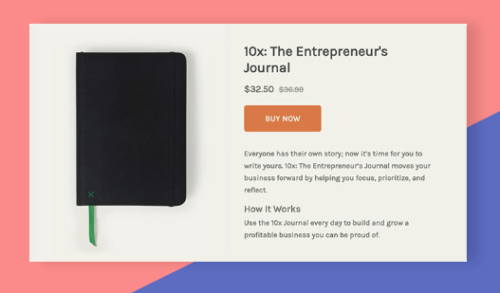
Shopify buy now button for Shopify Lite

Shopify Lite comes with a “Buy Button” that can go on any site.

Outside of its core ecommerce software, Shopify offers a supercharged and highly customizable ShopifyPlus plan for high-volume merchants and enterprise businesses, and Shopify Lite, which is essentially just Shopify’s payment processing functionality. The Lite plan might be interesting to very small businesses just entering ecommerce. It acts a lot like PayPal: you can pop a Shopify Buy Button into your WordPress or Squarespace site, swipe credit cards with its app, and sell on Facebook and Facebook Messenger for $9 per month.

Shopify customer support, training, and resources

More Quick Sprout Shopify Reviews and Guides

WooCommerce

  • Best ecommerce software for blogs
  • WordPress compatible
  • Free, open-source software

WooCommerce has 64,140,184 downloads, and as such is the most popular ecommerce platform for building an online store (stats from Builtwith). It makes sense that WooCommerce powers 30% of online stores — the most of any ecommerce software — because it’s built on the system that powers 30% of all websites on the internet, WordPress.

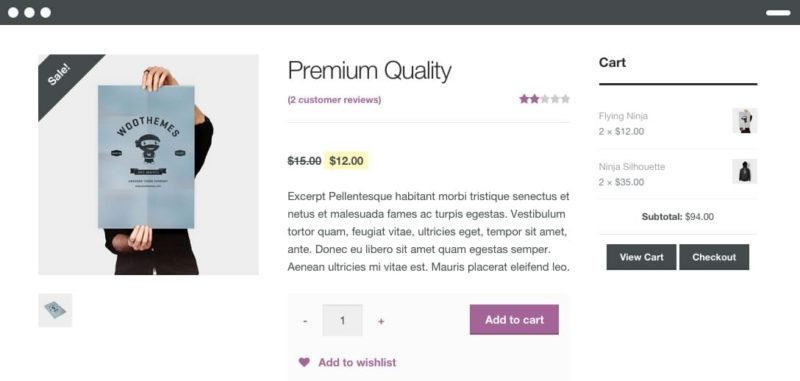
Example of WooCommerce Storefront theme

The free Storefront template from WooCommerce.

I only recommend using WooCommerce if you hit these three use cases:

  1. Your site is content-based. Your blog is the most important element of your site; not your store.
  2. Your store has between 10 and 20 items. More and you should use Shopify, less and you should probably use Shopify Lite.
  3. You’re not investing heavily in the store element of your business — you just want to get some buy buttons up, not build an ecommerce empire.

WooCommerce is free open-source software that runs on any self-hosted WordPress.org site. You’ll need a domain name, a web host, and a theme. Then you’ll need to install Woo. (If you’re already running a WordPress site, then installing Woo is as simple as activating any other plugin. You know the drill.)

If you don’t already have a theme, WooCommerce has a free template called Storefront, which prioritizes speed, uptime, and theme/plugin simplicity. It’s the “official” theme, and it’s purposefully clean and simple. It is built and maintained by WooCommerce core developers, and promises “water-tight” integration between the theme, WooCommerce, and any extensions or plugins you add. (WooCommerce.com is running on a $39 Storefront child theme, which gives the Storefront theme a new look.) There are also plenty of templates for sale that aren’t created by WooCommerce or WordPress.

Like with anything WordPress, there are some features built into your theme, and some features you’ll need to install a plugin for. Some WooCommerce extensions are free, but many aren’t; they’re $29, $79, sometimes $199 for a one-site subscription. If you want to do more advanced or powerful things in your store, like run a recommendation engine or sell recurring subscriptions, you’ll need to pay for extensions.

If you upgrade using any of the 300+ premium extensions, you can add on bookings, repeating subscriptions, and memberships. There are hundreds of extensions in the WooCommerce official marketplace. Popular ones include Stripe, PayPal, USPS, Amazon Payments, Authorize.Net, ShipStation, and MailChimp. For example, want to add reviews to your Storefront site? There’s a $19 extension for that. Want a pricing comparison table to show the difference between your Bronze, Silver, and Gold Memberships? There’s a $19 extension and you’ll get access to a shortcode generator to copy and paste into your layout how you’d like.

At WooCommerce, the customer service team is manned by “Happiness Engineers.” These very same team behind WordPress.com, Simplenote, Jetpack, and Longreads. In fact, the first three weeks of any employee’s time are spent in customer service, and one week a year “forevermore” after that. Why? “We believe an early and ongoing connection with the people who use our products is irreplaceable.”

To get in touch with this support squad, the first stop is documentation. You’ll find extremely detailed step-by-step instructions, how tos, and ways to fix common issues like blurry images. Need more help than that? Woo also has a help desk where you can submit a ticket or start a live chat. There’s no phone, Facebook, or Twitter support.

WooCommerce courses and training videos

More Quick Sprout WooCommerce and WordPress Ecommerce Reviews and Guides

Wix

  • Best ecommerce website builder
  • Drag-and-drop tool
  • Choose from 63 templates

You might know Wix as a drag-and-drop website builder, but it’s also a drag-and-drop ecommerce shop builder, too. And the process is just as simple: create an account, choose your template (there are 63 ecommerce templates to choose from), load your inventory and product pages, set up payment information, and start selling. You can even get started picking your template, designing your store, and trying out the store manager where you’ll track orders, manage inventory, and send out customer newsletters with coupon codes or sales — all for free. Signing up is a simple a logging in with your Google or Facebook account.

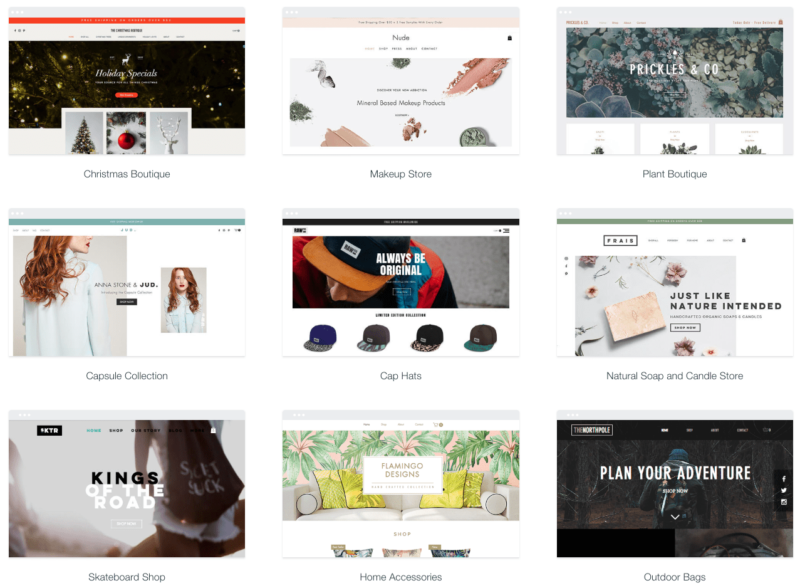
Thumbnails of nine Wix online store templates

Some Wix online store templates.

It’s not until you want to accept payments that you’ll need to upgrade your account to a business / ecommerce account. Wix Business plans range from $20 to $35 per month — but they’re billed in full yearly subscriptions at the time of purchase, so really you’ll be laying out $240 to $420. You’ll get 14-days to test drive the plan. That’s about on-par with Basic Shopify, which is $29 billed monthly rather than up front. If you pay upfront, Shopify knocks off 10% on annual plans and a 20% on biennial plans, bringing the monthly cost down to $26 or $23.

All of Wix’s business plans allow you to accept online payments without paying commissions, and get unlimited bandwidth (so any number of customers can visit your store). The more expensive plans grant you more storage, up to 100,000 emails a month and higher-priority support response.

With a business plan, you can take credit cards, PayPal, offline payments, and don’t have to pay any commissions to Wix. Not all businesses are the same, so neither are the Wix templates. Any Wix template can run a store, if you add the “Wix Stores” app, or you can get a head-start with a pre-made stores template. To do that, you’ll first choose your business-type.

Run a bookings-based business? You’ll start with a Wix Bookings template. Your customers will get auto-email reminders about the event. Sell sessions individually or as part of a membership plan. If you accept offline payments, it’s as simple as checking the “mark as fully paid” box on the bookings dashboard. There’s even a bookings template for restaurants.

I like that it’s super fluid to make sales and note when you’re busy: simply block off time you’re not available in your Wix schedule on the mobile app; sync your Wix Bookings with you Google calendar automatically. Customers can also book directly from their mobile phones, too — by creating a club and inviting your customers to it, they can chat you, book a service, RSVP to an event, or start a discussion from the app.

I haven’t seen anything like the Wix Music page includes a customizable music player and a way to sell your music directly from your page, without paying any commissions. Your reporting will include most-played, most-shared, most-purchased, and most-downloaded songs.

There’s also a pre-made template for ticketed events businesses. You can set the ticket price, manage the RSVP list, invite and add guests, and edit details.

From there, it’s all the drag-and-drop joy Wix is known for. You’ll want to design a “storefront” or homepage, product pages for each of the items you sell with images and product information. Want the menu in a different place, in a different font, with other elements? Drag it, change it, save it. If you’ve ever felt templates to be limiting — I can change that but only in those 3 predetermined ways?! — then you’ll love the new Wix Code. It’s a hybrid platform, with all of the ease of a drag-and-drop and the control of your own customization and scripting with a built-in database, JavaScript backend and integrated development environment. Simply turn on the Wix Code editor and you’re in. If you want more of a walk-through, check out my post on how to make a Wix website in 6 easy steps.

Wix courses and training videos

More Quick Sprout Wix Reviews and Guides

3 Other Ecommerce Software Options to Consider

Squarespace

  • Ecommerce built into every plan
  • Beautiful templates
  • No app store or marketplace

Squarespace is best known as a website builder, but its ecommerce solution is one of the most popular in the world. In large part that’s because ecommerce functionality is built straight into nearly all of its plans: Even if you start with just a basic website, you can sell products. That grow-into-it flexibility makes it an interesting option for businesses who aren’t quite sure of their future plans.

With Squarespace, what you get is what you get. Unlike pretty much every other ecommerce platform, it doesn’t integrate with endless apps and extensions. It comes with about 70 of the most popular and most useful built in, and provides setup support, troubleshooting, and general questions for all of them.

But there’s no app store or marketplace like you see with lots of other platforms. You can install third-party customization, but those will required some sort of code injection or “Code Block” — no one-click install. It’s really important to test out the functionality of your Squarespace site during your free trial and see if you like what you’re getting. If not, another platform with more integration capabilities might be a better option.

BigCommerce

  • No abandoned cart function on standard plan
  • Sales caps on each plan

Like Shopify, BigCommerce’s core product is available at a few different functionality tiers, ranging from $30 per month to $250 per month; also like Shopify, higher tiers are more robust, including features like abandoned cart saver, product filtering, and customer loyalty programs. Unlike Shopify, though, BigCommerce has a sales cap on each of its plans. If you’re bringing in more than $50k per year, for example, you’ll no longer qualify for the Standard plan, and be automatically upgraded to Plus ($80 per month with a sales cap of $150k per year).

The biggest difference you’ll notice if you’re testing out both Shopify and BigCommerce is how many native features BigCommerce has installed right out of the box. It offers an outstanding number of technical integrations and marketing features that Shopify might only be able to provide if you buy and install a plugin or extension (for example, single-page checkout). For some, BigCommerce’s roster of pre-installed features is going to be annoying. But those who aren’t overwhelmed by the sheer options may find that they don’t need to pay extra for the functionality they want.

Magento

  • Enterprise-level software
  • Overly expensive and complex for small- and medium-sized businesses

If you’re in the market for ecommerce software you’ll see some pretty impressive claims from Magento. It’s also an open-source self-hosted software, but it’s aimed at the enterprise level. Magento boasts huge clients like Burger King, Nike, and Rosetta Stone.

For large-scale stores in need of the ability to create complex customizations without limit, Magento makes sense. (In 2016, 202 Magento customers were in the Internet Retailer Top 1000 list, compared to 12 Shopify customers — and 42 merchants in the Internet Retailer B2B Ecommerce 300.) Impressive, but if you’re starting a digital business, you’ll still likely be happier with Shopify or WooCommerce. Why’s that? Magento’s more expensive to maintain, has a steeper learning curve, and it’s not robust with content tools.

Review Recap: The Best Ecommerce Platforms

  • Shopify is the best option for just about every business.
  • WooCommerce wins if you’re website is primarily content — there’s no doubt that WordPress wins in blogging.
  • Wix is certainly monetizable if your site’s already built and you’re not interested in switching.


from Quick Sprout https://ift.tt/2SzVmJB
via IFTTT

The Best Email Marketing Services

Quick Sprout recommendations for email marketing services are based on months of research and testing. We’ll never point you to a product or service that we don’t believe in or have first-hand experience with. Our content is reader-supported, which means if you click on one of our links to a recommended email marketing service, we may earn a commission.

Nearly every email marketing platform promises the same thing: great deliverability, intuitive tools, designer-quality templates, and useful reporting so you can make the most of every email you send.

In the most basic tier, you’ll likely be happy with any of the options — and that’s the tier I focus on in this review. I know they each have their super fans who’ll definitely tell you that this one is the best and the others don’t stack up — I’ll break it all down for you.

Why trust me?
I’ve run marketing and email campaigns as a consultant for years, both independently and as the head of marketing at an analytics startup. For this review, I looked at the best email marketing services and found that yes, they do all reliably deliver email, make it easy to manage your massive lists, and make sending emails more intuitive.

The 4 Best Email Marketing Platforms for Beginners

These are my top picks for businesses just getting started in email:

If you’re new to email marketing, Mailchimp is a great place to start. Its templates are knock-out gorgeous. There’s helpful just-in-time information at every step. And just about all of its reporting, testing, and tools are free on the Forever Free plan. You’ll get up to 2,000 subscribers and 12,000 emails a month at that price. When you grow too big to stay free, it won’t be painful: Mailchimp’s pricing is competitive: $15 per month once you pass 500 subscribers; $20 once you’re over 1,000; $50 for up to 5,000.

Next, Mailjet: the Google Docs of email marketing services. Astonishingly, it’s the only email marketing software with real-time collaboration. I don’t know about you, but when there are multiple departments that would like to weigh in on a campaign it can get pretty messy pretty quickly: design and copy and merchandising and a dozen other people trying to send feedback to a sole email marketer like it’s 1999. With Mailjet, that problem is solved. You can get everyone in the same email builder and collaborate. (I also like Mailjet if you’re used to collaborating in real-time with you one or two business partners. It can slow you down to hop in and out of the editor in Mailchimp or another software.) To access the collaboration element, you’ll need to sign up for the Premium plan, which starts at $18.86 per month billed annually or $20.95 billed monthly. If you choose Mailjet, I recommend the upgrade.

More advanced users who dream of their complex automated email workflows and robust tagging systems should check out ConvertKit. Its workflow builder is the easiest to use: you can visually map out your email sends and edit the emails in those flows seamlessly. Instead of clicking back and forth between editing your workflow and editing each email, you can edit them all from one space: the workflow simply slides to the side when you edit an email and slides back out when you’re done. It’s worth noting that ConvertKit’s templates are purposefully barebones and it’s easily the most expensive of the top beginner email marketing services. Plans are based on your subscriber count: $29 per month for up to 1,000; $49 for up to 3,000; $79 for up to 5,000. If you’re living in this software, though, it’s very much worth it.

Don’t have a big budget, but love the idea of a visual workflow builder and a robust tagging system? Consider GetResponse. The workflow tool is easy to use, just not as intuitive as ConvertKit’s but at half the price — $15 per month for 1,000 subscribers; $50 for 5,000 — it might be worth the tradeoff.

If you’re not just getting started with email, I’ll jump right to the chase, there’s not much in this review for you. For medium-sized or larger B2B company that need deep Salesforce integration like yours, I recommend Marketo. If you’ve got an engineer you can work with and want to have literally limitless potential, then you’ll love SendGrid. (It’s what we use at Quick Sprout for our email campaigns.) I won’t go deep on SendGrid in this guide, since it’s not necessary when you’re just getting started in the email world, but it’s what we use and love.

In all truth, you really can’t go wrong with almost any email marketing software — the only one I don’t recommend is Infusionsoft. I’d sell a kidney sooner than revisit that experience…

The Top Email Marketing Services Compared

Mailchimp Review

  • Best for beginners
  • Free forever plan

If you’re looking for a free or freemium product, Mailchimp is the place to start. As FastCompany says, Mailchimp is probably the biggest name in the freemium category. You get access to almost all of Mailchimp’s features without dropping in any credit card information. I like that.

It’s also an easy starting place for beginners. As you scroll and build your interactions, Mailchimp acts like a cheery, helpful workbook with with pro tips, best practices, and optimization advice waiting for you on every page. And it’s good stuff you’ll recognize from How to Write Marketing Emails That Get Results. Don’t just send a receipt, Mailchimp says, send some suggestions for other products they may want to add to their order! To Mailchimp, you’re not sending an email, you’re having an interaction with your recipient: It’s not an abandoned cart, it’s a show of deep interest in a product and an opportunity to capture their interest! We concur.

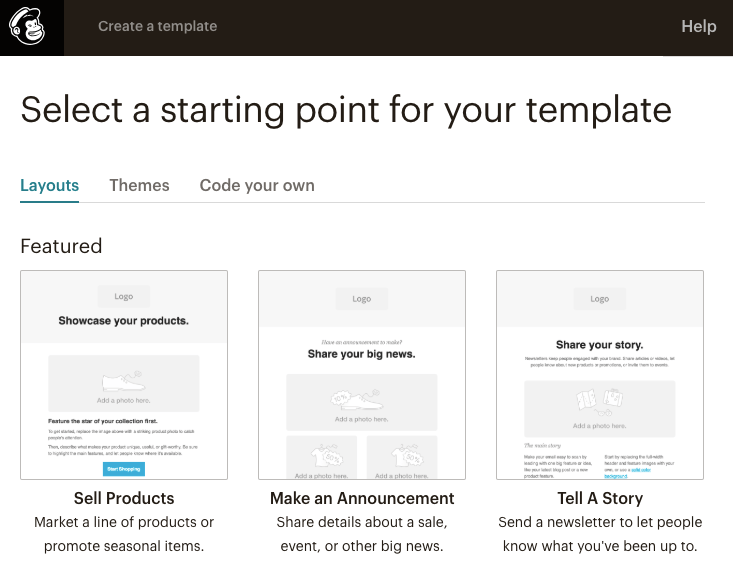
Mailchimp purpose driven email templates
Those interactions you create will be beautiful. Mailchimp’s pre-made templates are excellently designed and ready for images, GIFs, designed headers, the works.

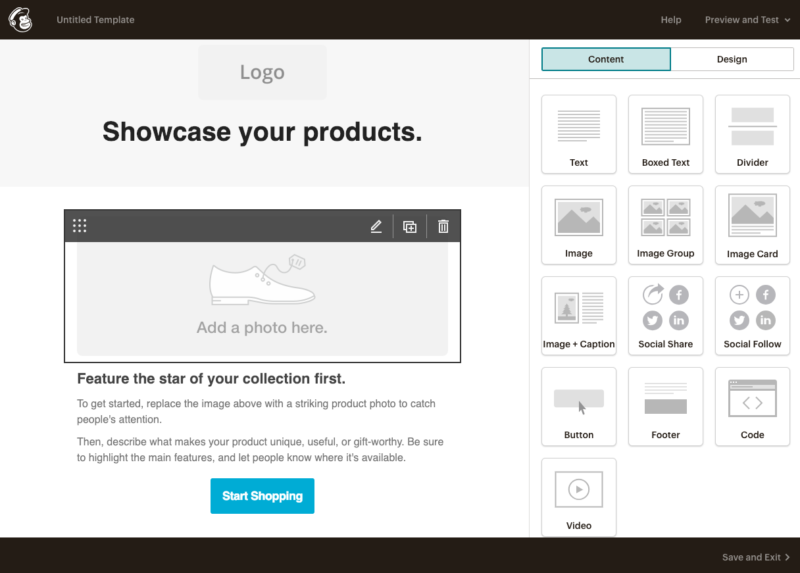
Editing a Mailchimp email template

Its drag-and-drop tool isn’t necessarily impressive, but it isn’t hard to use, and allows for simple customizations. Add a module, delete one, edit one, or swap the order.

Email remains Mailchimp’s dominant product — it sends more than one billion messages every day — but, in 2018, the company continued pivoting toward technologies both old (direct-mail postcards) and new (stripped-down websites, or “landing pages,” and a still-developing customer relationship management system).
Maria Aspan, Editor-at-large, Inc.

That still-developing customer relationship management system is definitely where I see Mailchimp has room to grow — I’d like it to be easier to send messages (of all types) to the right customers, based on more nuanced information about those customers.

Other Mailchimp Features to Note

Pricing: Free is free forever (up to 2,000 subscribers or 12,000 emails a month). When you get bigger or start sending more email, you’ll need to upgrade. You can pay per email or per subscriber.

Free Grow Pro Pay per use
$0 $10+ per month based on list size $199 per month on top of subscriber fees $0.01–0.03 per email
Up to 2,000 subscribers
Up to 12,000 emails per month

No credit card needed to sign up
Requires a MailChimp footer
Unlimited emails to up to 500 subscribers: $10
5,000 subscribers $50 per month
Adds things like premium support, advanced segmentation, comparative reports, and multivariate testing Purchase credits in bulk: 5,000 credits for $150; 75,000 credits for $750

Automation triggers: Welcome, date-based, abandoned cart, order notifications, product retargeting, product recommendations, product follow-up, customer re-engagement, best customers, first purchase, promo codes

Reporting: Automation, comparative, landing page, Facebook ads, Google ads

Landing pages: Unlimited free landing pages

Segmentation: I’m not very impressed with Mailchimp’s ability to segment, tag, or build workflows. Mailchimp comes with a bunch of pre-built segments you can use from the get-go: New / Active / Inactive subscribers, Potential / Recent / First-time / Repeat / Lapsed customers, Male / Female, Under 35 / Over 35. If you have a basic account, you can use up to five conditions to do simple list filtering, but not combine logic. You’ll need Pro ($199+ per month) to do that — then you’ll get access to complex and flexible list filtering with unlimited conditions.

A/B testing: You can test up to 3 variations (or if you go Pro, up to 8 multivariate combinations): subject lines, content, from names, and send times. There are lots of helpful notes throughout setup, like suggesting you send to 5,000 recipients per variant for significance — and right above that, noting how many recipients you currently have. This is the kind of easy-to-get-it-right support Mailchimp serves up throughout its platform.

Integrations: 185 integrations including Spotify, WooCommerce, Eventbrite, Zapier, Salesforce, and Big Cartel

Clear and useful documentation:
— Helpful materials for beginners
— Helpful materials for advanced users
— Live or recorded trainings
— Active user community

Support portal:
— Chat support M–F (paid users only)
— Email support 24/7 (everyone first 30 days, then paid users only)
— No phone support

Mailjet Review

  • Best for collaboration
  • Top features unlocked only with premium
  • No freemium plan

If there are a lot of cooks in your email marketing kitchen — I’ve run campaigns that needed buy-in or comments from design, branding, copy, merchandising, PR, legal, and more!— then Mailjet Premium is going to be a game-changer.

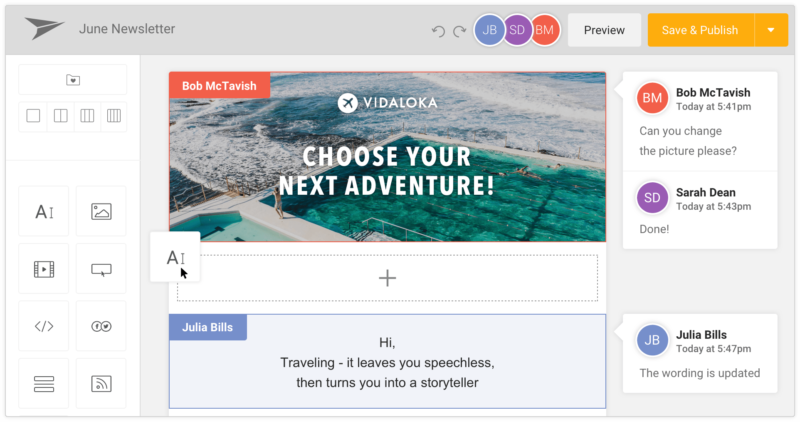
Instead of funneling all email campaign changes through one person, emailing out a preview, and having that same person make all of the changes, everyone can hop into Mailjet and collaborate. Make comments, make changes, and even lock down sections that are already approved. Track changes and restore old versions whenever you’d like to rewind.

Worried about letting loose the power of email sends to everyone? Add a “publication request” and automatically require manager sign-off before anything gets launched. It’s the stuff Google Docs has conditioned us to expect — and Mailjet is the only service that offers this option. For this reason alone, it’s easy to recommend Mailjet.

Mailjet Email Marketing Collaboration Tool

If it’s just you working on an email campaign, real-time collaboration won’t matter at all, and I think you’d be just as happy with Mailchimp. There’s nothing else super special about Mailjet on its Free and Basic plans: you get access to drag-and-drop email templates and 24/7 support. Opt for Basic and Mailjet will drop its branding.

Every Mailjet plan allows you to have unlimited contacts. Want to add a million people to your list? Go for it. You’ll only be limited by the number of emails you can send in a day or a month. On its Free plan, that’s just 200 a day. (It’s really more of a trial than a plan.)

Other Mailjet Features to Note

Pricing: Mailjet’s Free plan isn’t like the freemium plan from Mailchimp — it’s more of a limited scope trial, than a true plan. You’ll be able to load as large a list as you want, but you’ll be capped at sending 200 emails a day. To really use Mailjet, you need at least the Basic plan. Crest 60,000 emails sent a month and the prices for either plan increases.

Emails / month Free Basic Premium
6,000 $0 $10 $21
30,000 --
60,000 -- $19 $42
150,000 -- $69 $97
450,000 -- $167 $230
900,000 -- $334 $399

Reporting: Real-time dashboard with opens and clicks, sorted by contact or by email provider

A/B testing: Mailjet says, “You can test everything!” and it’s true in a way. You can pit up to 10 different emails head-to-head, testing things like the light blue header with the orange CTA button versus the the light blue header with the green CTA button — and both of those options with different CTA texts.

Segmentation: Limited (and for Premium plans only). Segment by gender, age, location, past opens and clicks, or past purchases.

Integrations: 85 including Shopify, Zapier, Salesforce, Zendesk, Typeform, Slack, Google, and WordPress

Clear and useful documentation:
There are a few questions briefly and directly answered, but nothing that’s as “just-in-time” as Mailchimp’s help pop-ups. With Mailjet, you’ll need to think of what to ask, for example: What is a good open rate? Once you know what you want to know you can click over into the help section, which recently got a facelift. There you’ll find plain answers with simple screenshots.

Support portal:
— Email support 24/7
— Slack support (Premium and Enterprise plans only)
— Phone support (Premium and Enterprise plans only)

ConvertKit Review

  • Best workflow
  • 14 day free trial
  • Starts at $29 per month

ConvertKit’s product is hands-down the best in its class, intuitive in a way that I didn’t even know to ask for — like the game-changing way of the iPhone touchscreen. I won’t be surprised if more platforms start to copy ConvertKit.

How’s it so great? Updating the emails in a flow is phenomenally simple. You’re always working in the visual automator flow chart. Click into any email and the flow chart slides to the side. Edit the email, then click on any other email to edit that one. You can seamlessly move from one email to the next and save them all at once.

Imagine, for example, that you have an automated flow to sign up for a webinar and you’ve changed the price or the date of the webinar. You’d like to change it throughout the entire email sequence. This method makes it simple to move from email to email within the sequence without using a bunch of tabs, or trying to remember where you left off. (If this isn’t making sense, give the free trial a spin and see what I mean.)

ConvertKit’s demo page has a good video walk-through of its best-in-class workflow.

If that wasn’t enough to win my affection, ConvertKit’s tagging system is impressively robust and operates as its segmentation functionality. Instead of grouping your subscribers into multiple lists (where you’ll get double charged by most services), with ConvertKit, you have one list and many tags. You can manually tag subscribers with just about anything, and auto tag them based on source, link clinks, and purchases through integrations. Use those tags to target your emails to particular customers, or use conditional content tags to show or hide different pieces of information to subscribers within each email.

Here’s an example: You’re a skydiving instructor. You use your list to sell skydives with customers and potential customers, and run a Conquer Your Fears email course to get new leads. You also use your list to upsell existing customers multi-packs of skydives, and you offer a six-week 40-skydive instructor training course.

As discussed in The Definitive Guide to Marketing Automation, your job is to long-term guide each of your customers through the different points of your conversion funnel. The people who’ve signed up for the Conquer Your Fears challenge are not the same as the ones interested in the training course. You need to use tagging and segmentation. With ConvertKit, you’ll be able to tag each of your subscribers with the number of skydives they’ve done — based either on purchasing from your web-store, or by clicking a link in an intro email.

ConvertKit is not the best email marketing service for everyone.

I appreciate ConvertKit’s honesty in its blog post 5 Reasons you should not switch from Mailchimp to ConvertKit. Even though ConvertKit is one of my favorite email service providers, I totally agree! If you want beautiful, drag-and-drop email templates, you should stick with Mailchimp. ConvertKit doesn’t have them.

A collection of Mailchimp template designs

Mailchimp has tons of beautiful image-rich templates and an inspiration gallery that’s truly inspiring.
The three simple text templates from ConvertKit
ConvertKit only has three “templates” and they’re about as simple as an email you’d send to a friend.
ConvertKit highly encourages text emails that create the feeling that you just opened Gmail and sent a note. So, it only comes pre-loaded with three email templates: text-only, classic, and modern. The difference? Text-only has no pictures; classic and modern have pictures. Classic uses a serif font; modern uses a non-serif font. That’s it folks. There are no fancy email templates, no GIFs, no header images.

The best way to market online is to teach, to regularly deliver valuable content to your audience so that they will trust you and eventually want to purchase from you. So when you send an email, what part of the communication delivers the most value?

That’s right, the content. So we should be stripping away everything else that isn’t necessary in order to focus on the content. Multi-column layouts, background images, logos, and all the other nonsense that typically fills marketing emails doesn’t deliver value to the recipient. Instead it is all about you, the sender. Flip that around and start delivering value.
ConvertKit Founder and CEO Nathan Barry

And, ConvertKit isn’t free. Even on its lowest plan, you’ll be paying $29 a month (or $24 if you pay annually up front) — which is still $29 or $24 more than you’d pay to get started with Mailchimp. There is a 14-day ConvertKit free trial, but you’ll be paying up front, no matter how successful (or unsuccessful) you are at building a list of subscribers.

If you don’t have a list yet, you might want to start with Mailchimp. And if you have one list, and plan to send to them all the same thing, Mailchimp will serve you well.

Other ConvertKit Features to Note

Pricing: Starts at $29 per month. Pricing is based on number of subscribers. All plans include visual workflow and unlimited emails.

$29 / month $49 / month $79 / month $99 / month $119 / month $149 / month
0–1,000 1,001–3,000 3,001–5,000 5,001–8,000 8,001–10,000 10,001–15,000
Automation triggers: Welcome, date-based, abandoned cart, order notifications, product retargeting, product recommendations, product follow-up, customer re-engagement, best customers, first purchase, promo codes

A/B testing: Available for headlines

Reporting: Automation, comparative, landing page, Facebook ads, Google ads Landing pages: Unlimited free landing pages

Integrations: 80 ecommerce integrations including Crowdcast, Demio, Teachable, Shopify, Woocommerce, and Zapier

Clear and useful documentation:
— Helpful materials for beginners
— Helpful materials for advanced users
— Live or recorded trainings
— Active user community

Support portal:
— Chat support (available 24-hours a day, 5 days a week)
— Email support (average 3-hour turnaround time, 7 days a week)
— No phone support

GetResponse Review

  • Runner-up for best workflow
  • Starts at $15/month
  • 30 day free trial

The best things about GetResponse are its visual flow builder (a less powerful version of ConvertKit’s flowchart style — but it doesn’t integrate with its email editor) and its landing page integrations. If you’re going to be doing any webinar marketing, these landing pages are already set up for you to crush it. And GetResponse probably won’t blow through your budget as fast, either.

GetResponse marketing automation visual workflow builder

I’ve seen the workflow builder in action, and it is one of the more impressive click-and-drag interfaces on offer, yet it is extremely easy to use.” — Stewart Rogers in VentureBeat

GetResponse has the most complex pricing structure of my top picks. With Mailchimp and ConvertKit, your price increases as your subscribers increase, but you aren’t necessarily unlocking a bunch of features or tools — you already had access to most of them. With GetResponse you pay based on the number of subscribers you have and the level of service you want: Email, Pro, Max, or Enterprise.

Subscribers Email Pro Max Enterprise
1,000 $15 $49 $165 $1,199+
2,500 $25
5,000 $45
10,000 $65 $75
25,000 $145 $165 $255
50,000 $250 $280 $370
100,000 $450 $490 $580
100,000+ -- -- --
1 user 3 users 5 users 10 users
Monthly prices listed. Sign up for an annual plan to save 18%. If you go opt for two years, you’ll save 30%. No refunds if you cancel early.

Other GetResponse Features to Note

Landing pages: GetResponse offers “basic” and “advanced” landing pages, but I think the names should actually be “very limited” and “unlimited.” If you stick with the Email plan, you’ll get “basic” which hosts one landing page with up to 1,000 visitors a month. The advanced option allows you to build an unlimited number of landing pages with an unlimited number of visitors, and do A/B testing on them. If you know you’re going to be using landing pages, sign up for the Pro plan. If you’re not sure, start with the Email plan.

A/B testing: You can test up to five messages varying the following fields: subject line, send time, from field, content.

Clear and useful documentation:
— Helpful materials for beginners
— Helpful materials for advanced users
— Live or recorded trainings
— Active user community

Support portal:
— Chat support (available 24/7)
— Email support (available in seven languages)
— No phone support

Recap: The Best Basic Email Marketing Platforms


from Quick Sprout https://ift.tt/2RlwofK
via IFTTT

The Best Domain Registrar

Thursday, August 29, 2019

How to Start an Online Store That Drives Sales

The best platform for starting an online store is Shopify. That’s what we use for all of our ecommerce websites. Creating your online store, is just 1 of 6 critical steps, which this guide will take you through in detail.

Start your free trial with Shopify today and create your online store in just minutes.

There’s a bunch of things to think about when starting an online store:

  • What tool do you build your store with?
  • What do you name your company and how do you get a domain?
  • Do you dropship or not?
  • How do you deal with taxes?

All of these are important decisions. For now, one thing matters more than anything else to get your first sale.

What’s that one thing?

Your marketing.

That’s right, how you choose to market your store completely determines how much money you’ll make. Get the marketing right, everything else falls into place. Get it wrong or neglect it, you’ll spend years on your store without selling a single item.

There’s 6 Steps to Starting and Launching Your Online Store

  1. Pick your marketing strategy.
  2. Find the right product niche.
  3. Pick a name for your brand.
  4. Create your online store.
  5. Do a 60-day marketing burst.
  6. Build your marketing flywheel.

Step 1: Pick Your Marketing Strategy

Before you open your online store, you need to pick your marketing strategy. Don’t even look at templates for your storefront, or color palettes, or logo designs, or anything yet. (We’ll get to the how to setup an online store stuff soon — I promise.) First, pick your marketing strategy.

If there’s one step that will make or break the success of your online store it’s this one. It’s not a hard choice, but it is one that you need to make thoughtfully and in advance.

Most online stores use one of three marketing strategies:

  1. SEO
  2. Paid marketing
  3. Platform marketing

Let’s go through each.

SEO for Online Stores

This marketing strategy is pretty simple: find keywords for products that you want to offer, then get your site to rank in Google for those keywords.

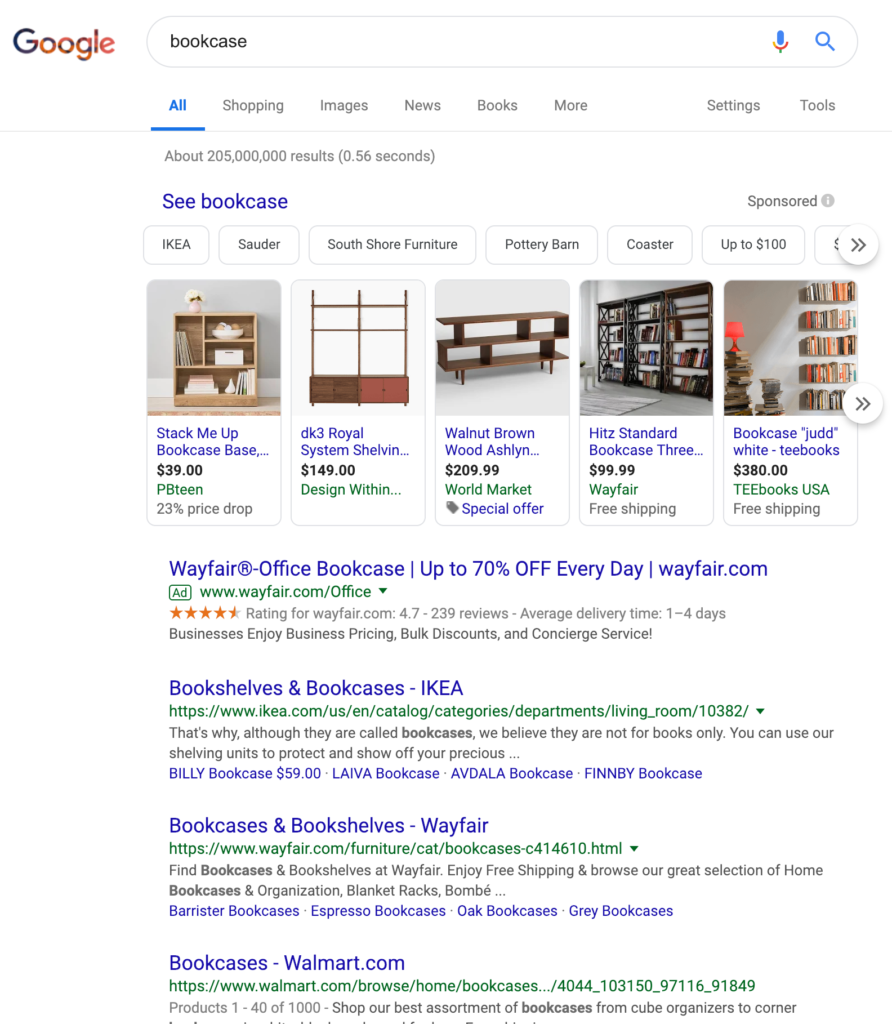
Google Search Marketing - Bookcase

In this example, IKEA, Wayfair, and Walmart.com are winning the organic spots (the ones underneath the carousel and the ads) SEO for the search term “bookcase.” If you get this strategy to work, you can make a lot of money with your online store.

SEO has a few benefits that are ideal for a businesses:

  • The traffic streams are very dependable, which means dependable revenue for your business.
  • Search traffic usually has the highest volume of traffic of any traffic source.
  • Even at scale, search traffic can be enormously profitable.

Dependable, high volume, and profitable. It’s everything you could want.

There is one major downside: SEO takes a lot of time and effort. Even if you’re pursuing a product category without any competitors, it can still take a good 3–6 months to see your site appear on the first or second page of search results for a keyword. The traffic volume will be pretty small until you get your page into the top 1–3 rankings on a keyword. If your category is even modestly competitive, it can take years of effort to get to that point.

If you go with SEO as the marketing strategy for your online store, you’ll focus on three things:

  1. Optimizing your product pages for product keywords.
  2. Building useful and engaging content for non-product keywords that are also in your category. This helps your product pages rank.
  3. Making your content so good that people will link to at as a resource.

When playing the SEO game, there are only two things that matter: content and links. So that’s where you’ll spend the bulk of your time.

Paid Marketing for Online Stores

Some online stores do exceptionally well with paid marketing. This includes sponsored posts on Instagram and Facebook, and paid results in Google search. Paid marketing are ad placements you buy.

Instragram Paid Ecommerce Ad

But is paid marketing right for your business? My general rule of thumb: paid marketing is a great option if your product is the type of thing that could be featured in a mall.

Why?

The biggest paid marketing channels right now are Facebook and Instagram. Instagram in particular has gotten very popular for online stores in the last few years.

But think of the frame of mind that someone has while scrolling through a Facebook or Instagram feed. They’re relaxing for a few minutes, laughing at a few photos, and leaving quick messages for a few friends. They’re enjoying themselves. It’s a lot like how people shop at a mall. Sometimes, people are looking for a particular item, but a lot of people go to the mall to enjoy themselves. Malls have known this for a long time and stores have optimized around this browsing experience.

Products that sell effectively in a mall are also likely to do well with a paid ad in Facebook or Instagram. These products typically:

  • Consumer products. Business products have a much harder time in these channels.
  • Highly visual and eye-catching. This is why apparel companies do so well in malls and why apparel companies have been really aggressive on Instagram the last few years.
  • Simple to understand. The offer needs to be understood within 3 seconds. If you have a more complicated sales process that requires more explanation, people will have scrolled past your ad long before you have a chance to make the sale.
  • An impulse friendly price point. If the price is too high that people need to carefully think through the decision, they’ll skip your ad and quickly forget it.

If your product meets all these criteria, you should seriously consider going the paid marketing route.

Google Ads (formerly AdWords) is one exception to this. Since you’re bidding on keywords within Google, you put your ad in front of people who are already actively searching for that type of product. As long as the keyword has enough search volume and the ad bids aren’t too competitive, it’ll work very nicely.

The biggest downside to paid marketing is that you’ll have to invest a bunch of money up front before you know whether or not you can turn a profit. Many of us don’t have those thousands of dollars to invest without a reliable chance of getting it back.

Most paid campaigns don’t turn a profit initially; they usually take a lot of iteration and work before they start making a profit. Most professional paid marketers need 3–6 months before their campaigns become profitable. So be careful and make sure you don’t invest more than you can afford to lose here. If cash is too tight for you, choose one of the other marketing options.

Platform Marketing for Online Stores

This is a completely different direction than the two methods above.

Instead of creating your own store and using a type of marketing to acquire traffic, you’ll leverage one of the main ecommerce platforms:

  • Amazon
  • Etsy
  • eBay

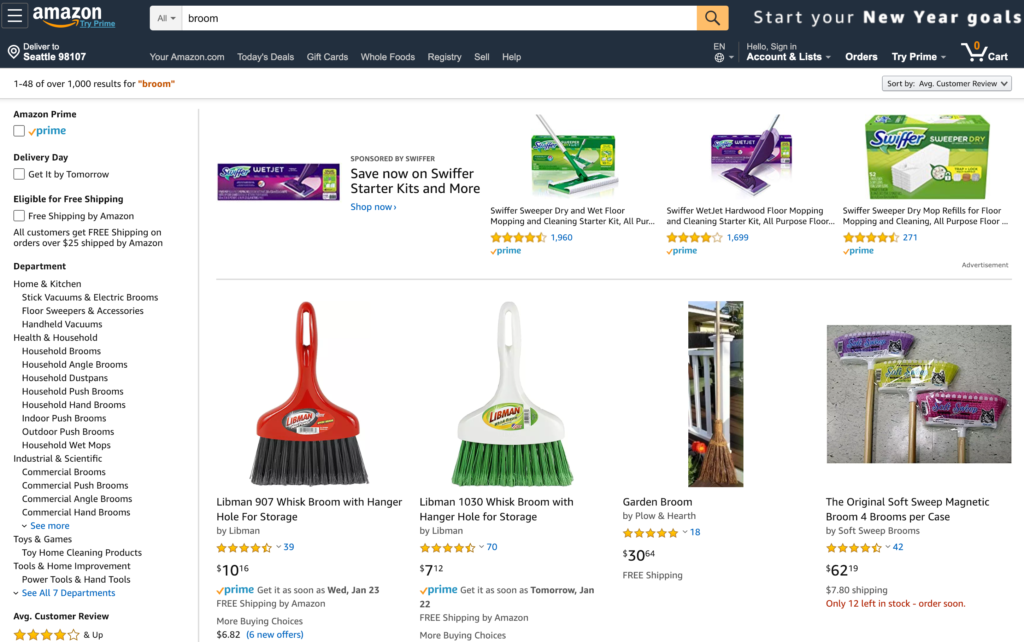
Amazon Platform Marketing - Broom

It’s definitely possible to be successful at any of these three. We recommend that most folks go after Amazon. Amazon’s audience is much larger which gives you more upside and just about every product niche already exists on Amazon.

The main exception is if you’re doing a craft business of some kind, like making your own bookends to sell to people. In that case, Etsy is a better fit since the audience expects more craft-oriented products.

eBay is still great if you’re doing a bunch of buying and reselling. But if you’re producing the same types of items consistently, the potential on Amazon is much higher.

You treat whichever platform you choose as your marketing channel. First, you’ll create your store on that platform and list all your products. Second, you’ll optimize your store to the best of your ability so the platform wants to feature your products.

Optimizing your store usually involves focusing on two areas:

  • Targeting your product pages to specific terms searched for within the platform
  • Getting as many 5-star reviews on your products as possible

As you improve your search terms and reviews, more people will see your products on that platform, which will produce more sales for you.

How to Choose the Best Type of Online Store for You

Let’s recap what we’ve covered so far. There are three types of online stores you can open. These types are based on the marketing strategy you employ.

The three marketing channels for an online store are:

  1. SEO — You’ll focus on content and links. Requires: time and patience
  2. Paid marketing — You’ll pay for placements. Requires: 3–6 months, money upfront, and a highly visual, simple-to-understand consumer product with an impulse-friendly price point.
  3. Existing platforms like Amazon, Etsy, and eBay — You’ll focus on winning the search terms within that marketplace and stacking up 5-star reviews. Requires: Committing to understanding that platform.

I strongly recommend that you pick one of these and build your entire business around it. That’s right, just one.

“Why can’t we do more than one? Wouldn’t we want to use multiple marketing channels for our store? More marketing means more sales right?”

I’ve made this exact mistake so many times myself. After a decade working in online marketing alongside some of the most well-respected marketers out there, I’ve noticed one overwhelming trend: folks that are good at one type of marketing are generally pretty bad at the others.

Why would this be?

A couple of reasons why it’s hard to be good at more than one kind of marketing:

  • Every marketing channel is completely unique. While some marketing principles apply across all channels, you’ll have to learn all the tactics from the ground up. Constantly trying to learn new channels really slows you down.
  • Online marketing channels constantly change. What works right now won’t work in 12 months. Even though I’ve spent a decade doing SEO, I still feel like I’m relearning it every year. If you’re focused on a single marketing channel, you’ll have a much easier time keeping up.
  • Online marketing channels are power laws. That means the majority of the profits go to a few big players — everyone else fights for scraps. If you’re not one of the winners, you won’t be making much.

If you stick with one marketing channel, you’ll get through the learning curve a lot faster. The faster you unlock your marketing channel, the sooner you’ll be making real money with your online store.

OK, step one is done. It was a long one, but it’s important that you spend time on it — it’s the very foundation of every other choice you’ll make in the process of setting up your online store.

Step 2: Find the Right Product Niche for Your Online Store

After choosing your marketing strategy, picking your product niche is the most important decision that you’ll make. Slow down and take your time to do some genuine research here.

A huge mistake that I’ve made in the past was jumping into hobby categories. Yes, being personally interested in the category really helps with building the business. But it’s also a common trap for picking a category that won’t support a thriving business. If there isn’t much demand in my niche, it doesn’t matter how great of a job I do, I’m doomed to fail from the beginning.

There are a few things I look for in a good product category for an online store.

First, avoid picking a category that’s too unique.

A common best practice in marketing is to differentiate yourself. And this is powerful advice — it’s a huge advantage when you have it.

It’s also tricky to find a genuine way to differentiate yourself that the market is willing to pay for. There are countless ways to differentiate any given product, but only 1–2 actually matter.

Does the top-rated toothbrush holder on Amazon need to do something wacky and unique? Not at all. It needs to be simple, easy to use, reliable, have a good price, and have a ton of reviews on Amazon. That’s it.

Instead of trying to differentiate yourself from every other product in your category, find a category with competitors that aren’t dominating their marketing channel. Are the Amazon reviews low for all the top products? Are the SEO results low quality? Are there no companies putting serious ad dollars behind a product? If the answer is yes, there’s an opportunity for you to out-compete them with your marketing.

A moderate price is also key.

Avoiding product categories with a low price makes a lot of sense. After all, if you only earn $1 in profit for each sale, you’ll have to sell 100,000 products every year to support yourself. After taxes and overhead, that’ll give you about $50–60K per year to live on.

Selling 100,000 of anything is a lot of work. No easy task.

Now let’s assume that you’re selling something for $80 and making $40 in profit on each sale. To make $100,000 per year, you’ll only need to sell 2,500 items. That’s much more manageable.

However, you also want to avoid selling something with a price that’s too high. As price goes up, so does buying behavior. Prospects demand more proof. They may even demand a completely different buying process. How many people buy cars without test driving them at a dealership? Most don’t. They want to see the car and talk to a real person before making a purchase that big. Cars require a lot of extra work and sales skill to sell effectively because of their higher price point.

We recommend finding a product that you can sell between $50 and $100 dollars. It’s high enough that sales will add up quickly for you. It’s also low enough that the buying process will be straightforward.

Lastly, make sure there’s demand.

You can usually tell if there’s demand by doing some category research on your marketing channel. For SEO, Google Ads (formerly AdWords) has a Keyword Planner that tells you how many times something is searched in Google every month. If the keyword for your product gets less than 1,000 searches per month, it’s probably too small to build a business on.

Same thing with Amazon, if you have trouble finding products in your category with more than 100 reviews, it’s probably too small.

These days, I’d much rather pick a category that I have zero experience in but has genuine demand. That’s much better than realizing that a passion category of mine has zero demand later on.

Step 3: Pick a Name for Your Brand

The bad news: everyone hates this step.

Trying to find a good name that’s not already taken gets really annoying. The websites are taken, the best names have been trademarked, and you’ll feel like you’re hitting dead-end after dead-end.

Good names are tricky to find.

Whenever I look for a new name, I feel a temptation to cut corners. After several full days of brainstorming names and hitting dead-ends, all I want to do is pick a less-than-ideal name just so I can move on to the next step.

I have to tell myself that it’s worth the effort to keep looking. It’ll pay off if I keep going and it always does.

Here’s the naming checklist I use:

  • Easy to spell. I never want any friction when people are trying to find my site.
  • 3 words or fewer. I like to keep it at short as possible so it’s easier to remember. 1 or 2 words is ideal, 3 is still good.
  • Pass the Bar Test. I should be able to say the name in a noisy bar without repeating it. That’s a great sign that it’s easy to understand. This is huge for word-of-mouth marketing later.
  • Can get the .com domain. Every online story needs a .com. It’s become too much of a standard. Some folks use weird domains like company.online or company.io. In my opinion, this causes problems later because whoever owns company.com will know how valuable it is once you try to buy it. I either buy the domain early or find one that’s instantly available.
  • Relevant to your category. Make sure the name relates to your product category in some way.
  • No trademark conflicts. Any corporate law firm can do a quick check for you on this. Since legal time is expensive, find 3–5 name options that check all the above items. Then have an attorney check for the trademarks all at the same time. It’s rare to not have at least one of them work.

We have an in-depth guide on how to pick and buy a domain name here.

Once you have your name picked, grab the domain using your domain registrar. Or if you’re buying the domain from someone, get it transferred into the domain registrar that you want to use for the long term.

Step 4: Open Your Online Store

If you’re pursuing an SEO or paid marketing strategy, this is a super important step. The quality of your site has a huge impact on how much of your traffic will turn into buyers.

First, we strongly recommend Shopify for building your site.

There are other tools out there like Magento and Bigcommerce — none of them compare to Shopify. It’s super easy to use, has all the features that you’d ever want, and has a very reasonable price.

The one exception to this is if you’ve already built out a blog with a large audience and want to add a small online store to it in order to sell a few items. In this case, adding WooCommerce to your WordPress is a good option.

Otherwise, always go with Shopify.

We’ve put together a detailed guide on creating an ecommerce website here.

And if you’ve picked one of the platforms like Amazon, treat your company and product pages with great care. Make the copy as compelling as possible. Use every feature that they give you. Get the highest quality photos that you can. Do everything. Really make your pages stand out.

Step 5: Do a 60-day Marketing Burst

All of our stores start from scratch.

When we’re just getting started, any bit of momentum goes a long way.

That first review, that first page that ranks in Google, that first purchase using a paid ad — it’s life changing.

At this stage of the process, I never worry about systems, scalability, or trying to do things in an efficient way. I’m looking for momentum any way that I can get it, no matter how much outreach or personal work I have to do.

The goal at this stage is to put in a huge burst of personal effort and get some momentum. Even if you have to do things that you know aren’t sustainable over the long term.

Here are a few examples:

  • I might tap my personal network to see if anyone is willing to do an interview with me and publish it on their own site. This will help me get a few initial links to my site.
  • I could ask personal friends and relatives to leave the first couple Amazon reviews.
  • I’d try spending some of my own cash on paid ads to test if the offer produces revenue at all.

I’m looking for any marketing idea that involves my time but also allows me to quickly get my first few wins.

At this stage, do some research on your marketing channel and come up with a list of 50 ideas that you could personally do yourself. Then prioritize them and plan a 60-day Marketing Burst. Ship as many of those ideas that you can within those 60 days. Work long hours, drink too much coffee, and really push yourself during that period.

By the end of the 60-day Marketing Burst, some of your marketing ideas will have worked and you’ll have your first couple sales. You’ll also have a small but steady stream of sales coming in because you’ve focused on a single marketing channel. That steady stream is enough to start building your marketing flywheel on.

Step 6: Build Your Marketing Flywheel

Once you have some initial momentum, it’s time to start building the marketing machine that will grow your business around the clock without you having to personally accomplish every task.

In the early days on Amazon, you’ll need to personally ask for a lot of your first product reviews. But that’s not sustainable.

Instead, look for marketing tactics that help create Amazon reviews for you without you asking for them.

Here’s an example.

A popular tactic on Amazon is to ask customers to leave a review. Some will even promise a discount code on the next purchase if a review is published.

You can automate that tactic. Have an assistant send the same templated email to every new customer, asking for a review and promising a discount code on their next order. All the platforms allow you to message customers personally through the platform. So while you can’t email blast all your customers at once, you can have an assistant send messages out one-by-one every week on your behalf. That’s a repeatable flywheel that doesn’t take up your time.

A quick side note on this review tactic: Before you try something like this, make sure to check the guidelines and policies of the platform you’re on. There are always rules about these sorts of things and every platform is slightly different. Be careful to not push things too far, putting your store in danger of getting removed entirely.

Look for as many of these repeatable marketing flywheels as you can.

Instead of creating content yourself, can you pay someone for content? If you did the keyword research, made a list of requirements that you want on each piece of content, and hired someone else to write the post itself, you could create a lot more content to help you win with an SEO marketing strategy. That’s a flywheel.

Instead of optimizing your paid ads yourself, can you delegate that? If your conversion rates are consistently improving and your cost to acquire a customer is going down, that lets you buy more customers with the same amount of capital. That accelerates your business without your personal effort. Another flywheel.

Focus on your core marketing channel and then build a marketing flywheel that will keep your online store growing without any effort from you. This is the key to opening an online store, generating sales quickly, and accelerating its growth.


from Quick Sprout https://ift.tt/2HxYQbI
via IFTTT