You’ve heard people talk about marketing automation, but do you know what it is and how your business can leverage it?
Having automation systems in place allows you to increase your customer size without having to grow your employee base. But are you really getting the most out of it? Or are you leaving money on the table?
This post will break down everything you need to know about marketing automation, and I will show you how to leverage it.
What Is Marketing Automation?
If you’re a marketer, you’ve probably heard of marketing automation. We’re going to bet though, that 90 percent of you have no clue what the term means. We don’t blame you — ‘marketing automation’ is a mouthful to say, and there probably should be a better way to describe the concept.
Let’s start by investigating the problem.
Marketing is the lifeblood of every brand-to-customer (or prospect) relationship. The field is also heavily integrated with sales. When companies first launch, they’re typically run by builders and sellers. Builders create the product, while sellers are out in the field forging 1:1 connections with potential customers.
The sales process is marketing in its most nascent stages.
As a company starts to grow, it’s impossible to maintain 1:1 relationships with everybody. At this point, it’s time to hire a marketing director who can build performance-driven, conversion-centric programs at scale.
Eventually, your company’s marketing program will get so big that you can’t — possibly — manage everything via Outlook, Word, and Excel spreadsheets. You could always hire a team of marketing specialists, but eventually, you’re going to start wasting cash on redundant tasks like emailing new customers, setting up social media-to-email programs, and emailing your users every time you post blog content.
That’s where marketing automation comes in.
Definitions of Marketing Automation

Marketing automation is a tough concept to capture in just a few words. The best way to understand the concept is to survey the landscape. Here are the most descriptive and comprehensive definitions that we’ve found:
Marketing automation is a category of software that streamlines, automates, and measures marketing tasks and workflows so that companies like yours can increase operational efficiency and grow revenue faster. – Marketo
Marketing automation is the use of software to automate marketing processes such as customer segmentation, customer data integration, and campaign management. The use of marketing automation makes processes that would have otherwise been performed manually much more efficient, and makes new processes possible. Marketing automation is an integral component of customer relationship management. – SearchCRM
Marketing automation is the use of software and Web-based services to execute, manage and automate marketing tasks and processes. It replaces manual and repetitive marketing processes with purpose-built software and applications geared toward performance. – Techopedia
Marketing Automation a subset of customer relationship management (CRM) that focuses on the definition, scheduling, segmentation and tracking of marketing campaigns. The use of marketing automation makes processes that would otherwise have been performed manually much more efficient and makes new processes possible.- Marketing Automation Times
At its best, marketing automation is software and tactics that allow companies to buy and sell like Amazon – that is, to nurture prospects with highly personalized, useful content that helps convert prospects to customers and turn customers into delighted customers. This type of marketing automation typically generates significant new revenue for companies, and provides an excellent return on the investment required. – Hubspot
Separating Fact from Myth

It’s common for marketers to talk about marketing automation and email marketing interchangeably. The fact is that email marketing is a component of marketing automation, but the two are far from the same thing.
Marketing automation combines disparate customer acquisition and retention channels to conform to conform to your company’s conversion funnel.
Yeah, that was kind of a mouthful.
Here is what we mean
Any company’s buy cycle will span multiple touch points. For instance, a customer may find your company through search. He may decide to ‘like’ your company’s Facebook page and then come back to your site to read a recently shared blog article. Your awesome blog content may convince him to become an email subscriber.
Conversion paths are unique. Imagine trying to chase down hundreds of them – it’s impossible. That’s where marketing automation comes in.
- Fact: Marketing automation connects multiple touch points and marketing channels including social media, email marketing, and content marketing. One of the core goals of marketing automation is to nurture prospects for the long-term, which mean focusing on goals beyond direct sales.
- Myth: Marketing automation is cold, inhuman, and impersonal. “Automation” is just another way of saying that we’re spamming people.
- Fact: Marketing automation makes it easier to send personalized, 1:1 targeted messages. In other words, marketing automation makes communication stronger. When you automate your marketing, you can focus more heavily on the quality of your campaigns and messaging. Marketing automation gives your team the ability to add more personal touches to your campaign – by collecting data on a prospect’s interests and goals, you can custom-tailor future offers so that they are more relevate.In fact, marketing automation will empower your organization to do the following:
- Add dynamic content based on an individual’s specific user profile. For instance, you can send targeted offers based on website patterns.
- Categorize customers and prospects by common behaviors, interests, and demographic details. These will be dimensions for segmenting your customers.
- Develop optimal marketing patterns. Marketing automation can help your company test different variables like email send times, subject headings, and ideas for personalization.
- Integrate marketing channels to deliver a comprehensive, cross-platform user experience. Make sure that every touch point is carefully planned for optimal conversion optimization.
- Myth: Marketing automation is spam.
- Fact: No way. Marketing automation is one of the most user-friendly marketing channels out there because it’s tailored around personalized user experiences. You’re not blasting audiences with an advertising messages. Imagine instead that you’re nurturing leads and guiding prospects through the sales conversion funnel.
What Marketing Automation Looks Like

What we want to express is that marketing automation is about software. Your goal is to grow your email list dramatically. A group of 5 people will be easy to manage, but 10? Not so much.
And many companies are dealing with lists of 10,000 or more. Sometimes 10 million. We’ll walk you through one example—a platform called Act-On.
Act-On is designed for:
- Small businesses
- With limited marketing resources
- Who don’t have dedicated IT staff for dedicated database maintenance
- Who need a cloud-based solution
- Who need a flexible, tiered pricing structure with month-to-month agreements
Tip: Different marketing automation platforms are designed for different types of businesses. Act-On is just one solution. It’s critical that your business research marketing automation options—HubSpot, Act-On, GetResponse, Eloqua, MailChimp, and Marketo to figure out which one is the best fit.
Most of these companies have free-trial options, so take advantage of the opportunity to ‘try before you buy’ first hand.
These companies are all awesome in their own right—we’re not going to recommend any particular one to you. There is no one-size-fits all approach. You need to choose the solution with (1) the targeting features you need and (2) the analytics capabilities.
Other features to pay attention to: CRM integrations, import/export features of customer data, and the ability to implement your own customizations.
The platform comes with email, website visitor tracking, lead management, social media, CRM, reporting and analytics. A core value proposition is that business owners can execute their marketing from one place to (1) generate high quality leads and (2) transform those leads into sales.
Here is what users see when they log-in to the Act-On home screen:

Here is an example analytics dashboard where Act-On users can preview performance for all e-mail based campaigns.
Notice how Act-On simplifies performance by focusing on three key metrics:
- Sent emails
- Opens on email messages
- Clickthroughs to the marketer’s website

Seasonality can affect the performance of a marketing automation campaign. Two variables that marketers need to watch are performance by day of the month and by day of the week. Understanding trends bay day can help you optimize the variables that we mentioned above—open rates and click-through rates back to your website.

Marketing automation programs come with integrated A/B testing software so that you can run experiments and refine your messaging to connect with your target audience:

Organizations can also maintain controls over who is using the marketing automation software. Typical users will include members of sales, account management, and marketing teams. You can restrict who can send emails, who has access to reports, and who can maintain control over administrative settings.

To save time and maintain a cohesive brand image, you can use your marketing automation software to create templates, email signature, and message formats. This functionality allows users to establish 1:1 connections in less time—with templates, you only need to change the form fields for names and email addresses.

Marketing Automation Is More Than Just Software

We’ve spent a lot of time emphasizing the value of tactics, marketing channels, and software. Keep in mind, however, that marketing automation is something more. As we mentioned in the intro—we wrote this guide to bridge a gap in the marketing automation space.
We did a lot of research before we put this post together. We probably spent more time reading and testing than we did writing. Here’s what we learned:
The core thought leaders in marketing automation are the software companies themselves. This is okay—we think companies like HubSpot, Marketo (and others) are awesome.
We want to emphasize (and re-emphasize), however, that our guide is software-agnostic.
We definitely think that software is a core part of the marketing automation dialogue, so we’re going to keep talking about it. But we also recognize how important it is to emphasize the strategic dimensions of this marketing practice.
There are a lot of people out there who call themselves ‘experts’ in marketing automation. But they’re not experts in marketing automation. They’re exceptional at using software.
Marketing automation starts with understanding the difference between ‘strategies’ and ‘tactics.’
Strategies are creative—yet structured—marketing frameworks. These programs start with the big picture.
Marketers will then reverse engineer solutions based on goals.
Tactics involve the implementation of specific marketing techniques—for instance, whether or not you want your email subject headings to contain action verbs.
To succeed with marketing automation, you need a healthy mix of strategy and tactics.
We’ve talked about marketing automation a lot, huh? You’re probably wondering what it means. Here is an example from the Act-On Blog :
An Example
US Fleet Tracking achieves $30,000 revenue in Black Friday campaign
US Fleet Tracking is a provider of Internet-based GPS vehicle tracking and asset management. The company started using Act-On to expand its marketing reach into new customer segments. (using email coupled with a Salesforce integration across desktop and mobile users).
The company was also looking to unify its marketing automation and sales efforts across different functions.
The company decided to implement Act-On to better engage its customers.
The result?
25% of email recipients requested a call back. In total, the marketing automation campaign generated $30,000.
Here are the tools that the company used:
- A real-time dashboard that provided insight into who received the campaign as well as engagement actions (across e-mail, website, form, and content engagement)
- Capabilities to personalize messaging to specific client interest.
- Reduction in cold calling.
US Fleet used marketing automation software to monitor qualified leads (on an individual basis). In one instance, US Fleet was alerted to responded to a potential customer. The result? A transaction valued at $8,500.
The Role of Inbound Marketing

The term ‘inbound marketing’ is something that you’ll likely hear about in tandem with marketing automation.
The two go hand-in-hand, but what exactly does ‘inbound marketing’ mean, and what does it have to do with marketing automation?
The terms “inbound marketing” and “content marketing” are frequently used interchangeably. The two concepts have risen in popularity—in tandem—over the last decade.
Inbound marketing is a customer acquisition practice that is built on human-to-human relationships. HubSpot, a content marketing and automation platform, is one of the companies that is responsible for making this term popular.
The concept has been around since 2006 and is central to the digital age. In fact, HubSpot calls it “the most effective marketing method for doing business online.”
Instead of relying on outbound marketing methods of buying ads, buying email lists, and aggressively pushing audiences into become leads, inbound marketing is the practice of attracting users through quality content that pulls people toward your company and product naturally. By closely aligning your content and marketing materials with your customers’ interest, your brand is in a position to attract, delight, and engage customers over time.
As defined by Hubspot, here are the biggest forces behind inbound marketing:
- Content Generation: Create targeted content that directly addresses your customers’ demands. That content should be extremely high-quality, entertaining, engaging, & shareable.
- Conversion Funnel Targeting: Marketers should pay attention – and respect– the fact that people go through stages as they interact with your company. Each stage requires different marketing needs. A customer who is just learning about your company for the first time, for instance, may not respond well to an aggressive, ‘buy-now’ CTA.
- Personalization: As you build out your inbound marketing and marketing automation strategy, you will learn more about your leads. This learning process will empower your company to re-invest that data into refining your marketing strategy. Marketing automation software will help you streamline this process and build 1:1 connections with hundreds of thousands—and even millions—of users.
- Cross-channel: Multi-channel marketing strategies connect all touch points in the customer journey. It’s common for users to engage with your brands across channels – email, social, and content before deciding to engage in a sale. Analytics will be crucial to this framework, so make sure that you are well-acquainted with basic web analytics tools.
- Integration: Your marketing and analytics software need to communicate effectively with each other. This integration will help ensure that your brand is delivering the right marketing messages to the right audiences at the right time in their journeys.
- Attraction & Engagement: Traffic acquisition is only part of the marketing equation. Organizations need qualified, targeted traffic to be successful in their marketing. We want to attract audiences who will ultimately become happy, long-term customers (who will refer other customers).
- Conversion & Progression Through The Funnel: Once you have visitors on your website, the next step is to convert them. At the very least, you should start collecting their email addresses. Once you start building an organic email list, you can start reaching out to your customers and prospects so that you can re-engage them through your content: ebooks, whitepapers, and tip sheets.
- Closing: You’ve become a lead magnet, what comes next? Now, you need to seal the deal by triggering marketing messages that inspire users to take action. At this point of your marketing strategy, you need to transform leads into customers (and existing customers into repeat buyers). You should use techniques like lead scoring, lead nurturing, mapping the buying process, and classic sales tactics.
Marketing automation can help connect and simplify these seemingly disparate actions. Instead of reaching customers manually, you can use software to establish these 1:1 bonds.
Make sure that you’re maintaining your relationships with your customers for the long-haul. Focus on more than just acquisition – embrace the art of retention. It’s easy to feel like new user acquisition is the low hanging-fruit. Keep in mind, however, that growth from within is just as—if not more—important to your marketing process.
Content is the heart of inbound marketing. Here is some inspiration of tactics that connect content across marketing channels.
Shopify, one of the biggest platforms for powering ecommerce websites, launched an email-to-blog content campaign. Whenever the company publishes a new blog post, subscribers receive an email.
That’s not all. Shopify’s ’s blog posts are also distributed via social media:

This cross-platform approach maximizes audience attention. It also creates a blog > email > social media feedback loop that facilitates engagement and sharing activity.
The catch? There is none. Shopify includes zero sales messaging with this process. Of course, the brand’s ultimate goal is to convert audiences into customers. But Shopify isn’t blasting an advertising message that says “convert now.”
Instead, the company is focused on nurturing brand-to-audience relationships. The idea resonates with HubSpot’s thought leadership that we presented earlier. Content is a marketing pillar. It’s trustworthy, value-driven, and compelling. Coupled with marketing automation software, content can amplify the success of your relationship-building efforts.

Tip: Close the feedback loop by connecting your marketing channels together. When you send an email to distribute a blog post—don’t show the full text. Show a snippet, and link back to the original website.

If there is a natural opportunity, ask readers to share your content via social media.
Marketing Automation Is Driven by Psychology

After reading the previous section, you’re probably convinced about the relationship between marketing, sales, and technology. People live by their emotions, and they’re driven by incentives. “What’s in it for me” is the question that fuels commerce as we know it today.
What’s important to keep in mind is that there are two sides to any commerce equation. If both buyers and sellers are too focused on their own goals, the critical ‘connection’ moment will never happen. Stop talking about why you’re awesome, and start focusing on why your audiences should care. That’s when you’ll see conversion success.
Marketing automation should be—first and foremost—driven by value.
When people talk about marketing automation, they focus on topics like analytics and A/B testing—again, probably because software companies are leading the conversations.
But we’re going to emphasize another quality that isn’t covered as often—empathy.
Care about your customers. Send them marketing messages that inspire delight. Always be looking for opportunities to listen to feedback.
Stop thinking about “pushing” email blasts, and focus on ways to pull audiences close to your brand. Marketing automation means targeting the right users with the right message at the right time in their buying journeys.
The Golden Rule of Marketing

At any moment, customers have one question running through their heads:
“What’s in it for me?”
Your marketing programs should answer this question directly. Sometimes, the answer will require multiple conversations. And span multiple marketing channels.
Let’s think with our shopper brains for a moment. You’re shopping online, add some items to your shopping cart, and go to check out. As you enter your billing address, you realize that you left your credit card in the kitchen. It’s midnight and you’re exhausted. You decide to put off your purchase until tomorrow. Then you totally forget. You’ve contributed to the phenomenon that online merchants call “shopping cart abandonment.”
Marketers, the world is working against you.
There are so many reasons why a transaction won’t happen, and these reasons are completely outside of your control. These forces of nature include direct (or indirect) competitors, shopper laziness, and mismatched timing.
Incentives can help you zight these external forces. Let’s go back to that example where you were shopping online but left your credit card in the kitchen. If you had a one-night-only 30% off coupon, would you have been more inclined to get up and walk to the other side of the house? If your shopping cart purchase was $20? Probably not. But if you were planning to spend $100 or more, the answer is likely to be a clear ‘you bet.’
As a customer acquisition strategy, Clarity emailed its subscriber base with the following refer-a-friend deal. Refer a friend, and get $20 to test out the platform for yourself. It’s a great way for Clarity to build its community while introducing new users to the product, for free. It’s also a sign that Clarity feels confident in its product.

Incentives don’t have to be monetary. They can be white papers, guides, e-books, and free consultations. By providing resources up-front, you’ll give your customers a sneak peak into your thought process, value, intelligence, and quality.
These incentives are crucial to moving your customers through the conversion funnel.
Feedback Loops

Marketing automation is built around feedback loops. With every action, there’s a consumer-driven reaction.
It is important to monitor these feedback loops with an objective eye. The reason? As a marketing, demand generation, or business development professional, you’re probably under immense pressure to sell. Even if you’re emailing a basic newsletter or content update, you never know how consumers will respond to your messaging.
Consumers are extremely sensitive and attuned to ‘salesiness.’ That’s why it’s so important to monitor your data—unsubscribe rates, spam complaints, open rates, and click-through rates—on email campaigns. Watch every customer service complaint. Listen to everything that your customers are telling you.
Here is an example reporting dashboard from a campaign in MailChimp:

What you’ll learn is that abuse reports are the norm rather than the exception—it’s normal to have 1 for every few thousand emails that you send. Some consumers are sensitive to email marketing (due to years and years of abuse), and others aren’t always familiar with the opt-out process. It’s a genuine mistake — people sometimes confuse “abuse reports” with opt-out forms.
If you care about your customers (and your job as a marketer), you will feel a strong emotional component with your work. Abuse reports and opt-outs of your email list will sting.
A core first lesson to learn is not to take it personally. Hold on to your empathy, but let the data guide you.
It’s common for marketers to be at two sides of the spectrum—some are extra sensitive to their consumers’ needs, and some don’t care at all. You need to find a point in the middle and flex between being data-driven and emotionally driven. Let the data tell you “what,” but let your emotions guide you in helping determine “why” and “how.”
Some questions that you should always be thinking about with your marketing messaging:
- Am I contacting users too often? Am I being too aggressive? Metrics to watch: Unsubscribe rates, abuse complaints
- Are audiences finding my value proposition interesting? Metrics to watch: Click-through rates to your website, open rates
- Are users engaged? Metrics to watch: Responses to your emails; activities on your website
- Who are my most engaged segments? Metrics to watch: Response rates and engagement rates by segments
Marketing or Sales?

Marketing automation is the solution to amplifying and streamlining 1:1 relationships at scale.
At times, you may feel like you’re walking the line between business development and marketing.
This is exactly where you want to be.
We call this process ‘marketing automation, but it is ultimately linked with the sales process. Think about it from a content creation perspective. It’s your sales team that has the window into what your audiences want. Marketing automation will give you amazing insight into the community that you’re trying to reach.
Marketing automation doesn’t stop with marketing. Which brings us to our next point…
Is it okay to sell with Marketing Automation?

Absolutely! This is one of the biggest cognitive pain points related to marketing automation.
We frequently think “content, inbound, or bust.” The marketing community is polarized—on the one side of the spectrum are the pushy folks who are driving direct sales. On the other side? The content marketers who never, ever want to sell.
What you really need is a blend of both. We do want to emphasize a key point, however, before diving deeper into this guide.
Marketing automation isn’t black and white. There are some instances where you will want to aggressively sell. There are some instances where you won’t want to sell—pushing more than great content will drive your prospects away.
With every marketing automation decision, you’ll need to make a judgment call—and intuition won’t help. You’ll need to rely on a thorough understanding of the conversion funnel and what it means.
4 ways to grow your business with marketing automation
Tactic #1: Identify and target high profile leads
When you get leads from your website, how do you get them? Usually you’ll get them by email, and you’ll probably add them to a list with all of the other leads you get.
Although it might seem obvious that you should target your best leads, you’ll be shocked to find out how often marketers not only ignore them but ignore segmentation altogether.
For starters, you should segment your list to avoid sending the same message to your entire database. If you want really good engagement from your list, then segmentation is your key. But how should you segment? A pretty common way of segmenting is based upon lead demographics, interests, behaviors and lead source.
For example, if you run a business that provides marketing help to companies, then you could segment based upon where a lead opted into your sequence:
- Newsletter
- Webinar
- Whitepaper
- Video
- Blog
Then you could look at a couple of other variables like:
- Whether he or she is a total stranger, client or former client
- And what your lead wants help with in his or her marketing
- Reputation Management
- Video Marketing
- Corporate Branding Online
- Becoming an expert
- Content marketing
- Blog marketing
- SEO
Now, that’s a basic way to segment. If you want to target your high-profile leads, you need to identify them using the following six questions:
- What is the biggest problem you are trying to solve?
- What’s it worth to you to solve the problem?
- What particular questions and concerns do you have about products like ours?
- What other options do you have?
- What do you need to believe about products like ours in order to buy?
- What metrics do you use to measure success?
The questions will help you not only identify the ideal prospect for your product or service, but it will also help turn that prospect into a buyer. In other words, these questions will help you get the information you need to target your best prospects.
If you’re wondering how to ask these questions, one option is to present it as a survey on your website. Survey Monkey or KISSinsights both provide platforms to help you gather this kind of intelligence.
Once you’ve identified those high-profile leads, continue to nurture them with questions, betas and recommendations so that they are helping you craft your product to fit their needs perfectly.
Tactic #2: Improve conversion late in the funnel
One of the best ways to increase conversion is to create a very focused sales funnel. In other words, you limit your prospects’ choices by giving them the exact information they are looking for and guiding them to the action you want them to take.
Your sales funnel does not exist in a vacuum, so it’s easy for your prospect to get distracted and leave the sales funnel. Let’s say your prospect ended up on your landing page, subscribed to your email newsletter, responded to an appeal in one of the emails and is on the order page.
At this point your prospect is primed, so you have to give them exactly what they want. But in order to sweeten the deal, you need to heighten the value in order to get them to convert this late in the game. That could be a free trial or a percentage off.
Your prospect doesn’t need a bunch of options, so your funnel at this point should be restricted to one and only one choice so you can close the deal.
But why do some prospects opt out? They opt out typically for three reasons:
- They get distracted by outside influences, like seeing something else online.
- They don’t feel your product is the best value exchange.
- They don’t understand what they need to do next. In other words, they don’t know how to proceed forward.
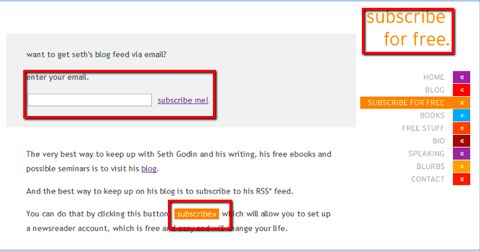
Because of this, your sales funnel should be simple. For example, if you look at Seth Godin’s email newsletter subscription page, you see how simple it is:
When it comes to closing a sale while offering multiple options, you’d want to make the decision simple…or at least seem simple by highlighting the best option. Here’s how 37 Signals does it:
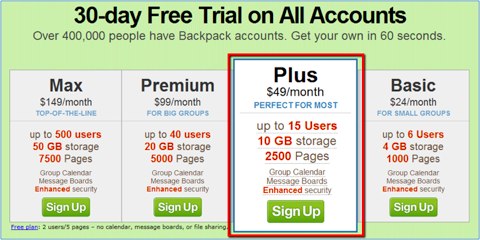
From the example above, it’s real clear that whichever option you choose, it is based on a 30-day trial. 37 Signals, I’m sure, tested this and found they get their best conversion by emphasizing one of the more affordable options.
In the end, the key is to simplify the process, not make it more complex by cluttering it with unnecessary information.
Tactic #3: Get rid of poor leads fast
On the other hand, you need to monitor your leads to identify those that are dead or worthless. Sure, you probably love seeing a large list, but digging into your analytics will tell you another story. And it won’t be good.
Lots of people probably subscribed to your email list but don’t engage in any meaningful way. They are probably too lazy to unsubscribe, but they are still on your list. You need to get them out of there because when you purge your list, you actually increase the value of the entire list. You boost your deliverability rate and email reputation.
So, how do you go about purging your poor leads from your marketing system? Here are some ideas:
- Remove or correct bad domains – sometimes leads share bad domain names. Sometimes this happens by accident, and other times people enter bad domain names on purpose. Regardless, identify them immediately and remove or correct them.
- Remove distribution accounts – for example, ISPs look for emails sent to distribution lists, or large email groups, and consider them spam. Plus, emailing to such lists is bad business. It’s like sending a letter to the “Resident.”
- Remove spam email addresses – some leads slip in with the word “spam” in the email address. Pull those as soon as possible as they can make you look bad to your ISP.
- Remove inactive addresses – for example, if a lead hasn’t opened an email in three or six months, remove that lead.
- Use data checkers at the point of signing up – these tools check for things like correct domain name, etc.
You can also purge leads based on these three criteria:
- Do they have the authority to buy?
- Do they have the budget to buy?
- When do they plan on buying?
The leads you want your salespeople to avoid are called NINAs. These are the leads that have No Influence, No Authority. These leads will waste your time and money! Let marketing nurture them.
Tactic #4: Reduce losing leads
Leakage is what occurs when good leads leave your sales funnel. With marketing automation you can easily plug the hole in the funnel that causes those leads to leave. But you have to find out where the leaks are occurring.
Your first step is to map out the life of a lead. Take it from cold to close, trying to identify those points in the funnel where the lead is falling off. Do you see a point where leads are pouring out? Or just trickling? Here are five ways to prevent leakage:
- Lead scoring model – according to a Sirius Decisions report, about 80% of leads are not followed up on by sales, which is probably a result from the two departments not talking to each other. They should talk and figure out what is a qualified lead. When a lead reaches that score, then marketing passes that lead to sales.
- Sales alerts – a good marketing automation system will also alert sales when a lead reaches a critical score so the right message can be sent.
- Lead nurturing process for decision-makers – because 78% of business decision-makers aren’t talking to sales reps, you need to develop a process that gets sales to that lead with relevant, personalized and simple information that gives the lead what they want.
- Monitor changes in leads – optimize your marketing automation to identify when a lead changes score. This means you pay attention to things like budget, the lead’s role in the organization and the need of the lead or their company. If they drop in score, the lead should be passed back to marketing. A good marketing system should automate this process as much as possible.
- Result tracking and revision – successful marketing involves constant monitoring of results and tweaking of your process. You should spend as much time on metrics as you do on any other process. Where are bottlenecks in the process? Where does the process fizzle? Are you and sales on the same page with lead scoring?
Constant communication between marketing and sales and a highly optimized and automated marketing system should help you plug any holes you have in your sales funnel.
Conclusion
If you’ve ever fought with sales or management about certain advertising campaigns, then you know what a pain it can be to argue your point without correct data.
Just implementing a marketing automation program can change the course of your business.
But when you get it working in a tip-top shape, then delivering clear results is your best proof for making business decisions.
It’s hard to argue with good results!


from Quick Sprout https://ift.tt/37raboa
via IFTTT