Monday, August 3, 2020

The Best Dropshipping Companies

Want to jump straight to the answer? The best dropshipping companies for most people are definitely Modalyst for Wix and Oberlo for Shopify.

If you want to start an ecommerce business without having to deal with:

  • Shipping
  • Storing inventory
  • Having money to purchase inventory upfront

Get into dropshipping. Manufacturers ship products directly to your customer for you. You get all the upside without any of the ecommerce headaches.

In this guide, I list and review the best dropshippers to help you get started.

The 15 best dropshipping companies, suppliers, databases, and tools

Once you have your Wix or Shopify account and your store set up, you’re ready to link up with a dropshipping partner and get selling. But, it can be hard to break into dropshipping because most dropshipping businesses don’t like to share their items or their suppliers. The thinking is: you’ll just replicate their shop and eat into their market.

I’m here to help with this list of 17 dropshippers, databases and suppliers — along with their pros and cons.

1. Modalyst — Best Wix plugin and directory

Free Starter Plan
Basic Plan $35 per month
Pro Plan $90 per month
4.8 out of 5 stars

Modalyst seamlessly automates your dropshipping business.

They connect you with suppliers to get your customers the products they need. They also boast a massive of products including clothing, jewelry, accessories, and more.

Modalyst is also centralized—making it very easy to use. You’ll be able to connect with suppliers from a single dashboard, and they even have an app for easy communication.

Where Modalyst really shines is their highly rated integration with Wix. With just a single click, you’ll be able to install their app and get started selling to your customers.

Pricing starts free with a basic plan that includes a 25 product limit.

2. Oberlo — Best Shopify plugin and directory

Free Starter Plan
Basic Plan $30 per month
Pro Plan $80 per month
4.7 out of 5 stars

This plugin service works with Shopify stores. You’ll browse the Oberlo directory (which includes suppliers verified by Oberlo) to find inventory you’d like to sell in your store. You’ll be able to see how many pageviews, sales, and star-rankings each item and seller has.

Once you make a sale, you’ll use Oberlo to order the item to be shipped to your customer.
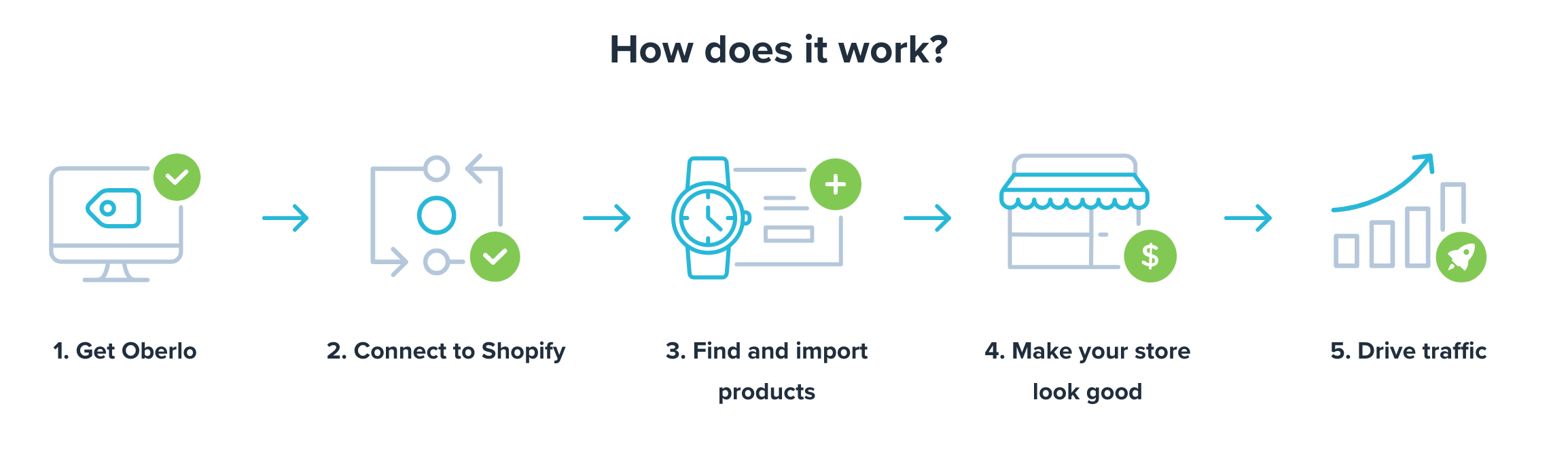
Oberlo - How it Works

Basically, the product selection and fulfillment are handled for you. That frees up your time to focus on driving traffic to your store.

Oberlo has a forever-free Starter plan, but to unlock shipment tracking and order fulfillment monitoring, which I recommend, you’ll need to upgrade to the Basic plan at $30 per month. It’ll also raise your sales limit from 50 to 500. Once you crest 500, you’ll be in Pro territory, which is $80 per month and allows for multiple users as well.

Oberlo has 4.2 out of 5 stars from 2,000 reviews in the Shopify app store.

3. SaleHoo — Members-only database of 8,000+ suppliers

60 Day Free Trial
Annual Plan $67 per year
Lifetime Plan $127 one time
9.6 out of 10 stars

A $67 yearly membership grants you access to this database of wholesalers and dropshippers. There are currently 8,000+ suppliers on the site, and they’re all screened by SaleHoo before they’re added to the directory. There’s a 60-day free trial period, and the customer service gets high marks: 9.6 out of 10 with 300 reviews on TrustPilot.

4. Spocket — A Shopify database app with good reviews

Free Starter Plan
Pro Plan $49 per month
Empire Plan $99 per month
4.7 out of 5 stars

Spocket is a database app of dropship items that you can sort by country and simply upload into your Shopify store. Spocket makes it easy to find US and EU items that’ll ship within your country rather than from China, cutting down on slow ship speeds.

The Basic plan (25 products with unlimited orders) is forever free, and upgrading to Pro is $49 per month for 250 products and branded invoicing. The Empire plan unlocks unlimited products for $99 per month. The app has 4.5 out of 5 stars in the Shopify app store.

5. Wholesale2B — Versatile supplier and dropshipping hub

Browse for Free
Multiple Plan Options
$29.99 to $49.99 per month
DIY Plan $67 per year

You can do a lot of different things with Wholesale2b: sell its products on eBay, Amazon, on a Wholesale2B site, or your own WooCommerce / Shopify / Magento / BigCommerce site. Handle the orders yourself by becoming a registered reseller with each supplier or pay Wholesale2B a 3% fee to handle that for you.

6. Inventory Source — Timesaving dropshipping automation tool

Dropship Automation Solutions
Inventory $50 per month
Full Automation $150 per month
180+ Dropship Suppliers

An automation tool that allows you to either sync the suppliers products with your page (inventory automation) or to sync the entire customer purchase flow so that your orders are automatically placed with your supplier (full automation). Inventory automation is $50/month and full automation is $150/month.

7. Worldwide Brands — Budget-friendly database

Lifetime Plan $299
Direct Access to All Wholesalers
16+ Million Wholesale Products
BBB A+ Rated

For $299, you can get a lifetime subscription to this database of wholesalers and dropshippers. Worldwide Brands is a budget-friendly — but still great — solution for those competing to sell products on Amazon, eBay, and Etsy.

Worldwide Brands distinguishes itself with its extensive upper-market wholesale directory of certified dropshippers and its reliable and quick-to-respond support team. The lifetime membership certainly doesn’t hurt either. Worldwide Brands has 4.9 out of 5 stars from 171 reviews on Trustpilot.

8. Dropified — Popular Shopify app for AliExpress

14 Day Free Trial
Builder Plan $47 per month
Premier Plan $127 per month
4.8 out of 5 stars

This is another Shopify app for populating your store with items and automate your orders on AliExpress, including customer shipping address.

That said, there is no Dropified marketplace, but rather a browser plugin that’ll let you pull from anywhere on the web. You can set up margin parameters and rules for changing the price points in your store.

There’s a 14-day free trial; after that it’s $47 per month for the Builder plan, or $39 per month on the annual plan. The Premier plan, which costs $127 per month or $97 per month with annual billing, recently added a profit dashboard, Zapier integration, and an unlimited high-speed captcha solver.

The app has 4.4 out of 5 stars from 104 reviews in the Shopify app store.

9. AliExpress — China-based dropshipper with great user reviews

Free To Join
100+ Million Products
Worldwide Delivery
Seller Feedback Reviews

AliExpress is Alibaba’s online retailer and a popular dropshipping service worldwide. A Chinese online sales platform, AliExpress offers incredibly low prices on many products.

On their website, you’ll find lots of user reviews and analytics that are super useful during the product research phase.

But here’s my take: AliExpress offers the perfect model for starting out.

You don’t need an established business entity before starting your online store. You control your margins. And there’s limited investment upfront. You can get up and running for free in literally under an hour with access to millions of products. AliExpress dropshipping is possible even without contacting suppliers.

Because AliExpress is best for small order quantities and finding samples of items, it can be a low-risk option for testing out product ideas without a ton of investment.

10. DHgate — 1M+ products, but check user reviews

Free To Join
Products From Certified Sellers
Worldwide Delivery
Escrow Protection On All Orders

There are over a million Chinese suppliers on DHGate. Best practice for buying off DHgate: check user ratings and feedback. Just like you would when buying something off of eBay, be wary of anything that could be a knock-off or imitation, and be prepared for slow shipping and nuances like new-with-box items arriving with their boxes unassembled.

11. Doba — 2M+ products with so-so profit margins

14 Day Free Trial
Basic Plan $29 per month
Advanced Plan $69 per month
Pro Plan $249 per month

This 2 million product database doesn’t just bring a number of suppliers into one marketplace — you’ll also place your customer orders within Doda as well. That being said, it’s not cheap and we’ve read a number of negative reviews, many of which mention that the prices aren’t low enough to profit. Doba has a 14-day free trial, so you can log in and run the numbers to see if a membership (which starts at $29 per month) is right for you.

12. Wholesale Central — Best free dropshipping directory

No Membership Required
Free Directory of Suppliers
Free Directory of Trade Shows
Good Site For Research

This free directory lists suppliers you can work with individually to order products from. There’s nothing fancy about it — it’s like a phone book — but has useful information to use as you do your research.

13. Sunrise Wholesale Merchandise — Some of the best shipping speeds

7 Day Free Trial
$49 per month or $199 per year
Over 20,000 wholesale products
Ships to USA and Canada

A $99 yearly fee gets you access to Sunrise’s selection of goods. It’s a bit smaller than other databases, but the shipping times are pretty quick: typically 5–7 days. Packages arrive to your customers with a receipt from “Customer Service” that’s not branded.

14. Megagoods — US-based dropshipping supplier

30 Day Free Trial
$14.99 per month
$1.50 per order fee
Located in California

A California-based warehouse that will dropship your goods under your packaging and branding, typically in less time than it’d take to ship from an overseas supplier. Pro tip: check the added fees to make sure that your margins are good.

15. Dropship News – Extensive online directory

Online Directory of Suppliers
No Registration Required
Find US-Based Suppliers
Free Resources and Guides

This free online directory of suppliers is worth sifting through. We found some great US-based suppliers. Most of each supplier’s dropshipping information is on their profile, which saves you some clicking around.

The Worst Dropshipping Services

1. National Dropshippers — Difficult user interface and product search (not recommended)

You can give a try to see if there’s a product that’s only available here, but if you can find it elsewhere you’ll probably be better off going with the alternative. Products are hard to find and search for, and the returns and shipping policies aren’t favorable.

2. Dropwow — Negatively reviewed Oberlo competitor (not recommended)

An app that’s reminiscent of Oberlo and Spocket, but with more negative reviews. The tool claims to automate your orders and help you locate dropshippers located in the US and elsewhere. However, with only 3.8 out of 5 stars from 121 reviewers on the Shopify app store, and a monthly subscription of $29 per month, I don’t recommend it.

3. DropshipDirect.com — Currently in hiatus

This site makes some enticing claims: 100,000 items in its inventory, a SaaS-approach to data, and quick shipping from its Michigan warehouses. However, the sign-up form is in private mode and the company seems to be on a year-long hiatus. We’ll keep an eye on Dropship Direct and report back.

Why Dropship?

Dropshipping solves a bunch of problems: no cash needed upfront, no boxes piling up in your store room, garage, or let’s be honest, in your spare bedroom. You never even have to touch the product or be responsible for the packaging or shipping. That means no more trips to the Post Office, either. Your dropship partner takes care of all that.

Today world’s largest cab company, Uber, does not own a single cab. World’s largest accommodation company, Airbnb, does not own a single hotel. Similarly, lot of ecommerce companies don’t own any inventory and just operate as a marketplace. If you ever had a dream to start a eCommerce business this is the best time.” —Saba Mohebpour CEO of Spocket, as told to Thrive Global

The benefits of dropshipping are also its drawbacks. You don’t have the inventory in your warehouse, so you don’t have control of a customer ordering something that’s out of stock. There’s no shipping work on your end, so you can’t control the shipping speed, or the packaging.

Long ship times = canceled orders.
Weird packaging = bad reviews.

And, you still need some money up front to build your website, put in the sweat equity of making that business take off, and all the other steps you’ll need to take to start your business.

Like any business partnership, you need to do your research on who you’re working with, what it’s going to cost you, and what you’re expecting to get out of it before you get too involved. This review will help you pick dropshipping companies that’ll work for your business — no matter your niche.

What’s the best dropshipping company for me?

Trying to find the best dropshipping company all up is a little bit beside the point. It’s like asking for the best eBay seller or the best store on Etsy. The things that make dropshippers great are a lot of the same things that make an eBay or Etsy seller great: They’re communicative and have fast shipping. The product arrives as promised. It looks like the listing and it shows up in one piece in packaging that looks nice and not chewed up by an alligator.

Just like an eBay seller, the best dropshipper for you is the one selling what you’re interested in buying (and reselling). They will reliably, communicatively, and quickly ship the product you’re after at a price that’s profitable for you — it’s about finding your best.

Most dropshippers use a Shopify or Wix store and an automation app like Modalyst or Oberlo. If you’re new to dropshipping, this is definitely the easiest way to get set up.

Why Shopify is the best way to start your dropshipping business

That means, you are basically setting up the equivalent to any ecommerce store. For ecommerce stores, the clear winner is Shopify. It’s been the frontrunner for a while. What’s most important about that for dropshipping is that the app store is super robust. Most stores use Shopify, so developers looking to make a high-quality app develop it for the Shopify app store.

So, if you haven’t already set up your Shopify store, that needs to go on your to-do list. We have a post that’ll walk you through the step-by-step process for setting up your Shopify store. It’s easy. There’s even a course in the Shopify Academy to learn how to start a dropshipping business with Shopify: Dropshipping 101.

I don’t recommend dropshipping with eBay

It’s compelling to set up shop with a marketplace — you don’t have to start a website, pay a subscription, etc. like you would with Shopify. But, I don’t recommend it. Unlike Shopify that’s super excited and helpful with new dropshipping businesses, eBay is growing more and more against them. Here are the sticking points for me:

  • Your store’s reputation is on the line — eBay is not forgiving and will downgrade accounts with reports of slow shipping
  • You’re probably not the only one selling that item
  • Your business case isn’t clear — why should someone buy that item from you, just another eBay store?
  • eBay has been cracking down on dropshippers and resellers, asking for proof of having the item in possession and freezing your store until you send in that proof. Proof could be a photo of your ID card with the item — not a photo of the item from a different listing. See this article from eSellerCafe.com for more on eBay Aggressively Banning Drop Shipping / Arbitrage Accounts.

If you do want to build your dropshipping business with eBay, I’d spend a few weeks or months in the seller forums to understand the specific risks and challenges of dropshipping on eBay.

How to start a dropshipping company

1. Find items to sell

Find your niche.

There’s lots of chatter on the internet about finding your dropshipping niche, but this is just a trendy buzzword for product-market fit: are there people who want to buy your product? From you?

If not, you won’t have a successful business.

You’ll have the most success dropshipping a product if there’s an audience that wants to buy it and doesn’t have an easy way to access it. That’s where you come in.

Some ways to find your niche: brainstorm rabid fan groups or audiences with a common need or interest (dog lovers, anime fans, parents who love to dress up their kids in matching outfits, sailors, very tall people, people who love 90s throwback tees). These are purchase-ready populations looking to love and buy things that they’re interested in.

See what’s trending on Facebook.

Doing a quick search of a phrase like “Get yours here” or “Buy now” and look at the videos featuring items for sale that are getting traction. This can give you a sense of which products are interesting people on Facebook right now. Look for a high number of views in a short period of time, then search for the item at a dropship supplier like Oberlo or AliExpress. Consider the price-point of the item in the video and the assets you can create for it. Can you replicate — or improve on — the current trending video? If so, you may have an item worth dropshipping.

Don’t sell anything dangerous or copyrighted.

If you’re a beginner, don’t start with something that goes in or on a person’s body. If you do not know the quality and source of the ingredients, and something goes wrong, do you have coverage for that liability?

Also, if there’s a celebrity or character from a movie franchise on the item, it could get you in trouble. Steer clear of mice with big round ears.

Look at seller’s reviews and order a test product.

How long has the seller been selling? What feedback have they been getting. When you order a test product, does it meet your expectations? What do you need to tell your customers so they’ll be happy when they receive the product?

Consider dropshipping only some items.

Just because you’re dropshipping some things doesn’t mean you need to dropship everything. Perhaps it makes sense to use dropshipping for large, bulky, high-priced niche items.

Say, for example, you have an online store that sells nautical gear. You may want to personally store and ship some items, but dropship the anchors. For items like this, your customers may also be more accommodating to longer shipping times since it’s a large and more considered purchase. Same goes for home goods: perhaps you keep small items in stock, but dropship the couches. You can increase your inventory breadth very simply this way.

Go directly to a supplier and build a dropshipping relationship with them.

This is a killer plan: there’s guaranteed to be less competition. You’re basically creating a new audience for an under-marketed product that’s not getting seen by a ready-to-buy audience. If you use a database, every single other subscriber is using that same database.

2. Nail the basics

Invest in a good domain name.

We buy all our domain names from Domain.com. (You can read our full review on the best domain registrars.)

Set up your website.

If you go with Shopify, you’ll be up in minutes. Lots of dropshippers recommend the Shopify Brooklyn theme with a good font choice. You can also use another ecommerce option. Here’s our review on the best ecommerce platforms, if you’re interested in exploring.

Get a professional logo.

You can get one for a reasonable price (and no design expertise) with 99Designs. See my post about how to get your first brand identity on a budget for more details and how to run a logo design contest.

Use a professional email address.

It should be a sensible start (help@, support@) with your own domain name. I recommend getting G Suite for $5 a month per user. There’s nothing to trust about emailing a customer service that’s at yahoo.com or gmail.com.

Give your customer strong trust signals.

You can do this with high quality photos and unique item copy, a real and robust About Us page, and thoughtfully using things like discounted prices and pop-ups.

Ask yourself: Would I buy from this store? Would I feel comfortable suggesting it to a friend or family member? You’ll need some trust logos and some FAQs at minimum.

Set shipping time expectations.

Most dropshipped items aren’t going to get to the customer very quickly — and in world where Amazon Prime has set the standard at two days, that means dropshipments of 30 days feel extremely slow. If you don’t prepare your customers they’ll be very unhappy. We’ve seen very straightforward copy, like: All our items ship directly from our suppliers in China. Shipments are processed the day of your order and arrive in 25–30 days.

Make sure your orders go through.

Bundle credit card orders so your bank doesn’t cancel your numerous orders. Let your bank know what types of orders and in what quantities you’ll be placing, so they’re not flagged as fraudulent. There is no pain so rich as having to reorder orders you’ve placed. (You do have a business credit card, right?)

Prepare for returns and cancellations.

How will you deal with unhappy customers? What’s your return policy and how will you chargeback customer payments? Will returned items be shipped to you, or to your distributor? How will that work? Like with anything in business, it’s important to set it all up from day one like it’ll be a huge success.

Set aside money to pay taxes.

If you’re using Shopify as your payment gateway, once you get to a certain sales threshold, Shopify will automatically report your sales to the government. You’ll want to make sure you have money available to pay applicable taxes. We also recommend getting an accountant and a lawyer (we’ve heard good things about UpCounsel and LegalZoom) and setting up Quicken.

3. Differentiate yourself

Make your store listings and ads unique.

Remember, if you can quickly and easily set up a dropshipping order for a specific product, it’s likely another store will be able to do the same. You will need to find an edge: why would someone order from you, or find your store selling the product, and not your competitor?

Take your own pictures. Write your own copy. Shoot unique social videos. Really put thought into how to best convey the product and why a person would want it: What problems does it solve? Can it make them feel joy?

Import user reviews.

If you’re using AliExpress, you can import the user reviews. No one likes being the first to buy something.

Consider offering free shipping.

Do all orders have free shipping or only when a certain order spend is hit? What threshold or minimum spend works best?

I do not recommend offering “Free products — you pay shipping.” Many customers would rather know the price up-front than go through a purchase flow that says $0 the whole way through and then slaps on a $15 shipping charge. It’s 2019 and the norm is free 2-day shipping with Prime. People are catching on and aren’t happy about it. Read more from The Daily Beast in Instagram Influencers Dupe Their Fans With ‘Free’ Products.

Market your store.

Make sure people know about your store. This can be through word of mouth, social media ads, viral memes, influencer programs, SEO, a newsletter. You’re going to need visitors to make sales.

4. Iterate iterate iterate

Use ads to test and gather data.

We’re assuming that you’ll be buying ads. If you do, buy and use the data to test what’s working. What gets traction? Double down on it. What doesn’t? Trash it. This may lead you to changing your products, your ad style, your audience. Following the early traction means you head toward what’s working and away from what’s not.

Analyze your sales.

What’s selling well? What’s not selling at all? Is there any common theme in the items? Replicate what you can. Stop what’s not working.

Dropshipping vocabulary

Arbitrage – The simultaneous buying and selling of an item to take advantage of a difference in price for the same asset. Say there’s a board game for sale at Walmart for $20, but the lowest price on Amazon is $45. Arbitrage is listing the game for sale on Amazon and buying the Walmart game. For every sale you make on Amazon, you take advantage of a $25 price difference. If your arbitrage is online to online, with free shipping, the math suggests you could simply sell on one site, buy and ship from the other, and pocket all the profit. This does not take into account any hiccups: returns, merchandise not accurate, merchandise no longer in stock, price changes in either market, etc.

Dropshipping (DS) – The supply chain system in which a seller does not keep items in stock, but rather transfers orders directly to a manufacturer, supplier, or wholesaler who ships the item directly to the consumer.

Minimum Advertised Price (MAP) – Some sellers set a floor to how low you can advertise or display your product for sale. This is not the same as the price you can sell it for. So, the MAP price does not take into account coupon codes or sales, or other tricks like offering a gift card with a purchase, offering rebates, or doing things like showing an even lower price in the cart.

Dropshipping examples and press

You may have seen the posts we’ve seen — the ones about people starting dropshipping businesses and raking in the sales. We’re talking five-figures in a single day, six-figures every month. What is this magic sauce, we wonder.

The magic sauce is the same sauce as any other business: it’s a math equation based on margins. How big are your margins? How big is your customer base? What’s the conversion rate? How stiff is the competition?

Welcome to a little-known corner of the e-commerce world, where small entrepreneurs use social-media ads and hip virtual storefronts to entice people into buying products listed on online marketplaces such as Alibaba Group Holding Ltd.’s AliExpress.

The process often involves online storefronts transferring customer details to an AliExpress seller, which ships the goods directly to the customer; the storefront bills the customer. Called dropshipping, it is a twist on a fulfillment technique that major online retailers also use to send goods directly from their manufacturers to the customer.

The entrepreneur profits by charging a high markup, betting shoppers are unlikely to stumble upon the less-expensive goods on a marketplace site. AliExpress is the most popular such marketplace, but some entrepreneurs order from sellers on other marketplace sites like Amazon.

—“The Mystery of the $70 Hoodie That’s All Over Facebook,” Wall Street Journal

The mystery of the $70 hoodie is also not a mystery: it’s a one-time sale that’s not going to turn into repeat business. It’s a simple equation:

high price + low product quality + poor customer experience = repeat business

Dropshipping seemed cool because it made starting an eCommerce seem easy: I didn’t need to buy products in advance; I didn’t need to have space to hold them, and it didn’t require extra time and effort to ship the orders myself. Dropshipping does have disadvantages, but it really appealed to me, so I continued my online search.

There are numerous ready-to-use eCommerce platforms like Shopify, BigCommerce or Squarespace. Most of them start at around $20 per month, which seemed like a good deal for a first-time entrepreneur like myself.

It took me two days to set up the store the way that I wanted it to look. Shopify is totally non-programmer friendly. All you need to do is open an account, select a look for your store, and that’s it – you’re ready to sell.

When I set up my store, I had no definite idea of what I should sell. I wasn’t sure if I should pick a product I was passionate about or just a random product I was able to find in dropshipping databases like WholesaleDirect.com or the like.

“This Guy Made $12K In One Month While Working Full-Time,” Huffington Post

“This guy” is Justin Wong, and he made his business work by studying Instagram marketing, set up affiliate partnerships with influencers, and matched his product with his marketing technique. And, he’s not confused about the pros and cons of that marketing strategy: when the posts age on a influencers feed, his sales go down.

My name is Jacky Chou. With my partner, Albert Liu (albeliu on Reddit), we launched a home decor dropshipping site that went from negative 3k to 250k a month in 8 months at 30-40% margins. We’re both first generation Asian-Canadians who moved from Vancouver to Berlin to work in marketing.

We started our dropshipping store as a ‘practice what you preach’ case study, as we’re both working as digital marketing consultants (Albert as a freelance Facebook consultant and I’m a founder of an SEO agency, Indexsy).

— “We made 250k USD last month with our dropshipping side hustle. Oberlo / Shopify reached out to us to do a success story. AMA!,” Reddit

Further reading


from Quick Sprout https://ift.tt/2Ezk0pY
via IFTTT

Best Web Hosting Providers

Want to jump straight to the answer? The best web hosting provider for most people is definitely Bluehost.

Hosting seems like an enormous headache at first.

Shared hosting, dedicated hosting, VPS, managed hosting, server cores, different RAM, CDNs, SSL certificates. It’s endless.

We’ve managed hundreds of websites ourselves over our careers. Large, small, and everything in between.

Using our first-hand experience, we waded through all the hosting options and narrowed it down to the best web hosting providers.

Read in-depth reviews of these below — plus, tips for saving money, the best types of hosting for different situations, and our method for picking the right web host. Let’s jump in.

The Top 9 Best Web Hosting Providers

#1. Bluehost – Best Web Host Overall

Normally $7.99/month
Free domain and SSL certificate
Recommended by WordPress
30-day money back guarantee
Get a 63% discount

For business owners and site managers, Bluehost is often considered to be the default choice for web hosting. They’ve been around a long time, offer great hosting at a great price, and have a great reputation for supporting their customers.

If you get stuck or have a problem, they have 24/7 support by phone or live chat. No hoops to jump through either. They list their support number and live chat options right on their site, you can reach it within two clicks:

Bluehost Review

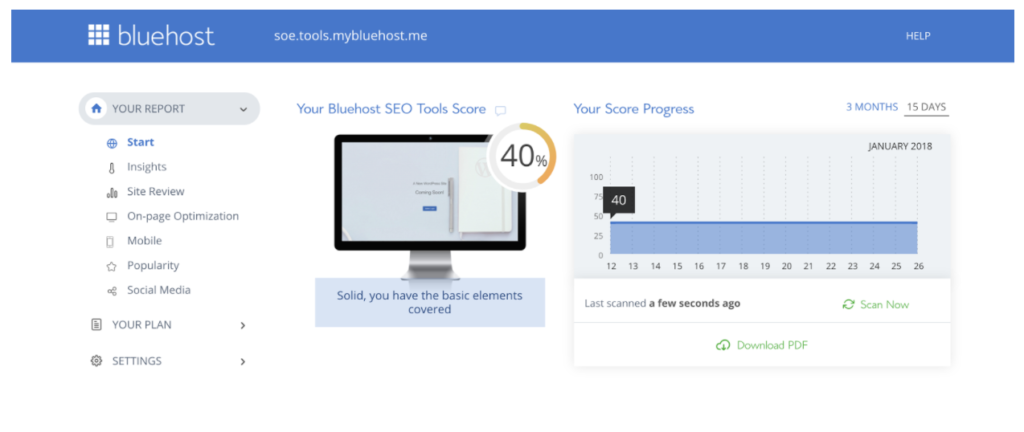
Bluehost gives you a variety of different features that’s sure to fit your website’s needs too. For example, they have a great SEO tool that scores and tracks how well your website is ranking for specific keywords. This gives you a good idea of how you should optimize your site for the best search rankings.

They also offer hosting that will support whatever direction your business grows.

Let’s say you start with a standard shared hosting plan and want to install WordPress. They have an easy 1-click install to make that happen. Then if your site keeps growing and you want to upgrade to managed WordPress hosting to speed up your site and improve security, they have that too. Or if you want to get more control by upgrading to VPS or dedicated hosting, they have plans for both.

The point is that Bluehost covers everything you could possibly need from a host. If you start with them, you’ll never need to switch to someone else.

#2. Dreamhost – Most Affordable Monthly Plans

Normally $2.59/month
Month-to-month pricing at $4.95
Recommended by WordPress
4.6/5 rating from Trustpilot
View the Latest Deals

DreamHost does things their own way — and that might be great for you.

They don’t use the standard cPanel that most hosts use. Instead, DreamHost offers a completely custom control panel to manage your website.

Many customers love it because it’s intuitive. The interface is also more user-friendly than cPanel.

But it comes with a big caveat: It makes things much more difficult to migrate off DreamHost.

Migrating to DreamHost is easier than ever though. The host introduced a free plugin that moves your WordPress site for you in just five steps. You’ll also be able to scale your hosting as your site grows.

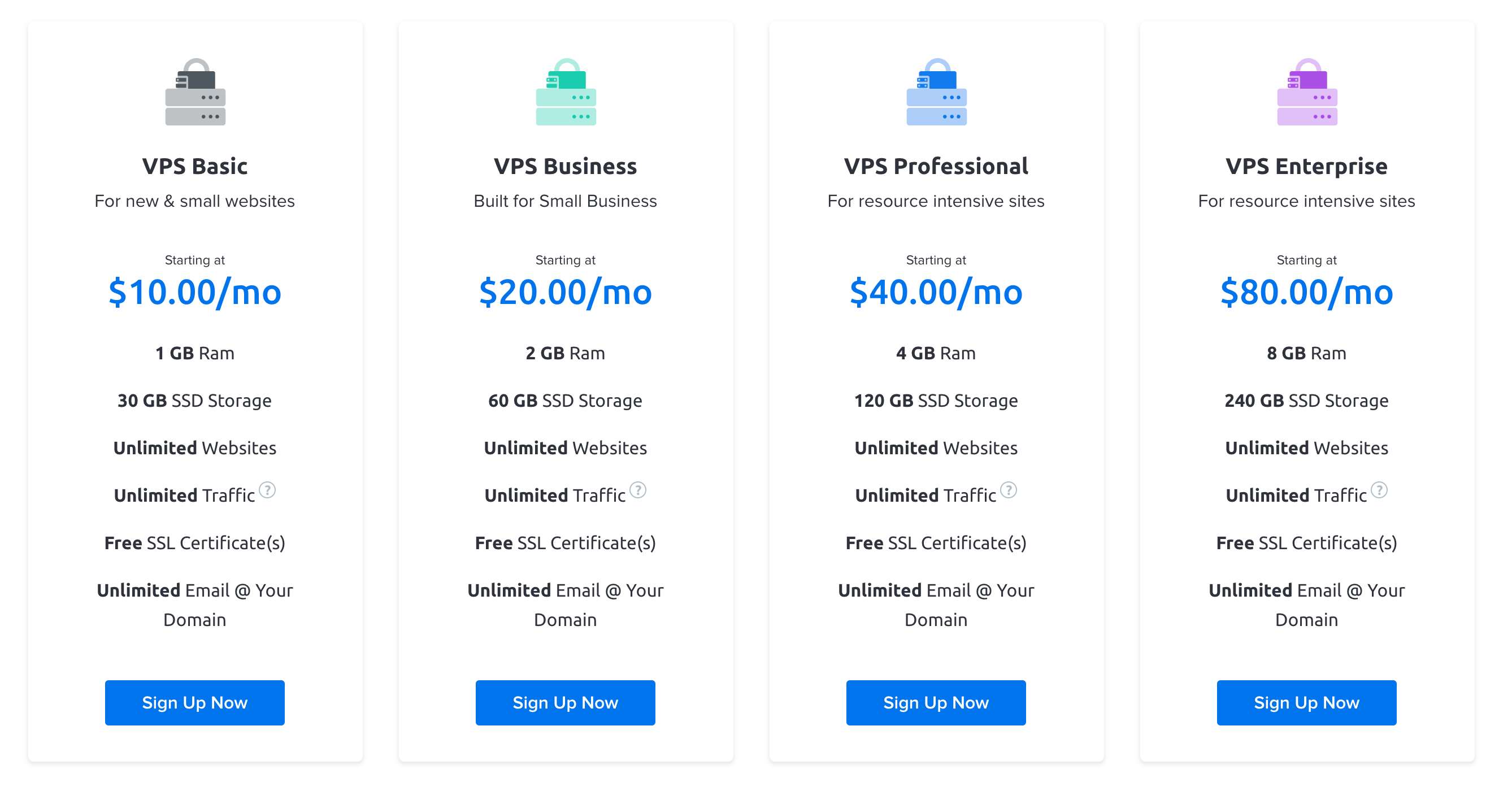
In addition to shared hosting and managed WordPress hosting, DreamHost offers low-cost upgrades to VPS and cloud hosting, as well as dedicated servers should you ever need them. Even their VPS plans start at $10/month:

Dreamhost Cloud

DreamHost is another one of WordPress’s three recommended hosts, and includes some managed WordPress hosting in its basic shared plans. It also offers a managed plan with more bells and whistles called DreamPress. Monthly plans under $3/month are available if you pay annually, $8/month if you’d like to add email. It does have an industry-leading free trial period — a full 97-day money-back guarantee — and transparent pricing that doesn’t increase after your initial contract.

Customer service is a little less traditional: email support is available 24/7, but live chat is only on during business hours. If you want technical support over the phone, you have to pay an additional $9.95. However, if you spring for either the DreamPress Plus or Pro managed WordPress plans, phone support is included along with other premium features.

The free trial period is the longest in the business — 97 days. Shared hosting plans start at $2.59/month, and since DreamHost doesn’t do promo pricing, it won’t jump after your first contract is up. This is one of the lowest hosting prices out there, it’s a great option for anyone looking to save every dollar.

What’s really worth noting is the outstanding offers DreamHost has for nonprofits: one free Unlimited shared hosting plan (which includes unlimited storage, unlimited bandwidth, unlimited sites, and email hosting) for 501(c)(3) organizations, plus a 35% discount on the souped-up DreamPress-managed WordPress hosting. That’s a fantastic deal.

#3. Hostgator – Best Scalability for Price

Normally $6.95/month
Month-to-month at $10.95
Free domain and SSL certificate
45-day money back guarantee
Get a 61% discount

HostGator is another big name in small business web hosting, and it’s a bit of a mixed bag.

While HostGator does have an extensive self-serve knowledge base is, it doesn’t offer any sort of email support — just phone and live chat. Be prepared to get on the phone whenever you have a question.

Unlike some hosts, Hostgator does include support in all its plans. If you want a hosting plan that’s cheap and includes support, this is the host for you.

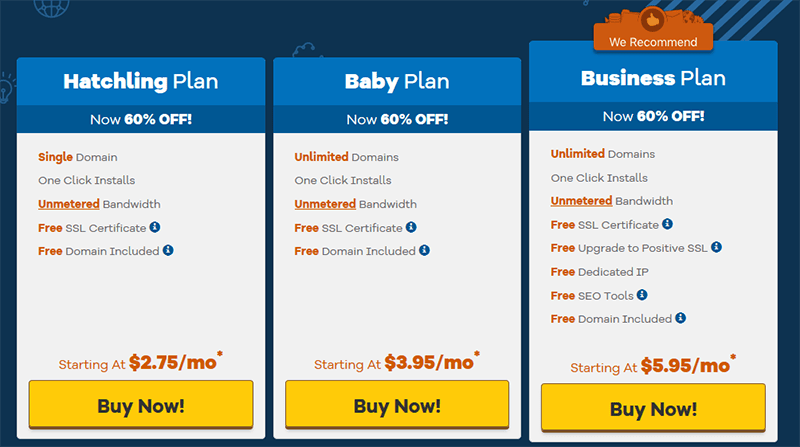
HostGator does offer Windows hosting in addition to Linux, as well as a variety of options to upgrade, including cloud hosting, VPS hosting, managed WordPress, and a dedicated server. Shared hosting plans start at $2.75/month.

Hostgator Review Pricing Plans

HostGator tends to rank highly on tech publications like PCMag, but customer reviews are pretty dreadful: it has only one star on Trustpilot. If you’re interested in trying HostGator, I recommend taking full advantage of the 45-day money-back guarantee and testing out their support thoroughly before committing.

#4. Hostinger – Best Cheap Hosting Plans

Normally $7.99/month
Month-to-month pricing
Free domain and SSL certificate
30-day money back guarantee
Get a 90% discount

If you’re looking to keep the cost of your hosting as low as possible, seriously consider Hostinger.

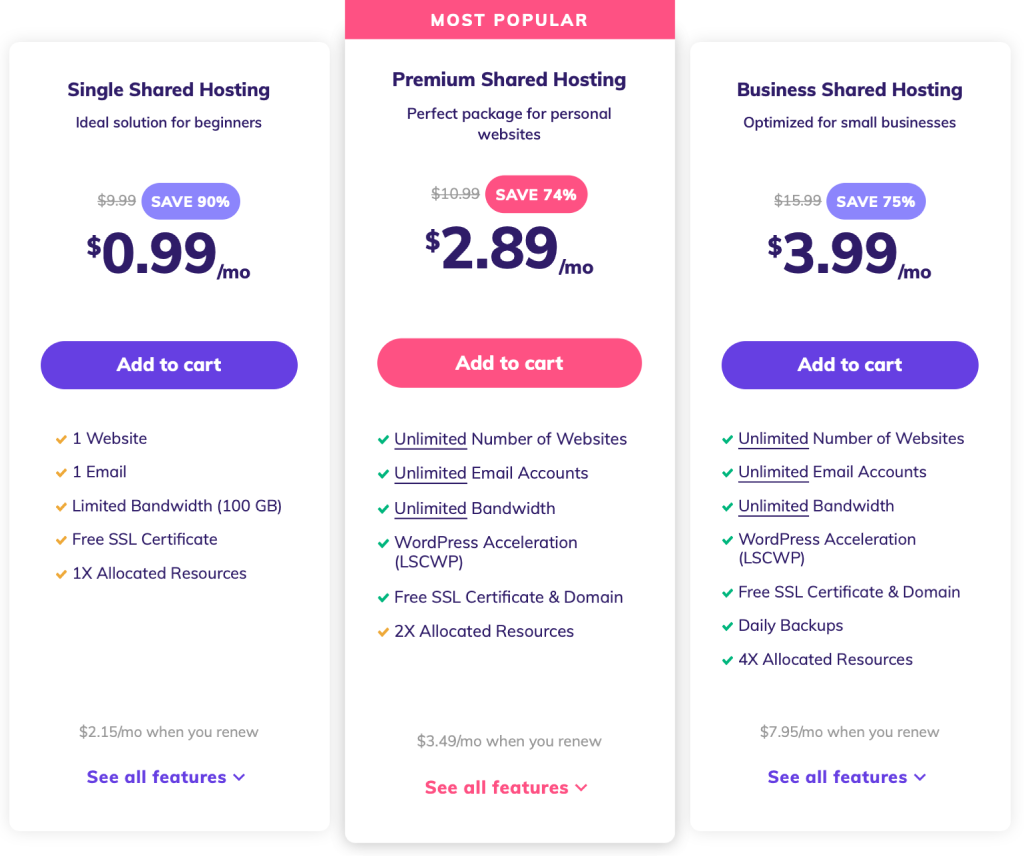
Their lowest plan starts at less than a dollar:

Hostinger Pricing

All of these rates are promotion so they’ll go up at renewal. But you’re able to lock in these ridiculous prices on a longer subscription. You can literally sign up for two years of hosting for $1/month if you pay for the two years upfront. That’s an amazing deal.

Even after the promotional pricing ends, the pricing is still super low. The single-site plan only costs $2.15/month, one of the lowest rates in the industry.

The best part? Hostinger doesn’t feel like cheap hosting.

Yes, they have some tricks that try to persuade you to become a customer like the fake countdown timers. But they’re pretty mild compared to more aggressive hosting companies like GoDaddy.

From the marketing to the UI for managing your site, it feels like a premium host.

The uptime, site speed, and support are all pretty good too. They have a 99.9% uptime guarantee along with 24/7 support whenever you need help. Don’t expect them to be quite as good as other hosts but the value per dollar is unbeatable.

#5. A2 Hosting – Fast & Reliable Shared Hosting

Normally $7.99/month
Month-to-month pricing at $9.99
Free domain and SSL certificate
30-day money back guarantee
Get a 63% discount

A2 Hosting has a reputation for having some of the fastest web hosting around.

At every hosting tier (shared, VPS, dedicated), A2 Hosting beats other hosts on speed. So if you’re looking for pure speed, this is your best pick.

A2 Hosting also has a 99.9% Uptime Commitment on all plans so you know you’ll have a reliable host that won’t be down often.

I also really like their free site migrations that come with every hosting package. If you’ve set your site up on a bad host and want to migrate, this is a fantastic deal. It’ll save your dozens of hours trying to get your site rebuilt. Let the A2 Hosting team deal with it.

Like many of the other web hosts, there are 1-click installs for all the popular CMS tools like WordPress, Magento, and Drupal.

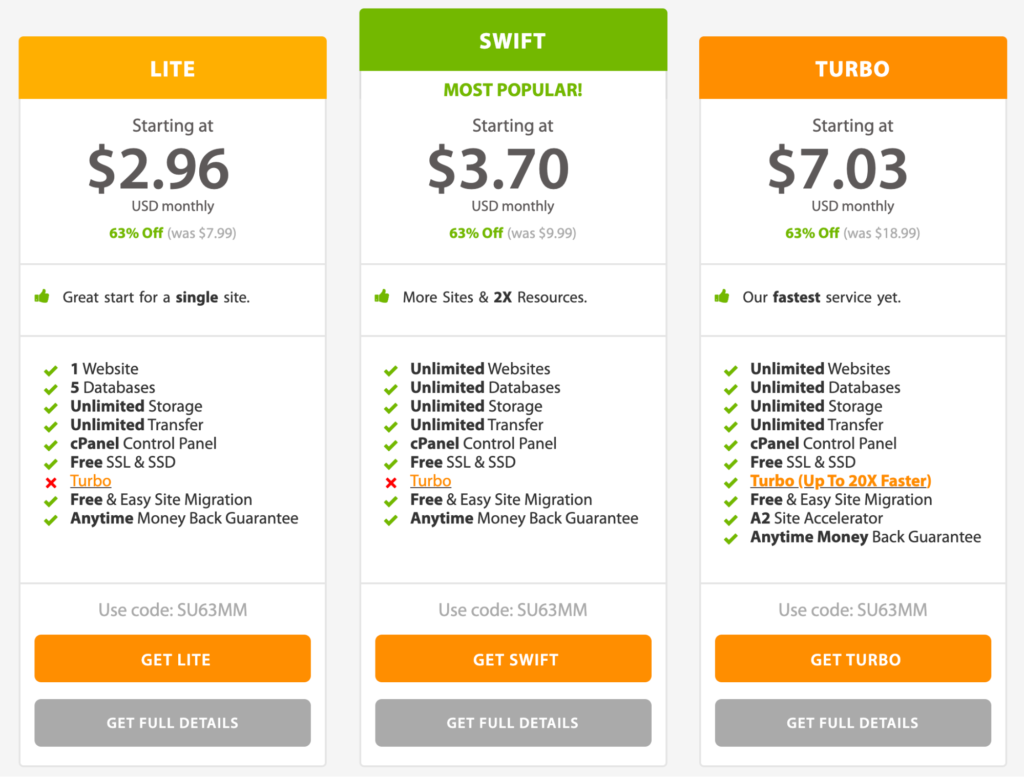
Keep in mind that their lowest tier, the Lite plan only includes 1 website:

A2 Hosting Review

If you plan on hosting multiple websites, you’ll need to get the Swift plan which is an extra $2/month after the promotional period ends.

One trick to save money with A2 Hosting: the promotional prices end on renewal. To lock in the 63% discount for as long as possible, go for the tri-annual billing which will bill for three years at once. You’ll get 2 years of hosting for free.

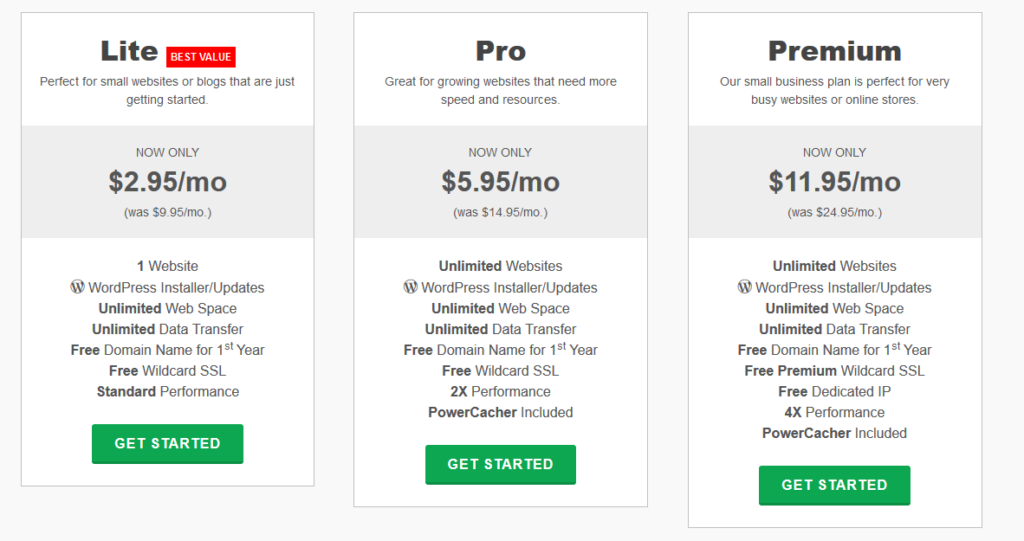
#6. GreenGeeks – Best Eco-Friendly Hosting

Normally $9.95/month
Free Domain Name
Free Wildcard SSL
Unlimited Web Space
Get Started for  $2.95/mo

GreenGeeks isn’t as well known as some of the other hosting companies on our top list, but they have in business for more than a decade and use renewable energy to power their hosting services.

They offer some of the best eco-friendly “green” web hosting solutions, making them a great option for individuals or companies who are conscious of the environment.

With their plans, you’ll get everything you need to build and manage your website at a great price.

GreenGeeks Pricing

If you plan to use WordPress then they will make it easy for you to get set up in a snap. They provide an automatic 1-Click WordPress Installer and auto-updates to keep your WordPress site up to date.

They also provide daily backups and advanced security features in order to help you keep your data safe and secure.

GreenGeeks also stays up to date with the latest technology like PHP7, SSD, CDN, and more. This helps make sure your website always stays fast and secure.

If you need help they have exceptional 24/7 support that is available by phone, chat, or via their ticket system. They are typically very quick to respond and can assist with a wide range of issues.

Overall I’m a big fan of GreenGeeks for their great service and dedication to helping the planet with their environmentally friendly web hosting plans. If you’re looking for a “green” hosting company, GreenGeeks is just what you need.

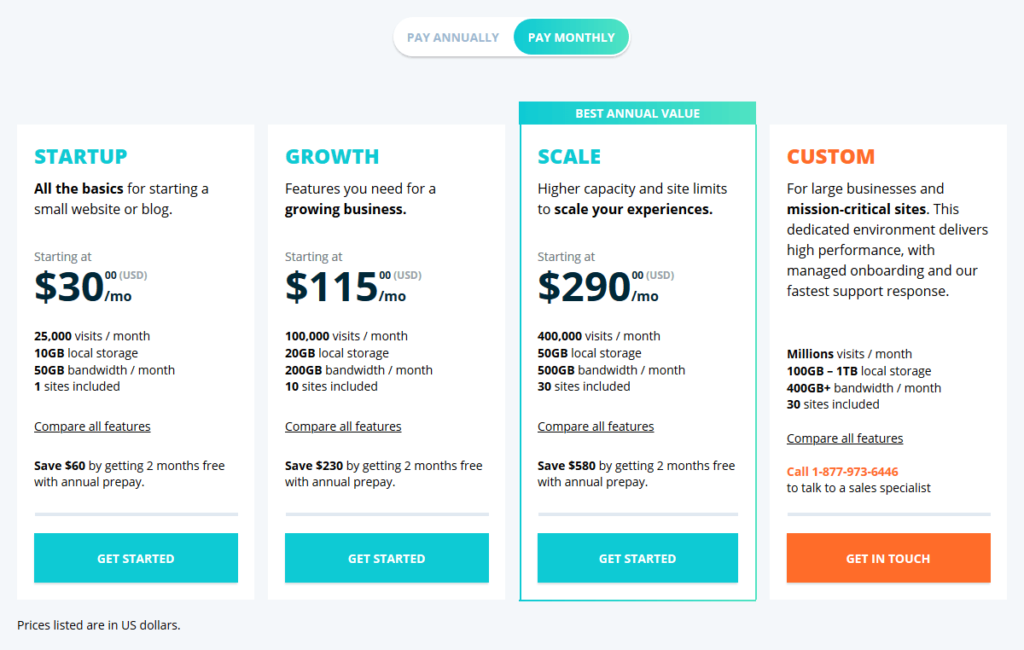
#7. WP Engine – Best Managed WordPress Hosting

Normally $30/month
Month-to-month pricing
Free domain and SSL certificate
30-day money back guarantee
4 months free or 20% off

When most people think of managed WordPress hosting, they think WP Engine.

And for good reason — it provides a truly excellent product. It does come at a price though. A fully managed WordPress host is noticeably more expensive than shared hosting providers.

WP Engine’s lowest-priced plan is $30/month, and that’s only for one 10GB site with max 25,000 visitors/month.

WP Engine Pricing

But when you factor in what WP Engine does for that price, it’s an incredibly appealing option for WordPress site owners. As a managed WordPress host, WP Engine only provides service to WordPress users, which means its entire infrastructure can be optimized for WordPress. Your site will be wicked fast, there’s virtually no downtime, and lots of maintenance tasks get taken care of automatically. If you want a blazing fast site where everything is taken care of automatically, you’ll want WP Engine.

Customer support is also laser-focused on WordPress, which makes for highly competent knowledgeable support staff available through tracked tickets and on live chat 24/7.

Just be mindful of the price. You’ll be paying more in order to get a lot more. With that said, WP Engine is the ultimate choice for any business running on WordPress. If you don’t want to waste time managing the hosting component of your website, then these are the guys to turn to.

#8. InMotion Hosting – Best VPS Hosting

Normally $7.99/month
Free domain and SSL certificate
Free and unlimited email
90-day money back guarantee
Get a 57% discount

InMotion may not look flashy, but it’s a solid web host with truly excellent technology, a wide assortment of plans, and a legion of longtime customers.

Its massive self-help knowledge base is the industry standard, and customer support is among the best. Don’t believe it? Try for yourself. InMotion’s 90-day free trial period for shared hosting is one of the longest around and gives you plenty of time to test out InMotion’s support team.

InMotion’s plans are really straightforward and almost identical. As you upgrade, you’ll get faster servers and extra databases, websites, and subdomains. It’s a straightforward approach we like, especially for small businesses and websites that aren’t overly complex. No pushy upsells or confusing tiers to worry about.

Even the entry-level plans have excellent customer support. It’s 24/7 via 5 communication channels: phone, chat, email, tutorials, and Q&A, which were actively answered.

I also appreciate that none of this support is hidden or hard to find. The phone number is broadcast at the top of the page and the chat support login is easy to find in your admin panel.

There’s nothing more annoying than 24/7 support that requires you first unearth the contact methods on your own. It’s a waste of time and tells me exactly what I need to know about the host.

I also appreciate that the support is available at your level — whether you’re just starting and need someone to walk you through the ultimate basics with a friendly and supportive demeanor, or you want someone who can talk specs and technical nuances like a pro, the InMotion support has you covered.

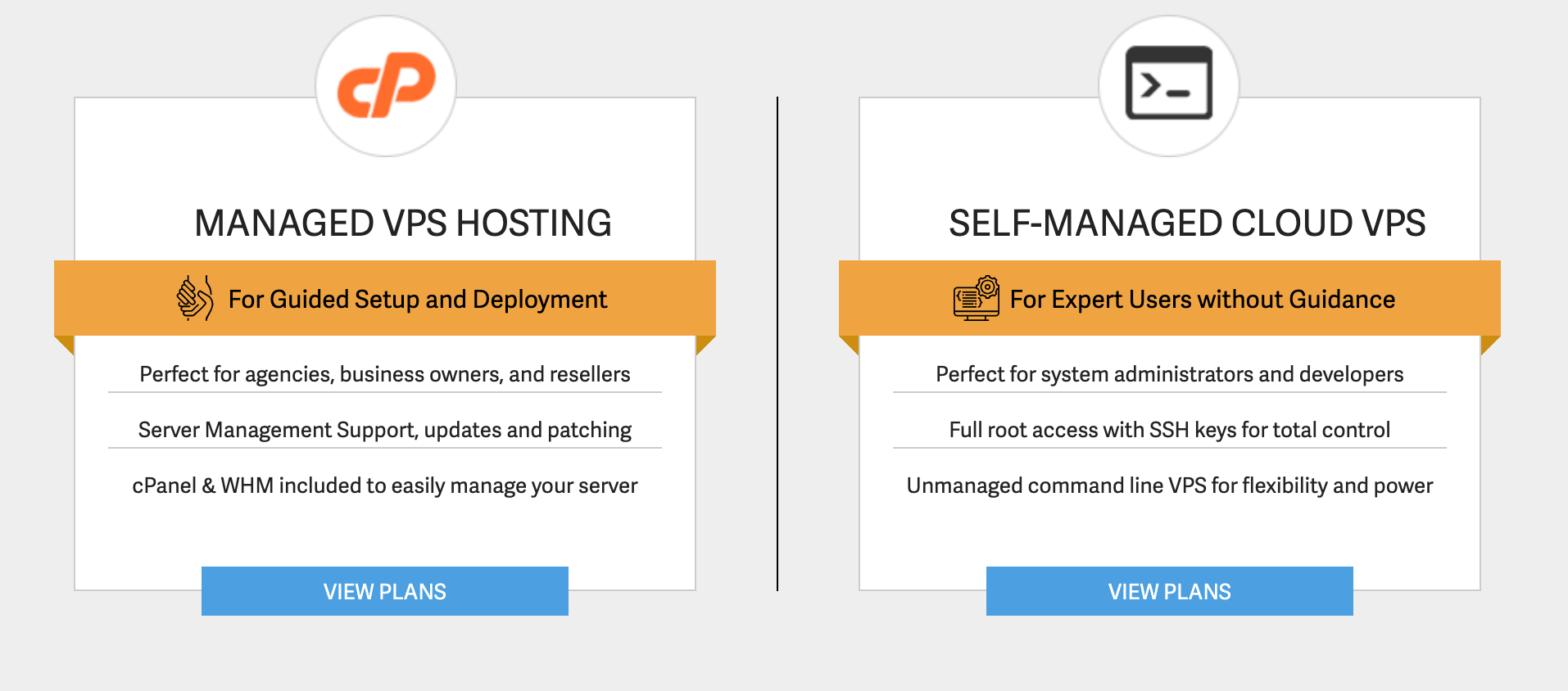
InMotion also has some of the best VPS hosting options. They even have two types of VPS hosting so you can get the exact amount of support or flexibility that you want:

InMotion Hosting Review

InMotion regularly runs promo pricing, with deals that start as low as $5/month. Normal pricing for shared hosting bumps up to $8–$9/month after the initial contract is up.

In addition to shared hosting, InMotion offers upgrades to managed WordPress hosting, VPS hosting, and dedicated servers.

#9. SiteGround – Best Customer Service

Normally $11.95/month
Free SSL, email, CDN, & backups
Recommended by WordPress
30 day money back guarantee
Get a 67% discount

SiteGround has one of the best reputations among web hosts with a rabid fan base and glowing reviews.

SiteGround Hosting Reviews

Along with DreamHost and Bluehost, SiteGround is one of WordPress’s three recommended web hosts. WordPress hosting is built into all of its shared hosting plans, you’ll get automatic updates, streamlined security, and expert technical support.

SiteGround is widely considered to be a leader in shared hosting. Its servers are ultra-fast and extra secure, and SiteGround is constantly deploying new updates to keep them that way.

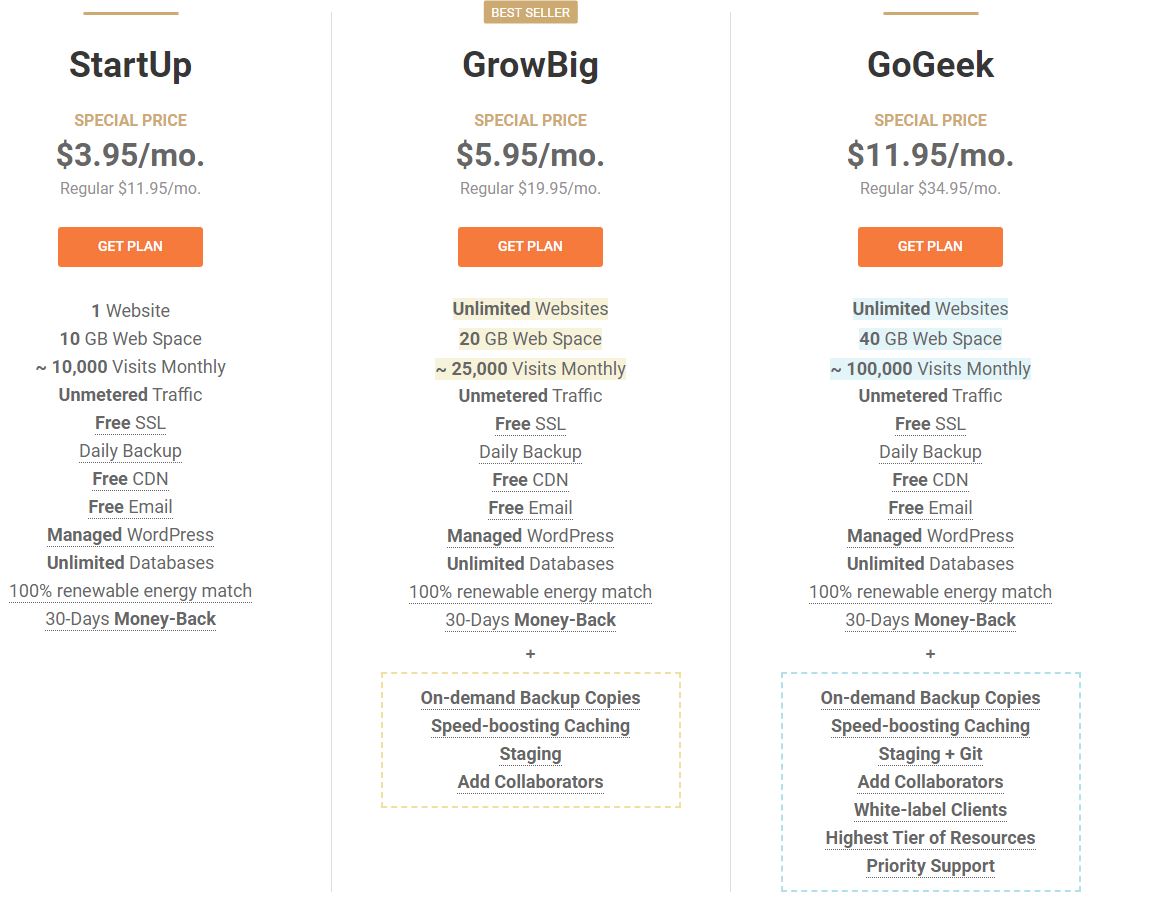
While all its shared hosting plans are powerful, SiteGround is especially well-known for its highest-tier shared plan, GoGeek, which is suped up with tools developers will find especially useful, including a staging server and Git repo creation. Lots of small business and personal websites will probably find this overkill, but if your needs are more complex than the basics, SiteGround has a lot to love.

There is one downside. Once you blow through SiteGround’s introductory pricing, your plan’s price will triple.

For example, its lowest tier of shared hosting jumps from $4/month to $12 and its highest tier jumps from $12/month to $35. That doesn’t feel great.


In fact, it was the reason for most of the one-star reviews on TrustPilot. Watch for this when you’re comparing pricing and remember that your hosting plan will last a lot longer than the promotional period.

SiteGround Renewal Prices

SiteGround also has the shortest trial period of all our other shared hosting our top picks: only 30 days. This isn’t a major problem though. You’ll be able to easily evaluate any host within a month.

SiteGround does have cloud hosting and dedicated servers. In fact, SiteGround is one of our top picks for cloud hosting. If you think there’s a chance you’ll need to upgrade to some serious hosting power once you generate lots of traffic, SiteGround is a great option that will make upgrades easy later.

SiteGround’s customer support is available 24/7 across all channels — phone, chat, and email — and its knowledge base is rich and well-organized.

SiteGround also has the most transparent uptime: it has a 99.9% annual uptime guarantee (or you get a month of hosting free) and posts both its annual average and the previous month’s uptime right on its site.

SiteGround Uptime

SiteGround’s annual uptime compared to last month’s.

SiteGround is an amazing option for businesses with room to grow. There’s plenty of upgrades to support you along the way.

Which Type of Hosting Is Right for You?

Now, let’s look at the best hosting for different situations (see definitions of hosting types at the bottom of this post).

The Best Shared Web Hosting

For the vast majority of folks, you’ll want shared web hosting.

Shared web hosting means that your website is on the same server as other websites. Most sites are small enough that they don’t need an entire server to themselves so web hosts bundle a bunch of sites together and put them all on the same server.

This is how web hosts get the price of hosting down.

In most cases, it’s a great deal.

There are downsides. If one site on the server gets taken down, yours could get taken down too. If several sites are on the same server and one of those sites gets a huge traffic spike that takes the server down, all the sites go down. So it’s possible for your site to go down at no fault of your own.

In practice, this rarely happens. Especially for smaller sites that can handle a little downtime every once in awhile, having shared hosting is a great trade-off in order to get the hosting bill lowered.

Think of shared hosting as the ideal “entry-level” package for your site.

So which hosting companies are the best for shared hosting?

These are the 5 best shared hosting companies:

The Best WordPress Hosting

Blogs are one of my favorite ways to build traffic and customers. I’ve managed multiple sites with hundreds of thousands or millions of visitors per month.

When it comes to blogs, WordPress is by far the best option for running the blog.

These days, I always get managed WordPress hosting for my high traffic blogs. Managed WordPress hosting is a specialized hosting package built entirely around WordPress.

There’s a few major advantages to getting specialized WordPress hosting:

  • Everything is streamlined around WordPress
  • Security is extra tight
  • WordPress updates and server maintenance happen automatically
  • Backups happen automatically
  • The support team has advanced knowledge of WordPress
  • The site can handle much higher traffic volume since everything is built around WordPress

There is one major downside though: the cost.

Managed WordPress hosting tends to be more expensive. If you’re building a site with the goal to generate tons of traffic (50,000+ visitors/month), it’s absolutely worth it. I go this route even if I don’t have the traffic volume yet. As long as I’ve set a goal to build that traffic over time, I’ll choose a managed WordPress host from the beginning.

What about smaller sites that want to use WordPress?

In that case, skip the managed WordPress hosting. The premium features won’t provide enough value to justify the extra cost. Just about every host out there allows you to install WordPress easily and quickly.

Our 3 favorite WordPress hosts:

The Best Small Business Hosting

Any small business owner has a lot on their plate. Marketing, managing the service or product delivery, all the back-office tasks, it adds up.

Resources are also limited so if something breaks, the owner has to fix it themselves.

And on top of all that, they need to watch every dollar. Every extra dollar in an expense means one less dollar in their pocket.

The best web hosts for small business are super reliable, have world-class support when the odd issue does come up, and have a reasonable price. This minimizes the extra tasks for the owner while also keeping expenses low. And when things do go wrong, a solid support team makes the fix as painless as possible.

You’re looking for that sweet spot between price, reliability, and an amazing support team.

These are the 2 best small business web hosts that excel at all three:

The Best Cheap Hosting

Sometimes, you need to save money.

Whatever the circumstances, there are ways to save on your hosting bills. And since they recur every month, getting them as low as possible does add up over time.

I want to give you a quick warning though.

On web hosts, cheap definitely isn’t always great. There is a point where reducing the costs any further seriously impacts the quality of your hosting. Your site will be down on a regular basis, you’ll never be able to get a competent support rep to help you, and every task you try to complete will have a horrendous user experience.

We’ve found the best cheap web hosts. While their service isn’t quite as good as the others that we recommend, it’s good enough if you’re trying to get the cost down. Just be careful about shopping around for even cheaper deals, it’s usually too good to be true.

We recommend these 2 hosts if you’re trying to get your hosting costs as low as possible:

They’re also good for side projects or ideas that you’re playing around with. Then if it becomes a real project or business, you can always switch to one of the better hosts later.

The Best Cloud Hosting

If you’re building a larger site or want to guarantee your uptime, you’ll want to look for cloud hosting.

Cloud hosting is a bit different than shared hosting.

Instead of a bunch of different sites using the same server, your site will get spread across multiple servers. This has a few major advantages:

  • Other sites can’t take your site down. If they get a spike, your server can simply start using other servers.
  • You can quickly scale your site bandwidth up and down. Since you’re already using multiple servers, it’s really easy to add more or take some away.
  • Since there’s redundancy across multiple servers, server uptime gets a lot better.

All these benefits do come with a higher cost. No matter which cloud host you choose, it will be noticeably more expensive than a shared hosting package.

I use the 50,000 visitors rule. If my site has above 50,000 visitors a month or will in the foreseeable future, I move it to cloud hosting.

Consider cloud hosting if you’re planning on building a large site or have a business that can’t afford any downtime whatsoever.

These are the 3 best cloud hosting companies:

How To Find The Best Host For You

Before diving into all the criteria on how to evaluate web hosts, I have some simple rules for you on picking your web host:

1. If you plan on building a high traffic WordPress blog, get WP Engine. The extra cost is well worth it. This is also a good option for folks that want to pay a little extra so they never have to worry about anything related to their hosting.

2. For all other sites, get a web host that’s fast, has great uptime, and amazing support. Bluehost, Siteground and InMotion are your best bets here.

3. If you really want to get the cost down, do with Hostinger or Hostgator. Both are decent at low prices. I wouldn’t consider hosts that are any cheaper than this though.

By following these rules, you’ll be happy with the host that you get and won’t have to switch any time soon.

So how do we evaluate web hosts? What actually matters?

Let’s go through all the key items.

Site Uptime

If people can’t access your site, why have it at all?

First and foremost, you want a web host with great uptime. This means you’re site is always available and never goes down.

To try to avoid the “just trust us” promise of near-perfect uptime, most hosts provide some sort of guarantee of at least 99.9 percent uptime. However, that guarantee isn’t much of a guarantee. It just means your bill can be discounted in the event of any unplanned downtime. There’s a lot of fine print on these guarantees, too, including not accepting self-reported or third-party uptime data, and not providing refunds for downtime that was out of the host’s control (for example, a hurricane).

Site Speed

Site speed impacts everything related to your site. Want search rankings? Get a fast site. Want conversions on your site? Make it fast. Want happy users? Speed it up.

Every part of your business is impacted by the speed of your site.

When looking at different web hosts, make sure you’re choosing a host that can serve every page lickity split.

There is some nuance with site speed.

In the early days, you need a host that’s fast “enough.” It doesn’t have to be blistering fast but it needs to be fast.

Think of Amazon. Back in the day when Amazon just sold books, their site needed to be fast but it didn’t need to be instantaneous.

Now that many people use it for all their shopping, Amazon’s site can’t be fast enough.

The bigger you get, the faster you’ll want to be. If you’re planning on building a high-traffic site, you’ll want a host that can maintain crazy-fast speeds on large sites.

Customer Support

When running your own site, web host customer support is the single most important thing a web host can offer.

Digging through use reviews doesn’t always give you a conclusive answer on the quality of support at a particular web host.

There can be a discrepancy between reviews and quality. Take, for example, HostGator. Technology publications tend to rank its products highly: it earns a score of 4.5 out of 5 on both CNET and PCMag. But it has 1 and a half stars on Trustpilot and only 4 and a half stars on WhoIsHostingThis — and nearly all of negative comments are directed at customer service.

Watch out for glowing reviews on top publications, they don’t always reflect reality.

There is one true test for assessing the customer support quality at any host.

The free trial customer support test.

Pretty much every web host has some sort of money-back guarantee on their shared hosting plans, which means you can set up your website and see what you think of the service with relatively low stakes — just your time and any add-on fees you opt into, like paying for domain registration. We recommend going to town with customer support during that trial period. Get on live chat, open tickets, hop on the phone as much as possible to see if you like what you’re being served up.

Most web hosts offer some sort of free trial period. I recommend using this time to really dig into your host’s customer support — its knowledge center and especially support staff across all channels. That’ll tell you the real story.

Traffic Volume

The amount of traffic that you get has a huge impact on the hosting that you need.

For a site that gets 300 visitors every month, pretty much any standard hosting package will be good enough. As long as your web host has strong customer support, you’re good to go.

As you get bigger, all sorts of small details start to matter a lot more.

Is the PHP on your server being updated regularly? Do you have a CDN for your content?

Is your site being backed up daily and can you restore it within 15 minutes if something goes wrong?

Do you have an SSL certificate? Can your server handle a giant traffic spike during a marketing promotion?

Whenever I have a larger site, I look for premium hosting that takes care of all this for me. And if I’m planning on building a large site, I look for a host that can easily scale to millions of visitors per month. I’m happy to pay a premium price in order to guarantee easy upgrades in the future.

Don’t skimp if you’re going big.

And if you plan to stay under 50,000 visitors/month, get a standard shared hosting package. There’s no reason to worry about the advanced stuff.

Price

While you don’t want to overpay on hosting, you definitely don’t want to underpay either.

Avoid choosing a host exclusively on price.

Most basic web hosting plans are in the $10-$20/month range. Yes, there are cheaper options. Some of them are promotional offers that go away at renewals. Others are hosting plans with terrible support and uptime.

My rule is if the price sounds too good to be true, it probably is.

I also don’t worry about chasing promotional offers to save a few dollars. For every site I’ve ever managed, we used our host for years on end without ever switching once we had a host we were happy with. Promotional offers come and go pretty quickly.

Migration Features

The ability to easily and quickly migrate an existing site will save you weeks of time.

Even a basic WordPress site can be a real hassle to migrate. First you have to set up a new WordPress install on your new host. Then you need to export the database of content from your old site and import it into your new one. Finally you have to re-configure everything in WordPress like the theme, plugins, and settings.

That’s a real pain and that’s why we put together an entire guide on WordPress migration.

It is possible to skip all this.

Some hosts will offer a 1-click migration for popular site builders like WordPress.

If you’re switching hosts and handling the migration yourself, look for an easy migration feature. This is a great way to make the final decision once you’ve narrowed it down to a few final options.

Managed Hosting

Here’s how a normal host works:

  • After you sign up, you get a login.
  • The login takes you to cPanel. The cPanel is an app on your server that lets you manage it through a UI without needing to know how to code anything.
  • You configure your server however you want.
  • There’s a FTP option to upload files manually to your server.
  • There are also quick options for installing WordPress and other site software if you want.
  • You get full access and can do anything you want. It’s a “choose your own adventure.” Install WordPress, Drupal, Magento, or code your entire site by hand.

Most web hosts work like this.

There are also managed web hosts. These hosts customize the hosting environment and manage a lot more of it for you.

WP Engine is the best example, they’re a managed host for WordPress. Instead of getting a cPanel login that lets me do anything I want, WP Engine gives me a login to their custom interface that’s built to manage WordPress sites specifically.

When a web host is optimized exclusively for WordPress, three key things happen. First: It gets faster than pretty much any shared hosting provider can dream of. Everything can be tailored to making WordPress work its best, whether that’s optimizing website caching or tinkering with the command line tools. The host only needs to know how to support WordPress, as opposed to, say, Joomla and a Node server and some sort of custom-made site and on and on.

Second: Sites get more secure and stable. A managed WordPress host can build a system that predicts, accommodates, and patches all of WordPress’s vulnerabilities. That means fewer malicious attacks and less downtime.

Finally, and perhaps most importantly for small businesses: Admin and site maintenance get a lot easier. And that service is vital because managed WordPress hosting is significantly more expensive than shared web hosting services.

While I give up some flexibility from not having a basic web server like other hosts, a managed host takes care of a lot of ongoing tasks that I’d normally have to handle myself.

If you have a small business site, a normal host is fine. If you’re building a larger site, a managed host will save you a ton of time in the long run and is worth the extra cost.

Definitions: Shared, Virtual Private Servers, Cloud, and Dedicated Hosting

Shared hosting means that you share space with a bunch of other sites on the same server. The advantage is that it’s a lot cheaper. The downside is that other sites can impact the performance of your site. If someone else gets a huge traffic spike, it could impact everybody on that server before the web host throttles their traffic.

Virtual private servers (VPS) also has multiple sites on the same server But these sites have dedicated space that’s managed by software. You get many of the benefits of having a dedicated server (you own IP address, less volatility in uptime, etc) without needing an entire server for just yourself. But the performance isn’t quite as good as having your own server to yourself.

Cloud hosting is similar to VPS but instead of having space on once server, you get space across multiple servers. Like VPS, it’s resilient to traffic spikes from other sites. If a site on your same server takes that server down, your host simply moves your site to another server. That’s why they call it “cloud” hosting.

It’s also extremely scalable for your own site. Adding more resources to your site is a breeze since your host only needs to increase the total server resources that you can consume at any given time. Because of these advantages, it does tend to be more expensive.

Dedicated hosting gives you a server just for you. No one else gets space on that server. You’ll also be in complete control and can configure that server however you want.

Which of these should you get? Here are some simple rules of thumb:

  • Small sites should be on shared hosting. Any impact from other sites on the same site will be minor. This is the best option for any site that does 50,000 visitors per month or less.
  • When you get over 50,00 visitors/month, move towards cloud hosting and then a dedicated host if you really need it. Don’t worry about a dedicated host until spending thousands of dollars per month on hosting sounds like a rounding error in your annual budget.

Last Tip: Ignore Free Web Hosting

For just about everyone, free hosting is not worth it.

Web hosting is not where you should save money. If you’re worried about the price of hosting, I’d say you need to worry about generating revenue and traffic before trying to save a few extra dollars cutting hosting costs.

A free host is only good for something like an event one-pager or an extremely small, extremely low-traffic site. If you are doing either of those things, you should still skip the free host route and jump straight to a free website builder that’ll let you link your site to a custom domain for free, like UCraft or Google Sites. They’re both very basic limited builders, but they are easier to get up and running than a free web host.

That being said, there are some great free and discount web hosting plans for nonprofits and educators. If that’s you and you want to know more, head over to my best free web hosts review. I go into lots of detail there.

Conclusion

Out of hundreds of web hosting companies I have narrowed it down to my top 9 picks for the best web hosts.

Whether you are searching for the cheapest price or the most robust services, or something in between, you can find the best web hosting for your needs from these top-rated companies.


from Quick Sprout https://ift.tt/2zg41Ib
via IFTTT