Tuesday, October 4, 2022

Compare The Best Credit Card Readers

Want to jump straight to the answer? The best credit card reader for most people is Square Reader or Clover Go. 

Credit card readers are handy for accepting in-store payments. The technology has improved tremendously over the years, slowly phasing out bulky credit card terminals and machines. In addition, today’s mobile card readers are portable, allowing you to accept payments at events, trade shows, or at a client’s work site. 

With the growing demand for chip and contactless payments, a credit card reader is a must-have for most businesses. Read on to find out about the best credit card readers on the market and how to choose the best one for your business. 

The Top 5 Best Credit Card Readers 

Below are our top picks for the best credit card readers on the market. 

Company logos for our best credit card readers reviews

Square Reader For Contactless and Chip – Best for Most 

  • Instant setup
  • Free magstripe reader included
  • Transparent pricing
  • Connect with a free online POS
Claim your free magstripe reader today

The Square Reader makes accepting credit card payments more accessible than ever. The pocket-size reader quickly connects with your Android or iPhone, so you can take dip or tap card payments in no time. Plus, Square throws in a free swipe reader, so you can also accept payments the old-fashioned way. 

Screenshot of webpage for the Square card reader showing how you can dip the chip or tap to pay
The Square reader makes accepting credit card payments more accessible than ever.

Need a point-of-sale(POS) system as well? No problem. This reader connects to Stripe’s free online POS so you can manage online and in-store sales in one place. The POS also offers advanced features, such as sales reports, email and text, low-stock alerts, and inventory management. 

You can technically accept credit card payments for free with Stripe. You only need a stripe account and can claim your free magstripe reader. Then, you’ll only need to worry about the transaction fees. However, you’ll be limited to swipe payments, with no option to accept chip cards or Apple pay. 

That’s why we recommend the Square Reader for Contactless and Chip. You can set everything up in a few minutes with zero technical skills or experience. And you can accept multiple types of payments, including EMV chips, Google Pay, and Apple Pay. 

The card reader costs $49, which is very affordable. The pricing is also straightforward. You’ll only need to pay a flat rate of 2.6% + 10 cents on every in-person transaction. Otherwise, there are no extra costs or hidden fees. Only keep in mind that Afterpay transactions cost 6% + 30 cents. 

Clover Go – Best Reliable Mobile Credit Card Reader 
  • Reliable payment processing
  • Pocket-sized card reader
  • Competitive transaction fees
  • Free mobile processing app
Sign Up For Clover Today

Clover Go is another terrific card reader for most businesses. It is an excellent choice if you’re mostly interested in reducing your per-transaction costs. The reader also accepts swipe, dip, or contactless payments, so you’ll never need a separate reader for magstripe transactions.

Screenshot of business owner accepting credit card payment with Clover Go
Clover provides its customers with a dedicated merchant account. 

Clover Go also accepts Samsung Pay in addition to Apple Pay and Google Pay. Clover Go is similar to the Square Reader for Contactless and Chip. The portable devices are roughly the same size. Plus, you can connect Clover Go with Clover’s free online POS. You also get advanced POS capabilities like configuring tax rates, tips, and discounts. 

However, Clover Go shines because of its reliability. Unlike Square, Clover provides its customers with a dedicated merchant account. You get a First Data merchant account that ensures payment stability throughout. As a result, there are fewer chances that your payments will be held for arbitrary reasons, which happens pretty often with third-party merchants. 

The Clover Go card reader costs $49. The transaction costs vary but range between 2.29% + $0.15 cents and 2.60% +15 cents for in-person payments. The costs for online transactions vary between 3.10% + $0.15 and 3.40% + $0.15 depending on the transaction volumes. 

Clover also charges a monthly fee to use its software, starting from $9.35 per month for Register Lite and $39.95 per month for the Register plan. Finally, Clover offers some of the best payment processing hardware when it’s time to scale your system. 

Helcim Card Reader – Best Card Reader for Volume-Based Discounts 

  • Unbeatable volume-based discounts
  • Free desktop stand included
  • No monthly fees
  • Dedicated merchant account
Sign Up For Free

Keeping transaction costs low is even more important when dealing with high-volume sales. That’s where the Helcim card reader comes to the rescue. Helcim offers terrific volume-based discounts to help keep your costs at a minimum. 

Screenshot of Helcim home page
Helcim offers terrific volume-based discounts to help keep your costs at a minimum. 

Granted, the initial cost is high compared to most card readers reviewed here. You’ll fork out $109 for the card reader. Plus, you’ll have to pay an extra $79 for the Bluetooth thermal receipt printer. Of course, this is optional but worth it if you’d like to print paper receipts on the go. 

Still, the card reader comes with everything you need to process card payments, including tap & pay, chip, pin, and magstripe. In addition, the reader accepts debit card payments, including PIN debit and debit tap. 

The card reader also easily connects to your preferred device. The supported devices include Android and iOS tablets, smartphones, PCs, and laptops. Plus, the intuitive Helcim app offers a complete POS experience. Here, you can track customers and transactions, save or send email receipts, and manage inventory from one convenient location. 

The best part is there are no monthly fees. Unlike Clover, you don’t need a recurring subscription to enjoy Helcim software. You also don’t have to worry about deposit fees, setup fees, cancellation fees, user fees, PIC fees, or any extra fees. All this is free with Helcim. 

Finally, the most attractive aspect of the Helcim card reader is the low transaction costs. For example, processing up to $25,000 worth of in-person transactions costs 0.30% + 8 cents. You’ll pay 0.50% + 25 cents for keyed and online transactions. The transaction costs go even lower as you process more payments. 

Helcim may be expensive, but you’ll recoup the initial investment in the saved processing fees. Plus, you’re getting an unbeatable deal when you factor in what you save in no monthly fees or extra charges. These factors make Helcim the best choice if you process high-volume payments. 

Toast Go 2 – Best Card Reader For Processing Table-Side Payments 

  • Durable restaurant-grade hardware
  • Flexible payment options
  • Accepts digital wallet payments
  • Free setup and dedicated customer support
Try Toast Go 2 Today

We’ve looked at some terrific card readers so far. However, restaurants have special needs, so you need equipment that can handle harsh restaurant environments. We’re talking about heat, spills, grease, and frequent use. Toast Go 2 is specially designed for restaurants and food service environments.  

Screenshot of the Toast Go POS showing how guests can tap, chip, or swipe their cards
Toast Go 2 is specially designed for restaurants and food service environments. 

The hand-held card reader handles all your crucial credit card payments, including swipe, tap, and insert. You can also accept digital wallet payments such as Apple Pay, Google Pay, and Samsung Pay. 

However, unlike most hand-held card readers, the Toast Go 2 comes with table-side features. For example, you can take orders directly from the card reader. Similarly, the reader also alerts servers when orders are ready. 

Of course, you can also expect restaurant-grade hardware. For example, the card reader is spillproof, drop resilient, and dustproof and holds the charge for up to 24 hours. Toast also boasts a 3X faster processing speed than similar card readers. 

Toast offers two pricing plans for this card reader. You can pay either $609 upfront or $69 per month. This option will decrease the processing fee to 2.49% + 15 cents per transaction. Alternatively, you can pay the higher processing fee of 2.99% + 15 cents per transaction. In this case, you won’t have to pay an upfront or monthly fee. 

The card reader also comes with an indoor wireless access point, point-of-sale software, router, and free setup. The Toast Go 2 is especially ideal if you upgrade to other Toast hardware, including POS, kitchen display system, and self-ordering kiosk. 

You can purchase the hardware individually while slowly upgrading your payment system. Alternatively, you can buy hardware bundles to save costs. 

PayPal Zettle – Best Card Reader for PayPal Users 

  • Get paid directly to PayPal
  • No monthly fees or contracts
  • Quick and easy setup
  • Portable card reader
Sign Up For Free

Most card readers transfer funds to your bank account. But PayPal users can avoid the hustle and cost of moving money by receiving funds directly to PayPal. For example, the PayPal Zettle card reader deposits money directly to your PayPal account in as little as one business day. 

Screenshot of the PayPal Zettle homepage showing how you can tap, swipe, or insert your card
The PayPal Zettle card reader deposits money directly to your PayPal account in as little as one business day.

Customers can tap, swipe, or insert credit and debit cards. For in-person sales, you can also accept peer-to-peer, PayPal checkout, and QR code payments. 

The card reader is easy to set up, and you can start accepting payments in just a few minutes. You also get a free PayPal Zettle app on your Smartphone or tablet to manage payments and track sales. 

The card reader is also PCI-compliant out of the box. PayPal Zettle doesn’t charge monthly fees or setup costs. You also won’t get locked into a monthly contract. 

Finally, the card reader is very affordable. It costs only $29. However, you’ll have to pay $79 for each additional card reader. The transaction fees start at 2.29% plus 9 cents per transaction for in-person sales. Online or keyed-in transaction fees start at 3.49% plus 9 cents per transaction. 

Overall, it’s a terrific card reader for business owners who get paid via PayPal. 

How to Find The Best Credit Card Reader For You 

Finding the right card reader for you shouldn’t be too difficult if you know how to compare your options. Here’s what you should be looking at when shopping for a credit card reader: 

Ease of Setup 

At the very least, your credit card reader should be easy to set up. Ideally, you should start accepting payments a few minutes after unboxing the reader. The card readers on our top list, except the Toast Go 2, are easy to set up. 

For example, setting up the Square credit card reader is simple and doesn’t require technical knowledge or experience. You only need a compatible Android or iOS device such as a smartphone or tablet. You’ll also need to download the free Square app on your preferred device.

Next, turn on your device’s Bluetooth and open the Square app. Don’t forget to charge and turn on your card reader. Then, go to Settings > Hardware > Card Readers > Connect Reader from the Square app to connect the card reader. That’s it!

Most other card readers, including PayPal Zettle, work similarly. You can set everything up in just minutes and start processing payments. However, not all card readers are this easy to set up. 

Famously, the Toast Go 2 is more difficult to set up. You’ll almost certainly need expert support. Fortunately, Toast offers free setup and technical support with your purchase. This doesn’t make Toast a bad card reader. 

You only need to prepare for the setup process in advance. So ensure you check the reader’s online specifications and guides to ensure you’re well equipped to set it up. 

Bank Deposit Funding Time 

You’ll need to find out how long it takes for the credit card payments to hit your bank account. The funding time varies between credit card readers. However, some options, like Square reader, offer same-day transfers to your debit card, account, or routing number in some cases.

It’s worth noting that most card readers take up to two business days to transfer funds to your bank account. Furthermore, this timeframe may vary depending on your bank. So ensure you read the fine print before purchasing your credit card reader. 

Costs and Service Fees  

It’s good to price shop to find the best deal for your credit card reader. You’ll need to consider the hardware cost and subsequent service fees, including transaction fees and monthly subscriptions. 

You can get an excellent mobile card reader for as little as $49. This is the typical price range, so compare additional charges. For example, PayPal Zettle and Clover Go both cost $49. Their transaction fees are also similar. 

However, PayPal Zettle doesn’t charge for its software, monthly subscription, or contract. On the other hand,  you’ll need to pay at least $9.35 per month to use the Clover Go software. Alternatively, you can spend more on your hardware with the promise of lower transaction fees. 

For instance, the Helcim Card Reader costs $109 per month. It’s expensive compared to similar readers. However, with transaction costs starting from 0.30% + 8 cents, you’ll be able to recoup your investment in the long term. 

Finally, check for setup costs and other additional fees. Most credit card readers don’t charge setup fees. Even Toast Go 2, which may require professional installation, doesn’t charge a setup fee. Still, it’s worth confirming that this is the case. 

Cloud POS App 

It’s no longer necessary to have POS hardware unless you want it. Cloud point-of-sale systems are standard with today’s credit card readers. You only need to connect your card reader to a mobile device such as iPhone or android smartphone. Then, you can use the device as a POS to manage payments. 

The main thing to look for is compatibility. Ideally, you shouldn’t have to purchase a separate device to enjoy the POS feature. Most modern card readers support the main operating systems, including android and iOS. 

Finally, check for POS features. This is the main difference between vendors. For example, PayPal Zettle is light on features compared to most credit card readers on our list. So it might not be the top choice if POS is essential to your business. 

Finally, some of the crucial cloud POS features to look for include: 

  • Omnichannel reporting 
  • Offline mode 
  • Reporting and analytics 
  • Real-time records 
  • Payment processing  
  • PCI compliance 
  • Order tracking 
  • Inventory management 
  • Customer management 

Ideally, you shouldn’t have to pay extra to enjoy all these features. The Helcim card reader is a great example. You can access all its advanced POS features without a monthly subscription or additional cost. 

The Top 5 Credit Card Readers in Summary 

Modern credit card readers accept various types of payments, including magstripe cards, EMV chips, and contactless and mobile payments. This way, you don’t need separate hardware to process different types of payments. And, with cloud point-of-sale (POS) apps, credit card readers are more accessible than ever. 

The Square Credit Card Reader and Clover Go are the best options for most businesses. These readers offer transparent fees, come with a cloud POS, and are affordable and reliable. 


from Quick Sprout https://ift.tt/SOe8C1Y
via IFTTT

Monday, October 3, 2022

SmartBiz Review

SmartBiz is an AI-powered financing platform that has funded more than 230,000 entrepreneurs. With fast and flexible financing options, SmartBiz matches you with the perfect lender to receive the loan you need. 

More than 60% of SmartBiz loans go towards women, minority, and veteran-owned businesses, as it aims to help any small business find reliable access to SBA, bank term, and custom financing. 

SmartBiz logo

SmartBiz Compared

SmartBiz did make our top list for the best SBA loans. The best loan service for most people, though, is Upstart, because of its quick funding time, flexible repayment terms, and you can qualify without a credit history. Apply for a small business loan today and check your rate with zero paperwork or hidden fees.

Want to read more about the top best startup business loans? We reviewed dozens of options and narrowed it down to the top six. If you want to scope out all of your options, see all of our top picks here.

About SmartBiz

SmartBiz is the number one facilitator in SBA 7(a) loans for less than $350,000, and with more than $9 billion delivered to businesses across 13 years, the company is trusted by many. The ultimate aim of SmartBiz is to ensure small businesses can apply for and secure low-cost funds from banks.

SmartBiz has evolved over the years—from one streamlined application to an AI-powered platform and reliable access to SBA, bank terms, and custom financing for any business type. SmartBiz works with a diverse team of technologists who work together to transform small business banking and keep the fees low. 

SmartBiz Products and Services

SmartBiz offers three different loans, including SBA, specific-term, and custom loans. All SBA loans have lower rates and longer terms, while specific-term bank loans offer fixed rates and shorter repayment terms and are an overall faster way to access funds. 

On the other hand, SmartBiz custom loans have both customizable repayment terms and interest rates. From lines of credit to invoice financing, SmartBiz can help you find the perfect loan for your needs. 

SmartBiz Health and Stability

SmartBiz was founded in 2009 by a team of financial service entrepreneurs and is a privately held company. The company has backing from leading venture capital firms, including Investor Growth Capital, Venrock, First Round Capital, Baseline Ventures, and SoftTech VC. SmartBiz has a total funding amount of $37 million as of 2022. 

Today, SmartBiz employs 51-100 people across its Austin and San Fransisco offices. With a 4.2-star rating on Glassdoor, it seems that SmartBiz offers a healthy work environment and diverse culture. 

And as the number one facilitator for SBA loans for small businesses, SmartBiz is a stable company that delivers every time.  

SmartBiz Pricing

SmartBiz is a free loan service with no hidden fees. You can apply for an SBA loan, a term loan, or custom financing in under five minutes online. Whether you run a small business, need a personal loan, or find yourself in a unique situation without the funds—SmartBiz can handle it all for you, entirely free. 

SmartBiz Pricing Structure

Because SmartBiz is a loan service, it doesn’t have a traditional pricing model. Instead, if SmartBiz accepts you for a loan, you will have to make repayments every month. The interest rate and repayment terms depend on how much money you borrow and what type of loan you choose. 

SmartBiz Pricing Comparison

SmartBiz’s interest rates for its SBA loans vary depending on the amount you borrow and your credit score. Any working capital and debt refinance loans from $30,000 to $50,000 have a variable interest rate of 9.25%. And for loans between $50,001 to $350,000, the variable rate is 8.25%. 

In comparison to other popular financing services, SmartBiz certainly offers higher interest rates. For example, Upstart’s interest rates start at 5.31%, and while Bluevine doesn’t offer SBA loans, its business lines of credit have a rate as low as 4.8%. 

Lendio is one of the only other financing services with similar interest rates to SmartBiz, with its maximum rates set at 8.25%. However, its minimum rates start at 5.75%—and with any company, the rate is indicative of how much money you borrow.

SmartBiz Trials and Guarantees

SmartBiz is a free forever loan service that only requires you to make repayments on accepted loans. SmartBiz guarantees that the soft credit pulls it conducts will not affect your credit score.

SmartBiz Startup Business Loans Review

Compared to other financing services, SmartBiz stands out for its SBA loans for small businesses and startups. You could benefit from SmartBiz’s service if you are looking for custom financing, SBA loans, or specific-bank term loans. 

SmartBiz is better for small businesses because of its custom financing options. Whether you need lines of credit or invoicing loans, SmartBiz can help kick your business off the ground. To see how SmartBiz stacks up against its competitors, check out our top picks for startup business loans.

What Makes SmartBiz Startup Business Loans Great

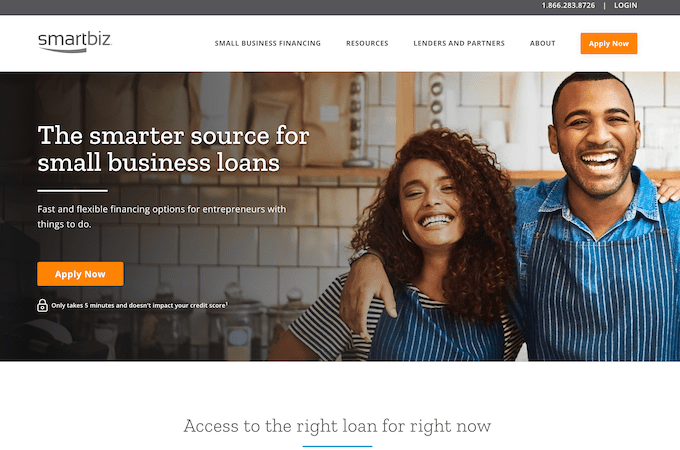
Screenshot of SmartBiz homepage
SmartBiz offers custom financing and flexible loans for small businesses.

SmartBiz helps you find flexible small business loans as quickly as possible. 

  • Custom financing: Whether traditional loans aren’t suitable for you due to time constraints, low revenue, or credit profile issues, SmartBiz offers custom financing solutions for any situation to help you find the loan that works best for you. With interest rates as low as 6.99%, bank term loan amounts of $30,000 to $500,000, and repayment terms of 24-60 months, you can pay off your loan quicker than you applied. SmartBiz offers different options, from lines of credit to invoicing loans, you can find a flexible funding solution with ease.
  • Quick and easy application: SmartBiz’s online application process is incredibly easy to do in three easy steps. You can fill out one single, streamlined application to find out if you’re pre-qualified for the loan. SmartBiz will request a few common documents, including personal and business tax returns, personal financial statements, profit and loss statements, balance sheets, and collateral. SmartBiz will then refer you to a lender that will most likely fund your business, to which you can access your capital and grow your business.
  • Fair eligibility requirements: To be eligible for a SmartBiz loan, there are a few requirements you need to prove. Unlike most financing services, SmartBiz doesn’t ask for unfair requirements. All SmartBiz asks is that your business is not in the following industries: gambling, life insurance, religious teaching, political and lobbying activities, oil wildcatting, mining, mortgage servicing, real estate development, bail bond, and pawn or private clubs. To be eligible for all SBA 7(a) loans, your business must be above two years old, and your credit score must be above 650. 
  • AI-powered solution for lenders: SmartBiz lending partners can benefit from its AI-powered technology solutions to create more approvals and optimized risk and resource management. This SmartBiz platform comes with application management, AI-powered automation, document capture, automated reviews, online file audit, and underwriting and closing features. You can efficiently manage all loan applications and create a customized lending experience. 
  • Refinancing options: You can choose to purchase or refinance commercial real estate through a SmartBiz SBA loan. All it takes is five easy steps, from pre-qualifying and providing financial information to accepting your letter of intent and conducting a property valuation, SmartBiz ensures you get your funds as quickly as possible.  

Where SmartBiz Falls Short

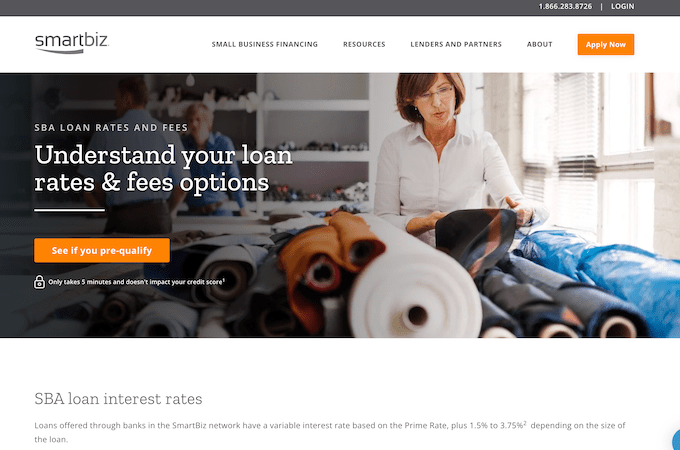
Screenshot of SmartBiz webpage for understanding SBA loan rates and fees
SmartBiz fees and interest rates vary depending on the size of the loan.

SmartBiz comes with different loan rates and fees, depending on how much money you borrow. 

  • High fees: SmartBiz definitely has higher fees than most of its competitors. For an SBA loan, fees for working capital include the following: $350,001 to $700,000 — 2.77% of the guaranteed portion; $700,001 to $1,000,000 — 3.27% of the guaranteed portion; and $1,000,001 to $5,000,000 — 3.5% of the guaranteed portion + 3.75%. Not only that, but it also has excess fees for applications and bank closures. For example, on top of the working capital fees, you also have to pay a $3,000 one-time application fee and a $450 bank closing cost, and third-party report charges may apply. 
  • Higher interest rates: The lowest interest rate that SmartBiz offers is around 6.99%, but that is for a custom financing option. If you are interested in an SBA loan, the minimum interest rate is between 8.25% and 9.25%, plus the prime rate of between 2.75% and 3.75%, which is high compared to other financial services that start between 4-5%. 
  • Customer support: According to a few reviewers, SmartBiz’s customer support is lacking in many ways. A few reviewers claimed that its customer service was slow while others said the representatives were unfriendly and unhelpful. Some reviewers went as far as to say they couldn’t even get in touch with SmartBiz’s customer support in the first place, which is unfortunate. 

SmartBiz Startup Business Loans Compared

While SmartBiz is a decent option for small businesses to take out an SBA loan or custom financing, the best financing service for most people is Upstart because of its quick funding time, and you can qualify without a credit history. 

SmartBiz Business Loans Review

Business loans can be an easy way for small business owners to find the funds to kickstart their business ventures. Everything that we discussed above regarding startup business loans applies to most business loans of any kind. However, we did discuss more about SBA loans and custom financing options, which can have more fees associated with them. 

Here is a quick look at how SmartBiz stacks up against some of the best financing services on the market today:

  • Bluevine — Best for established businesses seeking lines of credit up to $250,000 
  • Lendio — Best small business loan marketplace with 75+ lenders
  • OnDeck — Term loans and lines of credit for business owners with a 600+ FICO score
  • Fundbox — Best for new businesses in need of inventory or supplies from vendors
  • Funding Circle — Best small business lender for loan terms up to five years
  • Kabbage — Best for businesses with low monthly or annual revenue
  • Lending Club — Best P2P lending marketplace for business loans
  • Kiva — Microloans up to $10,000 at 0% interest for entrepreneurs
  • SmartBiz — Best for SBA loans up to $5 million with 25-year terms
  • Credibility Capital — Bank-backed loans for business owners with great credit 
  • CAN Capital — Best merchant cash advance for small businesses

SmartBiz Final Verdict

SmartBiz offers excellent custom financing options and SBA 7(a) loans for small businesses. If you need to find quick and easy funds, you can do so by utilizing SmartBiz’s AI-powered platform. 

With 13 years in the industry and $9 billion delivered to businesses across the U.S, SmartBiz is a reliable and stable company, and we would recommend SmartBiz to any small business that needs access to quick funds. 


from Quick Sprout https://ift.tt/g35SRlH
via IFTTT

Saturday, October 1, 2022

Compare the Best Screen Recording Software

Want to jump straight to the answer? The best screen recording software for most people is OBS Studio or Loom.

If there’s anything better than telling employees what to do, it’s showing them.

Screen recording software makes it easier than ever to create professional tutorials with minimal effort. With the right tool, you can describe problems, deliver instructions, and share knowledge—all at the click of a button.

But not every screen recording tool is equal. Keep reading to find my top five picks that tick all the right boxes, from a user-friendly interface to advanced features and premium effects.

The Top 5 Best Screen Recording Software

  • OBS Studio — Best Free Screen Recording Software
  • Loom — Best for Online Sharing
  • Scribe — Best for Making Automated Step-by-Step Tutorials
  • Camtasia — Best for Creating Professional-Level Screen Videos
  • Screencast-O-Matic — Best for Mobile Screen Recording

Don’t worry; I’ll tell you exactly why they make it on my list.

OBS Studio — Best Free Screen Recording Software

  • Free open-source platform
  • HD-quality recording and streaming
  • Complete broadcasting tool
  • Intuitive audio mixer
Get started for free

OBS Studio comes packed with several advanced features and offers HD-quality recording and streaming with no limits on video length—all without charging you a single penny. While this may sound too good to be true, it isn’t.

It’s an open-source platform that lets you record your screen, save it, and come back to it later. You can also encode your footage in FLV format and save it locally. The fact that OBS Studio is a complete tool for broadcasting means you can add as many displays and cameras as your computer can handle.

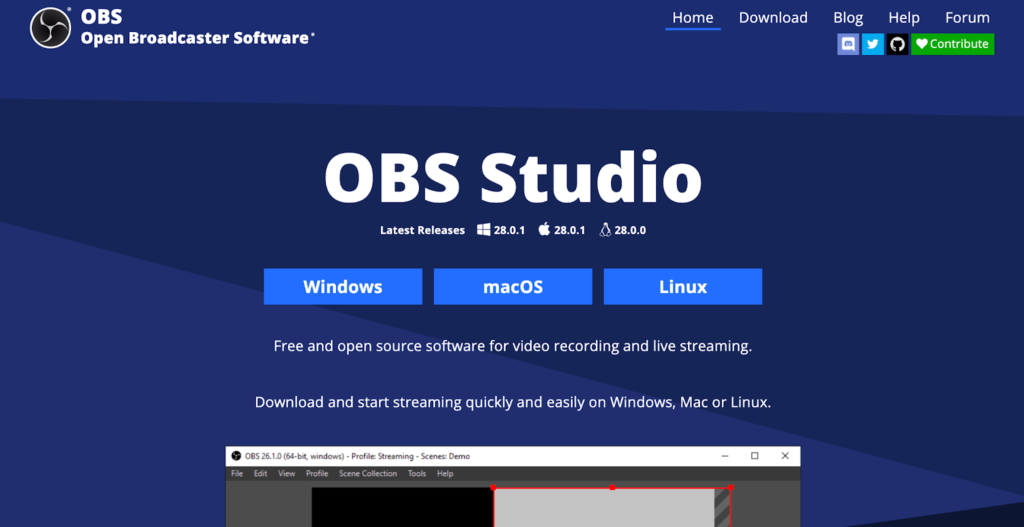
Screenshot of OBS Studio homepage
OBS Studio comes packed with several advanced features and offers HD-quality recording and streaming.

Easily create scenes with images, text, browser windows, window captures, and more, and switch seamlessly between them through custom transitions. Sizing and positioning elements within each studio require just a click and drag, and you can control them during a recording session using a hotkey.

OBS Studio’s intuitive audio mixer and extra components like noise suppression and VST plugin support ensure your audio delivery is nothing short of excellent. Use the Streamlined Setting tools to give your recordings the final polishing touch.

My only issue is the steep learning curve. The complicated interface is loaded with way too many advanced features that feel overwhelming initially, but once you get a hang of it, it’ll be a smooth ride from there.

Pricing

OBS Studio is a free screen recording software.

Loom — Best for Online Sharing

  • Easy sharing and collaboration
  • Multiple screen recording options
  • Mobile-optimized library
  • Decent editing tools
Sign up for the 14-day trial

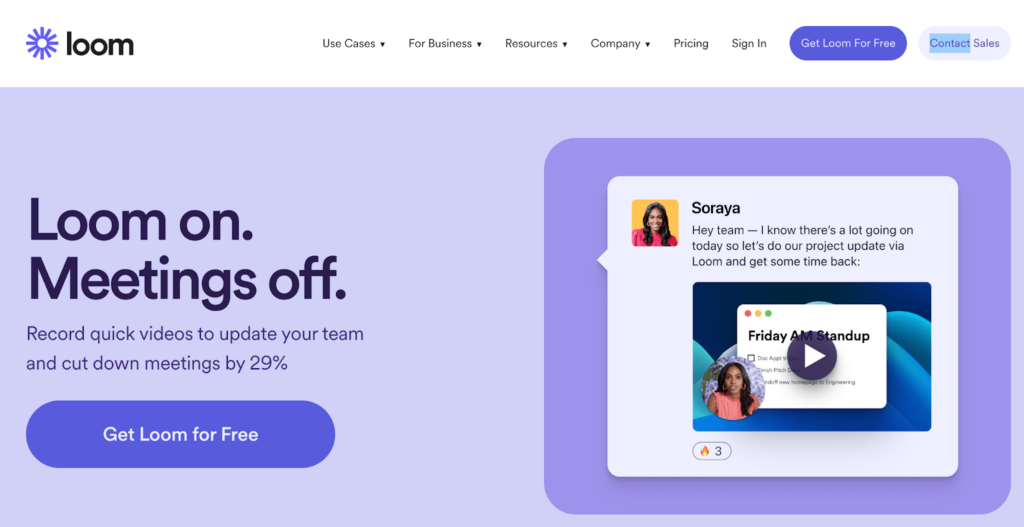
Loom is the easiest way to quickly record something—process, workflow, or tutorial—and share it with your team.

Choose whether you want to record your screen, screen with webcam video, or just webcam, and go about your process. Once you’re done, your video will automatically be uploaded to the Loom platform. Add the final finishing touches to add more context to your video, using the platform’s basic editing tools.

When you’re happy with the end product, simply copy the link to the video and share it with your team. All your Looms are then stored in a mobile-optimized library, allowing you to access your videos even when you’re not in front of your computer.

Screenshot of Loom homepage
Loom is the easiest way to quickly record something—process, workflow, or tutorial—and share it with your team.

Loom is designed for easy collaboration. Viewers can interact with you through timestamp comments and emojis. You’ll also be notified every time there is any activity on your account, so you never miss anything important.

Having said that, Loom isn’t perfect. Its editing functionality is significantly limited compared to other screen recording software and you cannot censor sensitive information. While the desktop app works smoothly, its mobile app is slightly confusing. For instance, you cannot combine video with screencasting.

Nevertheless, Loom still gets the job done without any hassle—and gets done well.

Pricing

Loom currently offers three plans:

  • Starter — Free
  • Business — $8 per creator, per month
  • Enterprise — Request a customized quote

Test-drive the Business plan by signing up for the 14-day trial.

Scribe — Best for Making Automated Step-by-Step Tutorials

  • Create visual step-by-step guides
  • Innovative Pages feature
  • Custom editing and branding
  • Effortless video sharing
Try for free

Scribe is one of the few screen recording software tools that strike the right balance between functionality and aesthetics.

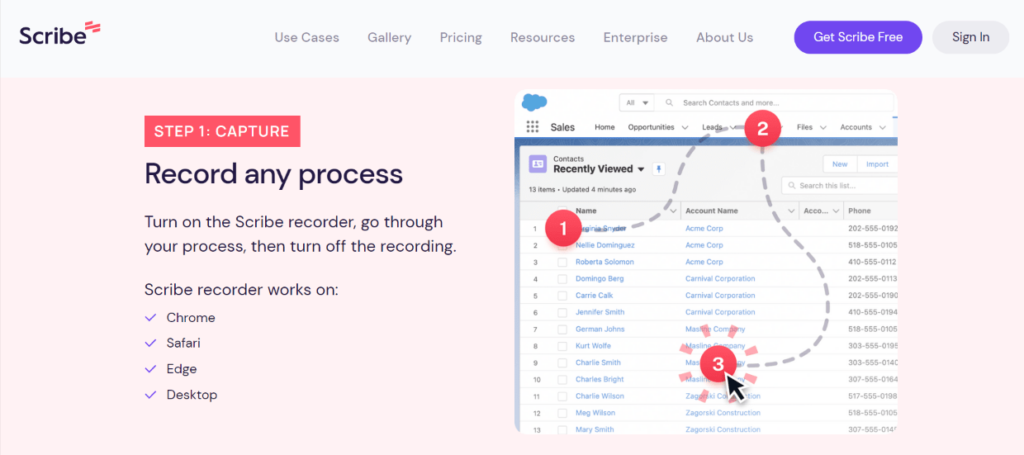
It’s a browser extension or desktop app that lets you create automated, visually-appealing step-by-step guides with just one click. Simply hit the Record button to start capturing your process prices, and when you’re done, select Stop.

Scribe will then automatically generate a step-by-step guide, complete with relevant screenshots and text.

Screenshot of Scribe homepage
Scribe lets you create automated, visually-appealing step-by-step guides with just one click.

What’s more, you can edit and update your screen recordings to customize them into visual SOPs, training manuals, and other types of documents. Add custom branding, annotations, and blur to bring more depth and detail where needed.

Its Pages features let you combine multiple Scribes to create an even more comprehensive document. Once your custom Scribe is ready, share it instantly with your team as a PDF document or a URL link—or embed it in wikis or your knowledge base.

Pricing

Scribe currently offers three plans:

  • Basic — Free
  • Pro — $29 per user, per month
  • Enterprise — Request a customized quote

Nonprofits are eligible for a 50% discount, plus you can get a pilot for the Enterprise plan before making any commitment.

Camtasia — Best for Creating Professional-Level Screen Videos

  • Creates professional-looking videos
  • Click-and-drag editing
  • Good stock images
  • Interactive features
Try it today

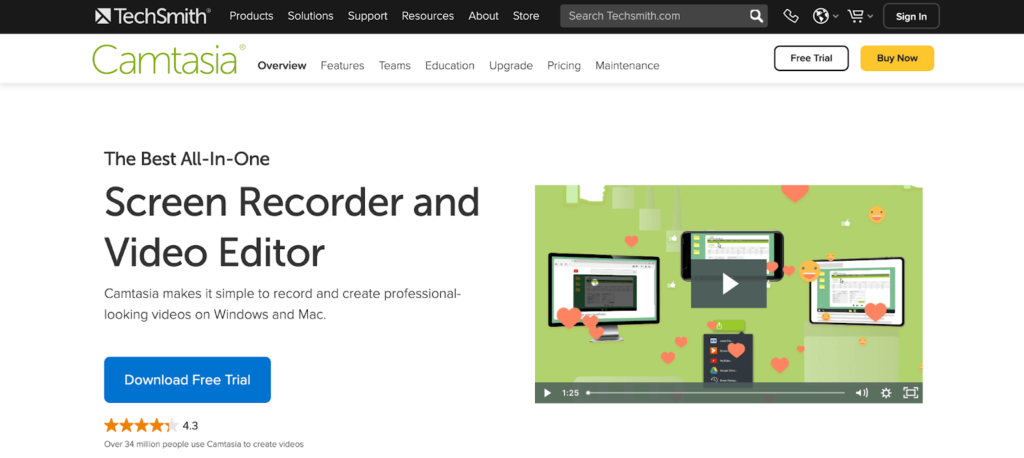
Developed by TechSmith, Camtasia makes it simple to record and make professional-looking videos on your desktop.

Record both video and audio from your Mac or Windows device, as well as capture your webcam for voiceovers to guide viewers. Its built-in video editor comes with an exhaustive list of editing options giving you all the necessary tools at your fingertips.

Screenshot of Camtasia home page
Camtasia makes it easy for even beginners to create professional-looking videos on your desktop.

There’s also a decent selection of stock images with click-and-drag effects to customize screen captures however you like. Insert zoom out, zoom in, and pan animations into footage—or use transitions between slides and scenes to improve the flow of your videos.

Camtasia makes it surprisingly easy to create professional intro and outro segments, so even beginners can use the tool. Experiment with interactive features that let you add quizzes or clickable buttons to your videos.

While configuring these elements doesn’t take much time, previewing and exporting the final video certainly becomes more complicated than when handling non-interactive videos.

Pricing

Camtasia currently offers the following four plans:

  • Individual — $299 per user
  • Business — $299.99 per user
  • Education — $212.99 per user (This is the discounted rate)
  • Government and non-profit — $268.99 per user

A 30-day money-back guarantee is available on all plans for your greater peace of mind.

Screencast-O-Matic — Best for Mobile Screen Recording

  • Mobile-optimized tool
  • Multiple screen recording options
  • Built-in stock library
  • Editing capabilities
Get it now

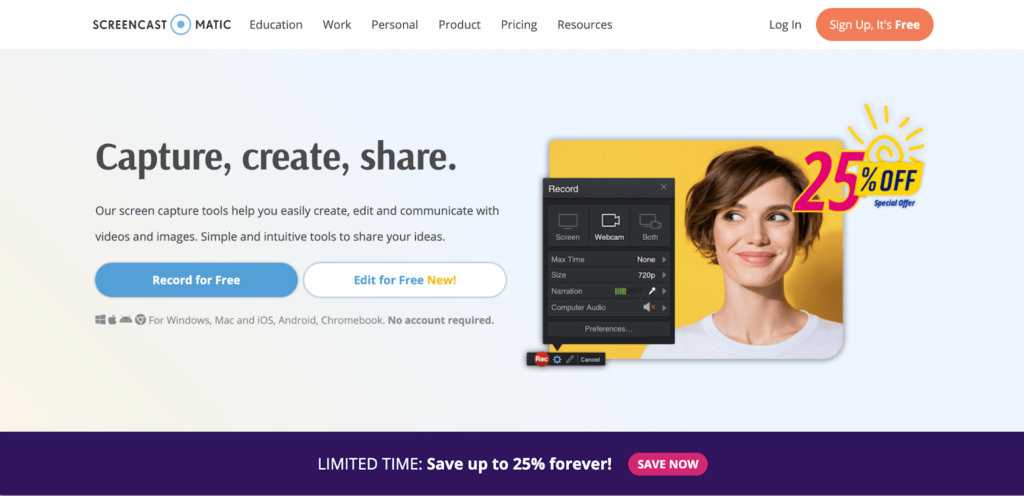
Screencast-O-Matic is another excellent screen recording software that can be installed on all different devices, including PCs, tablets, laptops, and mobile phones—and it offers a great experience on each one.

The software works particularly well on mobile apps, offering more features than its competitors. The iPhone and iPad apps allow you to record your screen and overlay a separate recording of your face onto the same screen recording. You can then edit the video directly on your mobile device.

Screenshot of Screencast-O-Matic homepage
Screencast-O-Matic is an excellent screen recording software that works particularly well on mobile apps.

This doesn’t mean Screencast-O-Matic’s desktop app isn’t just as good.

Record your desktop’s entire screen or just a specific area and optionally add a webcam with your face. While the free version lets you crop and adds music, the paid version comes with more editing tools to customize your recordings.

Overall, Screencast-O-Matic is fairly easy to use and comes with a video editor to make your recordings more engaging. Other features include a built-in stock library full of videos, images, and music tracks, scripted recordings, drawings and annotations, and text-to-speech caption generation.

Save your screen recordings directly to your device or upload them to Screencast-O-Matic, Google Drive, on YouTube. You can also add them to your Dropbox or Vimeo account, but you’ll need the paid plan for this.

Pricing

Screencast-O-Matic offers two categories of pricing:

Individuals and Business

  • Solo Deluxe — $3 per month paid annually
  • Solo Premiere — $6 per month paid annually
  • Solo Max — $10 per month paid annually
  • Team Business — $8 per month, per user, paid annually

Education

  • Solo Deluxe — $2 per month paid annually
  • Solo Premiere — $4 per month paid annually
  • Solo Max — $6 per month paid annually
  • Team Business — $2 per month, per user, paid annually

Monthly plans are available, but only for Screencast-O-Matic’s Business plans.

How to Find the Best Screen Recording Software for You

Ideally, you want to consider the following factors when choosing a screen recording software tool:

Screen Recording Capabilities

As mentioned, all screen recording software tools are not equal. While some record your whole screen, others focus on a specific area. Naturally, it’s better to choose tools that offer both.

Alongside finding out how the software records, you should also note its audio recording options. Does the tool even record audio? If yes, does it record from my microphone or use system audio recording?

I recommend using tools that let you superimpose a webcam feed over your screen capture. This is extremely important to record commentary over your recorded material and to add a face to the voice. Also, check the recording quality to ensure the recording is in high definition.

User-Friendly Interface

Consider your prospective software’s interface. Is it user-friendly and designed with the inexperienced user in mind? Or does it have a steep learning curve, requiring prior knowledge?

Understand your and your team members’ technical capabilities when deciding on screen recording software. This is extremely important as users are unlikely to use software they find too complicated or tedious.

Sharing Options

Sharing is another crucial factor when choosing a screen recording software.

Once a recording is done, see whether you can save it and in what video file format (MP3, GIF). Find out whether you can upload the screen recording to the cloud and platforms like YouTube, Dropbox, and Google Drive in real time and get a sharing URL link for it.

Having options to embed them in wikis and knowledge bases is also desirable.

Summary

The best screen recording software is OBS Studio and Loom which combine a user-friendly interface with advanced features and convenient sharing options. However, your individual requirements can always differ, so ensure to choose a tool that works best for you.

The majority of my recommendations come with free plans and trials, so you can always test-drive different software before committing and pick the most suitable option for your needs.


from Quick Sprout https://ift.tt/zr81cha
via IFTTT

Multi-Cloud vs. Hybrid Cloud

Cloud environments have become a necessity for modern organizations across all industries. But choosing the right cloud computing system for your company size, goals, and infrastructure can be challenging. 

“Multi-cloud” and “hybrid cloud” are two terms that are often used interchangeably, but they’re not the same. Understanding the key differences and benefits between these cloud environments will help your business grow and ensure you have the right cloud computing system that addresses your unique needs. 

This in-depth guide will explain everything you need to know about multi-cloud and hybrid cloud, including tools, tricks, and best practices for success.

The Top-Rated Cloud Storage Services For Multi-Cloud and Hybrid Cloud Environments

In addition to cloud computing, your organization needs to have a cloud storage solution to safely store assets—and these are the best options on the market today:

You can read our full reviews of the best cloud storage services here. 

Company logos for our best cloud storage services

What is Multi-Cloud and What is Hybrid Cloud?

Multi-cloud refers to a cloud computing infrastructure involving multiple cloud services that perform different functions, such as SaaS, IaaS, and PaaS. Most multi-clouds include at least one public cloud service, with each solution coming from different providers.

A hybrid cloud environment always includes at least one private cloud in addition to public cloud services. The data and processes of a hybrid cloud typically work together to complement each other, managed almost like a single entity.

In short, multi-cloud infrastructures blend two or more of the same type of clouds, while hybrid infrastructures blend two or more different cloud types. 

The Basics of Multi-Cloud vs. Hybrid Cloud

Let’s take a closer look at the core components of multi and hybrid clouds. This will help you understand how these cloud environments work while comparing the similarities and differences.

Data Storage

Storing, protecting, and easily accessing sensitive data must be a priority for every organization. So when you’re looking for cloud solutions, this needs to be a top-of-mind initiative. 

Both multi-cloud and hybrid cloud environments use infrastructure that combines different clouds. So in each scenario, storing sensitive data will be crucial to operations and infrastructure design.  

You can store your data on-premise, on a private cloud, in a public cloud, or on an internal server. As long as the data is safe, backed up, and accessible, each type of cloud infrastructure can support sensitive data storage.

Security

Securing your cloud environment relies on the system’s architecture. 

If you’re using a system that involves multiple public clouds, you’ll need to evaluate the security protocols and reliability of your cloud service providers and vendors. These providers should have processes and protocols in place to protect you from both internal and external threats. 

Organizations that want more control over data encryption, endpoint security, access controls, and other system configurations can think about deploying a private cloud. This pairs multiple public services with a private cloud, resulting in a hybrid cloud environment. 

Regulatory Compliance

Some organizations must follow industry-specific rules and regulations. This might include HIPAA, GDPR, PCI, or similar protocols. 

You might be able to find public cloud service providers that offer these industry-specific solutions out-of-the-box. So it’s typically in your best interest to seek out these providers that likely have better cybersecurity resources than private cloud solutions. 

If you’re also dealing with highly sensitive data storage, such as patient data or payment information, you need a cloud environment that is highly controlled and secured. You might be able to get this directly from public cloud providers. But sometimes you may need a hybrid solution that involves some type of private cloud in your infrastructure. 

System Architecture

Multi-cloud systems mix different cloud solutions of a similar type. But there isn’t any communication between the systems, as each solution is used for different purposes. 

A multi-cloud architecture also lacks a centralized management system for the network, and data is stored on at least two public clouds. 

Hybrid cloud architectures contain at least one public cloud service and at least one private cloud or on-premises data center. All of the infrastructures can be managed from a single source of truth with the capability of identity management, cloud monitoring, alerts, and more. This higher level of interconnectivity makes it possible for public cloud solutions to behave as an extension of the private cloud architecture. 

Many hybrid solutions also utilize private clouds and on-site data centers to store sensitive data. So certain records aren’t kept in the public cloud services. 

System Availability

Multi-cloud systems rely on vendors for availability. If one vendor has a problem, you’ll need a backup system so end users don’t have any downtime. 

With a multi-cloud infrastructure, you can also set up separate public clouds that are closer in location to different users. This type of deployment solves problems related to latency for users in different regions. 

Availability for hybrid cloud systems falls on the shoulders of in-house IT teams. That’s because the entire workload is based on private clouds or on-premises systems. 

As a result, hybrid clouds could have more issues with downtime if there’s a failure on a public or private cloud. Some downtime is inevitable if there’s a traffic spike or something goes wrong.

Vendor Lock-In

Multi-cloud organizations are vendor-independent—meaning they aren’t locked into a relationship with a single cloud services provider. Workloads and processes can easily be changed so that new vendors can be added, old vendors can be removed, and any vendor can be changed. 

You may want to change vendors based on technology, cost, experience, location, or other factors. Regardless of the reason, multi-cloud systems are the easiest if you want to adapt and change with ease. 

Hybrid clouds require more integrations between public cloud systems and private clouds. This presents more challenges when you’re changing or moving to a new vendor. While they’re not necessarily locked in and unable to change, cloud organizations could experience significant downtime as they’re transitioning from one vendor to another. 

3 Tools to Improve Cloud Computing for Multi-Cloud and Hybrid Cloud

Below are the top tools that we recommend for implementing and managing your cloud environment. 

#1 — VMware

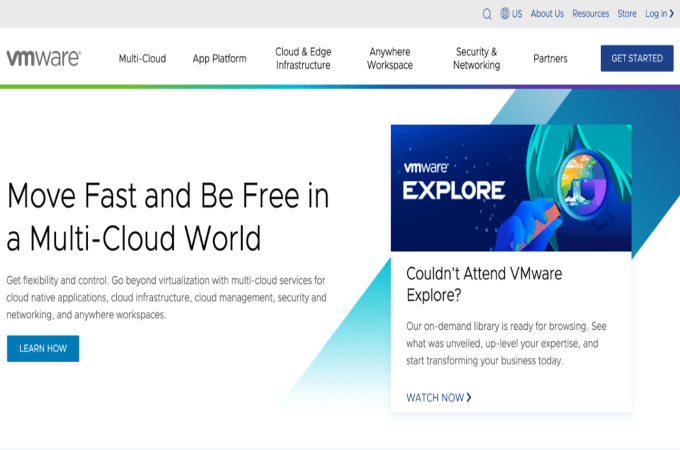
Screenshot of VMware homepage
WMware has tech just for multi-cloud.

VMware offers cloud computing technology that’s specifically designed for multi-cloud environments. You can use the service to simplify your multi-cloud systems while adding enterprise-grade security.

With VMware, organizations can run enterprise apps from anywhere and scale operations across public cloud environments. The solution can even be used to add enhanced visibility and governance across multiple public clouds, which would otherwise be challenging in a multi-cloud deployment. 

#2 — Azure Stack

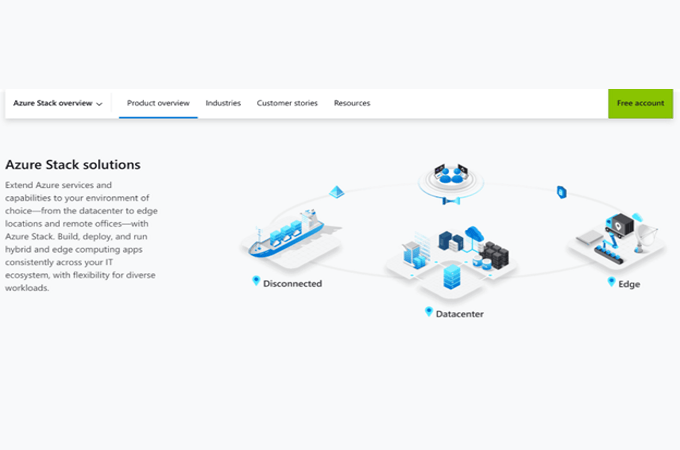
Screenshot of Azure Stack product overview webpage
Azure Stack can handle all cloud infrastructure.

Some tools on the market are designed for multi-cloud, while others are built for hybrid cloud. But Azure Stack can accommodate both types of cloud infrastructures. 

Developed by Microsoft, Azure Stack has multiple solutions for both hybrid and multi-cloud systems. It’s an excellent product for businesses that need to meet regulatory and data sovereignty requirements, which is why it’s a top choice for industries like healthcare, financial services, and government. You can also use Azure Stack to speed up your cloud migration process with its simple tools, resources, and dedicated training. 

#3 — Kubernetes

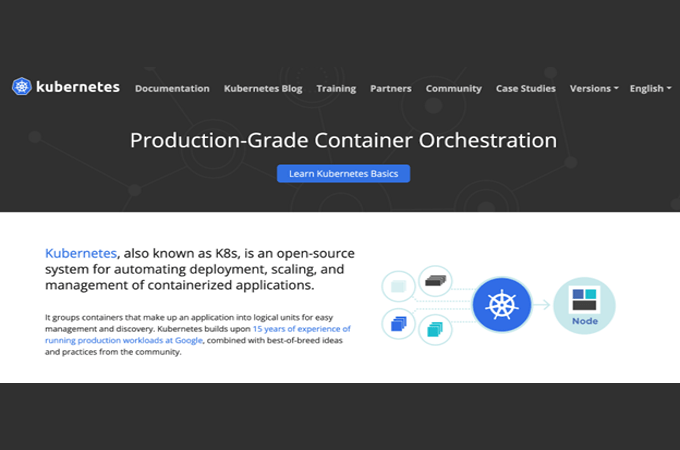
Screenshot of Kubernetes homepage
For hybrid Cloud and IT teams.

Kubernetes is an open-source solution for enterprise IT departments managing a hybrid cloud. It’s a way for tech teams to leverage both on-premises and public cloud infrastructures with flexibility and consistency. 

You can use Kubernetes to quickly move workloads and applications to different parts of your IT environment. The solution has been used to help organizations migrate over 150+ different cloud services to a single source of truth for scalability and management. You’ll never outgrow Kubernetes, and you can use it to deliver applications consistently from a hybrid cloud setup.

5 Best Practices For Cloud Computing With Multi-Cloud and Hybrid Cloud

As you’re deciding between a multi-cloud or hybrid cloud environment, there are several things you need to keep in mind. The following best practices will not only help you choose the right cloud system, but they’ll also help you deploy, manage, and scale your organization.

#1 — Start With a “Cloud First” Mindset

Before you select and deploy a cloud computing system, you must first prepare your organization for a cloud shift. This goes beyond your IT department and involves a company-wide approach to define your business technology. 

Whether you’re using a multi-cloud or hybrid cloud approach, neither will be totally effective if you don’t have a cloud-first mindset. 

This mindset helps you start to move away from your legacy systems and outdated tech, and look for replacements that are available as cloud services.

It’s worth noting that not every application and process is suitable for a cloud deployment. So you may need to refactor some of your enterprise applications if you want to move them to the cloud. 

#2 — Look Ahead for Your Future and Growth

Migrating to the cloud is not a one-time occurrence. It doesn’t happen overnight, and the changes will define your organization in the long run. 

For both multi-cloud and hybrid cloud deployments, you need to understand that your infrastructure and resources will eventually evolve. Planning for that evolution will help you choose the right systems and services for your goals. 

You should be looking for ways to acquire new skills and knowledge related to cloud systems. Understand the differences between vendors and systems.

Some cloud migrations can take multiple years. So start with a plan to map out exactly what that migration process will look like. Then re-evaluate that plan on an annual or semi-annual basis based on your progress. 

#3 — Implement a Process for Continuous Assessment

Cloud service providers are constantly changing offerings. A single provider could be the best available option for your needs today. But that could quickly change in a few months as your needs change or their services evolve. 

So you need to have a system in place to constantly assess your vendors. 

Does their technology still support your needs? Do they have new technology as a separate service that you should be leveraging? Is there another vendor on the market that can better support the initiative in question?

Assessments can be scheduled on a quarterly, semi-annual, or annual basis. But you can also have ad-hoc assessments based on needs if something happens or a unique situation arises that requires some extra attention for a vendor. 

#4 — Prioritize Management and Governance Rules

Governing systems through multi and hybrid cloud environments can be challenging. 

Hybrid systems give you more flexibility and control, but they’re harder to set up and maintain. Multi-cloud systems are easier to deploy, but governance is difficult because the solutions aren’t managed from a single location. 

Regardless of which system you choose, you need to think about the way you’re going to manage each cloud service. If you’re not going to manage everything under a single entity, you need to have rules in place for each public cloud so that your team can appropriately control access and secure the environment. 

You should also have systems in place that can track the consumption of your cloud service usage, which will help you with this initiative. 

#5 — Look at Individual Workloads in Your Cloud Environment

Cloud applications hosted on-site could potentially be replaced by SaaS. Generally speaking, moving to SaaS will be more cost-effective than PaaS or IaaS.

So you can look at the individual workloads of your cloud computing systems to see if the process can be handled by a different SaaS tool. Modern cloud-native applications are typically more agile than legacy applications. 

In some cases, the applications you’re using for individual workloads may become obsolete. Shifting to a public SaaS could be the only answer. 

What to Do Next

Now that you understand the differences between multi and hybrid cloud systems, it’s time to decide which solution will be better for your organization. The easiest way to start this process is by moving on-site data to a public cloud. You can use our reviews of the best cloud storage services to compare the best options on the market today. 

From there, you can continue to evaluate your systems and see if it makes more sense to continue deploying multiple cloud services for different processes. If you decide that you want to go with a hybrid approach, you need to prioritize IT security. You can compare the best endpoint security software as a starting point. 


from Quick Sprout https://ift.tt/bZH86St
via IFTTT