Wednesday, February 14, 2018

The Top 15 Apps to Edit Your Instagram Photos and Videos Like a Pro

By now I’m sure you realize how important Instagram is for your business.

Every day your audience gets bombarded with many different pictures and videos showing up on their timelines. That’s why I’ve told you in the past that you need to write captions that drive engagement.

But nobody will read your captions if the image doesn’t capture their attention. They’ll just keep mindlessly scrolling past your post.

I’ve seen some companies hire experts in photography to help them put out better Instagram posts.

While I can applaud the effort, I also think it’s a complete waste of money. You can take your own photos without hiring a professional.

Now you can use that extra cash and apply it to other aspects of your business to focus on the newest marketing trends.

Instagram has tools allowing you to edit your photos and videos directly on their platform. Those might be okay for the average person, but your business should avoid them.

Why?

It’s all about standing out from the crowd.

All of the 800 million monthly active Instagram users have access to those editing tools. If you’re using them too, your posts will look like everyone else’s.

There are other apps available that can help make your photos stand out. But there are thousands of them out there, so it’s tough to figure out which ones are most useful.

That’s why I’ve taken the time to share with you the best 15 apps for photo and video editing. These will help you take your Instagram posts to the next level.

I’ll go through all of my favorites and show you some of the key features of each one.

1. Afterlight 2

If you’re looking for unique filters, Afterlight 2 has a huge collection of old school and vintage ones available. These are definitely an upgrade from filters that come standard with Instagram.

They also have some really cool effects and designs that allow you to add text and other typography to your images:
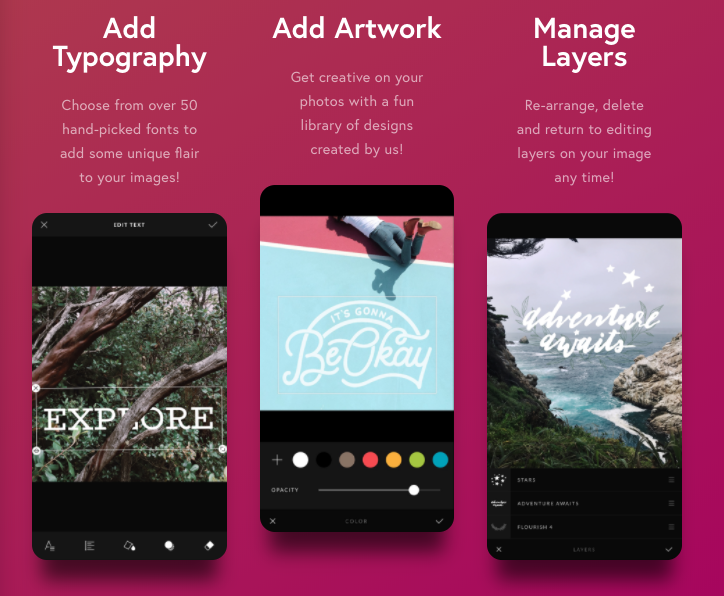
image11

You can even put part of your text behind elements within your photo. This feature is perfect for businesses.

Now you can capture the attention of your followers by layering a catchy headline directly over your image as opposed to just writing a caption. This is a great opportunity for you to do something like:

  • advertise a sale
  • promote a new product
  • build hype for an event
  • run a contest
  • get more followers
  • draw attention to a link in your bio

You can download Afterlight 2 for $2.99, and that’s all you’ll ever pay for this app. They don’t have any other in-app upgrades or additional charges to access their best features.

2. Snapseed

Snapseed takes your editing effects to a whole new level. You can apply effects and filters to specific areas of your image with high precision:
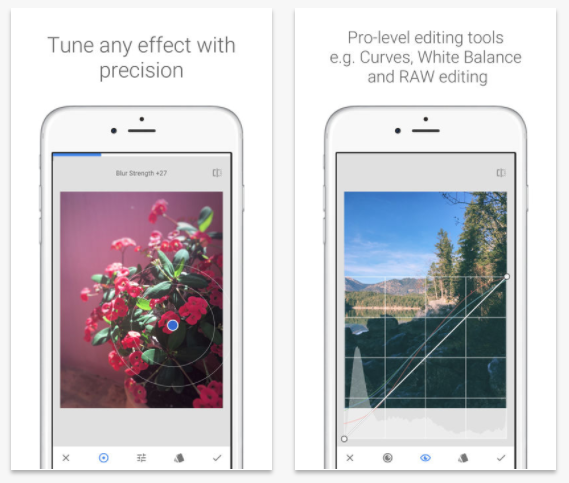
image2 12

They’ve got a really cool editing feature called a perspective tool. This helps you automatically adjust or correct any skewed lines in your images.

Let’s face it, a picture taken by hand won’t be 100% perfect. You might think your horizon is level or buildings are lined up properly, but that’s rarely the case.

That’s when the perspective tool can make your photos look professional.

What’s the best part about Snapseed? It’s free. It’s definitely worth checking out since there’s no risk involved.

3. Aviary Photo Editor

Aviary Photo Editor is an Adobe product. If you’ve used Adobe software and were happy with the experience, you should give this Photo Editor a try:
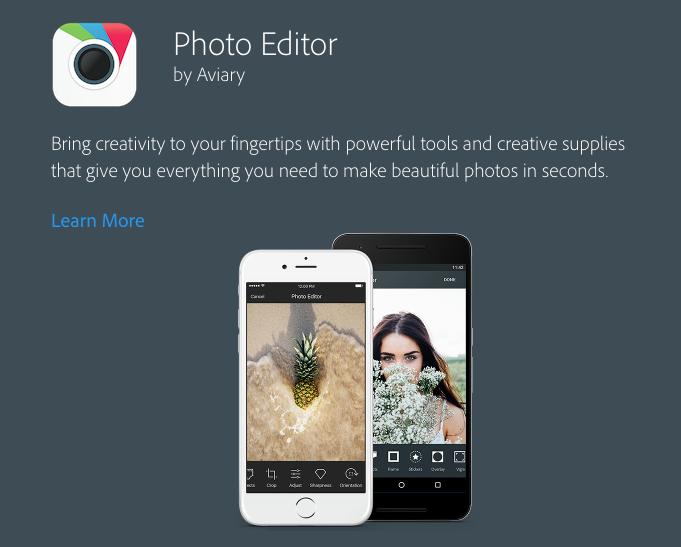
image7 12

The editing tools on Aviary allow you to saturate colors within your photos as well as soften or sharpen areas for an effect.

Aviary also has a large collection of frames, stickers, and other overlays to embellish your images. You can even hand-draw captions across the pictures.

I like to use Aviary because of the features allowing me to fine-tune my images. With just a couple of clicks, you can eliminate blemishes or brighten shadows to make your images more lively.

Aviary saves your images to the cloud. If you have an Adobe ID, you can access your images from anywhere and edit them from any device.

This feature comes in handy if you’re taking and editing images as a team. Everything can be stored in one place.

4. Vintagio

For those of you who want to add a vintage feel to your videos, Vintagio has what you need, as the name suggests.
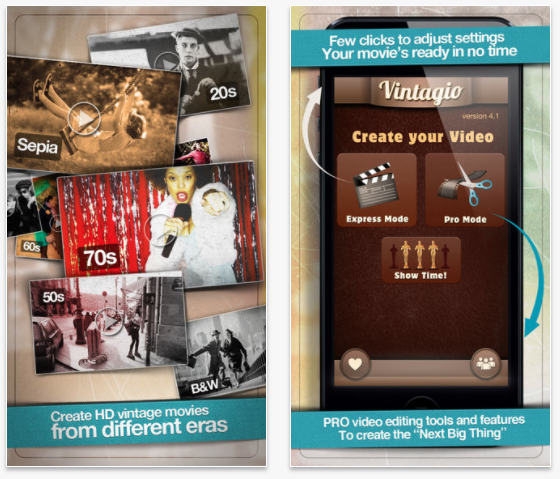
image5 12

If you’ve got a fashion company or ecommerce store that sells clothing, this app can be useful for promoting products from bygone eras.

If you want your video to appear to be from a certain time period, their video filters can match the style of that time. That way, it’s clear to your audience that the setting of your video is not supposed to be the present day.

You can also trim and piece together different video clips with this app.

And you can change the video quality of your clips if you want to create something that looks like it’s from the 1950s.

Vintagio has great soundtracks from different eras as well. You can adjust the speed and timing and add other effects to your clips too.

Combining all these elements together will help you make a unique Instagram video.

5. Average Camera Pro

The name says it all. Average Camera Pro was created to help regular people edit photos like professionals.

Unlike other apps that just edit photos, Average Camera Pro has a built-in camera function. You can use it to take multiple pictures at the same time or set a timer for the photos.

image1 12

You’d find these tools on high-quality and expensive cameras. But you can have them on your phone for just $0.99.

This camera function works best if you want to take pictures in low-light settings. Since you’re increasing the exposure time, you’ll get brighter pictures that would normally appear dark on a regular phone camera.

Sometimes when you try to brighten a really dark photo, the editing looks obvious in your final image.

But you won’t have to worry about that if you take the pictures with Average Camera Pro.

6. TiltShift

TiltShift is great for bringing focus to a specific area of an outdoor scene. So if you’ve got a business with a physical storefront, you can use this app to bring your location to life.
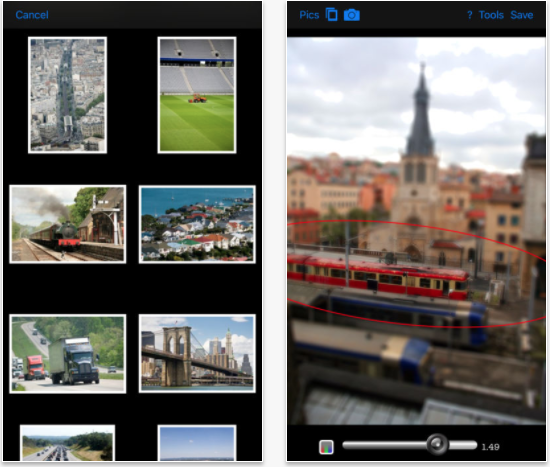
image3 12

The effect makes your image appear as if it’s a miniature. Instagram has a tilt-shift feature built into their editing tools, but this one is far more advanced.

If you take lots of landscapes or other outdoor photos, this app is worth getting for just $1.99.

7. Superimpose

Do you want to change the background of a picture you took? Instagram doesn’t have any tools for that, so you’ll need to get the Superimpose app.

Superimpose lets you remove the background from an image.

Then, you can combine it with another picture. This is awesome from an advertising perspective.

Want to take an exotic beach photo without leaving your office?

No problem.
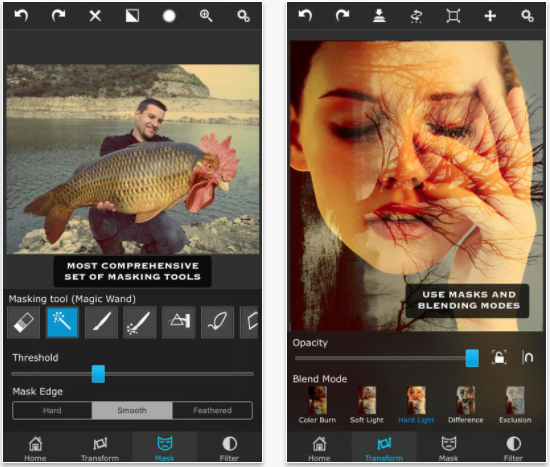
image6 12

Check out these creative images above. Superimpose allows you to blend images together or even change an image into something unrealistic, such as a fish with the head of a chicken.

Using Superimpose  as part of your arsenal of photo editing tools will make your brand stand out on Instagram. You can create images that are fun, exciting, and imaginative.

Plus, their software creates a smooth final product that’s believable. Your pictures won’t have that unprofessional crop and paste feel to them.

It’s only $1.99 to download. In no time at all, you’ll be uploading new photos to Instagram that will get your followers talking.

8. 8mm Vintage Camera

The 8mm Vintage Camera is great for shooting and editing longer videos. Now that Instagram lets you upload videos that are up to a minute long, this app is perfect for you.

You can get really cool video effects such as:

  • light leaks
  • scratches
  • flames flickering
  • dust

All of these can make your videos feel more authentic.
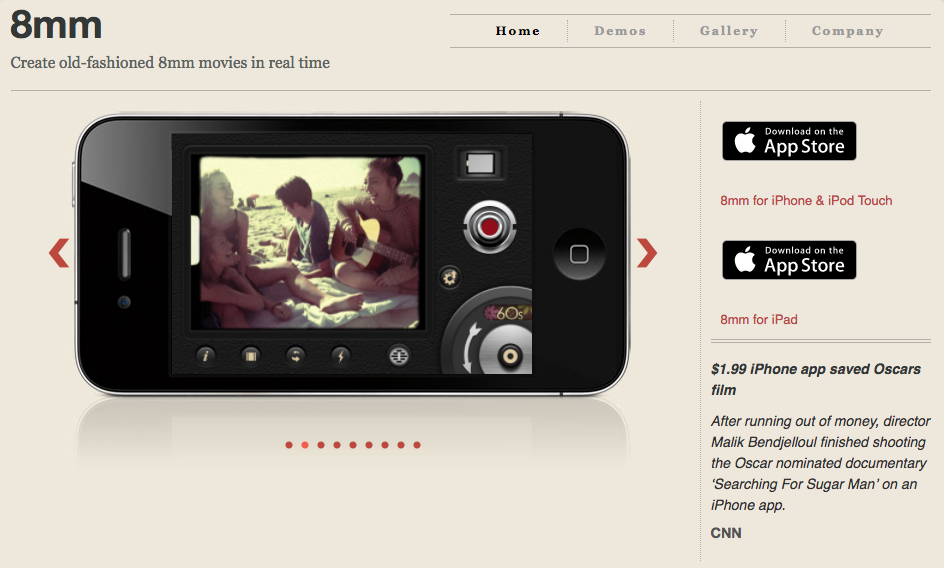
image15

8mm Vintage Camera was even used in the filming of an Oscar-nominated movie.

If a professional director can use this app to get on the red carpet, you can certainly use it to edit your Instagram videos. It’s available for download for just $1.99 with some additional premium themes available as in-app purchases.

9. CrossProcess

If you love adding filters to your photos but are sick and tired of using the same ones, it’s time for an upgrade. CrossProcess has over 70 filters.

image4 12

I’ve seen many businesses on Instagram using the same one or two filters over and over again.

It’s boring.

Your followers will realize pretty quickly you’re not being very original. Once this happens, they may start ignoring your posts. Or even worse, they could unfollow you.

If they aren’t following you, you won’t be able to keep them informed of other promotional information that drives engagement and gets conversions.

You can prevent this from happening by simply spicing up your photos with new filters available from CrossProcess.

10. PicFrame

Instagram allows you to upload multiple photos to one post. The only problem is you have to rely on your followers to scroll through each one.

This is not always the case.

If you want to combine multiple photos into one image, you can do it by creating a collage with PicFrame:
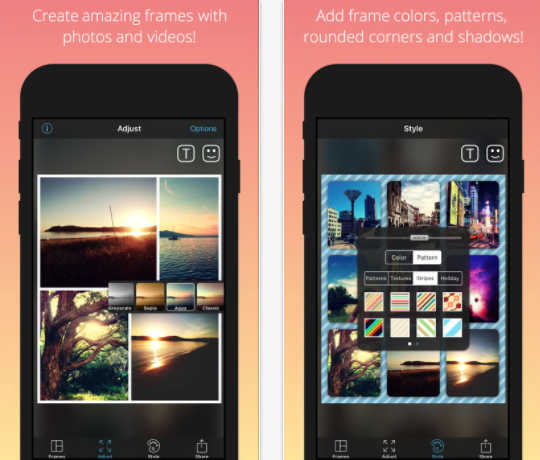
image8 11

One of the coolest parts of this app is you can apply different filters and effects to each image within your collage as opposed to having one tone across the entire picture. That way, they can all be unique and stand out from each other.

You can also adjust the color and design patterns of your frames with this app.

If you really want to enhance your collage, PicFrame has lots of bonus features like stickers, shapes, text, and even music.

I think it’s worth the $2.99 price tag.

11. Facetune 2

If the majority of your Instagram photos contain people as opposed to just products or landscapes, you need to consider Facetune 2.

Nobody is perfect. Sometimes, we get blemishes, breakouts, or acne. After a long night of tossing and turning, everyone gets bags under their eyes.

But these imperfections shouldn’t discourage you from posing for a photo.
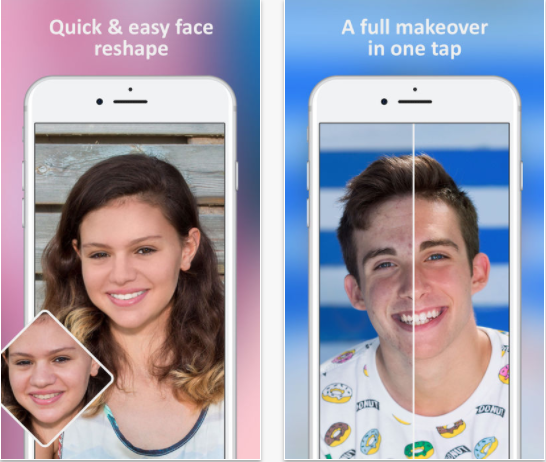
image9 10

This app can make photos of people more flattering. Sometimes, all it takes is a slight adjustment to the lighting.

Facetune 2 also has specific filters designed for selfies. Sometimes the front-facing camera on our phones doesn’t take the best pictures, so just apply one of the filters to make up for it.

With a few easy steps, you can easily:

  • whiten teeth
  • change eye color
  • remove wrinkles
  • eliminate shine on oily skin
  • make dull skin appear vibrant

The Facetune 2 app is completely free, so there’s no reason why you shouldn’t at least try it.

12. Tiny Planet Photos and Video

Tiny Planet lets you take images and videos with a fisheye lens effect.

This effect creates the appearance of a “tiny planet”—hence, the name.
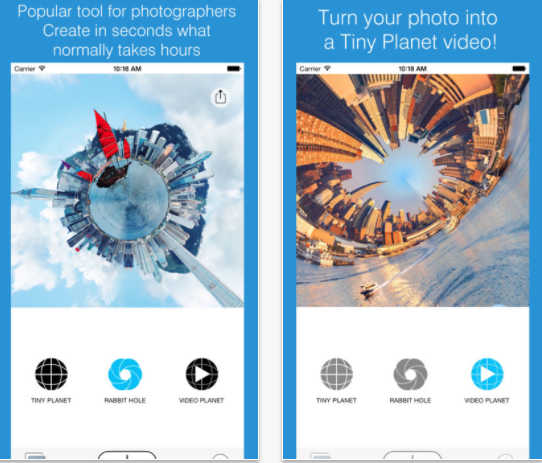
image12

Have you checked Instagram today? How many photos have you seen so far that look like this?

I’m willing to bet you haven’t seen any. I know I haven’t.

Get this app if you want to create images that are fun. The circular and warped photos this app creates can also be used as background images on phones, computers, or other devices.

You can suggest that to your followers.

13. Quick

Quick has really cool fonts that you can add to your photos.

They simplified the photo editing process with this app. Quick advertises that it’s designed to be used with “just a thumb.” So you won’t need to get on your computer or do anything too fancy to get great photos.
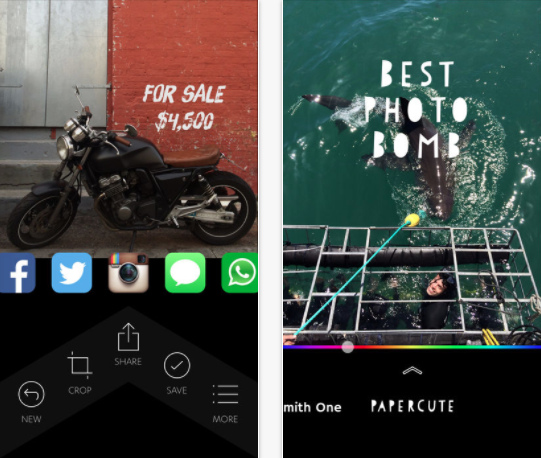
image10 5

You can send your edited image straight to Instagram or other social media platforms directly from the app.

As you can see from the example above, their text overlay features are great for captioning a photo or listing a price for something on your ecommerce store.

14. DXP FREE

The whole purpose of the DXP FREE app is to create multiple exposures on one image.

As a result, your pictures will stand out. Check out these examples:
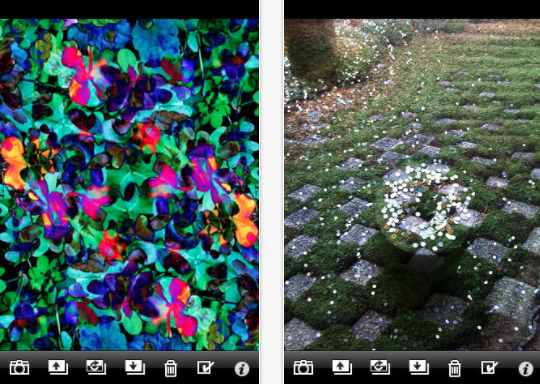
image13

Instagram doesn’t offer such tools.

This app does require a little bit of patience and precision. You’ll need to understand the concepts of blending, or you might get a bit frustrated when you’re trying to edit.

But like with anything else, the more you use it, the easier it’ll get. Just as the name says, it’s free to download.

15. Tangent

Tangent lets you add patterns, textures, and geometric shapes to your images.
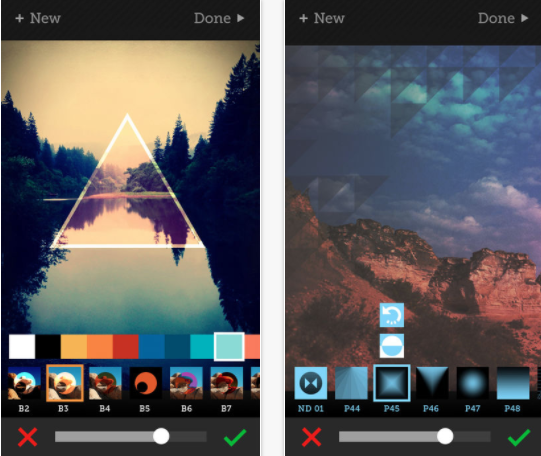
image14

It’s another way to let your creative juices flow.

It also has some features that allow you to add framing overlays to your photos.

Tangent gives you an opportunity to express yourself. If your company has an audience that recognizes art and creativity, you’ll definitely want to use Tangent to impress your Instagram followers.

Conclusion

To captivate your Instagram followers, you’ll need to make sure your photos and videos are edited properly. That doesn’t mean you have to hire a professional editor.

There are plenty of apps available that are really easy for anyone to use. Lots of these are free of charge or only cost a couple of dollars, so they are worth a try.

Everyone with an Instagram account has access to the same filters and editing tools.

Editing your photos with another app can separate your pictures from the crowd. If you’re not sure where to find the best apps, refer to this list as a guideline.

All of these apps are unique and offer different features depending on what you’re looking for, such as collages, text overlays, face touch-ups, or vintage themes.

What types of camera effects do you like to use when you’re editing photos and videos on Instagram?


from Quick Sprout http://ift.tt/2F1YuHI
via IFTTT

Monday, February 12, 2018

How to Get More Converisons by Optimizing Your Checkout Process

Do your conversion rates need a boost?

Nobody has a conversion rate that’s 100%. I think it’s safe to say that no matter how successful your company is, your conversions can always be improved.

Recognizing this is half the battle, but you’ll need to actually implement some changes if you want to see an increase. Just hoping for more conversions isn’t going to cut it.

Here’s another mistake I see businesses make. They confuse a conversion problem with a traffic problem.

Sure, driving more traffic to your website is great. I encourage you to do this. You may get more sales, but it won’t necessarily change your conversion rate.

Ecommerce websites need to focus on their website layouts. I’ve told you before that websites with simple designs have higher conversion rates.

But you’ve also got to simplify your checkout process.

If you analyze each phase of this process, you may find certain elements that are actually driving customers away.

Fortunately, I’ve helped businesses with this problem before. I want to share some of my most successful strategies with you.

Here’s how you need to approach your checkout process to maximize conversions.

Take a look at your shopping cart abandonment rates

Over 69% of shopping carts get abandoned. That number is astonishingly high.

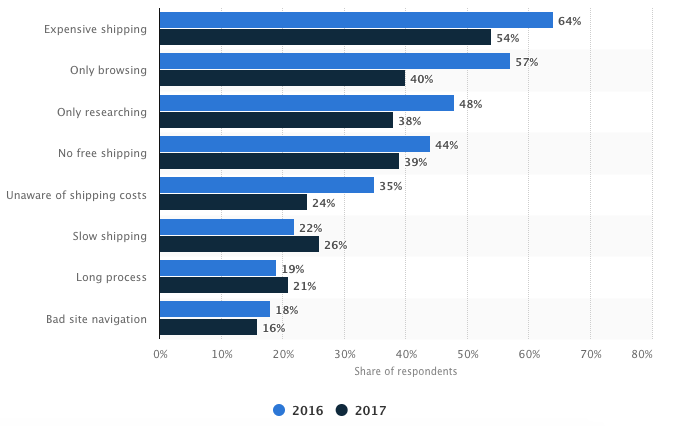
According to Statista, these are the top reasons why consumers abandon carts:

image1 13

Take a look at these figures and see if your existing checkout process has any of these hindering components. Are you encouraging customers to just browse?

It’s clear based on this data that lots of customers may add something to their shopping carts without any intention of buying anything. I know I’m guilty of this myself as well.

You need to find ways to convert these window shoppers into customers. I recommend trying to tastefully implement scarcity tactics:

  • create a sense of urgency
  • use FOMO (fear of missing out)
  • run promotions with short deadlines
  • add popups with promotional offers

These tips will help you reduce abandonment rates and get more conversions.

Shopping cart abandonment is an epidemic that needs to be addressed. You can send your customers an email reminding them they forgot something in their carts as part of fixing the problem.

But looking at your shopping cart abandonment rate is only the first step of optimizing your checkout process.

You should be constantly tracking this number to see whether the changes you’re implementing are making a difference. Keep referring back to it as you go through this guide.

Eliminate unnecessary steps

If your checkout process is long and complicated, it’ll have a negative impact on your conversion rates. Make sure you’re only getting information that’s required to complete the sale.

Consumers are busy. The more steps you make them go through to buy something, the more time they have to realize they really don’t want it.

But if you can simplify your checkout procedure down to a few steps, the customer won’t have time to second-guess their decision.

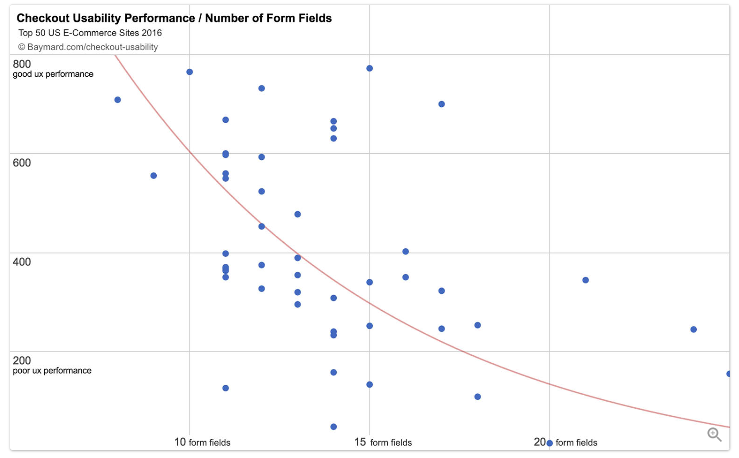
That’s why the number of form fields should be as low as possible.

image3 13

As you can see from the graph above, the fewer form fields, the higher checkout performance and usability. As a result, your checkout process will have better conversion rates.

But look at how quickly those numbers drop when the form fields become too long. Those yield a poor UX performance, which can negatively impact conversions.

Ask yourself this question:

What information do I really need to complete this sale?

  • customer’s name
  • shipping address
  • email address (to send confirmation)
  • billing information

That’s really it. You don’t need to find out their favorite hobby or their mother’s maiden name.

Just stick with the bare minimum, and you’ll see your conversion rates rise.

Encourage customer profiles, but don’t force it

Some ecommerce websites force customers to create profiles before they can buy something. While I can see the reasoning behind this strategy, it’s killing your conversions.

Look, I get it. From a marketing perspective, you want as much information about your customers as possible.

Once they create an account, you’ll have their name, location, and email address to which you can send more promotional info.

That’s all great. But if you had to choose, wouldn’t you rather have their money?

Not everyone wants a customer profile.

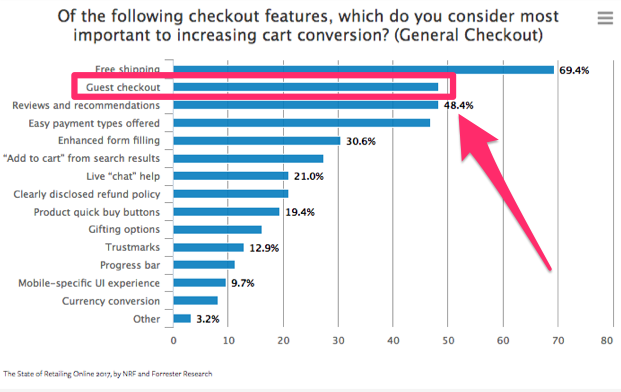
Over 48% of online retailers said a guest checkout was the most important factor to increasing shopping cart conversion rates on their websites.

image2 13

This was the second highest response on the list, trailing only behind free shipping.

Profile creation piggybacks on our last point as well. You want the process to be as quick and simple as possible. Going through a long process will turn customers away.

But you can encourage your customers to create a profile in other, subtle, ways. For example, your “create a profile” CTA button can be larger and more prominent than the “checkout as a guest” button.

Or you can send the customer an email after they complete the checkout process encouraging them to create a profile.

This message can be part of your actionable drip campaign, notifying customers of:

  • their order confirmation
  • their order getting shipped
  • their order being delivered.

You could add a promotion to one of these emails offering a discount off their next purchase if they create a profile.

Just don’t make it a requirement to buy something.

Focus on your top benefits

Besides the product, what else does the customer get when they buy something from your website? There are certain things you can do to add the perceived value of the purchase.

Here’s what I mean.

As I’ve mentioned, not everyone comes to your website with the intention of buying something. But while they are browsing, something might catch their attention.

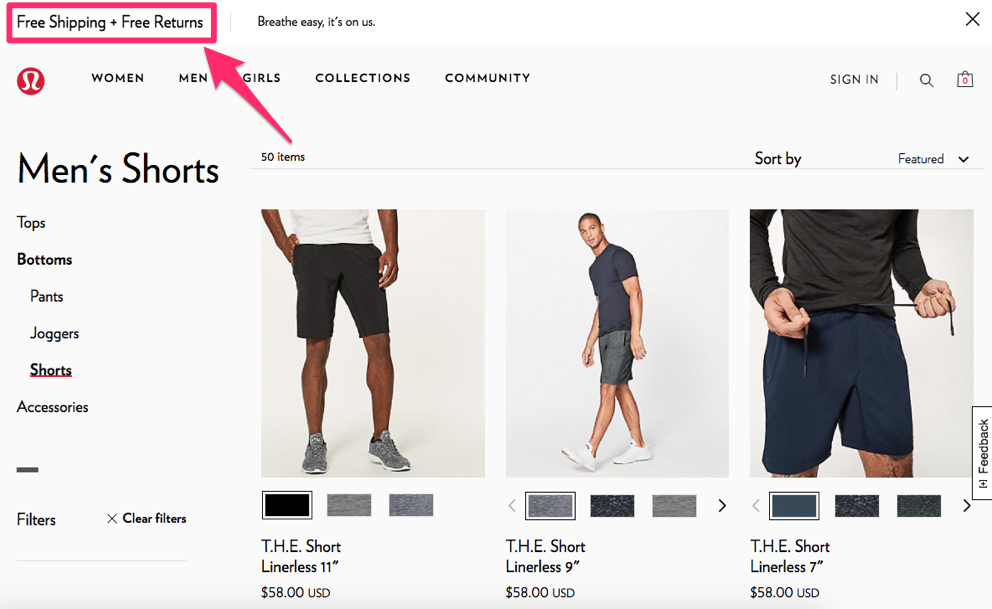
They may want to buy it, but they want to make sure they aren’t stuck with it if they change their mind later. That’s why you should clearly state your return policy.

Take a look at this example from Lululemon:

image6 13

When you’re browsing on their website, you can clearly see at all times they offer free shipping and free returns. Their customers know they can get the item delivered free and send it back without any problems.

Obviously, you don’t want items to be returned. Don’t worry, they probably won’t be. In fact, according to the National Retail Federation, about 8% of all purchases get returned.

But just giving your customers the peace of mind can be enough to drive the sale.

In addition to your shipping and return policies, make sure you highlight any other features your company offers. Some things to consider:

  • warranty information
  • secure checkout
  • social proof of the product
  • any differentiating features.

One of these elements can turn a “window shopper” into a paying customer.

Learn how to use images

Believe it or not, pictures can help improve your conversion rates. Instead of just listing your products, show the customer what they’re buying.

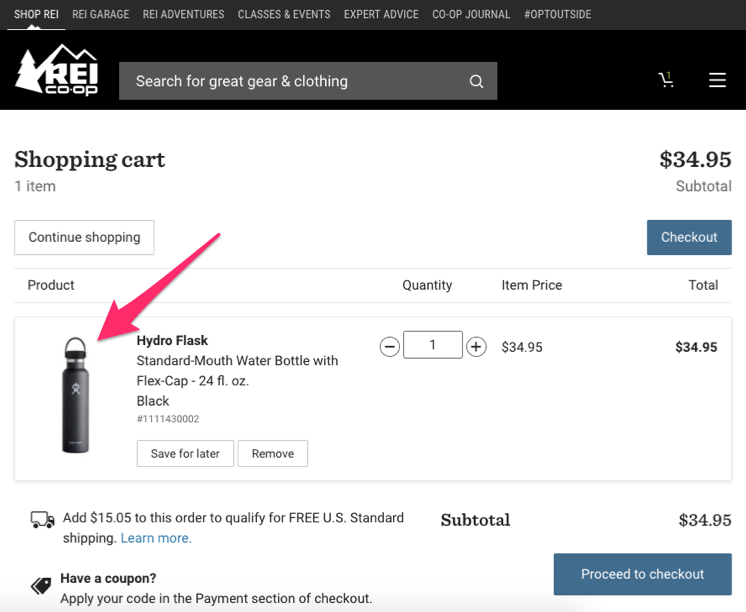
While you may have an image or two of your products on your ecommerce shopping page, make sure that image shows up in the shopping cart.

Why?

This can help remind the consumer what they’re buying and reinforce their decision. Plus, it’s much more appealing than just reading some text on a page.

Here’s an example from the REI website:

image4 13

The consumer gets reminded of exactly what they added to their cart. This could also help avoid any confusion or mix-ups down the road if they selected the wrong color, size, etc.

When they see a visual confirmation of the product they want, psychologically they’ll feel more comfortable about completing the purchase.

Faces also help improve your conversion rates.

According to a recent case study, conversions jumped from 3.7% to 5.5% when an animated picture of a phone was replaced with the face of a customer service representative.

Include images of people on your website. They could be wearing your product, using your product, or be beside your product.

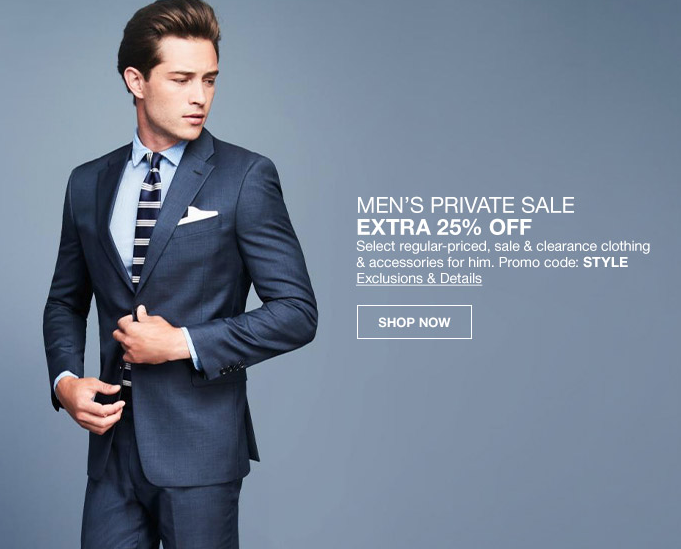
Check out this example from the Macy’s homepage:

image5 13

Notice it shows a person, and that person is looking at the promotional information and the CTA button.

We’ve already established consumers are drawn to faces. In this case, you’d look at the model’s face and then follow his gaze directly toward the text.

This is a great method for increasing conversions.

Simplify the overall design of your website

In addition to simplifying your checkout process, you should also try to clean up your entire website.

If your products are displayed in a cluttered manner, the consumers will feel overwhelmed. They won’t be able to find what they’re looking for, and your conversion rates will suffer.

While you may have hundreds or potentially even thousands of items for sale on your website, you don’t need to cram all of them on to one page.

Less is more.

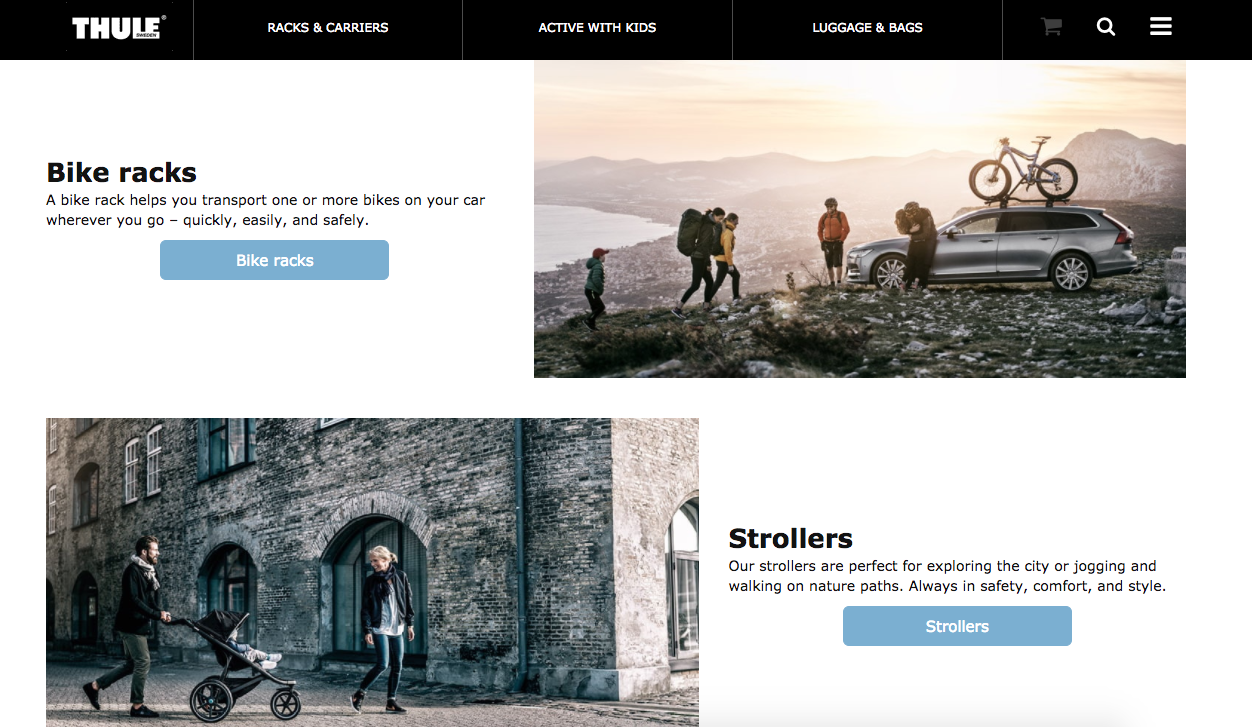
Let’s look at an example so you can see what I’m talking about. Here is the homepage for Thule:

image9 11

There are only five different places the consumer can click to start navigating through products. On the top header, they can select:

  • racks & carriers
  • active with kids
  • luggage & bags

They’ve also got some options within the main body of the page for:

  • bike racks
  • strollers

That’s it.

Now, as you continue to scroll, you’ll see more options that follow the same format as these two pictures above. But at no time do you ever see more than two pictures and two CTA buttons on the screen at once.

This simple design makes it easy for shoppers to find exactly what they’re looking for.

Give your customers lots of payment options

Some payment options may be more beneficial to your company than others. I completely understand this.

One credit card company may charge higher transaction fees than others, but that doesn’t mean you shouldn’t accept that method of payment.

Recognize your customers have preferences. Certain payment options may give them better reward points or bonus miles over others.

If they want something but can’t buy it with their favorite card, they’ll just buy it from a different retailer instead.

You should accept newer and unconventional types of payment as well. In addition to accepting all major credit cards and debit cards, consider using:

  • PayPal
  • Venmo
  • Apple Pay

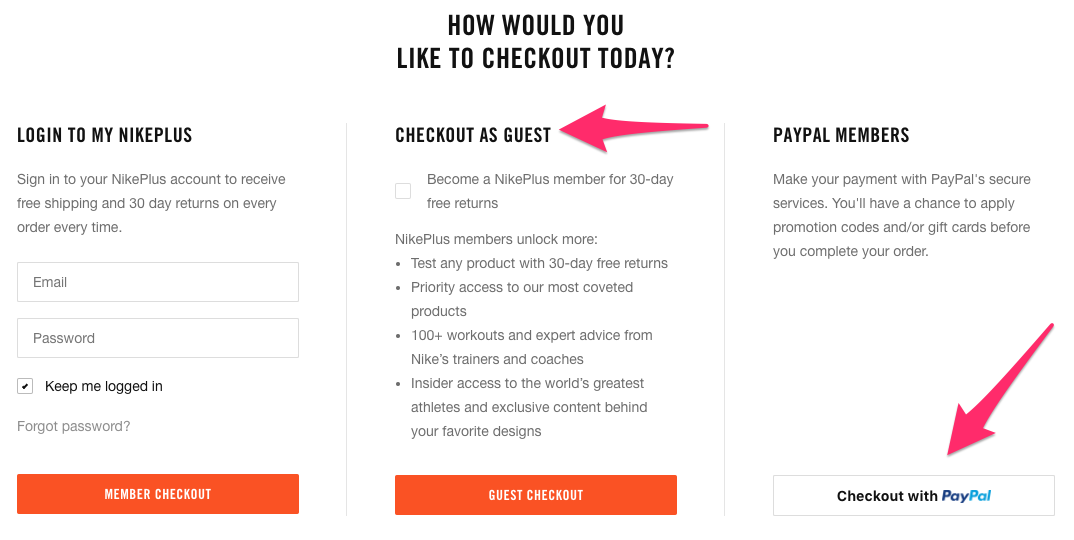
I want to show you an example of this. Here’s a screenshot from the Nike website:

image8 12

If you look at the bottom right corner of the screenshot above, you’ll see they allow their customers to check out using PayPal.

This could appeal to people who have a high PayPal balance and who want to use it for purchases. Accepting PayPal can also help eliminate concerns from customers who may be worried about their credit card information getting stolen.

The reason why I used this example from Nike is because it also highlights another concept I mentioned earlier.

Although they encourage customers to create a profile, they allow them to continue the checkout as guests. Even under the guest checkout area, it shows all the benefits of becoming a member.

To join, all you need to do is check off a box and proceed.

Another quick point about your payment methods. I recommend asking for payment as the last step of the checkout procedure.

By now, the customer has already invested some time into providing other information, so they’ll be more likely to continue. Asking for their payment first could drive them away.

Don’t forget about mobile shoppers

Retailers always need to keep mobile shoppers in mind.

In 2017, 34.5% of ecommerce sales came from mobile devices. That number is projected to reach 54% by 2021.

Your checkout process needs to be optimized for mobile devices. Make sure your site is mobile friendly.

You could even consider creating a mobile app for a checkout process to minimize friction even further.

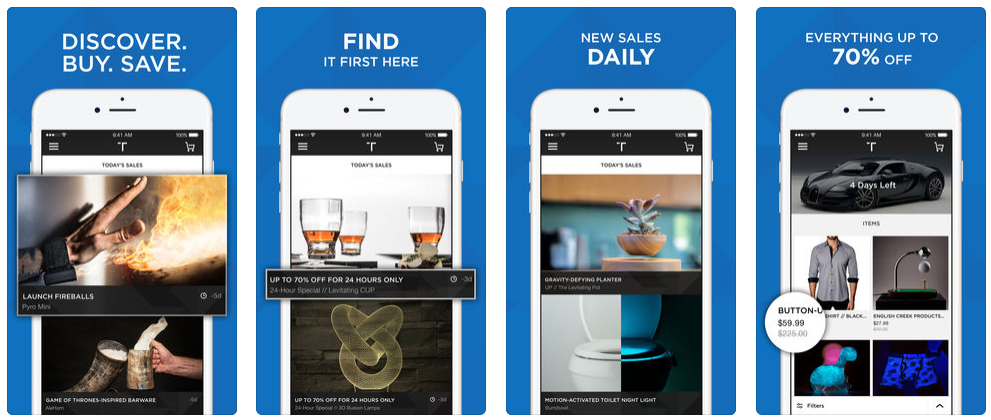
Touch of Modern is a great example of a successful retail mobile application:

image7 13

You can learn a lot about getting high conversions from their business model.

They get between 150,000 and 200,000 new downloads every month. More than half of their customers are repeat shoppers. Nearly two-thirds of their total sales come from their mobile application.

Those numbers are incredible.

The reason why this app is so successful is because they use daily flash sales and store all their customers’ data on the app, making the checkout process lightning fast.

Customers don’t have to re-input all of their credit card information and shipping addresses every time they want to buy something.

The reduced friction results in high conversions.

Conclusion

Getting higher conversions isn’t that difficult. It just takes some effort.

As you can see from everything I talked about in this article, these methods aren’t really too extreme. They are also fairly easy to implement.

First, analyze your shopping cart abandonment rates.

Next, eliminate any unnecessary steps in your checkout process. Stick to the basics and only ask for information required for a sale.

Encourage shoppers to create a customer profile, but don’t force them to.

Highlight your top benefits. Use images throughout the checkout process to confirm what the customer is buying.

Make sure you offer many different payment options as well.

Don’t forget about mobile customers. Your website needs to be optimized for mobile devices. You may even consider creating a mobile app for your ecommerce store.

If you follow these tips to simplify your checkout process, you’ll get significantly higher conversion rates.

What changes do you need to make to your checkout process to reduce abandonment rates and get more conversions?


from Quick Sprout http://ift.tt/2swniFt
via IFTTT

Friday, February 9, 2018

How to Increase Open Rates with These 7 Email Subject Lines

How long does it take you to write marketing emails?

If you’re anything like me, you put lots of thought, effort, and time into each and every word in the message. That’s what it takes to write actionable email newsletters.

Your message is full of great content. You might even have some discounts, coupons, or other promotional offers there as well.

Maybe you’re promoting a new product, service, or trying to drive traffic to a landing page. Regardless of the goal of your marketing emails, all of your campaigns have one thing in common:

subscribers need to open them to see your message.

Sounds simple, right? But all too often I see marketers come up with a subject line in two seconds and send out the message.

The subject line is the first thing the recipient sees when they get your email. Just how important is it?

Well, 35% of people open emails based solely on the subject line. Furthermore, 69% of people mark messages as spam based on the subject line.

Basically, your subject line will make or break the success of your marketing campaigns.

To increase your open rates, you’ve got to come up with subject lines that stimulate interactivity, which I identified as one of my top marketing trends of 2018.

But you can’t use the same subject line over and over. That gets boring, and your subscribers will catch on.

That’s why I created this list of the top 7 subject lines that increase open rates. Now you have a reference guide for every message you send.

Let’s dive in.

1. Personalized subject lines

Adding a personal touch to your subject lines can help increase open rates.

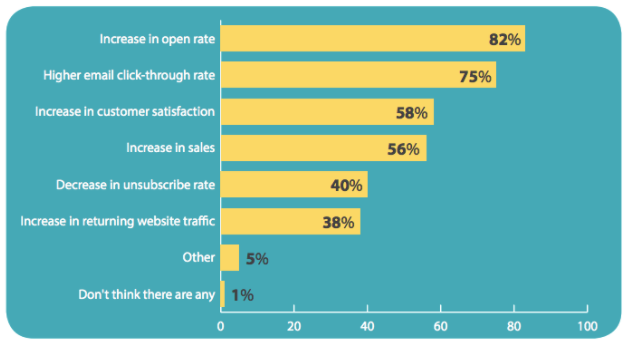
In fact, the Institute of Direct and Digital Marketing (IDM) identified these as the top benefits of personalized emails:

image1 15

As you can see from their data, increase in open rates was the first benefit of personalized subject lines.

Personalized subjects can have a larger impact on your campaign as well. You’ll also get more clicks, fewer unsubscribes, higher customer satisfaction, and more sales.

What kind of information can you use to personalize a subject line? You can use your customer’s:

  • name
  • postal location
  • birthday
  • current location
  • info related to their transaction history
  • content related to browsing history
  • product recommendations
  • social media accounts

If you’re on the fence about what’s appropriate to use, start off by addressing the recipients by their first name in the subject. See how much of an impact that has on your open rates.

How much of a difference will it make?

Well, research shows that personalized email messages improve clicks by 14% and increase conversions by 10%.

Studies also show that personalized promotional emails result in 29% higher open rates.

The reason why this strategy works is because it helps you establish a more intimate connection with your subscribers. They’ll see that the content was created specifically for them as opposed to a mass audience.

I’m much more likely to open a message that says “Hey Neil!” than the one that begins with “Dear Valued Customer.” The first one makes it seem like I personally know the sender.

Give this method a try next time you’re sending out an email.

2. Subjects that create a sense of urgency

Are you familiar with the concept of FOMO? It stands for the “fear of missing out” on something.

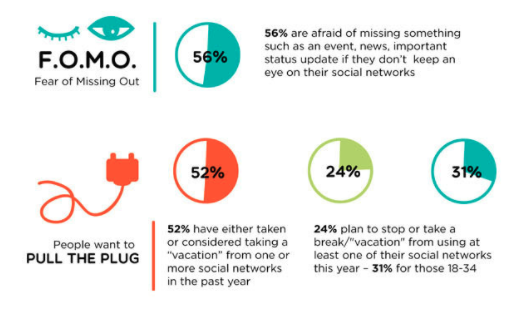
Social media websites today make FOMO more prevalent. Take a look at these numbers:

image3 15

FOMO has become such a problem for people that it’s impacting the way they live their lives. You can stimulate this powerful emotion in your email subject lines.

How can you create a sense of urgency?

Offer a sale with an expiration date.

If someone is on your subscriber list, they’ve probably bought something from your company in the past. Even if they haven’t, they’re interested enough to probably buy something soon.

While your coupon might be available in the body of the message, you need to make it obvious in the subject line.

Let’s compare two hypothetical subject lines. Which one do you think is more effective?

“New weekly coupon inside!”

or

“25% off sale ends tonight!”

I promise you that the second example will get more opens than the first one. That’s because the deadline of “ends tonight” gives people a reason to act fast.

If they don’t open the message now, they’ll fear they will be missing out on a great deal—FOMO.

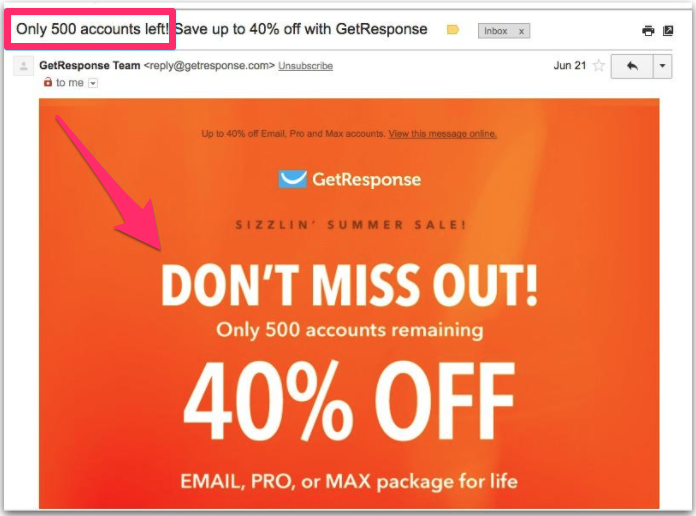
Another way to generate urgency is by alluding to a limited quantity of something remaining. Here’s a great example from GetResponse:

image7 15

GetResponse is an email marketing software. So it’s no surprise they have a great email subject line to promote their services.

The idea is to get people to act fast.

If your subject line says the deal is valid until the end of the month, the recipient has no reason to open it now. They may never end up opening it.

But that can change if you generate urgency.

3. Breaking news subject lines

Your content needs to be highly relevant.

If your company isn’t in the news reporting or media industries, you’ll have to get creative here. Here’s what I mean.

You don’t need to send emails reporting a local robbery or car accident. But you can link recent news to your business.

For example, let’s say you have an ecommerce company that sells clothing. You’ve got your email subscribers segmented by location based on their zip codes.

It’s February, and a winter snowstorm is approaching the states in New England.

You could send an email with a breaking news subject line about the storm and say that you’re selling winter coats, hats, and gloves at a discounted rate.

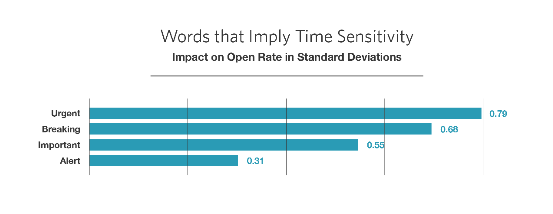
MailChimp conducted a study in which they analyzed 24 billion emails. These subject lines had roughly 22,000 unique words.

image2 15

Their data showed that people opened messages with keywords that were related to breaking news.

If you can’t think of create ways to link recent news to your email campaigns, create some news of your own. Share recent news about your company.

Talk about things like:

  • a new product release
  • an approaching event
  • new member of your staff

And make them sound like news headlines in your subject lines.

4. Subject lines that tell a story

You can get more sales by mastering the art of storytelling. But you can also increase your email open rates with the same tactic.

Everyone loves to hear a good story.

That’s why we read books, watch movies, and sit for hours watching our favorite television shows on Netflix. The stories keep us captivated.

You should tell stories in your emails to capture the attention of your subscribers. Then you can include CTAs within the story or have the general theme of your story prompt an action.

But the key here is to use the subject line as a teaser for the story.

If you’re trying to drive traffic to a new post you wrote, consider using its title as your subject line—if it tells a story.

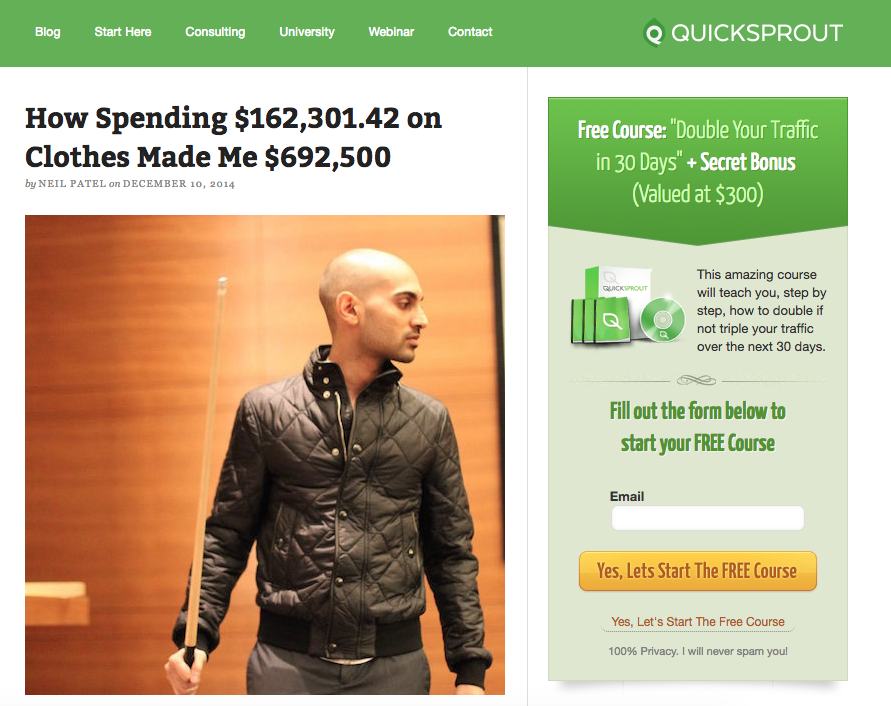
Here’s an example of an old post I wrote about spending money on clothes and being able to generate a profit:

image9 13

That’s a headline that grabs a reader’s attention.

If I wanted to promote this post via email, I could use its title as the subject line. Both of those numbers, spent and earned, are too high for people to ignore.

They might ask themselves, “How could you make that much money just by spending money on clothes?”

Then they would click to read the story or, in this case, open your email.

5. Stimulate curiosity with a subject line

People are curious by nature.

Refer back to our last example about storytelling. The reason why someone would want to click on that message is because they are curious.

Your subject line should try to pique the curiosity of your subscribers.

Don’t give it all away in the subject line. Instead, hint at something that they’ll find out if they open your message.

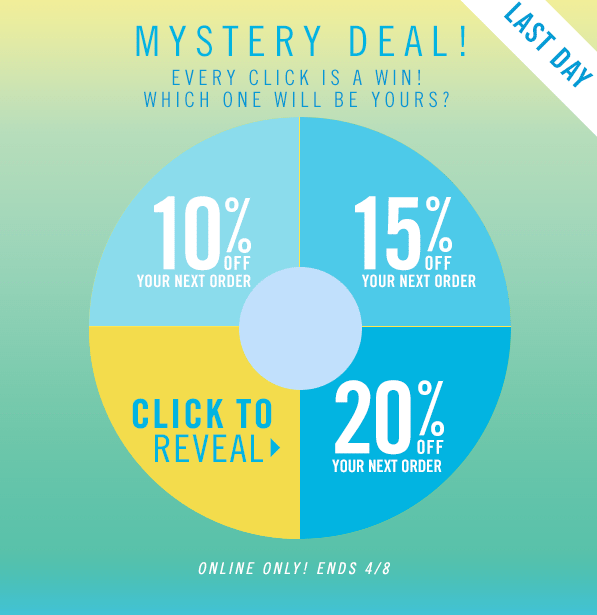
Rather than saying, “here’s 30% off your next purchase,” you can create a mystery sale instead. If you just tell the subscriber their discount, they don’t have a reason to open the message unless they are ready to use it.

Here’s an example from Forever 21 of an email that employs this technique:

image4 15

Apply the same concept to your subject line.

It doesn’t have to be applied to sales only. You can hint at a mystery event or maybe even a special guest on your next podcast.

Just make sure you’re not giving away all the information in the subject line.

Here’s another example. Let’s say you’re in the food industry. You want to send out an email about the most popular foods in America.

Potatoes are the most commonly consumed vegetable in the United States.

But you wouldn’t write that in your subject line.

Instead, you would write something like, “What’s America’s favorite vegetable? We’ve got the answer.”

This subject makes the recipient wonder, whereas just stating the answer gives them no reason to actually open the message.

6. Short subject lines

No matter what type of content your subject line contains, it needs to be short. Avoid using really long sentences and unnecessary characters.

To optimize the length of your subject lines, I recommend writing out several drafts before deciding on one. Then you can pick and choose pieces of each draft so you can get your message across as short as possible.

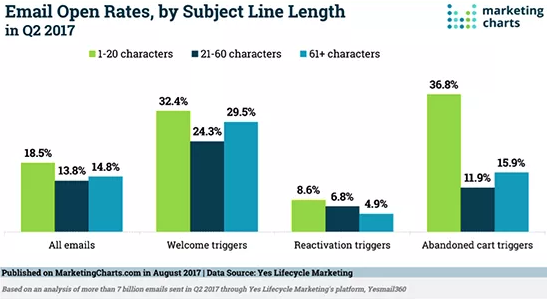
So how long is too long? Studies show that email subjects lines that have between 1 and 20 characters have the highest open rates.

image6 15

As you can see, this statement holds true across the board, regardless of what the email entails.

This could be due to the fact if the subject line is too long, the recipient may not be able to see all of the words in their inbox.

55% of emails get opened on a mobile device.

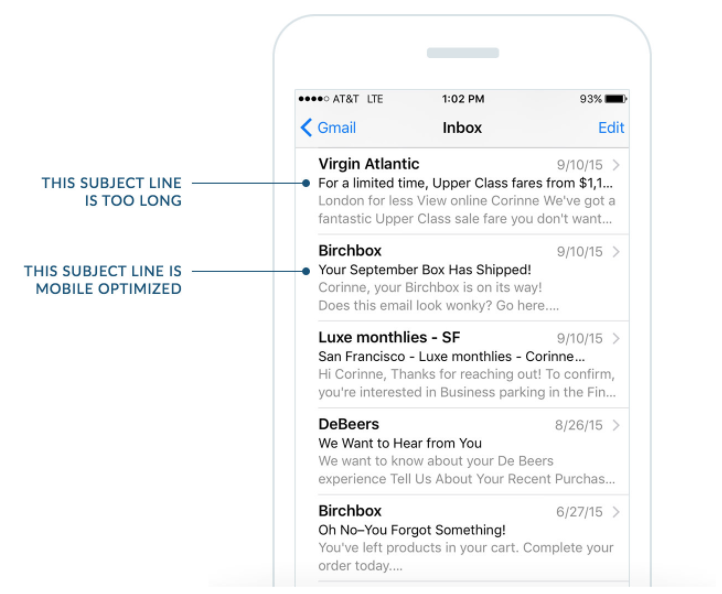
You’ve got to take this into consideration when you’re crafting a subject line. While it may look fine on your computer, this changes when it’s being looked at on a smaller screen.

Here’s an example to show you what I’m talking about.

image8 14

While most businesses realize that their emails need to optimized for mobile devices, they forget about the subject line.

Overall, if your subject line is short, you’ll get higher open rates.

7. Subject lines with free stuff

It’s OK to give things away for free. Some companies avoid this because they think it’s not profitable, which I completely understand.

Look, I’m not saying you need to give away your most expensive products for nothing. But it doesn’t hurt to give away a free gift with a purchase every now and then.

This is especially true if you’re using an email campaign to promote the free offer.

Why?

Take a look at these numbers.

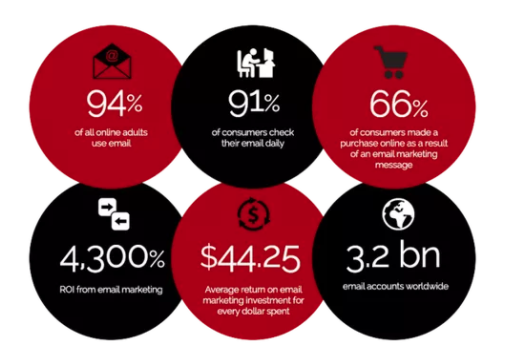
image5 15

Email marketing campaigns generate a 4,300% return on your investment. That’s because it’s not expensive to send emails.

You’re likely only paying a marginal monthly or annual fee for your software.

Plus you get so many benefits like an increase in sales, more website traffic, and new leads. So it’s OK to use this platform to promote a free offer.

Include the word “FREE” in your subject line to get more subscribers to open your messages.

Conclusion

Your email campaigns might be great, but if you can’t get people to open up the messages then it’s pointless.

I know how much time you spend writing your emails, so you need to put just as much effort into the subject lines.

Used personalized subjects that generate curiosity. You can also use your subject line to tell a story or talk about some kind of breaking news event.

Stimulate curiosity. Make the reader want to find out more information by clicking the message.

Give away free stuff and tell people about it in your subject line.

No matter which tactic you use, just try to keep your subject lines short. Make sure that they can be read on mobile devices.

If you follow these tips, you’ll get significantly higher open rates.

What types of subject lines are you using to get subscribers to open your messages?


from Quick Sprout http://ift.tt/2nUzhqL
via IFTTT

Wednesday, February 7, 2018

How to Identify the Target Market of Your Startup

Not everyone wants to buy what you’re selling.

For your startup company to be successful, you need to identify your target market.

This is one of the first steps of launching a startup company.

But it’s much easier said than done.

If you don’t have a clear target audience in mind, your marketing campaigns are going to cost you a fortune.

You’ll also have low conversion rates, and your customer acquisition costs will be through the roof.

Marketing to everyone and anyone is simply a waste of effort, time, and money.

Instead, focus your branding and marketing strategies on a specific group of people who genuinely have a need, want, or interest in your company.

Cash in the bank is obviously important for every business, but for startup companies, it’s their lifeline.

If your marketing campaigns are unsuccessful, your startup is going to bleed money.

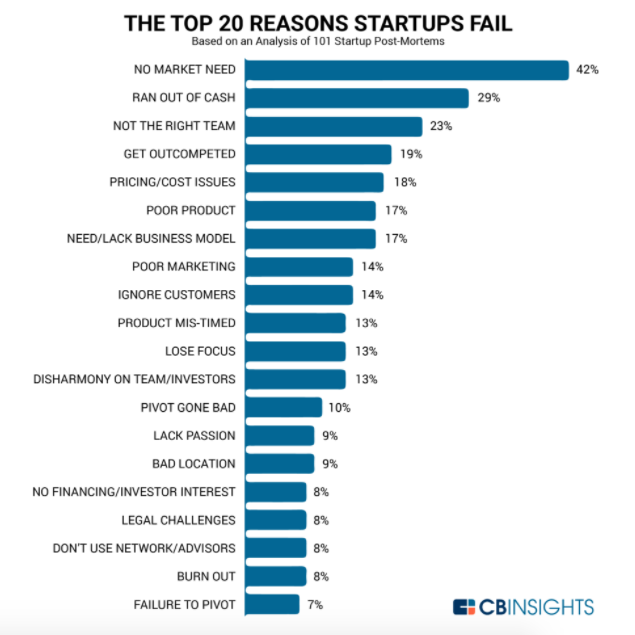
Take a look at the top reasons why startups fail:

image4 11

Let’s just focus on the top two reasons.

Reason #1: 42% of startups failed because there wasn’t a market for their offering.

That’s why identifying your market needs to be one of the first steps.

If you discover there isn’t a market for what your startup has to offer, you can go back to the drawing board and try something else before you invest too much time and money.

Reason #2: 29% of startups failed because they ran out of money.

Spending your valuable marketing budget on the wrong target audience could cause your company to go out of business.

With limited cash in the bank, you may not be able to recover from this.

But don’t worry.

I’ll explain what you need to do to identify your target market, which will position your startup company for success.

Start with broad assumptions, and slowly narrow your focus

Don’t start with a really narrow audience right away.

Instead, begin with larger groups that you assume may be interested in your brand.

From here, you can slowly start getting more specific.

Use a few of these simple and general segments to get started:

  • gender
  • age
  • location

You can also use these broad groups to eliminate people who aren’t in your target market.

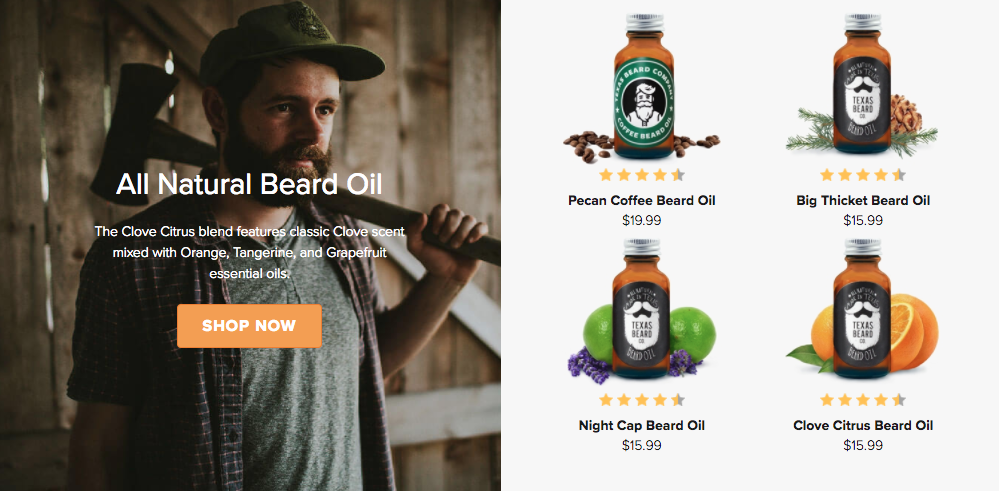
For example, let’s take a look at some products from the Texas Beard Company:

image8 10

They sell things such as beard oil, brushes, balms, combs, and any accessory you would need for a healthy beard.

So if you had a startup company like this, right away you could eliminate women from your target audience.

Don’t get me wrong, I’m not saying women won’t buy these products.

It’s definitely possible women could make a purchase from this brand as a gift for a man in their lives. But you wouldn’t make them part of your target audience.

What else can you assume about men who are looking for beard products?

Take their age into consideration.

It’s safe to assume that neither teenagers nor too many senior citizens would be buying these products.

As a result, you would eliminate males under the age of 20 and over the age of 60 from your target audience.

Now, what else can you assume about the people who may be interested in your products?

They either have a beard or want to grow a beard.

In the example we just used, you’ve already narrowed your target market to men between the ages of 20 and 60 who have beards.

As we continue through this process, we’ll narrow the target audience even more, but for now, this is a great place to start.

Analyze your competition

It’s rare for people to come up with a product or service that doesn’t already exist.

While the idea for your startup may be somewhat unique, you’ll still be a part of an existing industry.

Other people are already doing what you’re trying to do.

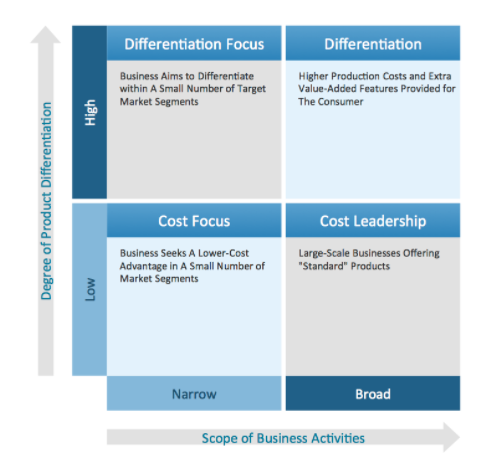
You’ve got to find out how to position your company within your industry:

image2 11

To do this properly, you’ll need to conduct research on your competition.

Figure out what they’re doing well and what needs improvement.

Who are your competitors targeting?

Look at their advertisements, visit their website, join their email subscription lists…

You can attempt to go after the same target market or focus on a group your competition may be overlooking.

Look at the graphic above as a reference.

Are you going to target a niche audience or sell products for the masses?

Will your brand have high quality products/services at a premium price or are you planning to target consumers who are more cost-sensitive?

It will be easier to answer these questions after you research the competition.

Analyzing your competition can help you increase profits even after your startup launches.

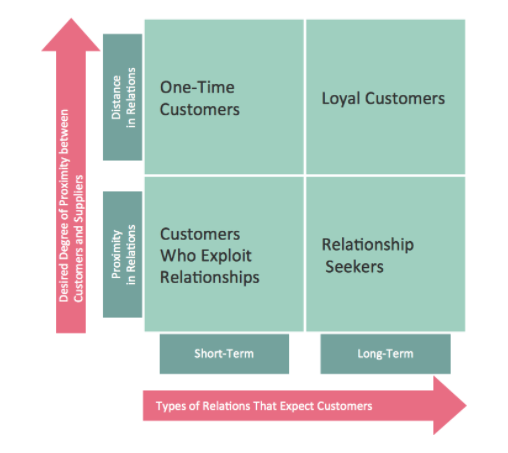
Competitive analysis can also show you how consumers behave in this industry:

image1 11

Ideally, you want to build long-lasting relationships with your customers.

But this idea can vary based on your products, services, brand, and industry.

You need to adjust your target market accordingly.

For example, let’s say your startup company sells cars or similar products.

A customer today may not be ready to buy another vehicle for another decade. In this case, you can’t rely on loyal and repeat customers.

Instead, you’ll have to focus on customer acquisition strategies.

Find out how your competition is able to continually market to different customers and whether their campaigns are successful.

Talk to people

While making assumptions and analyzing your competition are logical places to start, those strategies will only get you so far.

If you really want to focus on the ideal target market for your startup company, you need to put in much more work.

You need to speak to consumers.

See if your assumptions are right.

Conduct one-on-one interviews, and use focus groups to test your assumptions.

For example, let’s say your brand’s general target market is women between the ages of 25 and 40.

It’s a huge percentage of the population. You’ll have to come up with other ways to segment that target market into smaller groups who are genuinely interested in your brand.

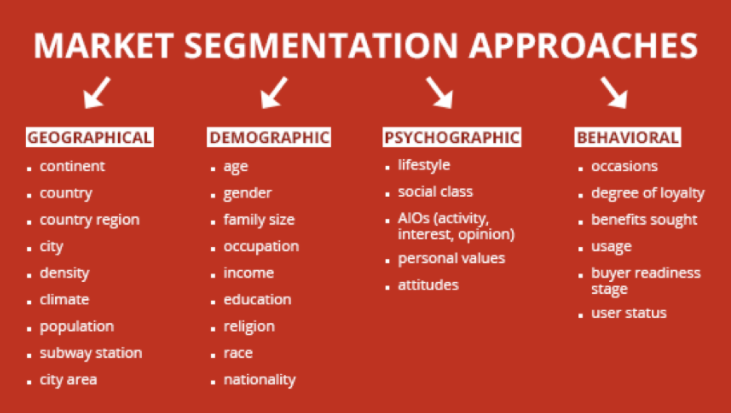
Here’s a way for you to segment your target market:

image3 11

Focus groups and interviews can give you more information about potential consumers for your company.

Your focus groups should have 10 to 12 participants.

Show these people different products, services, or marketing campaigns your startup is planning to use.

See how receptive they are to what you’re showing them.

Find out more information about the people who have a positive reaction.

If you’re only interviewing women between the ages of 25 and 40, what other similarities do they have?

For example, you might find out that all the women who liked your products were married.

You could also discover that women of a certain social class or annual household income were more receptive to your brand than others.

Make sure you find out as much information as possible about everyone in your focus groups.

Use the market segmentation graphic above as a reference.

Have all of your participants fill out a questionnaire before the interview or focus group starts.

But realize you won’t find out everything you need after just one session or interview.

This market research phase is an ongoing process.

The more people you can talk to, the more accurate your data will be.

As a result, it will be easier for you to identify your target market.

Create customer personas

Now that you have a better understanding of your target market, create customer personas to learn even more about their buying behavior.

A customer persona will ultimately help you market to this audience after you’ve identified them.

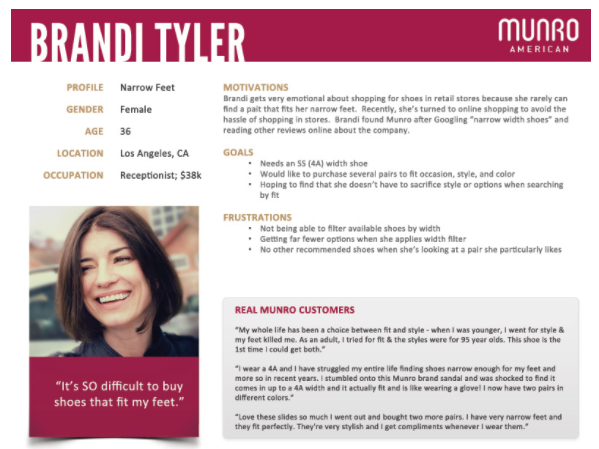
Here’s what a customer persona looks like:

image6 11

Make the persona specific to your company.

You can tell the example above is for a business selling shoes.

This customer persona has trouble finding shoes that fit her because she has narrow feet.

Now, your startup company may sell shoes to both men and women.

But each persona needs to be unique.

Your general target market in this segment may be:

  • women
  • 30 to 40 years old
  • $30-45k annual salary
  • lives in the western part of the United States.

Your customer persona has to be more specific. Notice that the example shows a woman who is:

  • 36 years old
  • $38k annual salary
  • located in Los Angeles, CA.

Do you see the difference?

The results of your interviews and focus groups can help you create these customer personas.

Not all of your customers are shopping for the same reason.

The purpose of the customer persona is to figure out the psychological and behavioral shopping approaches to consumers within your target market.

If you identify that a large portion of your target market has a similar occupation or lives in the same part of the country, you can adjust your marketing campaigns accordingly.

Use surveys

Once your startup launches and you start getting sales, you can use customer surveys to find out more information about your target audience.

These surveys can help show your customers how much you care about them:

image7 11

You want to find out more information about your customers so that you can improve their shopping experience.

But you’ll also use those survey results to identify your market.

Find out who they are and what they are using your products or services for.

Get information related to their:

  • demographics
  • geographic location
  • psychographic traits
  • behavioral trends

Earlier I told you to start by making assumptions about your potential target market.

But now that you have actual customers, there’s no reason for you to assume.

You’ve got actual people who were drawn to your startup company. This is your target market.

Now you need to figure out exactly who they are so you can target other people in this segment.

Take advantage of analytics and other resources

I’m going to assume your startup company has a website.

If it doesn’t, I hope you’re in the process of building one ASAP.

Who is visiting your website?

The traffic to your site can be a good indicator of your target audience.

Google Analytics can show you who is visiting your website:

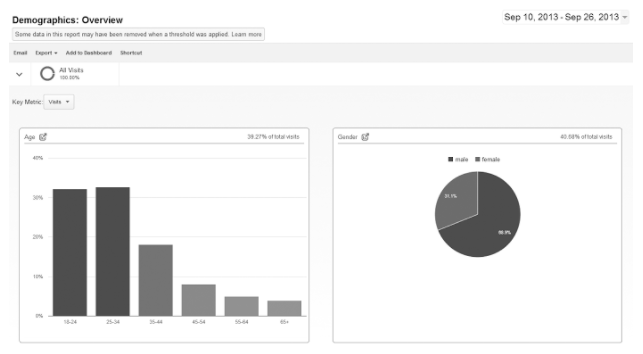
image5 11

This is an example of demographic data you would be able to get from these analytics.

The traffic from this sample is mostly males between the ages of 18 and 34.

Google takes these analytics one step further and displays other information such as:

  • sessions
  • bounce rates
  • pages per session
  • average session duration
  • transactions
  • new users.

The reports are generated and grouped by demographic information.

It helps you identify which users on your website are the most valuable.

That’s how you can determine your target market.

Conclusion (be ready to make changes)

As you can see, identifying your target market is a long process.

When you first get started, you’ll need to make general assumptions about your prospective customers, since you don’t have any concrete data yet.

Slowly start to narrow down that market based on your brand, products, services, and industry.

Use competitor analysis tools to see who is getting targeted by other businesses in your industry.

Are you going to take the same approach? Or will you focus on a different segment?

Talk to people.

Interviews and focus groups are a great way to help you narrow down your target market.

Customer personas allow you to focus on specific customers with unique needs.

Once your company starts getting sales, try to survey your existing customers to find out more information about them.

You can also use online analytics tools to see who is visiting your website.

Just be ready to make changes.

Your initial assumptions about your target market may have been wrong.

That’s okay.

As long as you’re able to adjust your marketing campaigns based on new information, your startup company will survive and thrive.

What’s the target market for your startup company?


from Quick Sprout http://ift.tt/2BLUCvN
via IFTTT