Wednesday, July 18, 2018

How to Increase the Profitability of Your Nonprofit Organization

The primary purpose of a nonprofit company is to help a certain cause.

These organizations’ missions usually differ from those of traditional businesses.

If you operate a nonprofit business, I commend you. It’s great to see entrepreneurs helping other people and providing aid to charitable organizations.

But just because your motive for running your business is to help a greater cause doesn’t mean you shouldn’t be trying to generate a profit.

At the end of the day, your nonprofit organization is still a business. From a business perspective, this company needs to be run with the same principles as every other company.

You need to keep up with the latest marketing trends. Research your industry, and analyze your competition.

Learn about the wants and needs of both your customers and donors.

I see this problem all too often when I’m advising nonprofit companies. They are still operating the same way they were 20 years ago.

Sure, they might have a website now, but they aren’t always using the most recent technologies.

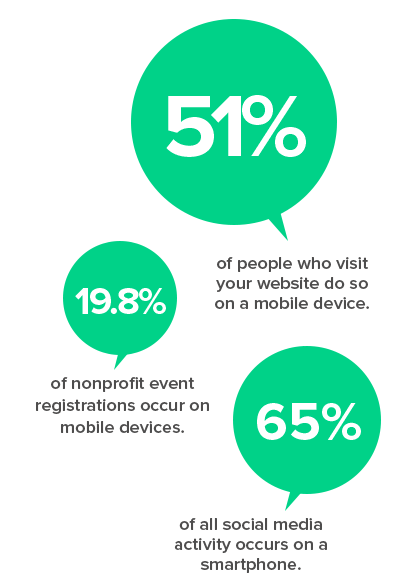
For example, check out these numbers related to nonprofit organizations and mobile devices:
nonprofit mobile

Times have changed. Your nonprofit needs to adapt if you want to survive and thrive.

If your nonprofit company is struggling or could use some fresh ideas, you’re in luck. I’ll explain what you need to do to boost profits for your nonprofit.

Promote customer acquisition

If you’ve been operating for a while, you probably have a solid base of customers and donors. That’s great news and something to be proud of.

But what steps are you taking to continuously grow this number?

Relying on the same customers isn’t a sustainable business model.

If you rely on mass direct mail or cold calling houses for donations, I’m guessing you’re having trouble acquiring new customers.
unknown call

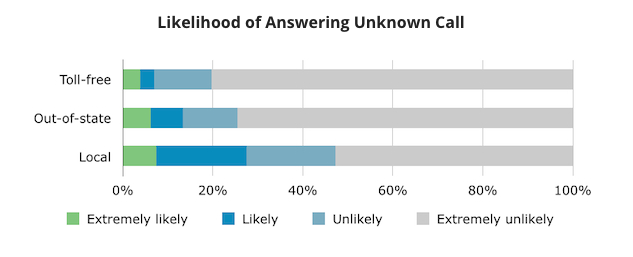
That’s because people are not very likely to answer the phone if they don’t recognize the number.

Just 7% of people say they’ll answer a toll-free call from an unknown number.

Furthermore, research shows that the average conversion rate for cold calls is roughly 2%.

With such a small percentage of people answering their phones and an even smaller percentage actually converting, those numbers aren’t appealing.

You need to find other ways to promote your brand so that it can be exposed to the widest possible audience:

  • promote your website
  • stay active on social media
  • build an email marketing list
  • encourage referrals

These are the types of tactics you need to implement if you want to get more customers and donors.  We’ll discuss these concepts in much greater detail as we continue through this guide.

Drive traffic to your website

Your website needs to be the top priority for your nonprofit organization and your marketing efforts.

We’re living in a digital age, and you need to recognize that the best way to get discovered is through the Internet.

But just having a website isn’t enough. You need to make it as easy as possible for visitors to buy and donate through this platform.

It’s imperative you have a clear call-to-action on each page of the website. This will be the best way for you to generate donations and ultimately increase your profits.

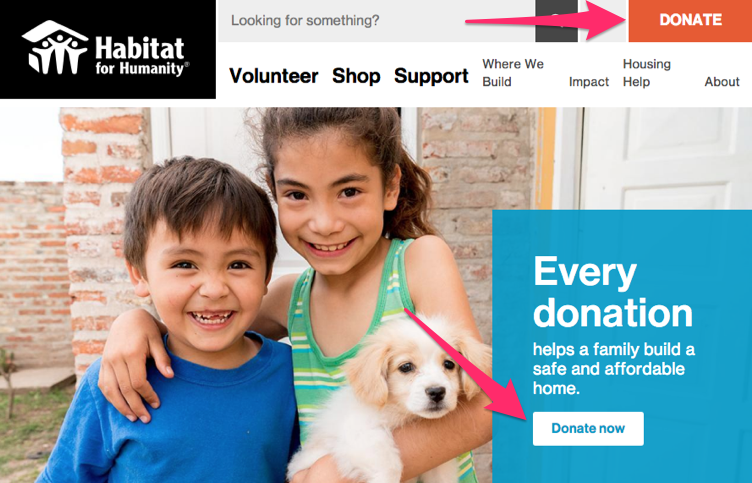
Here’s a great example of this concept on the Habitat for Humanity homepage:
habitat

As you can see, the “donate” CTA buttons are clearly displayed in several places on the site.

All your marketing promotions should lead people to your website. If someone hears about you or clicks a link, they’ll know exactly where to find you and what to do.

They won’t have to pick up the phone or mail in a check. They will simply visit your website and donate directly from there.

One of the best ways to drive traffic to your website is by blogging.

Blogging adds fresh content to your site on a regular basis, which helps improve your SEO ranking.

This will make it easier for your nonprofit to be discovered when people search for related topics on Google.

Blogging allows you to include internal links to other pages on your site. You should also add external links to websites with high authority rankings, especially if those sites support your cause.

More importantly, a blog gives people a reason to keep coming back to your site.

Think of it like this. How often does the same person donate or buy something from your nonprofit? I’m willing to bet the answer is “not every single day.”

But if you can establish a steady audience visiting your blog on a daily or weekly basis, it will increase the chances of getting conversions simply because your site traffic is higher.

Prioritize email marketing

When someone visits your website, trying to get them to buy something or make a donation shouldn’t be your only goal.

You can effectively market yourself without forcing visitors to spend any money.

You need to collect email addresses.

This will be the best way for you to stay in contact with your customers, donors, and volunteers. Eventually, this email list will help you generate more money.

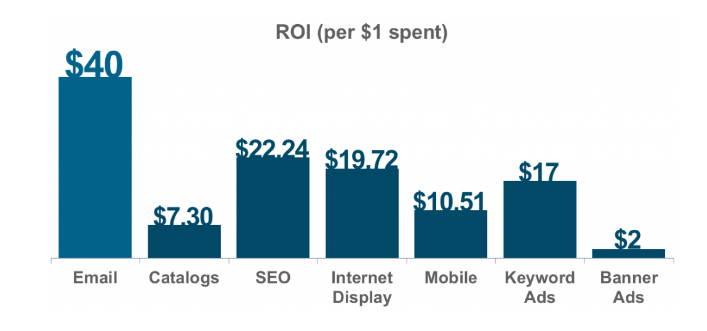
Email marketing has a high return on investment compared to other marketing tactics:
email ROI

That’s because the costs associated with these campaigns are low. You’ll pay only a flat monthly or annual rate for your email software based on the number of subscribers you have.

Think about how much money it costs you to send direct mail letters to homes asking for donations.

You’ll pay just a fraction of that cost by sending emails instead.

Plus, the best part about your email list is you know you’re contacting people genuinely interested in your organization. That’s why they signed up to receive these messages in the first place.

Someone who opts in to receive your promotional content is much more likely to spend money than a person receiving a call from an unknown number.

Improve your credibility and security

Scammers have always tried to trick people. The modern age is no exception.

It’s a sad reality, and it’s unfortunate it happens often.

As a result, consumers protect their information. If they’ve never heard of your nonprofit organization, they may not feel comfortable donating to you or buying from you for the fear your organization is not legitimate.

But you can do a few things to change that. Understand the top elements that add credibility to your website:

For starters, you need to make it easy for people to contact you through:

  • phone numbers
  • email address
  • physical address
  • links to social media pages
  • live chat

All of these need to be easily accessible.

Make sure you include security badges on your website as well. Proofread your site for grammar issues and typing mistakes. Such errors can make you appear unprofessional.

Your checkout and donation processes need to be secure. I’ll talk more about the way you accept payments shortly.

Increase your social media presence

Both your current and prospective customers are active on social media. The same holds true for your donors and volunteers.

You need to be active on these platforms.

If you don’t have profiles created on social sites, you need to do this as soon as possible. Facebook. Twitter. Instagram. YouTube. These are the best places to start.

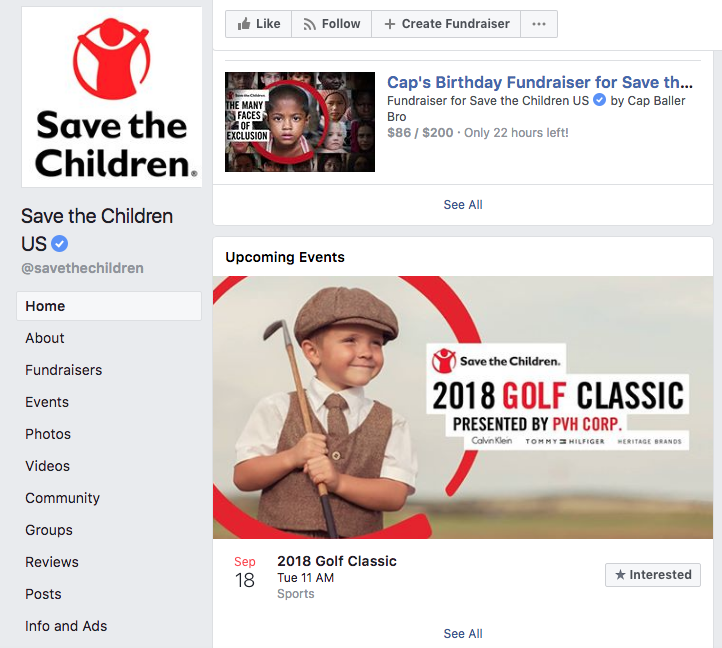
Check out the Facebook page for Save the Children:
save the children

As you can see, the organization uses this marketing channel to promote events and raise money for specific causes.

Post content on your social media profiles on a daily basis.

Try new strategies to increase the number of your social followers. Interact with these followers. Run promotions and giveaways to create exposure.

Social media platforms are great places for you to explain your cause.

Also consider using social media platforms to encourage customer referrals.

Accept multiple payment options

Let’s say someone decides they want to buy something or make a donation on your website. That’s great news.

But they see you accept the payment only through mailed checks or over the phone. That’s no good.

You need to accept payments online. But take your online payment concept one step further.

Accepting only Visa and Mastercard won’t maximize your profits. You can’t assume everyone has those cards. Even if they do, the cards may not be their preferred methods of payment.

You need to accept all major credit cards and debit cards.

Furthermore, you need to accept alternative payment options as well, such as PayPal, Apple Pay, and Venmo.

The more options you have available, the more likely people will buy and donate.

Tell your story

Master the art of storytelling.

The whole idea behind your nonprofit needs to be the driving force of your sales. Sell your story, not your product.

You’d be surprised how impactful your story can be. People care about the world. Just look at these numbers based on a recent survey of Generation Z:

gen z

Younger generations are especially aware of social concerns across the globe.

That’s why 70% of Millennials say they are willing to spend more money on brands supporting a cause.

Explain why you got into business in the first place. Whom are the proceeds helping? How will donations help those in need?

Elicit an emotional response from people who hear your story. The message needs to be loud and clear.

This story needs to consistent on all your marketing channels. Feature it on your website, social platforms, and email newsletters.

You should also give people the opportunity to share their stories. This will help create a sense of community and give people a reason to constantly visit your website.

For example, let’s say your nonprofit helps people who have a certain illness. Let people currently suffering from that illness share their stories. They can connect with other people in the same position.

Family members and friends of those with the illness can contribute as well.

By creating this community of people with unique stories, you will encourage more people to support your cause.

Go mobile

Your nonprofit organization needs to have a mobile website. As we saw earlier, more than half of nonprofit website traffic comes from mobile devices, and one in five nonprofit event registrations occurs on a mobile device.

If your site isn’t mobile-friendly, you’ll have high bounce rates and won’t get high conversions.

But if your site loads quickly and is mobile-optimized, you’ll have a better chance of making more money.

Take your mobile marketing efforts one step further by creating a mobile app for your nonprofit.
site vs app

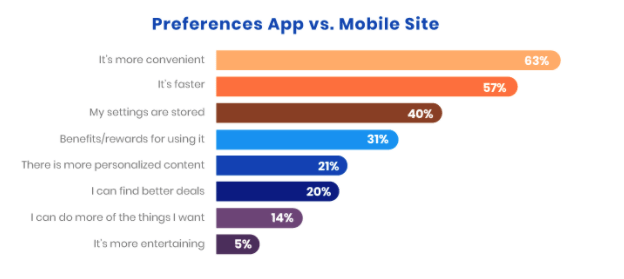
As you can see from the data above, consumers prefer mobile apps to mobile websites for several reasons:

  • convenience
  • speed
  • personalization

These are the components you need to focus on if you want to drive sales and donations through your mobile app.

Creating a mobile app also improves your legitimacy, which I discussed earlier. It will be easier for people to find you when they browse for related content in the app store.

You can use your nonprofit mobile app to accept payments.
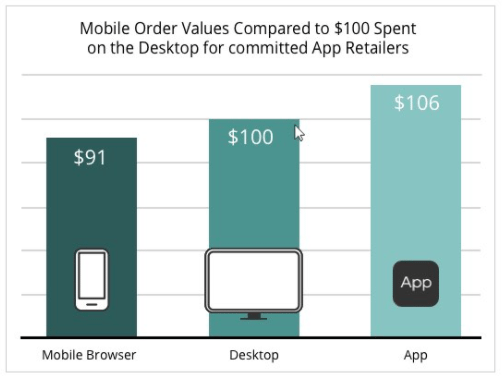
mobile payments

People spend more money on mobile apps than they do on mobile browsers and desktop devices.

This strategy will not only increase the number of donations you get but also the amount of each donation.

Partner with sponsors and influencers

Leverage relationships to expose your brand to a wider audience.

Get a well-known brand to sponsor an event or partner with your company. Lots of businesses will be willing to do this because it shows they are charitable as well.

Their customers can ultimately become donors for your nonprofit. You can accomplish this in many ways. It depends on what your sponsor is willing to offer.

For example, if people make a donation through your website, they could get a discount or gift card to the sponsor’s business.

You should also partner with social influencers and celebrities.

This is another great way to add credibility to your organization. Social media promotions from well-known personalities promoting your nonprofit will help you drive sales and donations.

Try to find someone who has a direct connection to your mission and cause. These people will be much more willing to help you.

Conclusion

Nonprofit organizations still need to make money.

You can do this without straying away from your primary company’s goal and mission. All this means is your cause will get even more support from your brand.

Focus on new ways to acquire customers and donors. Take advantage of digital marketing tactics to do this.

Drive traffic to your website, and encourage donations through that platform. This will be easy to do if you establish credibility.

Build an email subscriber list. Stay active on social media. Leverage your mission statement and story to drive donations.

Make sure you have a mobile website. Launch a mobile app to take donations from there as well. Accept as many payment methods as possible.

Find a celebrity or social influencer willing to support your cause and promote your nonprofit.

If you follow these tips, you’ll see an increase in sales, donations, and volunteers for your nonprofit organization. This will ultimately boost your profits.

How is your nonprofit organization using digital marketing tactics to increase profits?


from Quick Sprout https://ift.tt/2NZ3YXV
via IFTTT

Monday, July 16, 2018

How to Turn a Failed Startup Launch into a Success Story

We all make mistakes.

Sometimes these errors are minor, but other times they are grave. You need to learn how to avoid these mistakes.

Launching your own business is no easy task. As someone who has helped multiple startups to get off the ground, I know this process firsthand.

Things don’t always go as planned. Research shows that 90% of startup companies fail.

Sure, everything looked good on paper. You found the perfect name for your startup, but you hit some speed bumps along the way that you may not have been prepared for.

If your most recent business venture didn’t work out, it’s nothing to be ashamed of.

I get it. You poured your heart and soul into this project. The failure seems tough to overcome, especially if it cost you some money.

But your story doesn’t need to end here. You want to be an entrepreneur. That’s why you attempted to launch a business in the first place.

Don’t just accept defeat and try to get a standard nine-to-five job like everyone else out there. I know plenty of people who couldn’t get their startup off the ground.

You have two paths from here. You can either quit or move forward. Don’t fall into the group of entrepreneurs who quit.

I’ll show you how you can take that failed launch and turn it into an advantage that will move you forward. Here’s what you need to do.

Take a break

Launching a startup doesn’t happen in a week.

It starts with careful planning and research and then implementation of your ideas. You went through all the legal requirements of incorporating your business.

You spent time and money to develop products or software. Maybe you even built a mobile app.

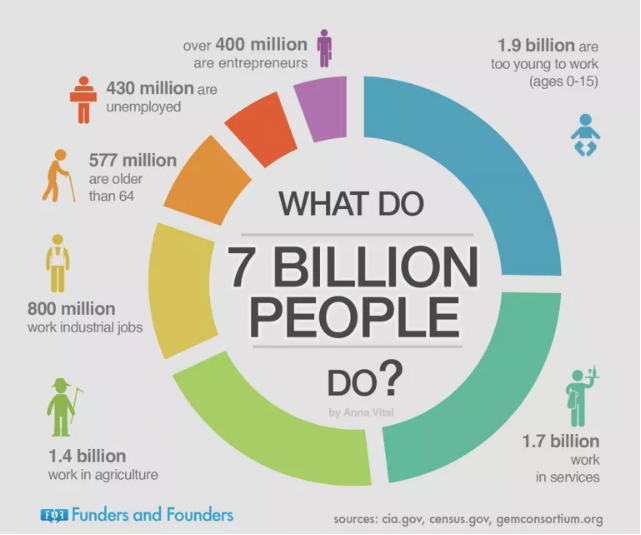
Being an entrepreneur isn’t for everyone. That’s why they make up the smallest population of the workforce across the globe.

7 billion

Everyone’s situation is different. Your startup could have failed after a couple of months or even a couple of years.

But regardless of when you failed, I’m sure you put in tons of hard work. You had some long hours and sleepless nights.

Working this hard over an extended period of time can burn you out.

It’s possible the effect of this failed launch even impacted your personal life.

You don’t want to let this event negatively affect the relationships with your family and friends. These relationships are much more important than your business.

Use this time as an opportunity to correct any wrongdoings that may have occurred while you were working on the startup.

Step away and just relax.

I realize this can be tough, especially if you don’t have a steady source of income at this moment. But you need to find a way to recharge your batteries.

As crazy as it sounds, taking a vacation might be just what you need. Put your startup out of your mind. Focus on your physical and mental health before you do anything else.

Once you have a chance to clear your mind, it will be much easier for you to jump back on the horse for a fresh start.

Figure out what went wrong

Now that you’ve had a chance to take your mind off things for awhile, it will be easier for you to assess the situation—you’ll have a more objective perspective.

You need to be able to look at yourself honestly in the mirror. It’s time to determine why your startup failed.

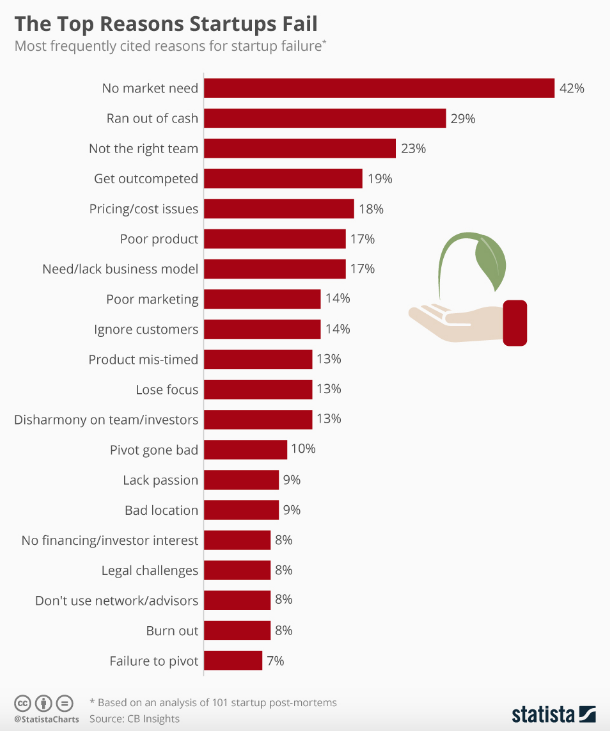
While it may be easy or convenient to blame someone else, you need to take responsibility for your actions. Here are the top reasons why startups fail:

why startups fail

If you look through this list, you’ll see many of these scenarios could have been avoided.

As the founder of your startup, you are responsible for making sure everything goes according to plan.

Let’s review the top three reasons for startup failure.

1. No market need

The number one reason why startups fail is because there wasn’t a market need. This should have been discovered during the early stages of the business. It’s your responsibility to conduct the proper market research. One of the first steps of launching a new business is to identify the target market of your startup.

If you skipped this step or took some shortcuts through the process, it could be the reason why you failed. Learning there was no market need for your startup could have saved you a ton of time, money, and effort if you figured this out in the early weeks or months.

2. Running out of cash

Running out of money could happen for a few reasons. Perhaps you either didn’t raise enough money or didn’t budget accordingly.

Again, both of those scenarios would fall on your shoulders.

Don’t get me wrong here, I’m not saying this so you can beat yourself up about it.

I just want you to figure out exactly what the problem was. Being in denial won’t help you move forward and turn your failure into a success story.

3. Not the right team

Surround yourself with people who can help you succeed. As you can see from the graph above, 23% of startups failed because the team wasn’t right.

Rather than blaming your team members for the demise of the company, make sure you find the proper people moving forward.

After all, who hired those team members? Don’t bring someone on board if they don’t bring anything to the table.

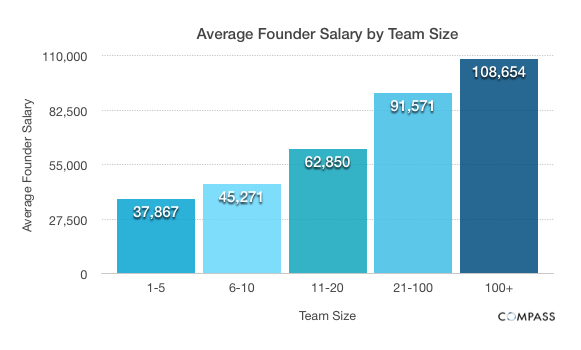
Research shows that founders with larger teams are able to pay themselves higher salaries.

team size

But doesn’t mean you should be hiring a ton of people right away.

Make sure you work with people who are compatible with your management style, hard working, and skilled in areas where you are weak.

For example, let’s say you are an excellent marketer. Working with a partner who is also a great marketer may not be what you need if neither of you knows how to develop products or handle finances.

Don’t lose confidence

Failure can be an extremely humbling experience.

But you need to be able to find the balance between being humble and remaining confident.

Entrepreneurs typically have that “eye of the tiger” character trait that gives them an edge in life. Don’t lose that feeling and mentality just because of a mishap.

Sure, you may not approach your next venture with that feeling of invincibility you had when you started your last one, but you should always remain confident in yourself.

Your failed startup is just one minor event on the long timeline of your life. Don’t let it define you.

Instead, use it as motivation to bounce back and be better than ever.

Trust me, you weren’t the first person, and you certainly won’t be the last, who failed at something. People have been in situations far worse than yours.

Look at the positives in your life. You’ve got family, friends, and your health. Be thankful for what you have.

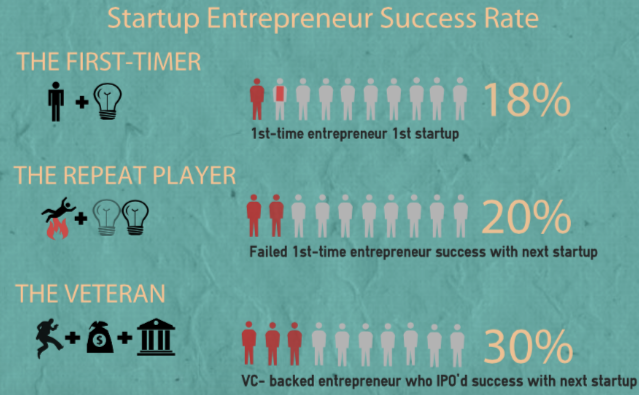
I have some encouraging news. The next time you launch a startup, you’ll have a greater chance of succeeding:

startup success rate

This makes sense.

That’s because you’ve been through this process before. It won’t be as overwhelming the next time because you’ll know what to expect.

Learn from your mistakes

Now that you’ve taken the time to recognize what went wrong, learn from those mistakes.

During what stage did your startup fail? Was it before or after the launch?

Did you have problems with production? Was there an issue with your product?

The key is to make sure you don’t make the same mistakes twice. You can’t just blindly approach your next startup without keeping your previous mistakes in the back of your mind.

Don’t take any shortcuts. Make sure there is a market for your brand. Secure the proper funding to reduce the chances of running out of money.

Bring in a partner or two if you need help. But it’s important to make sure everyone involved has a clearly defined role.

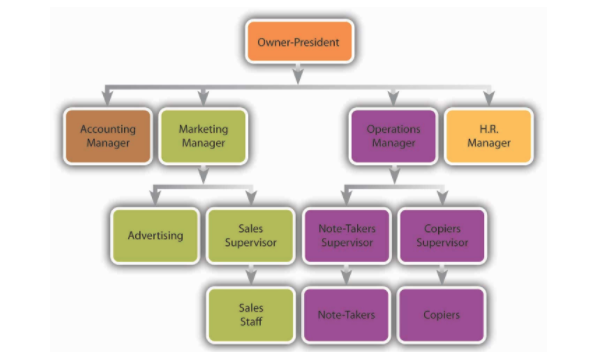
Here’s a look at the typical organizational structure of a business:

organization

Obviously, these titles will vary based on your type of business. But you can still use this as a reference so everyone clearly understands the management hierarchy.

Don’t be so hesitant to raise money from outside investors.

You’ll have less equity in the company, but you won’t be crippled financially if things end up going wrong again.

Plus, the fact that others will have a stake in the business will make them care more too. They will also put in the effort to make sure the company is successful because they have money on the line as well.

Focus on your concept

Take the time to put some effort into your concept whether it’s:

  • a product
  • a service or
  • software

I’m assuming your idea falls into one of these three categories or potentially a combination of them.

Ask yourself these questions: Do I need to start from scratch? Or can I make a variation of my failed attempt?

Sometimes, you may not need a completely new idea for a business. On the other hand, it may be in your best interest to start over with a new concept.

Everyone’s situation is unique.

It’s possible your product or concept wasn’t the issue that led to the failed launch. There may have been problems with budgeting, marketing, or some other factor that hindered your success.

If that’s the case, you could just launch another startup with the same concept under a different name.

Develop a detailed business plan

After you’ve taken the time to analyze your failure, it’s time to get back on the horse.

Whether you’re going to launch with the same concept or a new one, you have to start with a business plan.

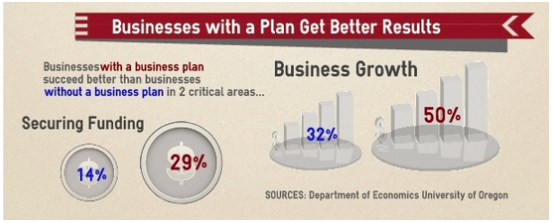
Learn how to write a business plan for your startup. Business plans will keep you accountable for your actions. If you put something on paper, you’ll make the effort to follow through with it.

Plus, writing a business plan increases your chances of securing funds and growing your business.

business plan

As a result, your chances of success will be much higher.

The first step of writing a business plan is clearly defining your target market. This will tell you exactly whom your brand is for.

Research your competitors. Is your product already available on the market? With whom are you competing?

This will help you come up with a strategy separating you from the crowd.

Set a realistic budget. Recall our discussion about investors. Make sure you raise enough money so that you don’t have to worry about running out of cash.

Include a financial section of your business plan. When will you break even? Display your cash flow projections and expenses.

Account for everything to make sure you can survive until you have a steady income.

Your business plan should include a plan to market your startup company.

Conclusion

If your new idea for your business feels like it has legs, go for it.

Be confident in yourself and this new idea. Go through the steps carefully without taking any shortcuts.

Just don’t rush into things. It’s important for you to take a break in between these launch attempts. Take the time to analyze what went wrong so you can learn from your mistakes and avoid repeating them.

Entrepreneurship isn’t for everyone.

Don’t feel obligated to start a new business right away if you’re not ready. You may decide to try something else in the meantime.

But as we discussed earlier, you’ll have a greater chance of succeeding the next time around, so don’t be discouraged by what happened in the past.

Turn your idea into a reality.

How were you able to identify what went wrong with your first startup launch?


from Quick Sprout https://ift.tt/2LaPzct
via IFTTT
Friday, July 13, 2018

How to Write Marketing Emails That Don’t Get Marked as Spam

Email marketing needs to be a priority for all businesses in 2018.

It doesn’t matter what type of company you have or what industry you’re in. In fact, 89% of marketers named email as their primary method of lead generation.

If you are putting more effort into your email marketing strategy, you’ve got the right mindset.

That said, just because you’re sending lots of promotional emails doesn’t necessarily mean they are effective.

Some of your emails might be getting marked as spam.

You spent time carefully writing your content, but you didn’t get the results you had expected. Why did that happen?

As you’ll soon learn, there are several different reasons why your emails are getting marked as spam. That was my inspiration for writing this guide.

I want to help you identify what’s putting your messages in the spam folder.

Even if you’re not currently getting your content marked as spam, you can still benefit from this guide. Understanding these email principles and best practices for writing marketing content will help you avoid these mistakes in the future.

In a perfect world, your emails should go straight to the recipient’s inbox, get opened, and generate click-throughs.

But you can’t get conversions if your content is being marked as spam. Keep my recommendations in mind, and use this guide as a reference moving forward.

Understand how consumers define spam

Spam used to be pretty easy to identify.

You’d get a message saying you won a contest you didn’t enter. The subject line would have a bunch of stars and other sketchy characters.

The message would come from an unknown sender.

In your lifetime, you probably even got some spam messages with subjects featuring NSFW content. I don’t think I need to provide an example of this since I’m sure you have an idea of what I’m referring to.

Years ago, spam would even contain malicious content, e.g., attachments containing viruses or phishing scams.

But email software has improved over time, and these messages tend to go straight to the spam folder.

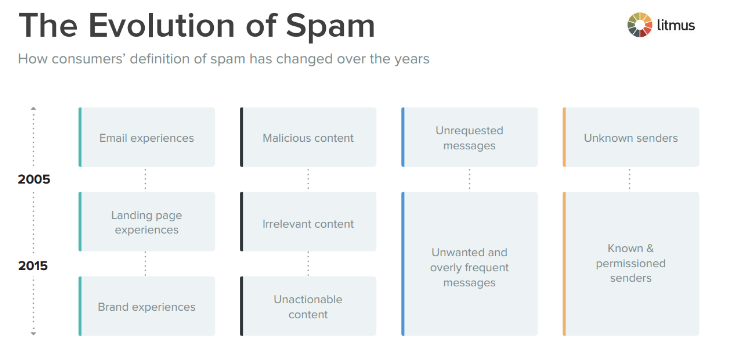
However, now legitimate brands are getting emails marked as spam because the consumer definition of it has changed:

define spam

As you can see, consumers report messages as spam even if they know the sender. They’ll even flag spam from senders who have their permission to send them emails.

This is a big game changer.

Someone could willingly sign up to receive emails from your brand and still send your content to the spam folder.

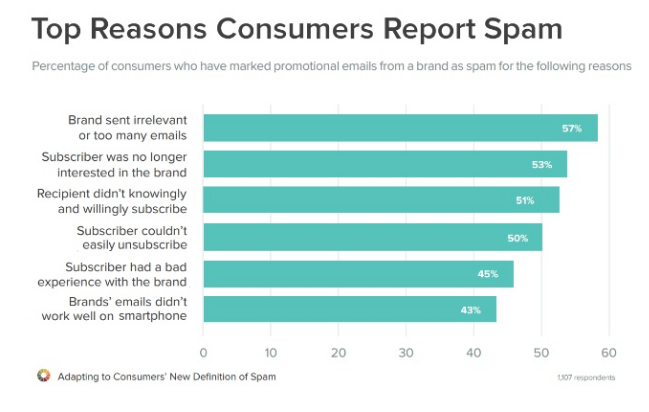
Studies show 57% of people say getting too many emails from a sender or receiving irrelevant messages causes them to mark the content as spam.

What does this mean for you as a marketer?

It means that your promotional messages are susceptible to getting marked as spam. Being a reputable brand and sending messages only to your subscribers doesn’t make you immune to this.

Don’t buy subscribers

As I just said, even recipients who subscribed to receive emails from a brand are still marking messages as spam.

If you’re buying email lists and sending content to people who never signed up to receive them, there is even a greater chance you’ll be heading for the spam folder.

Furthermore, you’re putting yourself at risk of violating the CAN-SPAM Act, which is enforced by the Federal Trade Commission.

Overall, sending unsolicited emails is just a losing strategy. In addition to the legal repercussions, it’s terrible for your brand reputation.

An average person who works in an office receives 121 emails each day. They won’t waste time checking unwanted messages.

Put yourself in their shoes for a minute. If you get a promotional message from a brand you never heard of and never signed up for, are you going to buy something from them? Probably not.

You can’t expect to see results from other people who receive these unwanted messages.

Instead, you should be focusing on how to grow your email list by getting new subscribers. Include signup forms on your website.

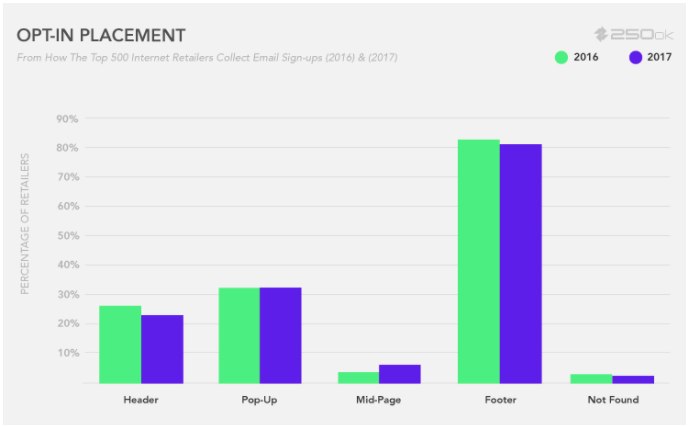
Research shows that the most common placement for email opt-in forms is in the footer of each page.

footer

Give this strategy a try, and watch your email list grow.

Now, you’ll be sending promotional content to people who actually want to hear from you as opposed to random email addresses you purchased.

Check spam risk before you hit send

Most email software for marketers has a built-in feature that checks for spam.

It scans your message and determines how likely it is to get sent to the spam folder.

To avoid a high spam risk, make sure you limit the use of promotional words such as:

  • free
  • buy
  • promo

Don’t get me wrong, you can include these words in your message, but use them sparingly.

Avoid special characters and writing in all capital letters. Don’t make obscure choices, e.g., adding spaces between letters, like F R E E.

Make sure the size of your email isn’t too big either.

If you’ve got links, be sure they from reputable websites with a high domain authority.

Your messages shouldn’t be too text-heavy or image-heavy. Balance text and images.

Don’t include too many colors or text written in colors difficult to read.

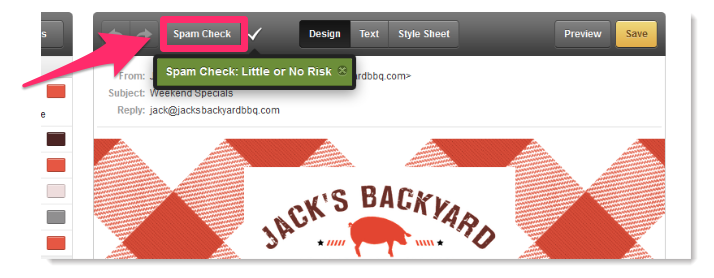
Here’s an example of what the spam check feature looks like on the Constant Contact platform:

constant contact

It may look a bit different on a different platform, but you’ll still be able to accomplish the same thing.

If your spam checker says you’re at a high risk of being marked as spam, you need to make some changes before you hit send.

Limit your sending frequency

As a business owner, you think about your brand 24 hours a day. I can relate to this.

You’re always coming up with new ideas to promote your company.

But your customers and email subscribers aren’t always thinking about you the same way you think about them. That’s just a reality. Can you blame them?

They have more important things on their minds, and they don’t want to hear from you that often.

Distributing promotional emails on a daily basis is not going to help your cause. You need to be selective when you send a new message.

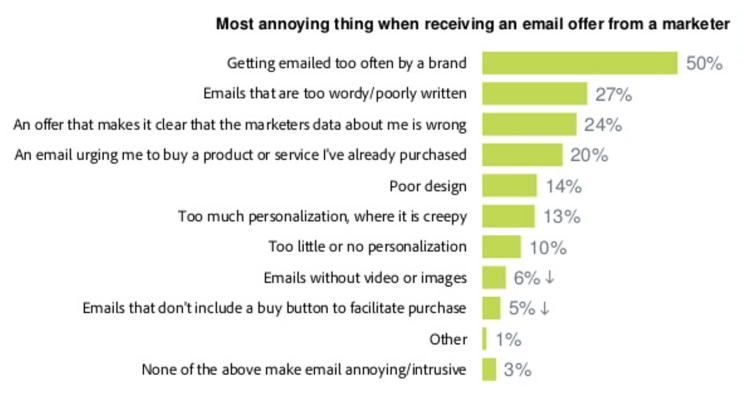
When it comes to receiving emails, consumers report that sending emails too often is the number one most annoying action taken by marketers:

annoying

I’d recommend limiting these messages to once a week at the most.

You can even change the sending frequency based on what the subscriber prefers.

When a new customer signs up to receive your content, ask them how often they want to hear from you. You can segment this list by people who want weekly messages or just a monthly newsletter.

Giving your subscribers exactly what they’re asking for reduces your chances of getting marked as spam.

Use a clearly labeled “from” field address

Make it clear whom the email is from.

Some of you may have multiple email addresses within your domain, depending on the size of your company.

For example, if someone submits a complaint or request for help on your website, they may get a reply from a support@yourdomain.com.

But if they’re trying to make a purchase or return an item, email inquiries might be made through sales@yourdomain.com.

Don’t change the sender field too often. Try to stick with the one that works best for your promotional messages.

Avoid odd choices, such as donotreply@yourdomain.com or 372as2y9@yourdomain.com.

Make sure you create a solid reputation for these sender fields. It will build trust with your subscribers and even increase the chances that they will add the address to their contacts lists.

If they are used to receiving your marketing emails from the same sender address and one day it comes from a different one, they may think it’s spam.

Even if that message is coming from your company, it’s confusing to your subscribers.

Don’t try to trick the recipient

I see people make this mistake all the time.

In an attempt to increase email open rates, they try to be sneaky and trick their subscribers into clicking the message.

That’s a big mistake. Tricking your customers can damage your brand.

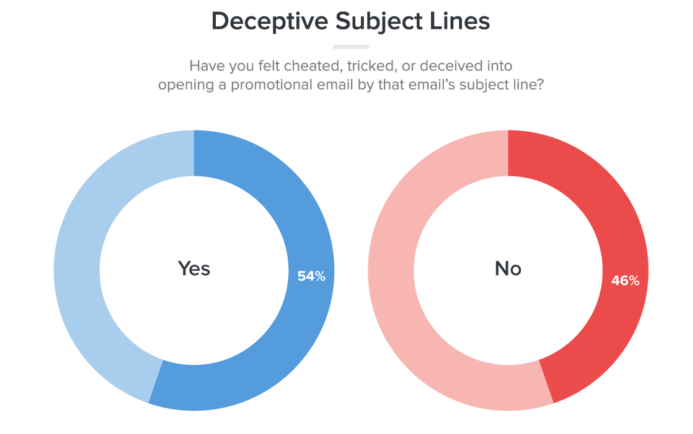
In addition to marking your message as spam, the recipient might ultimately unsubscribe from your email list. More than half of consumers say they have felt cheated or tricked into opening a promotional email:

deceptive

I’ll share with you some strategies that are perceived as deceptive by recipients.

Do not start your subject line with “Fwd:” or “Re:” to try to get more opens. This type of text implies you’ve already had a previous communication with the subscriber.

Discovering this was not the case will put a bad taste in their mouths.

Don’t send a message telling people they’ve won a prize if they haven’t actually won anything. Again, this is a fast way to disappoint the recipient and get your content marked as spam.

I’ve also seen some marketers conceal spam content by creating an image with text written on it.

You might fool spam filters, but you won’t fool the person who opens the email. They’ll still send you to the spam folder.

Stay relevant

You need to focus on the content of your messages.

Ask yourself these questions before you hit send: Why are you sending this email? Is this message adding value to the subscriber?

If you don’t have a clear answer to these, you should probably re-evaluate the message.

Don’t send content just to say hello or provide a friendly reminder that your company exists. Your subscribers don’t care about this.

Here’s a look at the top reasons why emails get reported as spam:

reasons consumers mark spam

Take a look at the top reason.

Earlier I talked about how the frequency of your emails can cause you to get marked as spam. Well, there is a second part to this principle.

Your content needs to be relevant.

Even if you’re sending emails only weekly or bi-monthly, you can still get sent to the spam folder if the subscribers think the message is irrelevant.

For example, let’s say you run an ecommerce website selling home furniture. A marketing email updating your subscribers about the weather doesn’t add value to their lives. It also has nothing to do with your brand.

Make an effort to always stay on brand.

If it’s been a while since you’ve communicated with your subscribers and you feel like it’s time to send a new email, you probably can’t go wrong by sending out a discount or promotional code.

Run a flash sale, or send an exclusive personalized offer.

These types of messages are likely to get opened and lead to conversions.

Master your subject lines

A successful email marketing campaign starts with the subject line.

You could have the best promotional message in the world, but nobody will see it if they don’t open the message.

It’s in your best interest to keep your subject line as short as possible. Research shows that email subjects between 1 and 20 characters yield the highest open rates, regardless of what type of email you’re sending.

This is partially due to the fact that 55% of emails are opened on mobile devices.

If your subject line is too long, it will get cut off when it’s viewed on a cell phone. If the subscriber can’t read the full subject, it decreases the chances they’ll open the message.

Let’s put open rates aside for a minute and get back to the topic of discussion: spam.

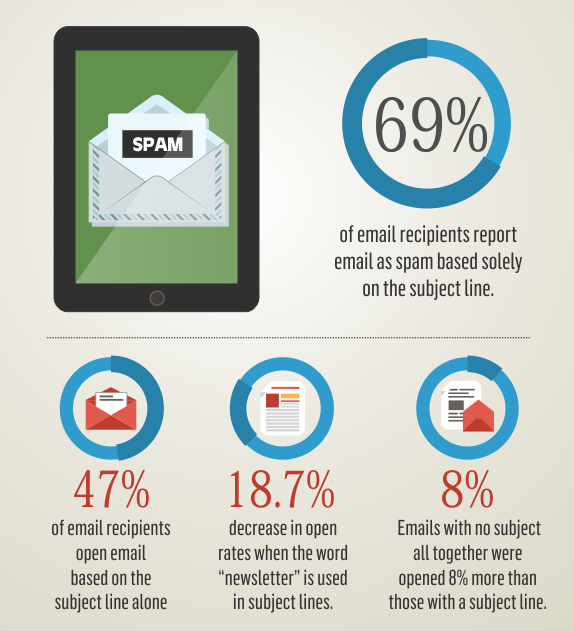
Research shows that nearly 70% of emails get flagged as spam just based on the subject line:

subject line

Learning how to write email subject lines will help reduce your chances of getting marked as spam.

I recommend personalizing your subject lines. Personal subjects have higher open rates and click-through rates. They also tend to increase website traffic and drive sales.

Use your subject line to create a sense of urgency. Provide an offer that won’t last forever, and make sure it’s properly conveyed in the subject.

Tell a story. Provide breaking news. Stimulate curiosity.

These are all great types of subject lines that will entice your subscribers to open your messages instead of reporting them as spam.

Conclusion

It’s great you’re focusing on your email marketing campaigns. But if your content is getting marked as spam, it’s obviously not an effective strategy.

Times have changed. Even reputable brands who have permission from recipients to send emails are getting flagged as spam.

The key is being able to identify why emails get sent to the spam folder and how you can avoid this from happening to you.

Never buy subscribers or send unsolicited emails. Instead, use your website as a tool for growing your email list.

Use tools to help check your content for spam before you hit send.

Don’t send marketing emails too often. Clearly label the sender field, and don’t change this address.

Do not deceive your subscribers by tricking them into opening a message. Always make sure the content of your emails is relevant.

Learn how to write subject lines that lead to opens and clicks as opposed to the spam folder.

Following these tips will help you avoid getting marked as spam. Ultimately, this will lead to higher conversions for your business.

How is your brand writing promotional emails without getting marked as spam?


from Quick Sprout https://ift.tt/2mdvx2Z
via IFTTT
Wednesday, July 11, 2018

How to Implement a Customer Referral Program That Drives Sales

As a business owner, you have to keep coming come up with creative ways to attract new customers. But as you know, this type of marketing can be expensive.

It’s much more cost-effective to market to your existing customers than to find new ones. Acquiring a new customer is six to seven times more expensive than retaining a current customer.

Sure, you may be very profitable right now without putting too much emphasis on acquisition. However, that business model isn’t sustainable forever.

You can’t grow at an exponential rate without expanding your customer base. Sooner or later, you’ll need to run marketing campaigns to attract new customers.

That’s why you need to implement customer acquisition strategies that won’t break the bank.

A customer referral program is one of my favorite ways to do this. Your campaigns will leverage your existing customers to bring in new business.

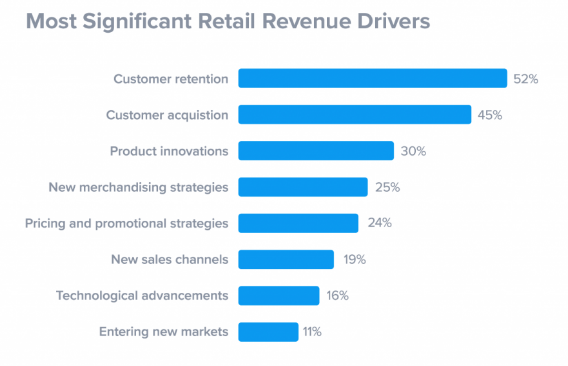
Take a look at the most significant driving factors of retail revenue:

image7 9

As you can see, retention and acquisition ranked first and second on the list. Combining both of these into one marketing campaign will be very beneficial for your business.

If you can properly implement a customer referral program, you’ll get new customers without having to do much work. All you have to do is set up the program. The rest will take care of itself.

Don’t get me wrong. It’s not as easy as it sounds.

The key here is coming up with the right referral program that gets your current customers excited enough to participate.

Whether you’re creating your first customer referral program or trying to improve your existing one, this guide will help you. I’ll tell you everything you need to know about referral programs that drive sales.

Prioritize the customer experience

Before you start worrying about the logistics of your referral program, you need to make sure your existing customers are properly taken care of.

After all, this strategy won’t work if your customers are unhappy. Research shows that 89% of businesses named customer experience as a key factor for customer retention and loyalty.

In fact, customers care more about the customer service than the quality of whatever they are purchasing.

Research indicates 86% of consumers are willing to pay more money for an enhanced customer experience.

This type of service starts at the top of the organization and works its way down. As the owner, you need to set the tone and make sure all your employees know how important customer service is to your success.

Unhappy customers are bad for business. Only 1 out of 26 dissatisfied customers will complain. What about the other 25? They’ll leave without saying a word.

According to research, 68% of customers say they left a company because they believe the brand didn’t care about them. Don’t let this happen to you. Let your customers know how much you care.

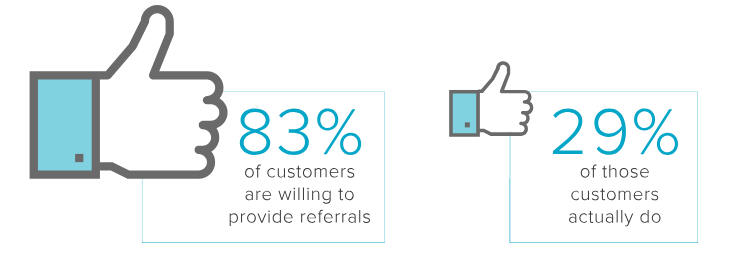
Happy customers are much more valuable. In fact, more than 80% of customers say they are willing to make referrals.

image2 13

Unfortunately, only a smaller percentage actually do.

That’s why your referral program will need to provide some extra incentives, but we’ll talk about that in greater detail shortly.

Offer referral incentives

If customers are happy, you’ll get some organic referrals even without implementing a program.

But for the most part, you can’t rely on such referrals alone when it comes to driving sales and getting new customers. It’s not scalable.

Give your customers a reason to refer their friends and family. Discounts and other monetary benefits will be the most actionable.

Put yourself in your customers’ shoes for a minute. Think about some of your favorite brands. Are you going to spend a ton of time trying to bring them new customers? If it comes up in a conversation, you might make a recommendation. But I assume you’re probably not actively going out of your way to do this.

However, I’m willing to bet that if the company offered you a credit, discount, or reward for these efforts, it would probably change your approach.

On the flip side, let’s say someone refers you to a new company. Sure, you may be likely to try them out. But an incentive would definitely boost your motivation to do that.

The best customer referral programs offer incentives to both current as well as new customers.

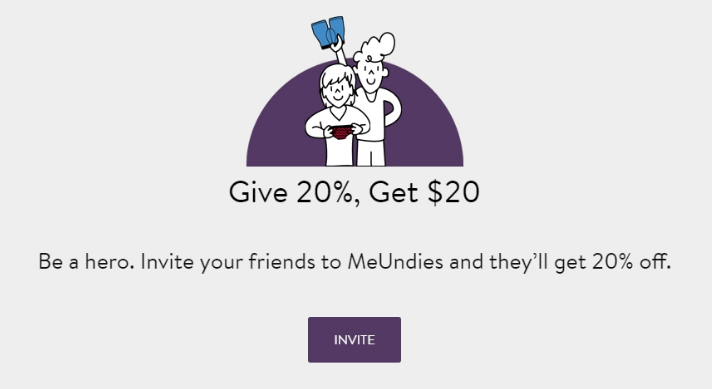
Here’s an example of this strategy implemented by MeUndies:

image5 13

It’s a simple concept.

When one of their customers refers a friend, the new customer will get 20% off their purchase. Once that purchase is made, the original customer gets a $20 gift card.

That adds up fast. The customers know they’ll get a $100 credit if they can convince just five people to make a purchase. This gives them a reason to spread the word.

Make sure your incentives are worth it to both parties. The amount needs to be relative to your prices.

With the MeUndies example, most of their products fall within that $20 range, so it’s a great amount. But if the reward was only $5, it may not be worth their customers’ time.

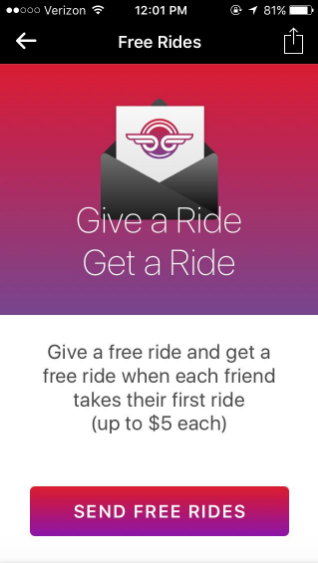
However, that doesn’t mean $5 won’t work for another business. Check out this referral incentive offered by Bird:

image3 13

If you haven’t heard of Bird, they are a new brand with an innovative spin on ride sharing. They have electric scooters placed all over different cities.

Customers use their mobile app to unlock the scooters. At a rate of just $1 to unlock a scooter and an additional $0.15 per minute, the $5 reward translates to nearly 30 minutes of free riding time.

While $5 may not be a big incentive for other referral programs, it is for this one.

That’s what you need to come up with. Take a look at your products or services, and decide what would be a good offer.

You don’t want to offer something too high that’s going to lose you money, but it also can’t be so low that it doesn’t motivate customers.

Find that sweet spot in between, and set your incentives at that amount.

Focus on a fast ROI

Just like with any other marketing campaign, you want to make sure your referral program makes sense from a financial standpoint.

If you’re spending money without getting a return on your investment, you obviously won’t be profitable. But the great thing about referral programs is that unlike traditional acquisition campaigns, they cost much less.

This connects to my previous point about finding an incentive that will encourage sales without depriving you of your profits.

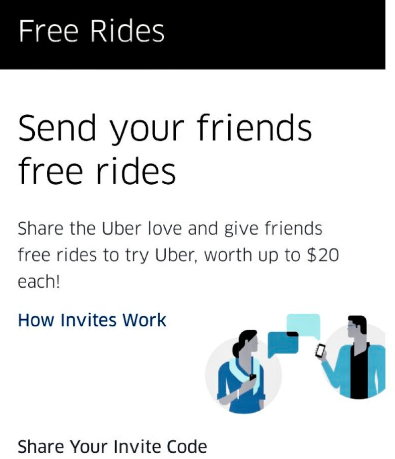
When you’re unsure how to do things, it’s always a good idea to follow the lead of those who succeeded before you. Take a look at Uber.

image6 13

That’s one of their initial referral promotions. It was a standard “give $20, get $20 concept.”

Let’s do some simple math here. If the current customer and new customer each get $20, the cost per acquisition is $40 based on this campaign.

I know what you’re thinking: $40 per acquisition sounds high. You might not think your business can afford something like this.

But if you do your research ahead of time, you’ll be able to get a quick ROI if you know your margins.

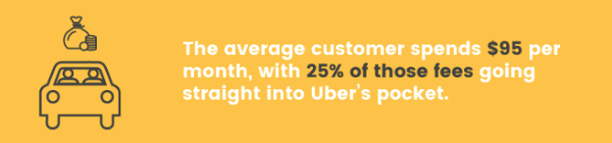
In a short period of time, Uber turned into an international giant. Customer referrals were the driving force behind their expansion strategy. I came across a recent study that analyzed how they were able to accomplish this:

image1 13

Keep these numbers in mind. If Uber kept 25% of what the average customer spent in a month, that would mean they would break even in less than two months if their acquisition costs were $40.

Once that $40 is repaid, everything else is profits.

The $20 for $20 offer is no longer available in every city or region.

Once they were able to control a large portion of the market share and prove their concept, they lowered the incentive. However, the new customers were already hooked.

You can apply the same approach to your referral program. Start off with high incentives to spread the word fast, but make sure you get a return on your investment.

After that, you can always make adjustments that translate to higher profits for your business.

Set yourself up for growth

Think about how you were able to get your existing customers to refer their friends.

You leveraged their customer loyalty and offered an incentive. Now, you have to apply that concept to these new customers.

Don’t waste any time. This is your chance to secure them for the long haul as well. Sure, they made a purchase because of a recommendation.

We know 92% of consumers trust a recommendation if it comes from someone they know. Your new customers already have a positive impression of your brand.

Now you have to convince them to stay. Once they make that first purchase because of the incentive you offered, what’s next?

Use your email marketing strategy to create an actionable drip campaign, and encourage these customers to buy again in the future.

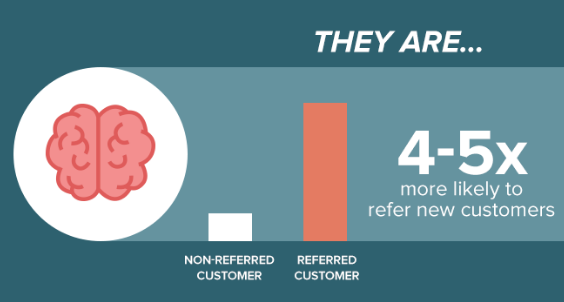
Make sure they understand they can benefit from the referral program. This should be much easier for you because referred customers are more willing and likely to refer more new customers.

image4 13

Furthermore, the profit margins from referred customers are roughly 25% higher than from non-referred customers.

Your customer referral program can set you up for exponential growth. Think about how successful you would be if each new customer referred just one new customer.

And then imagine all of those new customers also referred a friend. Can you see how quickly this could turn into a sales-driving formula for your company?

Keep an eye on quality control

This whole concept started with prioritizing the customer experience. Don’t ruin that.

For example, let’s say a customer refers a friend, but due to some glitch in your system, they don’t receive their incentive. That’s a big problem for you.

Now they went from a happy customer, who wants to refer their friends, to a dissatisfied customer, who thinks you’re trying to take advantage of them. Instead of getting an additional customer, you may have lost one.

It’s important you thoroughly check all the technology associated with your referrals. How will you send the incentives?

Text. Email. Social media. Promo code. Make sure each distribution method works.

Here’s something else to consider. You have to keep an eye out for customers who may be trying to rip you off. Just like with anything else, there will always be people looking to take advantage of the system.

You spent the time and crunched the numbers to come up with the perfect incentives for your customer referral program. In order for you to profit, those margins can’t be tampered with.

Customers might create multiple accounts and refer themselves to get the incentive on both accounts.

If this happens, you’ll end up losing money without getting a new customer. Make sure you have some safety nets in place to catch and/or prevent this type of occurrence.

Conclusion

Your business needs new customers.

With high average acquisition costs, you need to focus on cost-effective marketing campaigns. Leveraging your current customers is the best way to do this.

First, you need to focus on providing excellent customer service. Next, you’ll have to come up with an incentive that encourages the current customer and prospective customer to make a purchase.

Set yourself up for exponential growth and a quick return on your investment.

Keep an eye on the quality. You need to make sure your program works from a technical perspective and that nobody takes advantage of any loopholes.

If you implement this strategy, you’ll see an increase in sales from both current as well as new customers.

What kind of referral incentives are you offering to drive sales?


from Quick Sprout https://ift.tt/2KQ1WLE
via IFTTT
Monday, July 9, 2018

How to Use These 8 Visual Elements to Improve Your Marketing Strategy

Did you know that 65% of people are visual learners?

Furthermore, 90% of information that gets transmitted to the human brain is visual.

But if you thought that was crazy, consider this. We process images 60,000 times faster than we process text.

Let that sink in for a moment.

As you’re reading this, you may believe you’re processing the information I’m sharing with you, and that very well might be the case. But if I show you an image, like this one, it will increase the chances of you remembering it:

image4 8

As a marketer, you need to use this knowledge to your advantage. You always have to come up with new ways to reach and engage with your target market and current customers.

If your most recent marketing campaigns didn’t succeed, I want you to reevaluate those strategies.

Did you use any visual elements?

If you answered no, you have a significant room for improvement as you move forward. But some of you may be using visuals and still not having the success you’re looking for. That’s okay.

It’s possible you’re using the wrong visuals. Or maybe you’re just not positioning them properly within the campaign. You might need to make slight adjustments.

Regardless of your scenario, this guide will help you.

I’ve narrowed down the top 8 visual elements you can use to improve your marketing campaigns. I’ll tell you what they are and explain how to implement them.

1. Images

I’m sure you’ve heard the age-old saying that a picture is worth a thousand words.

In fact, articles with images get 94% more views than those without them.

To me, that’s a pretty significant number. What’s that worth to you?

It’s especially important to anyone who uses blogging to scale lead generation.

That’s why I use images in all my blog posts. They are a great way to break up the content and make my posts easier to read.

People don’t read your posts word for word. Things are going to get easier for you as soon as you accept it.

Your readers skim through your content. But if all they see is large blocks of text, they’ll find it difficult to stay engaged, get through it, and retain any information.

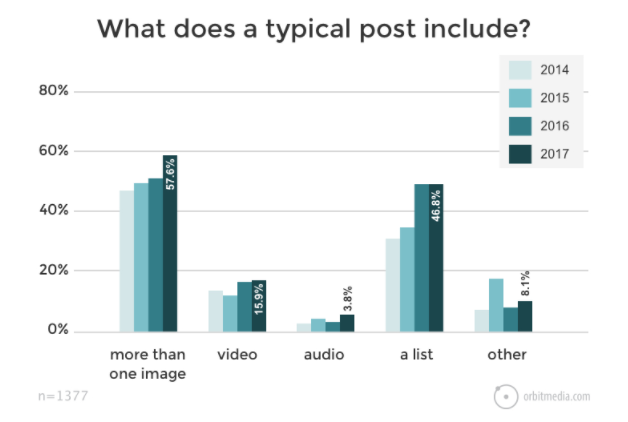
That’s why an increasing number of bloggers use more than one image per post to enhance their posts:

image2 8

Images give people a reason to stop while they’re scrolling. As I explained earlier, the human brain is programmed to process and retain visual information.

With images, you can still get your point across even if each word isn’t being read.

In addition to blogging, images should be used for your other marketing campaigns as well.

For example, let’s say you’re sending an email to your customers offering them a 25% discount. If you just put that in the message written as text, it won’t be very effective.

But by turning that message into a visual coupon, you will make the message much more appealing. As a result, the recipient will be more likely to use the discount, which will translate to more sales for your company.

2. Original photos

Where should you get your images?

Obviously, in today’s digital age, the Internet is saturated with photos. You can definitely use those to enhance your content. I do this all the time. Just use someone else’s photo, and give them credit for it.

While there is nothing wrong with this strategy, it’s not the only option.

If you really want to bring your visual marketing strategy to the next level, take original photos. You should consider doing this for a few reasons.

First of all, it makes your content more unique. There’s less of a chance that your audience has seen the picture if you took it yourself.

Sure, if you were taking a picture of a famous landmark, there will be similar ones out there. But yours will still be unique. Plus, you won’t have to give anyone else credit for the image.

Once you start taking original photos, you can use them for much more than just a single marketing campaign.

It gives you something to post on social media, which is part of your general marketing strategy as a whole. Check out these pictures on the Muscle Milk Instagram page:

image6 8

Yes, they could have found photos of people hiking, camping, and running on the Internet. But those would not have been as authentic as these.

Instagram is the perfect platform for you to post original photos. It gives your audience a reason to follow you, which will improve your brand awareness and benefit your company.

If your social media followers find out you’re posting random images from the web, they will be less inclined to follow you and your promotions.

You don’t need to hire a professional photographer to take and edit photos like a pro.

Once you publish original content, other people may end up using those photos as well. As a result, they’ll have to give you credit as the source, which will drive more traffic to your website.

3. GIFs

GIF stands for the graphics interchange format, but nobody calls it that.

It’s basically a hybrid between a picture and a video. GIFs have many different uses. They are more elaborate than a picture but not as long as a video.

For example, if you add a video to your content, you have to rely on someone clicking to view it. But that’s not the case with a GIF. When it appears on the screen, it will start moving.

You can use a GIF to demonstrate something quickly, like an action.

Put GIFs in your marketing emails. GIFs can be very funny, and they are extremely versatile. Look for online resources to find relevant GIFs for your brand.

While they may be simple, they can stand out and capture the attention of your audience, which will ultimately increase their engagement.

4. Memes

Memes have seemingly taken over the Internet.

They’re all over social media, and it seems like a day can’t go by without someone sending a meme to my phone via a text message.

Often, they’re meant to be funny, but they can also be downright stupid. You can still use them to enhance your marketing efforts. Here’s an example of a silly meme I could use about content marketing:

image1 8

That’s what some of these old-school business owners tell me when I first meet them for a business consultation.

A meme is basically just an image with the caption written directly on it.

Come up with clever ways to turn a recognizable picture, actor, fictional character, image, or cartoon into something related to your brand.

If you search for memes online, you’ll come across plenty that are pretty inappropriate. I do not suggest using these with your marketing strategy, unless that kind of humor is part of your brand image.

It’s better to be on the safe side and stick to memes that are corny but relatable, as opposed to really funny but possibly inappropriate.

There are also plenty of online tools, such as the Meme Generator from Imgflip, you can use to create your own meme.

Just make sure you know your target market. For example, if you’re marketing to a Millennial audience, it wouldn’t make sense to use an image of a rock star from the 1960s.

Use pop culture references your audience will recognize, or it defeats the purpose. You can also build a meme with industry jokes, like the one I used above.

5. Slideshows

Slideshows aren’t just for school presentations.

You can use them to enhance your digital content as well. You can embed your slideshows into your website pages and blog posts.

These are great tools for communication.

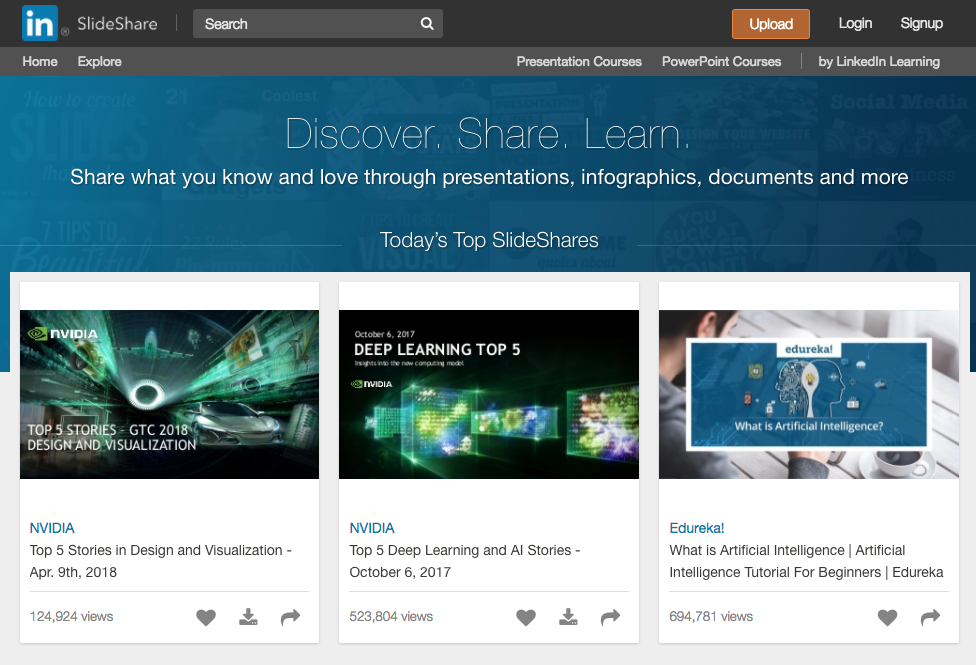
Consider creating and sharing your slideshows on SlideShare, for example:

image7 7

Here’s a great strategy for those of you who have previously published lots of long blog posts, articles, or case studies.

Turn those into slideshow presentations.

Simplify them, and give your audience a chance to retain that information. You don’t need to eliminate the text completely. Just republish those old posts with a slideshow at the beginning.

This is a great way to breathe fresh life into your old content with the help of visual aids.

6. Videos

No marketing strategy is complete without video content. That’s what consumers want to see today. So give them what they want.

You should find a way to use videos in nearly every aspect of your marketing campaigns.

Here are some examples of the types of videos you can create and ways to implement them:

  • embed videos on your website
  • send emails with videos
  • upload videos to social media
  • share product demonstrations
  • give tutorials

The list goes on and on.

Here’s what I recommend. Set up a YouTube account if you don’t already have one. From there, it’s easy to distribute your content on other marketing channels since YouTube is compatible with them.

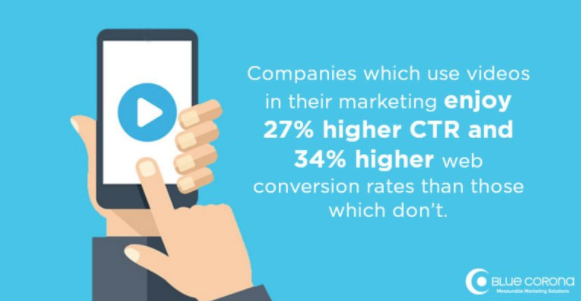
It’s easy to make videos. Plus, look at some of the benefits of video marketing:

image3 8

That’s why 83% of marketers say they would create more video content if they had unlimited time, budget, and resources.

Want to take your video strategy to the next level? Consider starting a video blog.

Stream live video on your social media channels as well.

7. Whiteboard presentations

I’m sure you’ve seen these before.

Yes, a whiteboard presentation is technically a video. But it’s a mix between a regular video and a slideshow presentation.

Rather than showing content slide-by-slide, it’s displayed as a video.

Lots of times, these are shot with just a hand that’s writing on a whiteboard.

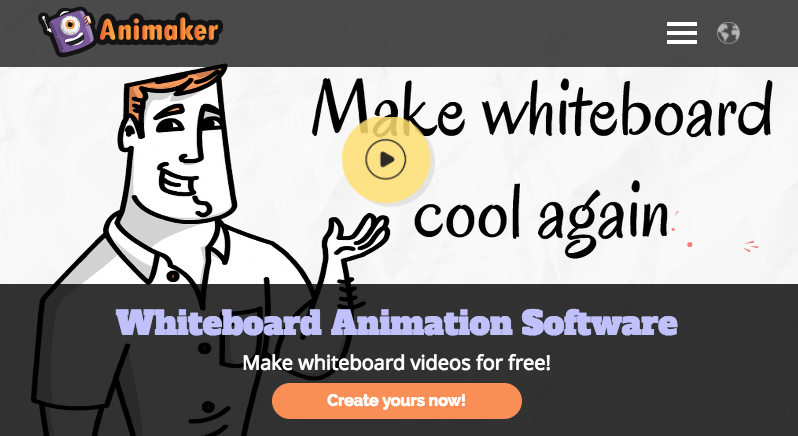
Consider using a platform like Animaker to create your whiteboard presentation.

image8 5

This method may be more professional and presentable than just filming yourself writing on a board in a dark room.

Basically, you want to create them as if you were a teacher, trying to present information to a class.

It’s a great visual tool to help you explain how to do things.

8. Screenshots

I use screenshots all the time when I’m blogging. This tool helps me get my point across in a way that’s easy for my readers to understand.

Use the same approach if you’re trying to explain how to do something online.

Sure, you’ll need some text to support the picture. But screenshots show the reader exactly what to do.

Skitch is my favorite software for taking screenshots and marking them up. You know all those pink boxes and arrows you see in my blog post images? Those are from Skitch.

Just telling your audience to click on something isn’t as effective as drawing an arrow directly to the button.

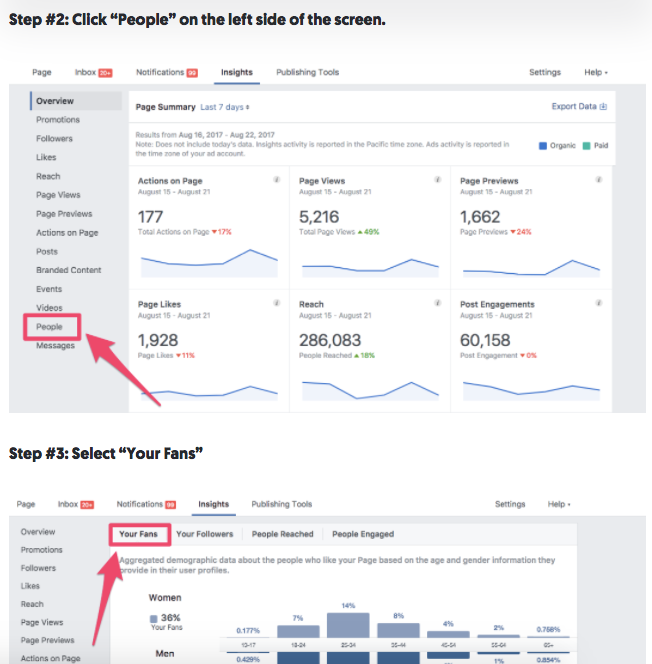
To show you what I’m talking about, here’s an example from a blog post I wrote about Facebook cover photos:

image5 8

In these step-by-step instructions, I use text to tell people where to click.

That said, look how many clickable buttons there are on these screens. There are dozens of choices.

By using Skitch to mark up these screenshots, I show the reader where to look, which improves their experience.

Conclusion

Visuals are more powerful than text alone.

You need to be incorporating visual elements into your marketing strategy.

Use images to break up your content. Take original photos to make your brand seem more unique.

Memes and GIFs are fun ways to spice up your advertisements.

Use slideshows and whiteboard presentations if you want to explain things to your audience.

Videos can be used for nearly any campaign.

Take screenshots and mark them up with arrows, boxes, and text to highlight what you’re talking about.

If you follow tips on this list, you won’t have a problem improving your marketing strategy with visual elements.

What types of visual elements does your brand use in your marketing campaigns?


from Quick Sprout https://ift.tt/2NzWA4Z
via IFTTT